Kirjojen hintavertailu – 12 859 818 kirjaa ja 27 kauppaa

Kirjailija

Neil McLynn

Kirjat ja teokset yhdessä paikassa: 4 kirjaa, julkaisuja vuosilta 2009–2026, suosituimpiin kuuluu The Conference of Carthage in 411. Vertaile teosten hintoja ja tarkista saatavuus suomalaisista kirjakaupoista.

4 kirjaa

Kirjojen julkaisuvuodet: 2009–2026.

The Conference of Carthage in 411

The Conference of Carthage in 411

Erika Hermanowicz; Neil McLynn

LIVERPOOL UNIVERSITY PRESS
2026
nidottu
On the heels of Alaric’s sacking of the city of Rome in 410 CE, Honorius, the emperor of the Roman west, appointed Flavius Marcellinus to oversee and judge a debate between two sparring Christian groups in Africa: the Donatists and Catholics. The debate was held in the wealthy city of Carthage, close to what is now modern-day Tunis. At stake were the future of Christian orthodoxy and even the survival of the Roman west, as Honorius feared that if this century-old sectarian rift were not healed, grain-rich Africa might be vulnerable to rebellion and secession, thereby threatening Italy with starvation and the emperor with annihilation. The Donatists and Catholics debated for three days in June of 411 CE, and much of the actual transcript survives. This book is the first English translation of that famous but often misunderstood conference in Carthage, the city to which many Italians had fled to avoid Alaric’s onslaught, where the Donatist and Catholic bishops hotly debated issues of legitimacy, law, purity, and procedure. Among those taking part in the debate were highly esteemed bishops who left their mark on western history including, most famously, St. Augustine.
The Conference of Carthage in 411

The Conference of Carthage in 411

Erika Hermanowicz; Neil McLynn

LIVERPOOL UNIVERSITY PRESS
2025
sidottu

Halvin toimitettuna 241,60 €

On the heels of Alaric’s sacking of the city of Rome in 410 CE, Honorius, the emperor of the Roman west, appointed Flavius Marcellinus to oversee and judge a debate between two sparring Christian groups in Africa: the Donatists and Catholics. The debate was held in the wealthy city of Carthage, close to what is now modern-day Tunis. At stake were the future of Christian orthodoxy and even the survival of the Roman west, as Honorius feared that if this century-old sectarian rift were not healed, grain-rich Africa might be vulnerable to rebellion and secession, thereby threatening Italy with starvation and the emperor with annihilation. The Donatists and Catholics debated for three days in June of 411 CE, and much of the actual transcript survives. This book is the first English translation of that famous but often misunderstood conference in Carthage, the city to which many Italians had fled to avoid Alaric’s onslaught, where the Donatist and Catholic bishops hotly debated issues of legitimacy, law, purity, and procedure. Among those taking part in the debate were highly esteemed bishops who left their mark on western history including, most famously, St. Augustine.
Decadence and decay : from ancient Rome to the present

Decadence and decay : from ancient Rome to the present

Faramerz Dabhiowala; Melanie Grundmann; Richard Whatmore; Mattias Hessérus; Adoreé Villany; Andrew Huddleston; Saul David; Andrew Preston; Daniela Cammack; Pernille Røge; Adam Tooze; J.R. McNeill; Jonathan Rees; Robert Beuregard; William O’Reilly; Michael Nelson; Peter Heather; Robert Coates-Stephans; Neil McLynn; Richard Miles

Bokförlaget Stolpe
2019
sidottu

Halvin toimitettuna 40,40 €

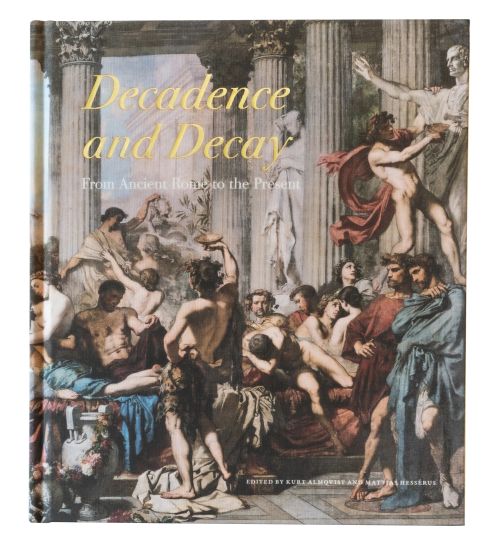
The fear of living in the end times has a long history. In Decadence and Decay, a group of distinguished international scholars describe how societies over time have handled and interpreted the concept of decline. In times of unrest and transition, declinism the notion that a culture or civilisation is headed towards irreversible decline tends to capture the public imagination. The essays in this volume address how notions of decadence and decay have been used both as opprobrium and as a form of self-definition and empowerment an instrument to protect individualism against collectivistic oppression. From ancient Rome to the present, ideas and expressions of decadence and decay have played a critical role in how we perceive the world.
Christian Politics and Religious Culture in Late Antiquity
These essays deal with two central preoccupations: the new styles of political behaviour developed by Christian rulers and Christian congregations during the century or so after Constantine's conversion, and the experiments in religious self-presentation which are reflected in our sources from the same period. The first topic is covered in papers dealing with such activities as outbursts of popular rioting and exhibitions of imperial penance, and with legislation by emperors and lobbying by bishops; the second in papers on the inscriptions erected by pagan aristocrats, on the self-images presented by Christian autobiographers, and on the motives behind Christian anthologizing. The two themes converge in the central section, focusing on Gregory Nazianzen. These papers are conceived as preliminary studies for a forthcoming book which will analyse his involvement in local and imperial politics, and the resourcefulness of his successive exercises in self-advertisement. They show him involving himself in family disputes, civic life and literary culture, reshaping the legacy of his friend Basil and shaping his own identity as an independent holy man, beyond reach of his obligations to family, city and church