Kirjojen hintavertailu – 12 903 725 kirjaa ja 27 kauppaa

Kirjailija

Neil R. Davison

Kirjat ja teokset yhdessä paikassa: 4 kirjaa, julkaisuja vuosilta 1998–2022, suosituimpiin kuuluu An Irish-Jewish Politician, Joyce's Dublin, and "Ulysses. Vertaile teosten hintoja ja tarkista saatavuus suomalaisista kirjakaupoista.

4 kirjaa

Kirjojen julkaisuvuodet: 1998–2022.

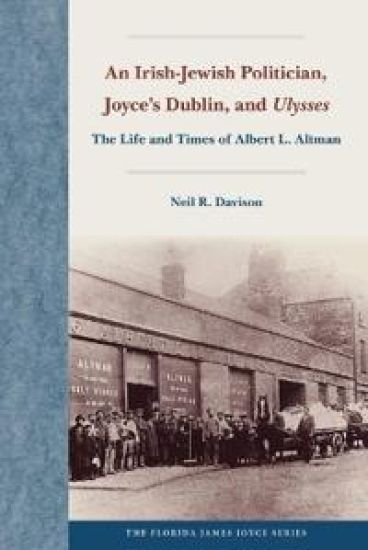
An Irish-Jewish Politician, Joyce's Dublin, and "Ulysses

An Irish-Jewish Politician, Joyce's Dublin, and "Ulysses

Neil R. Davison

University Press of Florida
2022
sidottu
A forgotten historical figure and his influence on the writing of James JoyceIn this book, Neil Davison argues that Albert Altman (1853—1903), Dublin-based businessman and Irish nationalist, influenced James Joyce's creation of the character of Leopold Bloom as well as Ulysses broader themes surrounding race, nationalism, and empire. Using extensive archival research, Davison reveals parallels between the lives of Altman and Bloom, including how the experience of double marginalization which Altman felt as both a Jew in Ireland and an Irishman in the British Empire is a major idea explored in Joyce's work. Altman, successful salt and coal merchant, was involved in municipal politics ove issues of Home Rule and labour, and frequently appeared in the press over the two decades of Joyce's youth. His prominence, Davison shows, made him a familiar name in the Home Rule circles with which Joyce and his father most identified. The book concludes by tracing the influence of Altman's career on the Dubliners story Ivy Day in the Committee Room as well as throughout the whole of Ulysses. Through Altman's biography, Davison recovers a forgotten life story that illuminates Irish and Jewish identity and culture in Joyce's Dublin. A volume in the Florida James Joyce Series, edited by Sebastian D. G. Knowles.
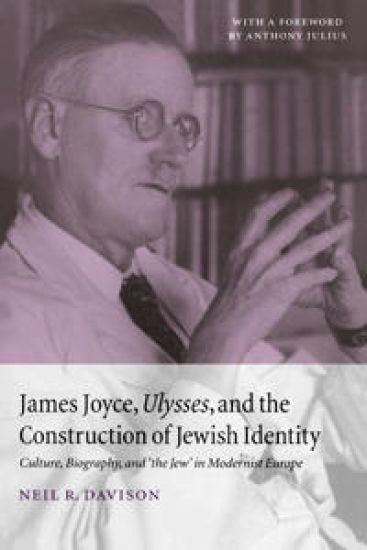
James Joyce, Ulysses, and the Construction of Jewish Identity

James Joyce, Ulysses, and the Construction of Jewish Identity

Neil R. Davison; Anthony Julius

Cambridge University Press
1998
pokkari
Representations of ‘the Jew’ have long been a topic of interest in Joyce studies. Neil Davison argues that Joyce’s lifelong encounter with pseudo-scientific, religious and political discourse about ‘the Jew’ forms a unifying component of his career. Davison offers new biographical material, and presents a detailed reading of Ulysses showing how Joyce draws on Christian folklore, Dreyfus Affair propaganda, Sinn Fein politics, and theories of Jewish sexual perversion and financial conspiracy. Throughout, Joyce confronts the controversy of ‘race’, the psychology of internalised stereotype, and the contradictions of fin-de-siècle anti-Semitism.
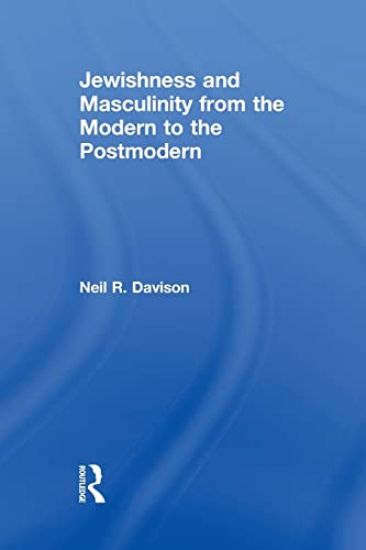
Jewishness and Masculinity from the Modern to the Postmodern
This study examines the impact of racial, gender, and religious constructs of Jewish masculinity on a select group of male writers including George Du Maurier, Theodor Herzl, Ernest Hemingway, James Joyce, and Philip Roth during the Modernist and Postmodern eras. In reading the work of these authors, Davison demonstrates how religious-based prejudices as well as doctrinal Judaic concepts were sustained in the discourse of race and gender surrounding "the Jew." The project engages a dynamic composed of the historically constitutive Jewish racial portrait, the psychosexual impact of that racial theory as internalized by Jewish males, and differing or conflicting discussions of Judaic-based gender and codes of male behavior. By focusing alternately on non-Jewish and Jewish writers, Davison explores how the racial/gender construct of "the feminized Jew" was pivotal to each in negotiating male-selfhood during his encounter with modernity. The study engages these issues during the Dreyfus era, within early Zionism, and in post-war High Modernism. In a final chapter on Roth, Davison explores how the author’s postmodernism remains tethered to Jewish history, liberalism, gender, and Judaic concepts.
Jewishness and Masculinity from the Modern to the Postmodern
This study examines the impact of racial, gender, and religious constructs of Jewish masculinity on a select group of male writers including George Du Maurier, Theodor Herzl, Ernest Hemingway, James Joyce, and Philip Roth during the Modernist and Postmodern eras. In reading the work of these authors, Davison demonstrates how religious-based prejudices as well as doctrinal Judaic concepts were sustained in the discourse of race and gender surrounding "the Jew." The project engages a dynamic composed of the historically constitutive Jewish racial portrait, the psychosexual impact of that racial theory as internalized by Jewish males, and differing or conflicting discussions of Judaic-based gender and codes of male behavior. By focusing alternately on non-Jewish and Jewish writers, Davison explores how the racial/gender construct of "the feminized Jew" was pivotal to each in negotiating male-selfhood during his encounter with modernity. The study engages these issues during the Dreyfus era, within early Zionism, and in post-war High Modernism. In a final chapter on Roth, Davison explores how the author’s postmodernism remains tethered to Jewish history, liberalism, gender, and Judaic concepts.