Kirjojen hintavertailu – 12 859 828 kirjaa ja 27 kauppaa

Kirjailija

Neil Rhodes

Kirjat ja teokset yhdessä paikassa: 8 kirjaa, julkaisuja vuosilta 2001–2021, suosituimpiin kuuluu Shakespeare and the Origins of English. Vertaile teosten hintoja ja tarkista saatavuus suomalaisista kirjakaupoista.

8 kirjaa

Kirjojen julkaisuvuodet: 2001–2021.

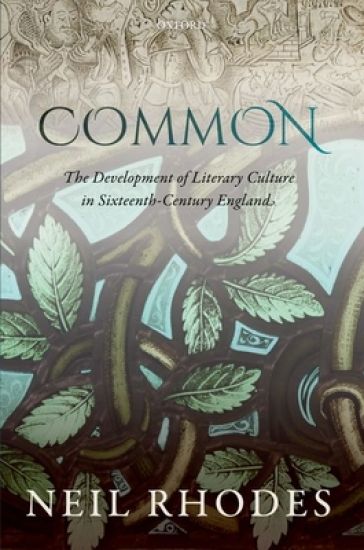
Common: The Development of Literary Culture in Sixteenth-Century England
This volume explores the development of literary culture in sixteenth-century England as a whole and seeks to explain the relationship between the Reformation and the literary renaissance of the Elizabethan period. Its central theme is the 'common' in its double sense of something shared and something base, and it argues that making common the work of God is at the heart of the English Reformation just as making common the literature of antiquity and of early modern Europe is at the heart of the English Renaissance. Its central question is 'why was the Renaissance in England so late?' That question is addressed in terms of the relationship between Humanism and Protestantism and the tensions between democracy and the imagination which persist throughout the century. Part One establishes a social dimension for literary culture in the period by exploring the associations of 'commonwealth' and related terms. It addresses the role of Greek in the period before and during the Reformation in disturbing the old binary of elite Latin and common English. It also argues that the Reformation principle of making common is coupled with a hostility towards fiction, which has the effect of closing down the humanist renaissance of the earlier decades. Part Two presents translation as the link between Reformation and Renaissance, and the final part discusses the Elizabethan literary renaissance and deals in turn with poetry, short prose fiction, and the drama written for the common stage.
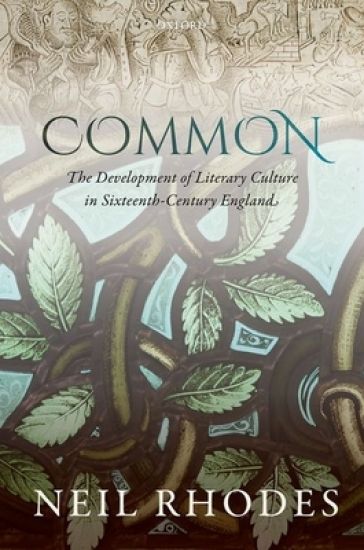
Common: The Development of Literary Culture in Sixteenth-Century England
This volume explores the development of literary culture in sixteenth-century England as a whole and seeks to explain the relationship between the Reformation and the literary renaissance of the Elizabethan period. Its central theme is the 'common' in its double sense of something shared and something base, and it argues that making common the work of God is at the heart of the English Reformation just as making common the literature of antiquity and of early modern Europe is at the heart of the English Renaissance. Its central question is 'why was the Renaissance in England so late?' That question is addressed in terms of the relationship between Humanism and Protestantism and the tensions between democracy and the imagination which persist throughout the century. Part One establishes a social dimension for literary culture in the period by exploring the associations of 'commonwealth' and related terms. It addresses the role of Greek in the period before and during the Reformation in disturbing the old binary of elite Latin and common English. It also argues that the Reformation principle of making common is coupled with a hostility towards fiction, which has the effect of closing down the humanist renaissance of the earlier decades. Part Two presents translation as the link between Reformation and Renaissance, and the final part discusses the Elizabethan literary renaissance and deals in turn with poetry, short prose fiction, and the drama written for the common stage.
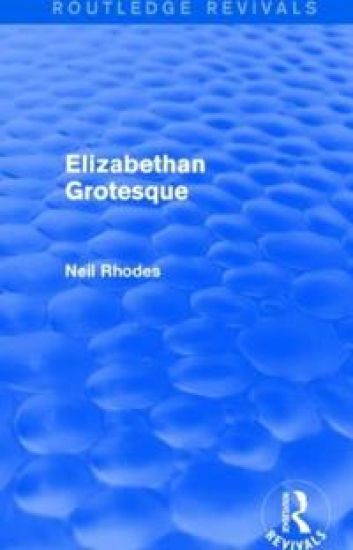
Elizabethan Grotesque (Routledge Revivals)
The comic grotesque is a powerful element in a great deal of Elizabethan literature, but one which has attracted scant critical attention. In this study, first published in 1980, Neil Rhodes examines the nature of the grotesque in late sixteenth-century culture, and shows the part it played in the development of new styles of comic prose and drama in Elizabethan England. In defining ‘grotesque’, the author considers the stylistic techniques of Rabelais and Aretino, as well as the graphic arts. He discusses the use of the grotesque in Elizabethan pamphlet literature and the early satirical journalists such as Nashe, and argues that their work in turn stimulated the growth of satirical drama at the end of the century. The second part of the book explains the importance of Nashe’s achievement for Shakespeare and Jonson, concluding that the linguistic resources of English Renaissance comedy are peculiarly – and perhaps uniquely – physical.
Shakespeare and the Origins of English

Shakespeare and the Origins of English

Neil Rhodes

Oxford University Press
2007
nidottu
What existed before there was a subject known as English? How did English eventually come about? Focusing specifically on Shakespeare's role in the origins of the subject, Neil Rhodes addresses the evolution of English from the early modern period up to the late eighteenth century. He deals with the kinds of literary and educational practices that would have formed Shakespeare's experience and shaped his work and traces the origins of English in certain aspects of the educational regime that existed before English literature became an established part of the curriculum. Rhodes then presents Shakespeare both as a product of Renaissance rhetorical teaching and as an agent of the transformation of English in the eighteenth century into the subject that emerged as the modern study of English. By transferring terms from contemporary disciplines, such as 'media studies' and 'creative writing', or the technology of computing, to earlier cultural contexts Rhodes aims both to invite further reflection on the nature of the practices themselves, and also to offer new ways of thinking about their relationship to the discipline of English. Shakespeare and the Origins of English attempts not only an explanation of where English came from, but suggests how some of the things that we do now in the name of 'English' might usefully be understood in a wider historical perspective. By extending our view of its past, we may achieve a clearer view of its future.
Shakespeare and the Origins of English

Shakespeare and the Origins of English

Neil Rhodes

Oxford University Press
2004
sidottu
What existed before there was a subject known as English? How did English eventually come about? Focusing specifically on Shakespeare's role in the origins of the subject, Rhodes addresses the evolution of English from the early modern period up to the late eighteenth century. He deals with the kinds of literary and educational practices that would have formed Shakespeare's experience and shaped his work and traces the origins of English in certain aspects of the educational regime that existed before English literature became an established part of the curriculum. Rhodes then presents Shakespeare both as a product of Renaissance rhetorical teaching and as an agent of the transformation of rhetoric in the eighteenth century into the subject that emerged as the modern study of English. By transferring terms from contemporary disciplines, such as 'media studies' and 'creative writing', or the technology of computing, to earlier cultural contexts Rhodes aims both to invite further reflection on the nature of the practices themselves, and also to offer new ways of thinking about their relationship to the discipline of English. Shakespeare and the Origins of English attempts not only an explanation of where English came from, but suggests how some of the things that we do now in the name of 'English' might usefully be understood in a wider historical perspective. By extending our view of its past, we may achieve a clearer view of its future.
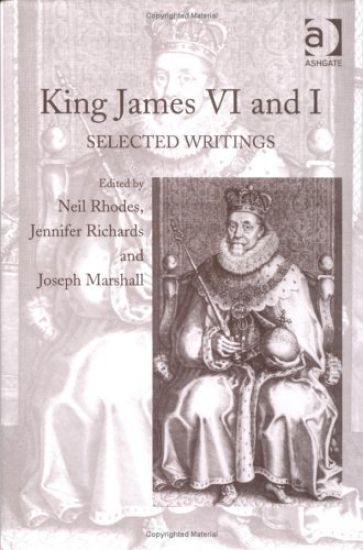
King James VI and I

King James VI and I

Neil Rhodes; Jennifer Richards

Ashgate Publishing Limited
2003
sidottu
'Yet hath it been ever esteemed a matter commendable to collect [works] together, and incorporate them into one body, that we may behold at once, what divers Off-springs have proceeded from one braine.' This observation from the Bishop of Winchester in his preface to King James's 1616 Workes is particularly appropriate, since James's writings cross the boundaries of so many different fields. While several other monarchs engaged in literary composition, King James VI and I stands out as 'an inveterate scribbler' and is certainly the most extensively published of all British rulers. King James VI and I provides a broad representative selection of King James's writings on a range of secular and religious topics. Each text is provided in full, creating an invaluable reference tool for 16th and 17th century scholars working in different disciplines and a fascinating collection for students and general readers interested in early modern history and literature. In contrast to other editions of James's writings, which have been confined to a single aspect of his work, the present edition brings together for the first time his poetry and his religious writing, his political works and his treatises on witchcraft and tobacco, in a single volume. What makes this collection of James's writings especially significant is the distinctiveness of his position as both writer and ruler, an author of incontestable authority. All his authorly roles, as poet, polemicist, theologian, political theorist and political orator are informed by this fact. James's writings were also inevitably influenced by the circumstances of his reigns and this volume reflects the turbulent issues of religion, politics and nationhood that troubled his three kingdoms.
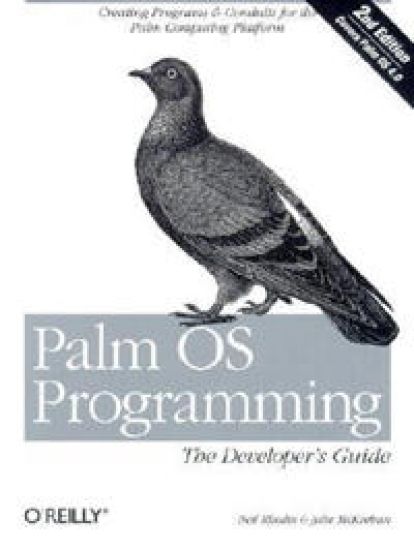
Palm OS Programming - The Developers Guide 2e

Palm OS Programming - The Developers Guide 2e

Neil Rhodes

O'Reilly Media, Inc, USA
2001
nidottu
With more than 16 million PDAs shipped to date, Palm has defined the market for handhelds, having dominated this class of computing devices ever since it began to outpace competitors six years ago. The company's strength is the Palm OS, and developers loyal to this powerful and versatile operating system have created more than 10,000 applications for it. Devices from Handspring, Sony, Symbol, HandEra, Kyocera, and Samsung now use Palm OS, and the number of registered Palm Developers has jumped to 130,000. If you know C or C++, and want to join those who are satisfying the demand for wireless applications, then Palm OS Programming: The Developer's Guide, Second Edition is the book for you. With expanded coverage of the Palm OS--up to and including the latest version, 4.0--this new edition shows intermediate to experienced C programmers how to build a Palm application from the ground up. There is even useful information for beginners. Everything you need to write a Palm OS application is here, from user interface design, to coding a handheld application, to writing an associated desktop conduit. All the major development environments are discussed, including commercial products such as Metroworks CodeWarrior, Java-based environments such as Sun KVM and IBM VisualAge Micro Edition, and the Free Software Foundation's PRC-Tools or GCC. The focus, however, is C programming with CodeWarrior and PRC-Tools. New additions to the second edition include: A tutorial that takes a C programmer through the installation of necessary tools and the creation of a small handheld application. A new chapter on memory, with a comprehensive discussion of the Memory Manager APIs. Greatly expanded discussions of forms, forms objects, and new APIs for the Palm OS. Updated chapters on conduits that reflect the newer Conduit Development Kit. The best-selling first edition of this book is still considered the definitive guide for serious Palm programmers; it's used as the basis of Palm's own developer training materials. Our expanded second edition promises to set the standard for the next generation of Palm developers.