Kirjojen hintavertailu – 12 903 725 kirjaa ja 27 kauppaa

Kirjailija

Neil Stephens

Kirjat ja teokset yhdessä paikassa: 3 kirjaa, julkaisuja vuosilta 2017–2018, suosituimpiin kuuluu Legalising Mitochondrial Donation. Vertaile teosten hintoja ja tarkista saatavuus suomalaisista kirjakaupoista.

3 kirjaa

Kirjojen julkaisuvuodet: 2017–2018.

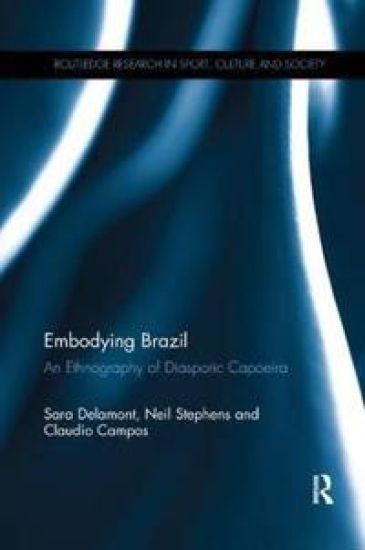
Embodying Brazil

Embodying Brazil

Sara Delamont; Neil Stephens; Claudio Campos

Routledge
2018
nidottu
The practice of capoeira, the Brazilian dance-fight-game, has grown rapidly in recent years. It has become a popular leisure activity in many cultures, as well as a career for Brazilians in countries across the world including the US, the UK, Canada and Australia. This original ethnographic study draws on the latest research conducted on capoeira in the UK to understand this global phenomenon. It not only presents an in-depth investigation of the martial art, but also provides a wealth of data on masculinities, performativity, embodiment, globalisation and rites of passage. Centred in cultural sociology, while drawing on anthropology and the sociology of sport and dance, the book explores the experiences of those learning and teaching capoeira at a variety of levels. From beginners’ first encounters with this martial art to the perspectives of more advanced students, it also sheds light on how teachers experience their own re-enculturation as they embody the exotic ‘other’. Embodying Brazil: An Ethnography of Diasporic Capoeira is fascinating reading for all capoeira enthusiasts, as well as for anyone interested in the sociology of sport, sport and social theory, sport, race and ethnicity, or Latin-American Studies.

Legalising Mitochondrial Donation

Legalising Mitochondrial Donation

Rebecca Dimond; Neil Stephens

Birkhauser Verlag AG
2018
sidottu
In 2015 the UK became the first country in the world to legalise mitochondrial donation, a controversial germ line reproductive technology to prevent the transmission of mitochondrial disease. Dimond and Stephens track the intense period of scientific and ethical review, public consultation and parliamentary debates preceeding the decision. They draw on stakeholder accounts and public documents to explore how patients, professionals, institutions and publics mobilised within ‘for’ and ‘against’ clusters, engaging in extensive promissory, emotional, bureaucratic, ethical, embodied and clinical labour to justify competing visions of an ethical future. They describe how this decision is the latest iteration of a UK sociotechnical imaginary in which the further liberalization of human embryo research and use is rendered legitimate and ethical through modes of consultation and permissive but strictly regulated licensing. Overall, this book presents a timely, multi-dimensional, and sociological account of a globally significant landmark in the history of human genetics, and will be relevant to those with an interest in genetics, Science, Technology and Society, the sociology of medicine, reproductive technology, and public policy debate.
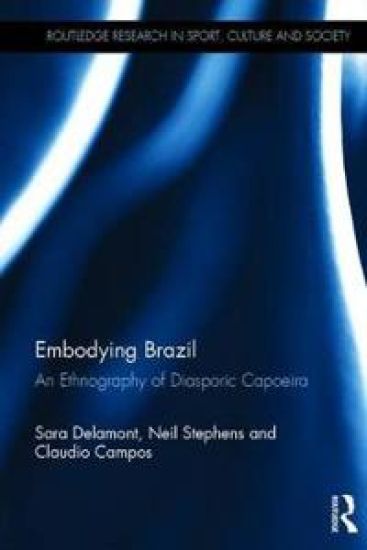
Embodying Brazil

Embodying Brazil

Sara Delamont; Neil Stephens; Claudio Campos

Routledge
2017
sidottu
The practice of capoeira, the Brazilian dance-fight-game, has grown rapidly in recent years. It has become a popular leisure activity in many cultures, as well as a career for Brazilians in countries across the world including the US, the UK, Canada and Australia. This original ethnographic study draws on the latest research conducted on capoeira in the UK to understand this global phenomenon. It not only presents an in-depth investigation of the martial art, but also provides a wealth of data on masculinities, performativity, embodiment, globalisation and rites of passage. Centred in cultural sociology, while drawing on anthropology and the sociology of sport and dance, the book explores the experiences of those learning and teaching capoeira at a variety of levels. From beginners’ first encounters with this martial art to the perspectives of more advanced students, it also sheds light on how teachers experience their own re-enculturation as they embody the exotic ‘other’. Embodying Brazil: An Ethnography of Diasporic Capoeira is fascinating reading for all capoeira enthusiasts, as well as for anyone interested in the sociology of sport, sport and social theory, sport, race and ethnicity, or Latin-American Studies.