Kirjojen hintavertailu – 12 903 725 kirjaa ja 27 kauppaa
Kirjailija
Nell K. Duke
Kirjat ja teokset yhdessä paikassa: 17 kirjaa, julkaisuja vuosilta 2005–2024, suosituimpiin kuuluu Literacy and the Youngest Learner. Vertaile teosten hintoja ja tarkista saatavuus suomalaisista kirjakaupoista.
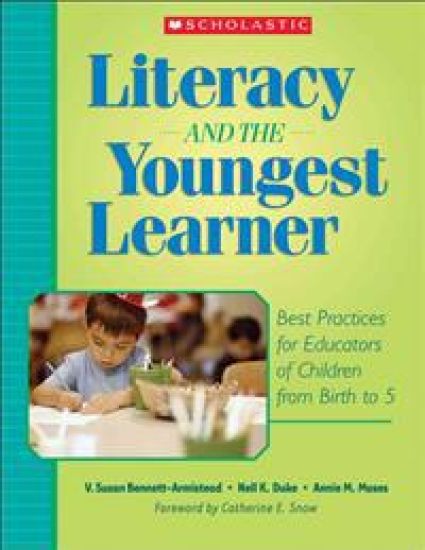
Research shows that literacy--the ability to listen, speak, read, and write - begins developing long before children enter elementary school. This book helps early childhood educators nurture that development. It begins with an argument for offering children literacy-rich activities and creating an environment for carrying out those activities. It then focuses on enjoyable and effective ways to build essential skills, such as oral language and phonemic awareness, and create dramatic play areas, book nooks, writing centers, and other literacy-rich spaces. Includes photographs, student work, and straight talk about kids and learning, Literacy and the Youngest Learner is destined to become a classic.
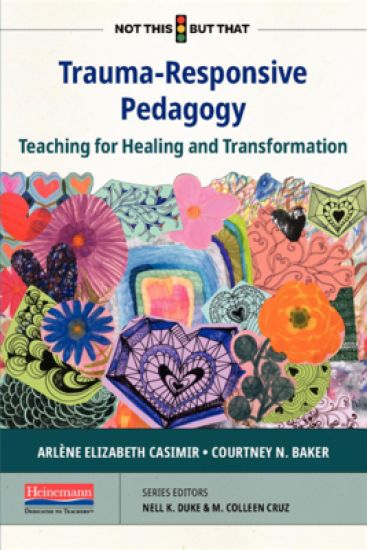
Trauma and adversity are increasingly common experiences for students and educators, with growing poverty, income inequality, social injustice, institutional inequity, and the global pandemic worsening the situation. Now more children are attending school while experiencing significant chronic and acute stressors. What can educators do to support students, help them learn, and ensure they reach their full potential? Trauma-informed schools are lauded as one way to address this challenge, but trauma-informed pedagogy can be hard to define and, consequently, difficult for teachers and schools to implement. Trauma-Responsive Pedagogy explores the research and practices around trauma-informed education in an easy-to-digest, actionable text that elevates the healing and wellness of both the children and the adults in our classrooms. It describes the challenges of a classroom that does not attend to adversity and trauma, then presents the research on trauma-responsive classrooms, and finally provides an inclusive framework that supports educators in centering the whole child in their classrooms--offering a recipe for what to do next period, next week, and next school year. Pedagogy that is trauma-responsive invites us to heal alongside our students while explicitly elevating evidence-informed teaching methods and practices and facilitating the necessary inner work to bring our whole being to the profession in healthy ways. Our students' challenges are not a deterrent to their learning. Together, we can turn wounds into wisdom.
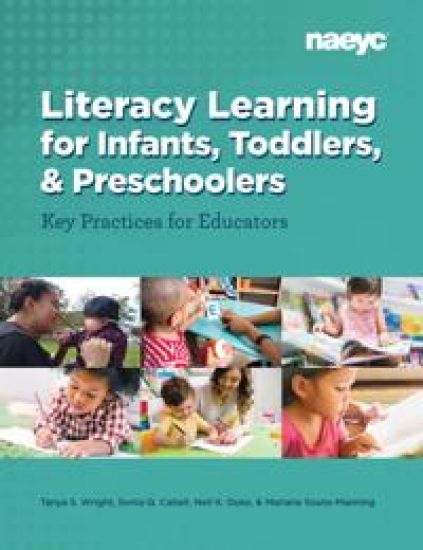
Spring 2023 Smart Book winners from the Academics' Choice Awards Literacy Learning begins at birth and continues throughout our lives! Birth to age 5 is a critical period in building the foundation for later success in reading and writing. Educators play a vital role in nurturing young children’s early language and literacy knowledge and skills. However, the specific practices that support literacy development in early childhood are often different than those used with older children. From some of the foremost early literacy development experts in the field comes this practical resource that is a must-have for all educators of infants, toddlers, and preschoolers. Using eight key practices—Knowing, Showing, Designing, Including, Engaging, Explaining, Observing, and Responding—as the framework, the authors discuss how educators can support five important areas of young children’s early literacy development: Language and knowledge Print concepts Sounds and letters Writing Text comprehension A range of features highlights information about these areas and practices, including the latest research findings, recommended resources, tips for integrating technology into play and learning, and more. With this book, explore how to create effective, appropriate, and fun learning opportunities for our littlest literacy learners.
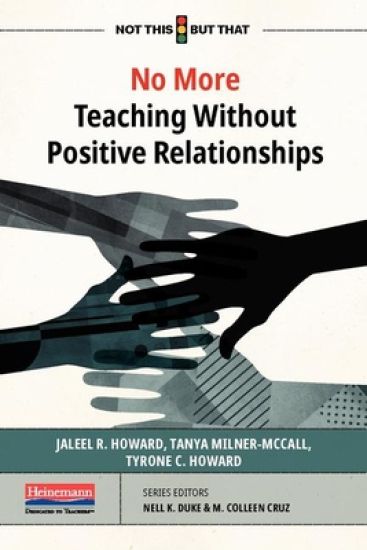
Teachers know the importance of strong relationships with their students, but sometimes connecting with them feels challenging. No More Teaching Without Positive Relationships reviews the teacher-student relationship research and provides practices for building relationships that make a difference. To learn, students need positive relationships with their teachers. So what gets in the way and how can we do better? Since there is no one way to make every relationship positive, authentic, sustainable, and trusting, the authors provide a range of strategies for building and maintaining connections with students. They also discuss critical considerations such as: Learning about students' backgrounds and interests Communicating with parents and caregivers Developing culturally responsive content Understanding the importance of race and ethnicity Building and protecting students' self-esteem Positive teacher-student relationships do not just transform student learning--they also create more stimulating and caring classrooms. A true relationship is dynamic, often requiring a change in behaviors and mindsets. It can be intense work, but it is the kind of work that can change a student's life.
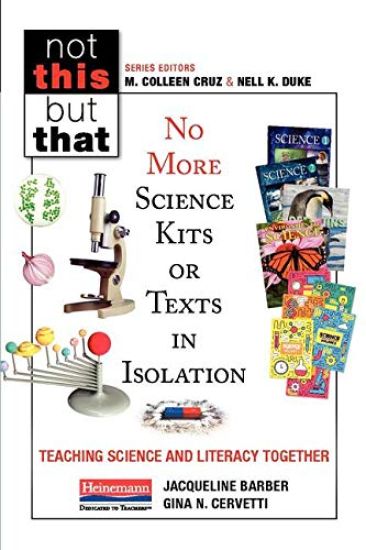
It is common to engage students in the process of science, using mostly hands-on activities, and equally common to provide students with only science knowledge through mostly text-based experiences. Neither of these approaches is authentic to how scientists make sense of the world. Both fail to connect those experiences to the larger purpose of science. In this book Jacquey and Gina show you why, and how integrating science and literacy instruction supports students' understanding of and engagement in both. Using research as their guide, Jacquey and Gina show you how to integrate science and literacy learning in a way that reflects the authentic ways scientists work. The authors have identified three key principles supporting this integration: Principle #1: Frame student investigations with a scientific purpose. Principle #2: Integrate "hands-on" science with literacy to support science learning. Principle #3: Help students engage with text in science. Throughout the book, they describe research that supports each principle and share examples of effective integration in the classroom that enhance students' science learning, reading and writing growth, and motivation. To avoid the trap of textbook-only science or inquiry-only science, we need to aim for synergy - engaging students in using firsthand experiences and text-based experiences as connected parts of investigating questions about the natural world.
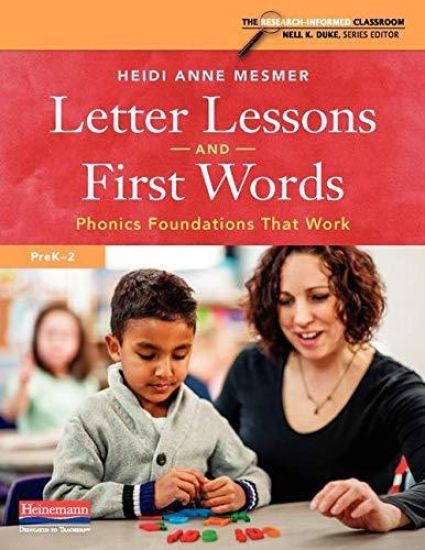
If you're not sure how phonics fits within your daily instruction, or crave a more effective process for teaching phonics, Heidi Anne Mesmer is here to help. In Letter Lessons and First Words, Heidi Anne provides a research-based vision of what lively, engaging phonics instruction can look like, along with practical, classroom-tested tools to make it happen in your classroom. Heidi Anne provides a one-stop shop for phonics instruction, including a clear scope and sequence of what to teach, a quick assessment to differentiate instruction, a simple lesson framework, and three activity-filled units matching key developmental milestones. More than twenty classroom videos bring the content to life, showing children working with letters, words, and books at various stages of learning. Additional resources include: A "know the code" chapter explaining English spelling (and online glossary) Answers to common questions Guidance about choosing books for readers at different stages new info about how children cognitively store words and why inductive tension is important. Isn't it time to re-imagine how you teach phonics? Letter Lessons and First Words will show you the way toward joyful instruction for today's classrooms. Read Heidi Anne's Blog post Developmentally Responsive Phonics Instruction: A Research-Based Approach
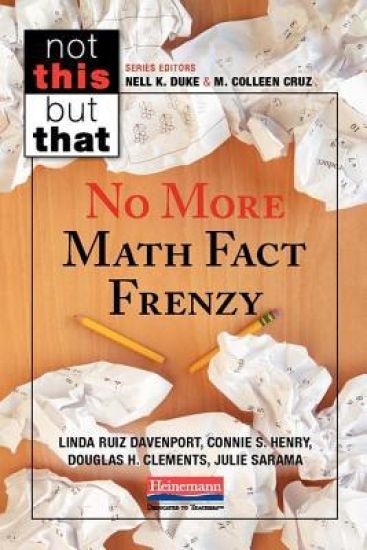
"Pencils ready? On your mark...get set...begin " Remember flipping over a page full of unrelated fact problems and scrambling to answer as many as possible in a minute? Remember trying to memorize math facts by rote? Many of our children are still asked to learn this way---even though research shows this approach can harm student learning more than help. Explore an effective, research-based approach to math fact instruction. No More Math Fact Frenzy examines this research and concludes that our approaches to math fact instruction are often ineffective. We want our students to know their math facts. We know they're better mathematicians when they're comfortable with them. Yet the ways we ask students to learn them in many classrooms remain unproductive. To address this, the authors outline three phases for helping students master their math facts. Building foundational concepts and strategies Learning more efficient reasoning strategies Meaningful, ongoing practice leading to full fact fluency Then they share recommendations for all three phrases: activities and games that build number sense, strategies that lead to flexible thinking, and ways to create and sustain a classroom culture of fluency. This kind of teaching helps students learn their math facts more successfully--and with less stress and anxiety. "When we emphasize foundation concepts and reasoning strategies as the path towards building authentic fluency, students can develop their number sense, articulate their thinking, and understand the reasoning of others." --Linda Ruiz Davenport, Connie S. Henry, Douglas H. Clements, and Julie Sarama
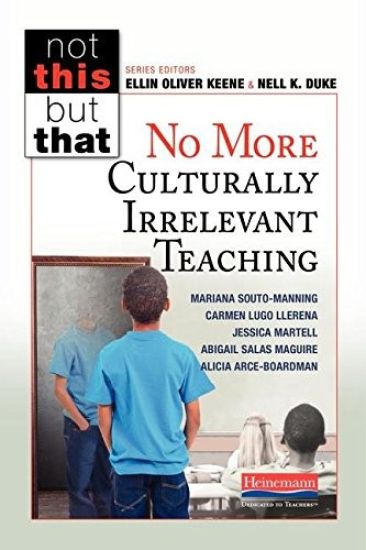
Every child is a cultural being with a unique history and rich cultural practices; a member of communities in and outside of school. Yet too many children spend their days inside classrooms where they rarely find their voices, values, and cultural practices reflected in curriculum materials, much less embraced and celebrated through instructional practices. Culturally relevant teaching is essential, now more than ever. If we want children to develop as successful learners, we must communicate that they belong in our classrooms. They need to see themselves, their cultures, their families, and their communities reflected in the materials and resources they find there. Culturally relevant teachers honor students' identities by positioning them at the center of teaching and learning. Each and every day, they make sure children and their families feel that they belong in school. They include multiple perspectives and points of view in the curriculum. In this book, four teachers who teach in richly diverse classrooms and have studied culturally relevant pedagogy for years with researcher Mariana Souto-Manning, share specific practices, strategies, and tools that make their teaching culturally relevant. Join the authors of No More Culturally Irrelevant Teaching and show your students that their lives do matter...in teaching, in learning, and in society.
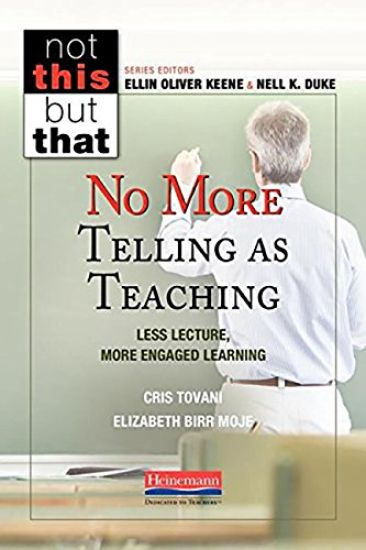
Congratulations to Cris Tovani, recipient of ILA's Adolescent Literacy Thought Leader Award 2017 The truth is, when we rely on lecture in an effort to cover content, we're doing students a disservice. Although lecture can be engaging and even useful, lecture alone cannot give kids real opportunities to learn, retain, and transfer the disciplinary ideas, skills, and practices we're trying to teach. Cris Tovani and Elizabeth Moje help us translate the time spent lecturing into powerful learning experiences where students interact and inquire into topics that matter. Their research-based alternatives help you create the conditions for engaging, relevant work that's inherently interesting and sparks critical thinking. Elizabeth Moje helps us understand the latest research on how people learn, and shows powerful evidence that teachers can increase student learning with more purposeful student participation. Veteran teacher and instructional coach Cris Tovani provides a practical model for instruction that's backed by the current research and puts student engagement at the center of your teaching. Her examples of problem-based learning activities include connections to national standards and topics that matter outside the classroom walls. Together, Elizabeth and Cris make a convincing argument that when we minimize teaching-as-telling and transition to planning for kids to do the work, student engagement soars--and so does learning.
Too often in classrooms, English Learners are described by what they cannot do, rather than by what they can do. Particularly in mainstream classrooms in which teachers have little or no training in how to meet their needs, ELs are seen through a deficit lens. In No More Low Expectations for English Learners, esteemed EL researcher Jana Echevarr a argues that teacher attitude affects student achievement, and describes what best practice methods for supporting ELs academic achievement look like. Julie Nora, an educator and advocate, offers strategies to provide the instructional supports ELs need for both language acquisition and content-area learning. Together, Julie and Jana provide a framework of understandings and practices to make you a more capable teacher of English Learners.
"When we give every student worksheets to learn phonics and spelling, we miss opportunities to get our students excited about words and fail to give them the opportunity to meet the high standards represented by the Common Core Standards. Our students need instruction that makes them think and helps them apply their word knowledge to real reading and writing situations." --Jennifer Palmer and Marcia Invernizzi We want students to be curious about how words work and develop strategies that work whether they are decoding words or spelling them. And our jobs would be easier if students couldn't wait for word study. Yet so many classrooms are stuck in the cycle of unengaging, one-size fits all phonics and spelling worksheets. Reading specialist Jennifer Palmer and literacy researcher Marcia Invernizzi offer better, more effective, more engaging practices. Their suggestions lead kids to not only make progress during word study but also to transfer what they learn about words to their reading and writing. No More Phonics and Spelling Worksheets show us: why skill-and-drill methods and worksheets cause children to struggle or disengage the kinds of teaching that research shows actually works instructional ideas for word study can put to use right away. "We can cast off one-size-fits-all factory instruction and try a more useful practice," write Jennifer and Marcia, "meeting each child where s/he is." Pick up No More Phonics and Spelling Worksheets, discover practices that better support literacy growth, and help everyone make progress.
Most teachers understand the importance of teaching children to read and write informational text. But how do they do it effectively? And in a way that is truly engaging? Nell K. Duke has the answer. With this book, she shows teachers how to build skills in reading and writing major informational text types-informative/explanatory, procedural/how-to, persuasive, nonfiction narrative, and biographical-through project-based instruction. Children read and write for real purposes and real audiences on topics that matter to them. In the process, they make a difference in the world. Drawing from the latest research, Duke explains how to design and carry out instruction, providing a blueprint for developing project-based units from start to finish-units that move children through a logical progression of phases: Project Launch, Reading and Research, Writing and Research, Revision and Editing, and Presentation and Celebration. Packed with clear, precise connections to Common Core State Standards, classroom-tested teaching ideas, and the work of practicing teachers and their students, this book will become an essential resource for years to come.
"Just as word learning is incremental, so is learning about vocabulary instruction. Teachers need exposure to research, best-practice strategies, and fellow practitioners." --Charlene Cobb and Camille Blachowicz The way we've learned influences the way we teach, but the vocabulary instruction many of us received--looking up words and writing sentences or completing worksheets-- just doesn't work. So what can we do instead? No More "Look Up the List" Vocabulary Instruction is your guide to engaging, research-proven practices for teaching words effectively. Practitioner Charlene Cobb and researcher Camille Blachowicz share why old-fashioned methods don't work, what the research shows does work, and how to put the research into action. Charlene and Camille answer teachers' most commonly asked questions about vocabulary instruction, including: How many words, and how do I select them? How can I foster student independence using dictionaries and glossaries? How do I find time for meaningful vocabulary instruction? How can I assess and hold students accountable? "Without practice in the full range of ways we use a word," write Charlene and Camille, "our word knowledge is limited and falls from our grasp as the next cycle of words enters." No More "Look Up the List" Vocabulary Instruction offers a solution--deepen students' engagement with words, increase their exposure to them, and expand their word knowledge.
"Reading and Writing Genre with Purpose in K-8 Classrooms adds a new dimension to genre studies that will engage students and re-invigorate teaching. The book sharpens our focus on student motivation, an essential yet often overlooked aspect of teaching. The authors offer an array of purposeful and creative ways to teach narrative, procedural, informational, dramatic, and persuasive texts, and bring us one step closer to the kinds of learner-centered instruction so necessary to succeed in a modern world." --Sharon Taberski, author of Comprehension from the Ground Up "Make room on your professional bookshelf for a much needed book You'll learn how to explicitly teach genre features and coach students as you establish meaningful writing purposes that inspire students to read. Not only do the authors provide solid guidelines for teaching genre in writing and reading, but they also invite you into classrooms to see how teachers and students create environments that engage all learners. And for each genre, you'll find lists of books to teach reading and writing " --Laura Robb, author of Teaching Middle School Writers "You can explicitly teach students what they need to know to comprehend and produce genres well while engaging students in captivating communicative experiences--in fact, you can do it better " --Nell K. Duke, Samantha Caughlan, Mary M. Juzwik, and Nicole M. Martin Too many U. S. classrooms lack a colorful compelling context for reading and writing, resulting in flat, uninspired, formulaic writing by students. Reading and Writing Genre with Purpose in K-8 Classrooms is designed to help pre- and inservice teachers, literacy coaches, and reading specialists question status quo ways of working with language and texts, replace weaker practices with better ones, and change the way genre is taught. Drawing from theory and research that suggests students learn better and more deeply when learning is contextualized and genuinely motivated, the book presents five guiding principles for teaching genre. Emphasizing purposeful communication, it will guide you through teaching students to read, write, speak, and listen to different real-world genres that inspire and engage them. Nell K. Duke, Samantha Caughlan, Mary M. Juzwik, and Nicole M. Martin identify commonly used assignments and practices for teaching genre that are fundamentally flawed and explain why offer inspiring alternative practices, grounded in research and illustrated in real projects in real classrooms show how the five guiding principles come to life in reading and writing projects across the whole K-8 grade span provide planning sheets and other tools and tips that will allow you to manage genre-with-purpose instruction in your classroom. This book is about teaching genre differently--with purpose. Reading and Writing Genre with Purpose in K-8 Classrooms will help you reinvigorate your teaching.
Based on her work over the last decade with more than 100 schools and visits to more than 5000 classrooms, Barbara Taylor shares her School Change in Reading (SCR) reform model in Catching Schools. At the heart of the reform model is the belief that student learning improves when teachers are supported with research-based, effective reading instruction and are given a way to work alongside one another to hone their teaching abilities. The end result: a collaborative school community, motivated teachers, and students who are successful, engaged readers. Taylor's action points to schoolwide reading improvement include: research-proven practices for teaching reading a model to put these practices into action for schoolwide reform in reading assessment practices to inform teaching collaborative meeting strategies and professional learning activities; including 100+ reproducibles for teachers and administrators. PLUS Video clips show lessons, coaching techniques, and staff discussions in action. Catching Schools provides processes around which other reforms can be carved. Improve student achievement and teacher effectiveness as you build a strong school community. With Catching Schools you'll be sure to catch your school before it falls behind.
"When we're true to children's developmental needs and know which books to put in their hands, good things fall into place. The key is to focus on the children and the practices we know help them to read at each grade level," says Barbara Taylor. These foundational beliefs have been the focus of Barbara Taylor's career and inspired her to create the Early Intervention in Reading (EIR) process. After more than two decades of classroom practice and refinement, Barbara Taylor has translated her EIR process into the Catching Readers series (Grades K, 1, 2, 3, and 4-5). Powerful Intervention Strategies for Your Classroom Daily, small-group interventions help struggling kindergarteners read on level by spring. Instruction focuses on word recognition, fluency, vocabulary and comprehension development. The use of trade books and leveled books reinforces and extends guided reading instruction. Live-from-the-classroom video clips show the lessons in action. Practical classroom-tested teaching tools include 100+ pages of reproducibles for teachers and students. Empowering Professional Development for Your School A clear consistent framework fosters schoolwide coherence and continuity. A month-by-month planning guide helps organize teaching across grade levels. The lessons in action video clips are ideal for group analysis. Dynamic Internet and consulting services support professional learning communities. Based on a Scientifically Proven Program The Early Intervention in Reading (EIR) program, developed by Barbara Taylor of the University of Minnesota, provides an in-class alternative to traditional pull-out remedial reading programs. It consists of supplemental instruction provided by the kindergarten classroom teacher rather than by other personnel. The program has been tested in several locales and has proven that teachers can intervene to support struggling readers. Click here to learn more about the EIR program. Click here to review EIR's efficacy studies, research base, and teacher evaluations. Click here to review the U. S. Department of Education What Works Clearinghouse Report. Click here to review EIR's "promising rating" by the Promising Practices Network.
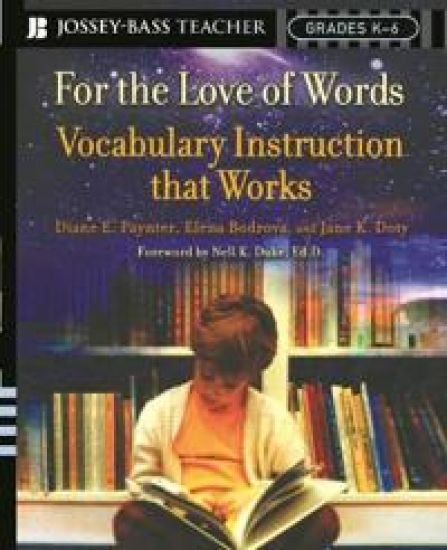
Many elementary students today have a reading and speaking vocabulary far below what is expected and necessary for their grade level. For the Love of Words offers teachers a practical and systematic instructional framework for helping students overcome “the vocabulary gap” so they can succeed academically, especially in reading comprehension. Unlike conventional “skill and drill” instruction, this approach helps students understand why a strong vocabulary is so critical for their success in reading and writing and develop strategies for learning new words based on the best of current research.

![Catching Schools: An Action Guide to Schoolwide Reading Improvement [With DVD]](/covers/9780325026589.jpg)
![Catching Readers, Grade 2: Day-By-Day Small-Group Reading Interventions [With DVD]](/covers/9780325028897.jpg)