Kirjojen hintavertailu – 12 859 827 kirjaa ja 27 kauppaa

Kirjailija

Neni Panourgia

Kirjat ja teokset yhdessä paikassa: 4 kirjaa, julkaisuja vuosilta 1996–2017, suosituimpiin kuuluu Primitive Man As Philosopher. Vertaile teosten hintoja ja tarkista saatavuus suomalaisista kirjakaupoista.

Nimi esiintyy myös muodoissa: Neni Panourgiá

4 kirjaa

Kirjojen julkaisuvuodet: 1996–2017.

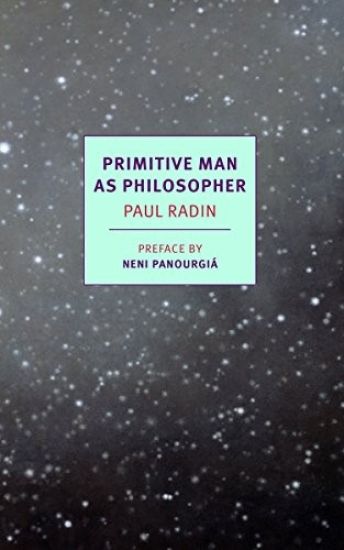
Primitive Man As Philosopher

Primitive Man As Philosopher

Neni Panourgia; Paul Radin

NYRB Classics
2017
nidottu
Anthropology is a science whose most significant discoveries have come when it has taken its bearings from literature, and what makes Paul Radin's Primitive Man as Philosopher a seminal piece of anthropological inquiry is that it is also a book of enduring wonder. Writing in the 1920s, when anthropology was still young, Radin set out to show that "primitive" cultures are as intellectually sophisticated and venturesome as any of their "civilized" counterparts. The basic questions about the structure of the natural world, the nature of right and wrong, and the meaning of life and death, as well as basic methods of considering the truth or falsehood of the answers those questions give rise to, are, Radin argues, recognizably consistent across the whole range of human societies. He rejects both the romantic myth of the noble savage and the rationalist dismissal of the primitive mind as essentially undeveloped, averring that the anthropologist and the anthropologist's subject meet on the same philosophical ground, and only when that is acknowledged can anthropology begin in earnest. The argument is clearly and forcibly made in pages that also contain an extraordinary collection of poems, proverbs, myths, and tales from a host of different cultures, making Primitive Man as Philosopher not only a lasting contribution to the discipline of anthropology but a unique, rich, and fascinating anthology, one that both illuminates and enlarges our imagination of the human.

Dangerous Citizens

Dangerous Citizens

Neni Panourgiá

Fordham University Press
2009
sidottu
This book simultaneously tells a story—or rather, stories—and a history. The stories are those of Greek Leftists as paradigmatic figures of abjection, given that between 1929 and 1974 tens of thousands of Greek dissidents were detained and tortured in prisons, places of exile, and concentration camps. They were sometimes held for decades, in subhuman conditions of toil and deprivation. The history is that of how the Greek Left was constituted by the Greek state as a zone of danger. Legislation put in place in the early twentieth century postulated this zone. Once the zone was created, there was always the possibility—which came to be a horrific reality after the Greek Civil War of 1946 to 1949—that the state would populate it with its own citizens. Indeed, the Greek state started to do so in 1929, by identifying ever-increasing numbers of citizens as "Leftists" and persecuting them with means extending from indefinite detention to execution. In a striking departure from conventional treatments, Neni Panourgiá places the Civil War in a larger historical context, within ruptures that have marked Greek society for centuries. She begins the story in 1929, when the Greek state set up numerous exile camps on isolated islands in the Greek archipelago. The legal justification for these camps drew upon laws reaching back to 1871—originally directed at controlling "brigands"—that allowed the death penalty for those accused and the banishment of their family members and anyone helping to conceal them. She ends with the 2004 trial of the Revolutionary Organization 17 November. Drawing on years of fieldwork, Panourgiá uses ethnographic interviews, archival material, unpublished personal narratives, and memoirs of political prisoners and dissidents to piece together the various microhistories of a generation, stories that reveal how the modern Greek citizen was created as a fraught political subject. Her book does more than give voice to feelings and experiences suppressed for decades. It establishes a history for the notion of indefinite detention that appeared as a legal innovation with the Bush administration. Part of its roots, Panourgiá shows, lie in the laboratory that Greece provided for neo-colonialism after the Truman Doctrine and under the Marshall Plan.
Dangerous Citizens

Dangerous Citizens

Neni Panourgiá

Fordham University Press
2009
pokkari
This book simultaneously tells a story—or rather, stories—and a history. The stories are those of Greek Leftists as paradigmatic figures of abjection, given that between 1929 and 1974 tens of thousands of Greek dissidents were detained and tortured in prisons, places of exile, and concentration camps. They were sometimes held for decades, in subhuman conditions of toil and deprivation. The history is that of how the Greek Left was constituted by the Greek state as a zone of danger. Legislation put in place in the early twentieth century postulated this zone. Once the zone was created, there was always the possibility—which came to be a horrific reality after the Greek Civil War of 1946 to 1949—that the state would populate it with its own citizens. Indeed, the Greek state started to do so in 1929, by identifying ever-increasing numbers of citizens as "Leftists" and persecuting them with means extending from indefinite detention to execution. In a striking departure from conventional treatments, Neni Panourgiá places the Civil War in a larger historical context, within ruptures that have marked Greek society for centuries. She begins the story in 1929, when the Greek state set up numerous exile camps on isolated islands in the Greek archipelago. The legal justification for these camps drew upon laws reaching back to 1871—originally directed at controlling "brigands"—that allowed the death penalty for those accused and the banishment of their family members and anyone helping to conceal them. She ends with the 2004 trial of the Revolutionary Organization 17 November. Drawing on years of fieldwork, Panourgiá uses ethnographic interviews, archival material, unpublished personal narratives, and memoirs of political prisoners and dissidents to piece together the various microhistories of a generation, stories that reveal how the modern Greek citizen was created as a fraught political subject. Her book does more than give voice to feelings and experiences suppressed for decades. It establishes a history for the notion of indefinite detention that appeared as a legal innovation with the Bush administration. Part of its roots, Panourgiá shows, lie in the laboratory that Greece provided for neo-colonialism after the Truman Doctrine and under the Marshall Plan.