Kirjojen hintavertailu – 12 859 818 kirjaa ja 27 kauppaa
Kirjailija
Ngaio Marsh
Kirjat ja teokset yhdessä paikassa: 84 kirjaa, julkaisuja vuosilta 1976–2026, suosituimpiin kuuluu Enter a Murderer. Vertaile teosten hintoja ja tarkista saatavuus suomalaisista kirjakaupoista.
Skolko stoil krepostnoj? Imel li on pravo zhenitsja ili na eto trebovalos odobrenie khozjaina? Vse li krepostnye byli bezgramotny? Avtor populjarnogo bloga na Jandeks. Dzen Nika Marsh daet otvety na eti i mnogie drugie voprosy o krepostnom prave v Rossii. V etoj knige vy ne najdete analiza sukhikh istoricheskikh faktov. Nika Marsh - master storitellinga. Kazhdyj fakt ili javlenie ona soprovozhdaet jarkimi, interesnymi, inogda tragicheskimi, a neredko - smeshnymi istorijami ljudej. Postepenno v etom kalejdoskope chuzhikh istorij chitatel nachinaet videt vpolne logichnyj ornament, a zatem ponimaet, chto zhizn krepostnykh v Rossii proshlogo imeet namnogo bolshe obschego s segodnjashnim dnem, chem khotelos by...
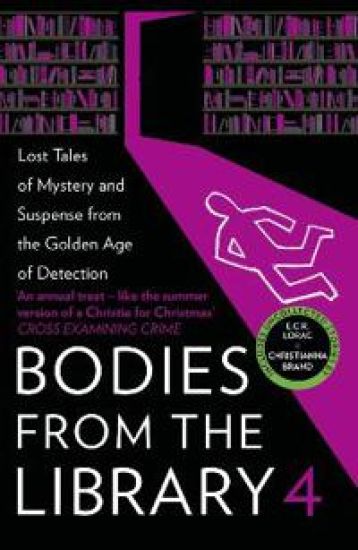
This annual anthology of rare stories of crime and suspense brings together tales from the Golden Age of Detective Fiction for the first time in book form, including a short novel by Christianna Brand. Mystery stories have been around for centuries—there are whodunits, whydunits and howdunits, including locked-room puzzles, detective stories without detectives, and crimes with a limited choice of suspects. Countless volumes of such stories have been published, but some are still impossible to find: stories that appeared in a newspaper, magazine or an anthology that has long been out of print; ephemeral works such as plays not aired, staged or screened for decades; and unpublished stories that were absorbed into an author’s archive when they died . . . Here for the first time are three never-before-published mysteries by Edmund Crispin, Ngaio Marsh and Leo Bruce, and two pieces written for radio by Gladys Mitchell and H. C. Bailey—the latter featuring Reggie Fortune. Together with a newly unearthed short story by Ethel Lina White that inspired Hitchcock’s The Lady Vanishes, and a complete short novel by Christianna Brand, this diverse mix of tales by some of the world’s most popular classic crime writers contains something for everyone. Complete with indispensable biographies by Tony Medawar of all the featured authors, the fourth volume in the series Bodies from the Library once again brings into the daylight the forgotten, the lost and the unknown.
Ngaio Marsh’s classic Christmas murder mystery in a special 50th anniversary edition. Christmas time in an isolated country house and, following a flaming row in the kitchen, there’s murder inside. When a much disliked visiting servant disappears without trace after playing Santa Claus, foul play is at once suspected – and foul play it proves to be. Only suspicion falls not on the staff but on the guests, all so unimpeachably respectable that the very thought of murder in connection with any of them seems almost heresy. When Superintendent Roderick Alleyn returns unexpectedly from a trip to Australia, it is to find his beloved wife in the thick of an intriguing mystery…
Dva opasnykh i uvlekatelnykh dela detektiva-intellektuala Roderika Allejna! Zamok Serebrjanoj Kozy, - obitel jazycheskoj sekty nekoego mistera Oberona i ego ekstsentrichnykh posledovatelnits, - polzuetsja v gorakh Frantsuzskoj Rivery durnoj slavoj. Odnako Roderik Allejn imeet vse osnovanija podozrevat, chto tam proiskhodjat veschi gorazdo opasnee samodelnykh ritualov, schedro pripravlennykh orgijami. I dejstvitelno: esche ne popav vnutr zamka, on sobstvennymi glazami vidit ubijstvo zhenschiny... Koloritnaja derevushka v anglijskoj glushi vekami chtit svoi traditsii, glavnaja iz kotorykh - drevnij i krasochnyj ritual "kazni Zimy", prazdnuemyj v noch Zimnego Solntsestojanija. Odnako traditsii traditsijami, no kogda ispolnitelja roli Zimy v samom dele nakhodjat obezglavlennym pri pomoschi ritualnogo mecha, - eto stanovitsja chereschur dlja mestnoj politsii. V igru vstupaet superintendant Roderik Allejn - neprevzojdennyj spetsialist po raskrytiju prestuplenij, v kotorykh vse ne tak, kak kazhetsja na pervyj vzgljad... Perevodchik: Poletskaja E., Voronezhskaja M.
This annual anthology of rare stories of crime and suspense brings together tales from the Golden Age of Detective Fiction for the first time in book form, including a short novel by Christianna Brand. Mystery stories have been around for centuries—there are whodunits, whydunits and howdunits, including locked-room puzzles, detective stories without detectives, and crimes with a limited choice of suspects. Countless volumes of such stories have been published, but some are still impossible to find: stories that appeared in a newspaper, magazine or an anthology that has long been out of print; ephemeral works such as plays not aired, staged or screened for decades; and unpublished stories that were absorbed into an author’s archive when they died . . . Here for the first time are three never-before-published mysteries by Edmund Crispin, Ngaio Marsh and Leo Bruce, and two pieces written for radio by Gladys Mitchell and H. C. Bailey—the latter featuring Reggie Fortune. Together with a newly unearthed short story by Ethel Lina White that inspired Hitchcock’s The Lady Vanishes, and a complete short novel by Christianna Brand, this diverse mix of tales by some of the world’s most popular classic crime writers contains something for everyone. Complete with indispensable biographies by Tony Medawar of all the featured authors, the fourth volume in the series Bodies from the Library once again brings into the daylight the forgotten, the lost and the unknown.
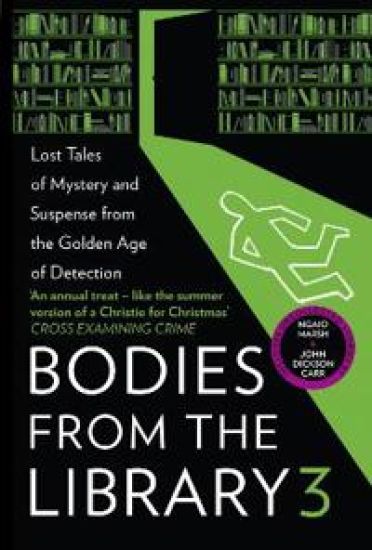
This anthology of rare stories of crime and suspense brings together 18 tales from the Golden Age of Detective Fiction for the first time in book form, including uncollected stories by Ngaio Marsh and John Dickson Carr. The Golden Age of detective fiction had begun inauspiciously with the publication of E. C. Bentley’s schismatic Trent’s Last Case in 1913, but it hit its stride in 1920 when both Agatha Christie and Freeman Wills Crofts – latterly crowned queen and king of the genre – had crime novels published for the first time. They ushered in two decades of exemplary mystery writing, the era of the whodunit, the impossible crime and the locked-room mystery, with stories that have thrilled and baffled generations of readers. This new volume in the Bodies from the Library series features the work of 18 prolific authors who, like Christie and Crofts, saw their popularity soar during the Golden Age. Aside from novels, they all wrote short fiction – stories, serials and plays – and although most of them have been collected in books over the last 100 years, here are the ones that got away… In this book you will encounter classic series detectives including Colonel Gore, Roger Sheringham, Hildegarde Withers and Henri Bencolin; Hercule Poirot solves ‘The Incident of the Dog’s Ball’; Roderick Alleyn returns to New Zealand in a recently discovered television drama by Ngaio Marsh; and Dorothy L. Sayers’ chilling ‘The House of the Poplars’ is published for the first time. With a full-length novella by John Dickson Carr and an unpublished radio script by Cyril Hare, this diverse collection concludes with some early ‘flash fiction’ commissioned by Collins’ Crime Club in 1938. Each mini story had to feature an orange, resulting in six very different tales from Peter Cheyney, Ethel Lina White, David Hume, Nicholas Blake, John Rhode and – in his only foray into writing detective fiction – the publisher himself, William Collins.
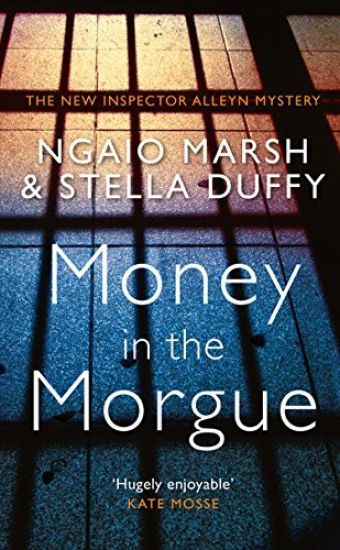
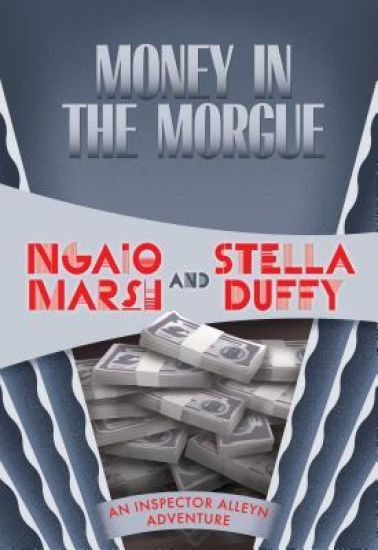
Roderick Alleyn is back in this unique crime novel begun by Ngaio Marsh during the Second World War and now completed by Stella Duffy in a way that has delighted reviewers and critics alike. Shortlisted for the CWA Historical Dagger Award 2018. It’s business as usual for Mr Glossop as he does his regular round delivering wages to government buildings scattered across New Zealand’s lonely Canterbury plains. But when his car breaks down he is stranded for the night at the isolated Mount Seager Hospital, with the telephone lines down, a storm on its way and the nearby river about to burst its banks. Trapped with him at Mount Seager are a group of quarantined soldiers with a serious case of cabin fever, three young employees embroiled in a tense love triangle, a dying elderly man, an elusive patient whose origins remain a mystery … and a potential killer. When the payroll disappears from a locked safe and the hospital’s death toll starts to rise faster than normal, can the appearance of an English detective working in counterespionage be just a lucky coincidence – or is something more sinister afoot?
Inspector Alleyn just wants to write a letter to his wife, but World War II, for one, keeps intruding. It's war-work, after all, that has brought Alleyn to this seedy hospital in New Zealand's hinterlands, and it's the war that has left the hospital swimming in convalescing soldiers - noisy, often drunk, and always over-interested in the nurses. Nor is the weather helping. A storm has killed the electrical power, leaving Alleyn, the soldiers, the medical staff and all stranded in the dark...with a murderer. It's a good thing for everyone, including the reader, that there's a Scotland Yard detective on hand. Dame Ngaio Marsh died in 1982 after writing 32 "Inspector Alleyn" novels and a few chapters of Money in the Morgue. The manuscript has been brilliantly completed by Stella Duffy, who shares with Marsh an expertise in crime-fiction, a New Zealand background, a passion for the theatre, and an Order of the British Empire. Marsh fans who have longed for just one more of Alleyn's adventures will be delighted, and new readers will enjoy the introduction to Marsh, long hailed as one of the "four queens" of classic British mystery.
As in her previous book, Grave Mistake, Ngaio Marsh offers up a lady of a certain age, high-strung and hyperventilating, two ticks short of neurosis. Photo Finish's dead diva, the soprano Isabella Sommita, was widely loathed, so much so that the problem is less a lack of plausible suspects than an embarrassment of options. Though the grand country-house - and with it, the country-house murder - was history by 1980, when Photo Finish was originally published, Dame Ngaio got around the problem by setting the story on a lavish island estate, cut off from the mainland by a sudden storm. Happily, Inspector Alleyn is among the guests, and can take charge in the coppers' absence. The penultimate book in the series, Photo Finish is also one of only four books set in Marsh's native New Zealand. It's nice to think that she came home at the end.
Ricky Alleyn - perhaps you know his father, Roderick? - first appeared in Spinsters in Jeopardy, as a child. He's now 21, and has taken himself off to a secluded island to write a novel. Or think about writing a novel. Or look for distractions so he can avoid writing a novel. The distractions abound, mostly in the form of colorful local characters (and a rather dishy one), so all is beer and skittles (well, except for the novel) until Ricky stumbles across a murder and then gets himself kidnapped. Which is too bad for Ricky (and the murder-victim), but dandy for the reader, as it brings Inspector Alleyn to the island, and he's on top form. A subtheme involving drug-running may strike a jarring note, but remember, Last Ditch was first published in 1977, and as such, it offers a remarkable look at what happens when the characters and conventions of the Golden Age fetch up in the distinctly tarnished present.
There will always be an England, and in the world of traditional crime fiction, there will always be an Upper Quintern, the sort of Little English Village that is home mostly to the very rich and the servants who make their lives delightful. But Sybil Foster's life is not delightful, even if she does have an extremely talented gardener. Exhausted from her various family stresses - a daughter, for instance, who wants to marry a man without a title! - Sybil takes herself off to a local hotel that specializes in soothing shattered nerves. When she's killed, Inspector Alleyn has a real puzzler on his hands: Yes, she was silly, snobbish, and irritating. But if that were enough motive for murder, half of England would be six feet under.
Ng'ombwana is a (fictional) African nation to have emerged in the wake of colonialism; as it happens, its President is Inspector Alleyn's old school chum, the "Boomer." Old school ties being what they are, the Boomer-making an official visit to London-insists that Alleyn handle his security, rather than Her Majesty's Special Branch. The Special Branch is not best pleased about this, as the Boomer is known to have some very deadly enemies, and the threats only increase when the Ng'ombwanan ambassador is killed. Happily for the Boomer, not only is Alleyn up to the task, but he is assisted by the rescued cat Lucy Lockett, who may have lost her pocket but proves extremely adept at finding clues.
It's 1972, and while Elton John and Alice Cooper may be topping the charts, Inspector Alleyn's latest case is set in that most gloriously retro environment: The country-house party. A Christmas party, as it happens, where Agatha Troy is enjoying the local holiday pageant and also painting the host's portrait. The painting's coming along fine, but the pageant goes a little pear-shaped when one of the players disappears. Could one of the party's eccentric guests (are there any other kind?) have been involved? Or-perhaps more likely-could the finger of blame come to rest on one of the manor-house servants, each of whom happens to be a recent prison parolee? What luck! Inspector Alleyn is on hand to wrap up the questions into the perfect Christmas parcel.
In 1968 Ngaio Marsh took her own Roman holiday (in part to research Italian police procedures) and the change seems to have done her good: Both her British and U. S. agents believed When in Rome to be the finest novel in her "Inspector Alleyn" series. As is so often (and so satisfyingly) the case, the tale concerns a murder within a closed group-in this case, a group of tourists visiting what Marsh calls the "Basilica di San Tommaso," who find themselves fumbling into a complex web of blackmail and drug-smuggling. Adding some irresistible color are depictions of both La Dolce Vita (of which Marsh took a jaundiced view) and the student radicals of the day, whom she seems to have found somewhat more persuasive. All in all, a brilliant example of classic Golden Age plotting melded with a decidedly Space Age cast.
We do love a man in a uniform, but the "Constables" in question are not policemen but paintings-the landscapes, specifically, of the 19th-century painter John Constable. Agatha Troy (the artist wife, you'll remember, of Inspector Alleyn) has a special fondness for Constable's work, so she jumps at the chance to take a river-cruise through "Constable Country" in the east of England. Her enthusiasm dims a little when it becomes clear that the ticket became available at the last minute only because a previous passenger was murdered in his cabin-and murdered, it seems, by a notorious international criminal known as the "Jampot." (How we long for the days when notorious international criminals had really cute names.)
The elderly Emily Pride is perfectly pleased to have inherited an island, even if her starchy pragmatism is ever-so-faintly appalled by the "Pixie Falls" spring and its reported miraculous healing properties. But really, the locals' attempts to capitalize on the "miracles" are entirely too tacky-Ye Olde Gift Shoppe, the neon signs...not on Miss Emily's watch, thank you. Of course, the locals are not exactly thrilled to give up their trade (Pixie Falls may be merely be known for healing warts, it's true, but you take your shillings where you can find them). Could their frustration have bubbled up into murderous rage? Inspector Alleyn will have to sort it out. And this time, it's personal.
The impresario Peregrine Jay has fulfilled a long-cherished dream: Thanks to a very generous gift, he now owns the Dolphin Theatre, and has restored it to its former glory. To celebrate the re-opening, a no-expenses-spared production of The Glove, a new play about the discovery of a true Shakespearean accessory. London's chattering classes are abuzz with gossip about the theatre, rumors about Peregrine, critiques of the play. But when murder takes center-stage, everyone gets very quiet, and only Inspector Alleyn can persuade them to start chattering again-this time, with a purpose.