Kirjojen hintavertailu – 12 859 818 kirjaa ja 27 kauppaa

Kirjailija

Nic Cheeseman

Kirjat ja teokset yhdessä paikassa: 10 kirjaa, julkaisuja vuosilta 2015–2026, suosituimpiin kuuluu Authoritarian Africa. Vertaile teosten hintoja ja tarkista saatavuus suomalaisista kirjakaupoista.

10 kirjaa

Kirjojen julkaisuvuodet: 2015–2026.

The Rise of Authoritarian Middle-Powers and What It Means for World Politics

The Rise of Authoritarian Middle-Powers and What It Means for World Politics

Marie-Eve Desrosiers; Nic Cheeseman

Cambridge University Press
2026
nidottu
In recent years a group of influential authoritarian states has emerged that fall between the ranks of great powers and small states. These authoritarian middle-powers – such as Turkey and the United Arab Emirates – exert considerable influence, particularly in their region. Yet this development has been overlooked in favor of a focus on superpowers, especially China and Russia. We therefore lack a framework for understanding their behavior and impact. This Element offers the first comprehensive analysis of how non-democratic middle-powers engage abroad. Drawing on case studies of states and regions, it shows how the combination of authoritarian politics and mid-level status leads to distinctive foreign policies. In particular, these approaches erode global democratic norms and institutions through a combination of hard power tempered by hedging and legitimation strategies. In this way, authoritarian middle-powers are helping to unravel the liberal rules-based order. This title is available as Open Access on Cambridge Core.

The Rise of Authoritarian Middle-Powers and What It Means for World Politics

The Rise of Authoritarian Middle-Powers and What It Means for World Politics

Marie-Eve Desrosiers; Nic Cheeseman

Cambridge University Press
2026
sidottu
In recent years a group of influential authoritarian states has emerged that fall between the ranks of great powers and small states. These authoritarian middle-powers – such as Turkey and the United Arab Emirates – exert considerable influence, particularly in their region. Yet this development has been overlooked in favor of a focus on superpowers, especially China and Russia. We therefore lack a framework for understanding their behavior and impact. This Element offers the first comprehensive analysis of how non-democratic middle-powers engage abroad. Drawing on case studies of states and regions, it shows how the combination of authoritarian politics and mid-level status leads to distinctive foreign policies. In particular, these approaches erode global democratic norms and institutions through a combination of hard power tempered by hedging and legitimation strategies. In this way, authoritarian middle-powers are helping to unravel the liberal rules-based order. This title is available as Open Access on Cambridge Core.

How to Rig an Election

How to Rig an Election

Nic Cheeseman; Brian Klaas

YALE UNIVERSITY PRESS
2024
pokkari

Halvin toimitettuna 22,20 €

An engrossing guide to fraudulent elections around the world—fully updated to mark the biggest election year in history in 2024, as over four billion people cast their votes Contrary to popular belief, authoritarian leaders who hold elections are generally able to remain in power for longer. Nic Cheeseman and Brian Klaas show us how they do so, exploring election-rigging strategies including gerrymandering and ballot-box stuffing, voter suppression, and fake news. Documenting pseudo-democratic methods from Argentina and Zimbabwe to Brazil, Nigeria, Russia, and the United States, they offer a sobering view of corrupted political process—while offering hope for future solutions.
The Moral Economy of Elections in Africa

The Moral Economy of Elections in Africa

Nic Cheeseman; Gabrielle Lynch; Justin Willis

Cambridge University Press
2021
sidottu
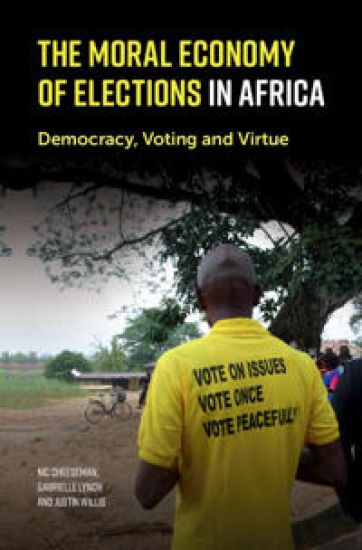
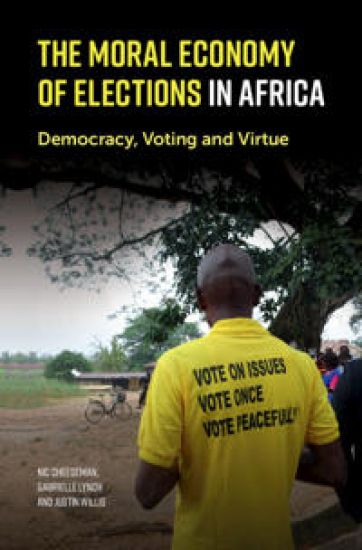
Do elections turn people into democratic citizens? Elections have long been seen as a way to foster democracy, development and security in Africa, with many hoping that the secret ballot would transform states. Adopting a new approach that focusses on the moral economy of elections, Nic Cheeseman, Gabrielle Lynch and Justin Willis show how elections are shaped by competing visions of what it means to be a good leader, bureaucrat or citizen. Using a mixed-methods study of elections in Ghana, Kenya and Uganda, they explore moral claims made by officials, politicians, civil society, international observers and voters themselves. This radical new lens reveals that elections are the site of intense moral contestation, which helps to explain why there is such vigourous participation in processes that often seem flawed. Demonstrating the impact of these debates on six decades of electoral practice, they explain why the behaviour of those involved so frequently transgresses national law and international norms, as well as the ways in which such transgressions are evaluated and critiqued – so that despite the purported significance of 'vote-buying', the candidates that spend the most do not always win.
The Moral Economy of Elections in Africa

The Moral Economy of Elections in Africa

Nic Cheeseman; Gabrielle Lynch; Justin Willis

Cambridge University Press
2021
pokkari
Do elections turn people into democratic citizens? Elections have long been seen as a way to foster democracy, development and security in Africa, with many hoping that the secret ballot would transform states. Adopting a new approach that focusses on the moral economy of elections, Nic Cheeseman, Gabrielle Lynch and Justin Willis show how elections are shaped by competing visions of what it means to be a good leader, bureaucrat or citizen. Using a mixed-methods study of elections in Ghana, Kenya and Uganda, they explore moral claims made by officials, politicians, civil society, international observers and voters themselves. This radical new lens reveals that elections are the site of intense moral contestation, which helps to explain why there is such vigourous participation in processes that often seem flawed. Demonstrating the impact of these debates on six decades of electoral practice, they explain why the behaviour of those involved so frequently transgresses national law and international norms, as well as the ways in which such transgressions are evaluated and critiqued – so that despite the purported significance of 'vote-buying', the candidates that spend the most do not always win.
Coalitional Presidentialism in Comparative Perspective

Coalitional Presidentialism in Comparative Perspective

Paul Chaisty; Nic Cheeseman; Timothy J. Power

Oxford University Press
2020
nidottu
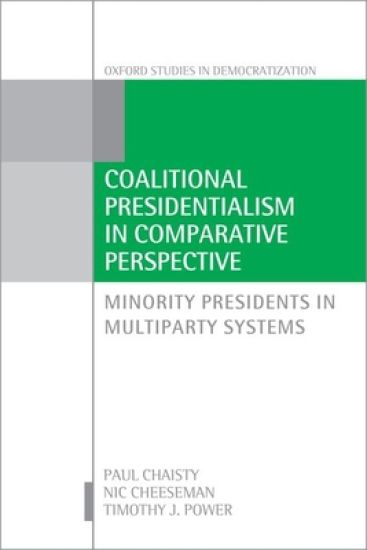
This book provides the first cross-regional study of an increasingly important form of politics: coalitional presidentialism. Drawing on original research of minority presidents in the democratising and hybrid regimes of Armenia, Benin, Brazil, Chile, Ecuador, Kenya, Malawi, Russia, and Ukraine, it seeks to understand how presidents who lack single party legislative majorities build and manage cross-party support in legislative assemblies. It develops a framework for analysing this phenomenon, and blends data from MP surveys, detailed case studies, and wider legislative and political contexts, to analyse systematically the tools that presidents deploy to manage their coalitions. The authors focus on five key legislative, cabinet, partisan, budget, and informal (exchange of favours) tools that are utilised by minority presidents. They contend that these constitute the 'toolbox' for coalition management, and argue that minority presidents will act with imperfect or incomplete information to deploy tools that provide the highest return of political support with the lowest expenditure of political capital. In developing this analysis, the book assembles a set of concepts, definitions, indicators, analytical frameworks, and propositions that establish the main parameters of coalitional presidentialism. In this way, Coalitional Presidentialism in Comparative Perspective provides crucial insights into this mode of governance. Oxford Studies in Democratization is a series for scholars and students of comparative politics and related disciplines. Volumes concentrate on the comparative study of the democratization process that accompanied the decline and termination of the cold war. The geographical focus of the series is primarily Latin America, the Caribbean, Southern and Eastern Europe, and relevant experiences in Africa and Asia. The series editor is Laurence Whitehead, Senior Research Fellow, Nuffield College, University of Oxford.
Authoritarian Africa

Authoritarian Africa

Nic Cheeseman; Jonathan Fisher

Oxford University Press Inc
2019
nidottu
For more than seventy years, authoritarian rule was the dominant form of government in sub-Saharan Africa. Three-quarters of African states have experienced some form of one-party or military rule since 1945. Accessible and engaging, Authoritarian Africa: Repression, Resistance, and the Power of Ideas is the first book to examine this subject from a historical perspective. Exploring the history and legacy of authoritarianism in Africa--from the colonial era until the onset of democracy in the early 1990s--it introduces students to the variety of authoritarian regimes that have existed on the continent, including one-party states, military rule, and personal dictatorships. This unique text also provides essential new insights, revising the traditional "story" of African authoritarianism by drawing on primary source materials (from songs to statistics) to provide a fresh, original perspective. Looking at what sustained authoritarian rule in Africa over more than a century, the authors consider the phenomenon on its own terms--not simply as a way station on the road to democracy--and in the context of the continent's social, political, intellectual, and economic history.
Coalitional Presidentialism in Comparative Perspective

Coalitional Presidentialism in Comparative Perspective

Paul Chaisty; Nic Cheeseman; Timothy J. Power

Oxford University Press
2018
sidottu
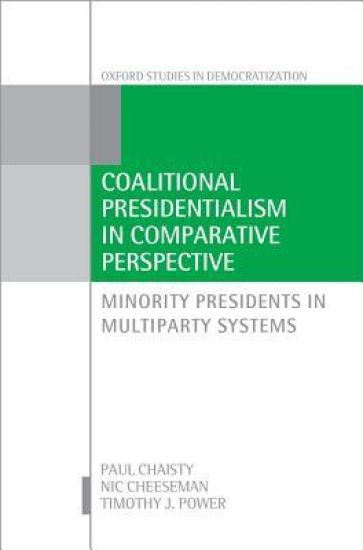
This book provides the first cross-regional study of an increasingly important form of politics: coalitional presidentialism. Drawing on original research of minority presidents in the democratising and hybrid regimes of Armenia, Benin, Brazil, Chile, Ecuador, Kenya, Malawi, Russia, and Ukraine, it seeks to understand how presidents who lack single party legislative majorities build and manage cross-party support in legislative assemblies. It develops a framework for analysing this phenomenon, and blends data from MP surveys, detailed case studies, and wider legislative and political contexts, to analyse systematically the tools that presidents deploy to manage their coalitions. The authors focus on five key legislative, cabinet, partisan, budget, and informal (exchange of favours) tools that are utilised by minority presidents. They contend that these constitute the 'toolbox' for coalition management, and argue that minority presidents will act with imperfect or incomplete information to deploy tools that provide the highest return of political support with the lowest expenditure of political capital. In developing this analysis, the book assembles a set of concepts, definitions, indicators, analytical frameworks, and propositions that establish the main parameters of coalitional presidentialism. In this way, Coalitional Presidentialism in Comparative Perspective provides crucial insights into this mode of governance. Oxford Studies in Democratization is a series for scholars and students of comparative politics and related disciplines. Volumes concentrate on the comparative study of the democratization process that accompanied the decline and termination of the cold war. The geographical focus of the series is primarily Latin America, the Caribbean, Southern and Eastern Europe, and relevant experiences in Africa and Asia. The series editor is Laurence Whitehead, Senior Research Fellow, Nuffield College, University of Oxford.
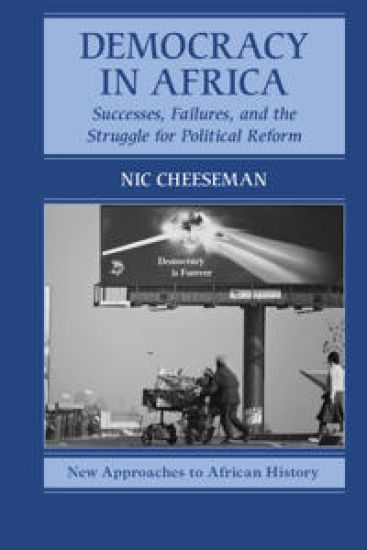
Democracy in Africa

Democracy in Africa

Nic Cheeseman

Cambridge University Press
2015
sidottu
This book provides the first comprehensive overview of the history of democracy in Africa and explains why the continent's democratic experiments have so often failed, as well as how they could succeed. Nic Cheeseman grapples with some of the most important questions facing Africa and democracy today, including whether international actors should try and promote democracy abroad, how to design political systems that manage ethnic diversity, and why democratic governments often make bad policy decisions. Beginning in the colonial period with the introduction of multi-party elections and ending in 2013 with the collapse of democracy in Mali and South Sudan, the book describes the rise of authoritarian states in the 1970s; the attempts of trade unions and some religious groups to check the abuse of power in the 1980s; the remarkable return of multiparty politics in the 1990s; and finally, the tragic tendency for elections to exacerbate corruption and violence.
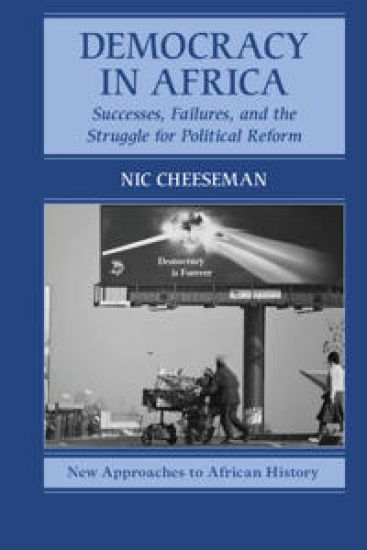
Democracy in Africa

Democracy in Africa

Nic Cheeseman

Cambridge University Press
2015
pokkari
This book provides the first comprehensive overview of the history of democracy in Africa and explains why the continent's democratic experiments have so often failed, as well as how they could succeed. Nic Cheeseman grapples with some of the most important questions facing Africa and democracy today, including whether international actors should try and promote democracy abroad, how to design political systems that manage ethnic diversity, and why democratic governments often make bad policy decisions. Beginning in the colonial period with the introduction of multi-party elections and ending in 2013 with the collapse of democracy in Mali and South Sudan, the book describes the rise of authoritarian states in the 1970s; the attempts of trade unions and some religious groups to check the abuse of power in the 1980s; the remarkable return of multiparty politics in the 1990s; and finally, the tragic tendency for elections to exacerbate corruption and violence.