Kirjojen hintavertailu – 12 903 725 kirjaa ja 27 kauppaa

Kirjailija

Nicholas Berdyaev

Kirjat ja teokset yhdessä paikassa: 18 kirjaa, julkaisuja vuosilta 1960–2021, suosituimpiin kuuluu The Fate Of Man In The Modern World. Vertaile teosten hintoja ja tarkista saatavuus suomalaisista kirjakaupoista.

18 kirjaa

Kirjojen julkaisuvuodet: 1960–2021.

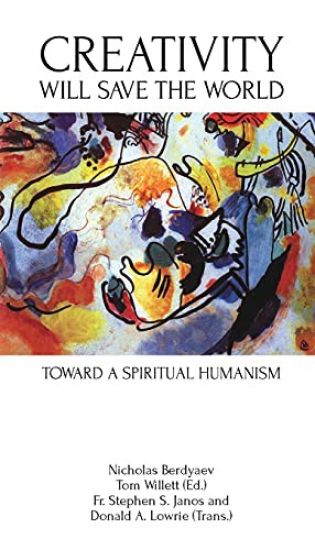
Creativity Will Save the World

Creativity Will Save the World

Nicholas Berdyaev

Alva Addison
2021
pokkari
Nicholas Alexandrovich Berdyaev (1874-1948) was a Russian philosopher and activist who changed the philosophical, aesthetic and religious landscape of the 20th century. The author of more than 15 books and nominated for the Nobel Prize in Literature seven times, he spoke in a new way about the centrality of creativity to what it means to be human. In 1922, along with other elite representatives of Russian culture, science and theology, Berdyaev was exiled from Russia by the Soviet authorities on the renown "Philosophers' Ship." For the rest of his life he lived in an expatriate who dreamed of returning to his homeland. In his seminal work, The Meaning of the Creative Act, which contains in raw form all of his dominant and formative ideas, he noted that "the importance and the interesting aspect in humans is connected with the opening up in them of the path towards the Infinite and the Eternal, with the possibility of breaking through. Creativeness is a transition beyond the limits of this world." Creativity Will Save the World presents the most evocative sections of The Meaning... along with excerpts from other Berdyaev books and articles in which he further elucidates his main theme that "God calls us to creative activity and to a creative answer to God's love." To those who aspire to the privileged and terrifying role of "artist," and to the rest of us who simply desire to practice a more humane spirituality and a more spiritual humanism, this book is dedicated. Tom Willett (1950- ) is an American musician, entertainment industry executive, educator and author who has been involved in the creation and marketing of more than 300 award-winning record albums. His work has been cited in "Billboard," "Rolling Stone," the "L. A. Times," "Entertainment Weekly" and Image Journal. He is the creator of Van Gogh to Go, a 3-volume series presenting van Gogh's most evocative quotes and paintings about art, work and spirituality, plus the online project, Into The Mystic. From the Editor"Throughout my career as a musician, booking agent, artist manager, Artist & Repertoire executive, marketing VP, educator, and author I have felt compelled to attempt to fashion, for lack of a better term, a 'Rock and Roll Theological Aesthetic.' By that I do not mean a philosophy of religious art per se, but an exploration into how great art, even popular music, by its sheer originality and excellence, can transport the listener from the here-and-now to what seems another realm, another place, another way of being. To quote The Door's Jim Morrison, I marvel at how compelling expressions of creativity can help us 'break on through to the other side.' To that I would add the wisdom of Mssrs. Jagger and Richards, 'I know it's only Rock and Roll, but I like it.'"For your consideration as 'Patron Saint of the New Spiritual Humanism, ' may I suggest Nicholas Berdyaev."
Sub specie aeternitatis: Articles Philosophic, Social and Literary (1900-1906)
1st English translation from Russian: the Russian religious philosopher Nicholas Berdyaev's 1907 book, "Sub specie aeternitatis: Articles Philosophic, Social and Literary (1900-1906)", is a sbornik collection 1900-1906 journal articles penned by him. It is among the earliest of his books, and as such serves as key to elements in his thought in this early period. Berdyaev's fundamental motifs of freedom, the person, creativity, spirit -- are already quite evident, and further advanced by his rediscovery research into the thought of significant often obscure thinkers, both Russian and foreign. Berdyaev in a number of his books similarly recycled previously published journal articles; "Sub specie aeternitatis" is however untypical in that the selection of articles is arranged chronological, rather than seemingly randomly. Historical understanding of the time is also helpful: turn of the century Russia, its defeat in the 1904-5 Russo-Japanese War, "Bloody Sunday" (22 January 1905), the failed 1905 "Russian Revolution" and the reactionary aftermath from its excesses. And against this setting there is also the intellectual and cultural setting. Berdyaev's 1907 book addresses an array of subjects. In this, he is part of a larger movement of creative minds having forsaken the dictates of crude materialism in favour of Philosophic Idealism, and its implications. There are profound critiques of positivist Rationalism and the German Neo-Kantianism (Rickert, Cohen, Windelband), and the need for ontological realism in place of ungrounded gnosseology. Several articles deal with Marxism and its descent into a totalitarian pseudo-religion governing all aspects of life. In another, we gain Berdyaev's insights on the unprecedented Intelligentsia-Church "Peterburg Religio-Philosophic Gatherings" at the turn of the century. There are studies of significant forgotten figures from the past, such as Khomyakov and Leont'ev -- each of whom Berdyaev will later write a book. Other profound figures. "Tragedy" as regards Nietzsche and an insightful view into the dramatic works of Maurice Maeterlinck. The L. Shestov article involving tragedy echoes the existentialist angst in man's condition, the tragedy of the concrete human person. Some of the articles relate to Russian issues of the time, and yet others remain timeless in their relation to our modern situation today -- cultural, political, social, intellectual, indeed spiritual, in search for valid groundings to the meaning in life, in more than hollow slogans. Berdyaev's Latin title, "Sub specie aeternitatis", might perhaps be loosely translated in context as -- "With an eye towards the aspect of eternity", -- and that for everyone caught up in the grueling quest for one's "daily bread", that even in the uncommon instances of a surfeit of "daily bread", there mustneeds be something more, to "life"... This is the first appearance of Berdyaev's 1907 book, "Sub specie aeternitatis", in English translation. It represents yet another hitherto unavailable work within the continuing series of our efforts at translation of neglected primary texts in Russian Religious Philosophy, under the imprint of "frsj Publications".
Sub specie aeternitatis: Articles Philosophic, Social and Literary (1900-1906)
1st English translation from Russian: the Russian religious philosopher Nicholas Berdyaev's 1907 book, "Sub specie aeternitatis: Articles Philosophic, Social and Literary (1900-1906)", is a sbornik collection 1900-1906 journal articles penned by him. It is among the earliest of his books, and as such serves as key to elements in his thought in this early period. Berdyaev's fundamental motifs of freedom, the person, creativity, spirit -- are already quite evident, and further advanced by his rediscovery research into the thought of significant often obscure thinkers, both Russian and foreign. Berdyaev in a number of his books similarly recycled previously published journal articles; "Sub specie aeternitatis" is however untypical in that the selection of articles is arranged chronological, rather than seemingly randomly. Historical understanding of the time is also helpful: turn of the century Russia, its defeat in the 1904-5 Russo-Japanese War, "Bloody Sunday" (22 January 1905), the failed 1905 "Russian Revolution" and the reactionary aftermath from its excesses. And against this setting there is also the intellectual and cultural setting. Berdyaev's 1907 book addresses an array of subjects. In this, he is part of a larger movement of creative minds having forsaken the dictates of crude materialism in favour of Philosophic Idealism, and its implications. There are profound critiques of positivist Rationalism and the German Neo-Kantianism (Rickert, Cohen, Windelband), and the need for ontological realism in place of ungrounded gnosseology. Several articles deal with Marxism and its descent into a totalitarian pseudo-religion governing all aspects of life. In another, we gain Berdyaev's insights on the unprecedented Intelligentsia-Church "Peterburg Religio-Philosophic Gatherings" at the turn of the century. There are studies of significant forgotten figures from the past, such as Khomyakov and Leont'ev -- each of whom Berdyaev will later write a book. Other profound figures. "Tragedy" as regards Nietzsche and an insightful view into the dramatic works of Maurice Maeterlinck. The L. Shestov article involving tragedy echoes the existentialist angst in man's condition, the tragedy of the concrete human person. Some of the articles relate to Russian issues of the time, and yet others remain timeless in their relation to our modern situation today -- cultural, political, social, intellectual, indeed spiritual, in search for valid groundings to the meaning in life, in more than hollow slogans. Berdyaev's Latin title, "Sub specie aeternitatis", might perhaps be loosely translated in context as -- "With an eye towards the aspect of eternity", -- and that for everyone caught up in the grueling quest for one's "daily bread", that even in the uncommon instances of a surfeit of "daily bread", there mustneeds be something more, to "life"... This is the first appearance of Berdyaev's 1907 book, "Sub specie aeternitatis", in English translation. It represents yet another hitherto unavailable work within the continuing series of our efforts at translation of neglected primary texts in Russian Religious Philosophy, under the imprint of "frsj Publications".
Aleksei Stepanovich Khomyakov

Aleksei Stepanovich Khomyakov

Nicholas Berdyaev

Frsj Publications
2018
nidottu
1st English Translation from Russian: "Aleksei Stepanovich Khomyakov" is an insightful book penned in 1912 by the eminent Russian religious philosopher, Nicholas Berdyaev (1874-1948). Under the perspective of "Khomyakov and us", the book explores, at depth and with extensive quotes, details of Khomyakov's life and thought. The book presents a number of ironies. A. S. Khomyakov was a central intellectual figure within the current of classical Slavophilism, which is typically glossed over for students of Russian thought as a conservative defense of the backwardness of the old Russian lifestyle; Khomyakov's view of Europe, however, as "the land of holy wonders" explodes this calumny. Rather, it is an Europe which is to be deeply engaged in accord with the Russian national psyche, not merely parroting the West. Khomyakov thus reworked Hegel and Schelling into a philosophy of "concrete idealism" based upon "an integral wholeness of life". The Slavophils supported the Russian Autocracy, but Khomyakov was regarded as a "dangerous man" by the tsar's functionaries. Khomyakov grounded Autocracy upon historical an event, when the Russian people peacefully and in accord chose Mikhail Romanov and his descendants to "assume the burden of rule". In this was a "poison pill". Khomyakov was an avid supporter of the Orthodox Church, but his theological writings were not allowed to be published, and had to be printed abroad, in French. Freedom, authentic freedom was a core tenet of the Slavophil conservatism, rendering them incompatible for employ by the bureaucracy, which they detested. Unlike the later leftist Narodniki (Populists), who were weighed down by a sense of guilt and alienation from the "narod/people", the Slavophils sensed themself at one with "the people". The Orthodox Church was central a motif in Slavophil thought. Khomyakov saw the inner essence of the Church as comprising "love and freedom". Against papal pretensions he coined the concept of Sobornost', a vision of true catholicity grounded in communality, based not upon force and blind obedience, but rather upon authentic love and freedom, as any true community must be. Khomyakov discerned within history two distinct and conflicting creative types. The Kushite type creates massive works in mute stone, in objectified and depersonalising materiality, and relates to reality in fetish magical an attitude. The Iranian (Zoroastrian Persian) is otherwise, reflecting the inward freedom and fluid plasticity of life in the human word and consciousness of "person", and is most manifest within Judaism and in Christianity. Berdyaev is critical of Khomyakov on various points: reliance upon a static and outmoded lifestyle, their apocalyptic deafness to the imperative "Thy Kingdom Come" of the "Our Father" prayer, an insensitivity to the mystical dynamics of the sacraments and mysticism in general, and a blind hostility to the religious heritage of Roman Catholicism and the Romance peoples, apart from the issue of the papacy. But there resonates strongly within Berdyaev his already existing core motifs of person, freedom, creativity, spirit, which are apparent there as well in Khomyakov's thought, in embryonic a form. All this renders Khomyakov as revolutionary in spirit under conservative a guise. A curious paradox quite ironic This echoes in spirit also the famous saying by St Alexander Nevsky: "Not in power is God, but in truth". This is the first appearance of Berdyaev's 1912 book, "Aleksei Stepanovich Khomyakov", in an English translation. It represents yet another hitherto unavailable work within our continuing series of efforts at translation of primary texts in Russian Religious Philosophy, under the imprint of "frsj Publications".
The Crisis of Art

The Crisis of Art

Nicholas Berdyaev

Frsj Publications
2018
nidottu
1st English translation from the Russian: "The Crisis of Art", an insightful booklet of 47 pages by the Russian religious philosopher Nicholas Berdyaev in 1918, originally comprised 3 articles. The present English text has been expanded into 9 related articles written by Berdyaev during this period, arranged into a threefold triadic schema. The 1st triad of articles in the present text are those contained in the original 1918 Russian text. The cover article, "The Crisis of Art", serving also as title to the booklet, examines cultural trends in art, both visual and literary, such as Symbolism, Decadentism, Cubism, Futurism (Filippo Marinetti) with mention of now obscure figures as Chiurlenis. Both "Picasso" visually and A. Bely's 1916 "Peterburg" novel give expression to the disintegrative features of the modern consciousness. The second triad of articles concern the Russian cultural figure, Vyacheslav Ivanov, mentioned in the initial article, concerning the lost aspect of "theurgy" in art, and attempts to recapture this in light of Nietzsche's Dionysianism. A "culture" as such in its dynamic youthful origins developes from within the "cultus", the "religious cult", and later ossifies losing its vitality. But such attempts at recapturing this initial experience typically prove artificial, prove to be mere "affectations of culture", of the genuine "experience", in Berdyaev's critique of Vyach. Ivanov. The third triad of articles further addresses this defect. The article on A. Bely's 1910 novel, "The Silver Dove", is a chilling account of a member of the Russian intelligentsia, intellectually very sophisticated but empty of soul and bearing, becoming involved with a Russian Khlysty-like sect, "the Doves". The second article, written abroad in 1923, addresses A. Bely's reminiscences of the Russian poet Aleksandr Blok (died 1921), and a failure at a "discerning of spirits" among the cultural element. The final Berdyaev article, on the obscure French Catholic figure L on Bloy (died 1917), is the most engagingly unique in our text. Written in 1914, for nearly a century until 2005, this was the only source written in Russian on L. Bloy, and nigh impossible to find, but a treasure to peruse. Bloy is in ways considered final representative of a decadentist French literary cultural trend, whose names are unfamiliar to most. But L. Bloy is characteristic of no trend, nor would any trend be comfortable having him. Roughly contemporary to Nietzsche, he bears similarities with Nietzsche, but whereas Nietzsche retreated into lofty isolation, L. Bloy took the "low road" into the bourgeois muck of life. He is a man obsessed with the Absolute, with the "existential man", with the unrepeatable unique fate and destiny of each person, concerning which it is only for God to judge. At first impression he provokes and repels, he is an irascible and impossible fellow, an obsessive with uncouth words and mannerisms. But on second thought, as Berdyaev notes, he is typical of the Russian "holy fools" of old, and we come to feel fascination that we have encountered the perspicacity of a seer. He is a man at the extreme, one relying on no tomorrow or the day after, and his obsession at times borders on the demonic, as Berdyaev notes, requiring a "discerning of spirits". His intuition of the "aloneness" of both God and the individual person is unique. Bloy's critique of the "bourgeois" is not the typical socio-political label of ideologues, but a pervasively profound "metaphysics of bourgeoisness". L on Bloy richly deserves further study as a significant French Catholic personalist and existentialist philosophic figure, which Berdyaev's article invites. The 10th article appended in our text was not penned by Berdyaev; rather, it suggests the threefold triadic structure to our text, symbolically. The present book is part of a continuing series of works of Russian religious philosophy in 1st English translation.
The Crisis of Art

The Crisis of Art

Nicholas Berdyaev

Frsj Publications
2018
sidottu
1st English translation from the Russian: "The Crisis of Art", an insightful booklet of 47 pages by the Russian religious philosopher Nicholas Berdyaev in 1918, originally comprised 3 articles. The present English text has been expanded into 9 related articles written by Berdyaev during this period, arranged into a threefold triadic schema. The 1st triad of articles in the present text are those contained in the original 1918 Russian text. The cover article, "The Crisis of Art", serving also as title to the booklet, examines cultural trends in art, both visual and literary, such as Symbolism, Decadentism, Cubism, Futurism (Filippo Marinetti) with mention of now obscure figures as Chiurlenis. Both "Picasso" visually and A. Bely's 1916 "Peterburg" novel give expression to the disintegrative features of the modern consciousness. The second triad of articles concern the Russian cultural figure, Vyacheslav Ivanov, mentioned in the initial article, concerning the lost aspect of "theurgy" in art, and attempts to recapture this in light of Nietzsche's Dionysianism. A "culture" as such in its dynamic youthful origins developes from within the "cultus", the "religious cult", and later ossifies losing its vitality. But such attempts at recapturing this initial experience typically prove artificial, prove to be mere "affectations of culture", of the genuine "experience", in Berdyaev's critique of Vyach. Ivanov. The third triad of articles further addresses this defect. The article on A. Bely's 1910 novel, "The Silver Dove", is a chilling account of a member of the Russian intelligentsia, intellectually very sophisticated but empty of soul and bearing, becoming involved with a Russian Khlysty-like sect, "the Doves". The second article, written abroad in 1923, addresses A. Bely's reminiscences of the Russian poet Aleksandr Blok (died 1921), and a failure at a "discerning of spirits" among the cultural element. The final Berdyaev article, on the obscure French Catholic figure L on Bloy (died 1917), is the most engagingly unique in our text. Written in 1914, for nearly a century until 2005, this was the only source written in Russian on L. Bloy, and nigh impossible to find, but a treasure to peruse. Bloy is in ways considered final representative of a decadentist French literary cultural trend, whose names are unfamiliar to most. But L. Bloy is characteristic of no trend, nor would any trend be comfortable having him. Roughly contemporary to Nietzsche, he bears similarities with Nietzsche, but whereas Nietzsche retreated into lofty isolation, L. Bloy took the "low road" into the bourgeois muck of life. He is a man obsessed with the Absolute, with the "existential man", with the unrepeatable unique fate and destiny of each person, concerning which it is only for God to judge. At first impression he provokes and repels, he is an irascible and impossible fellow, an obsessive with uncouth words and mannerisms. But on second thought, as Berdyaev notes, he is typical of the Russian "holy fools" of old, and we come to feel fascination that we have encountered the perspicacity of a seer. He is a man at the extreme, one relying on no tomorrow or the day after, and his obsession at times borders on the demonic, as Berdyaev notes, requiring a "discerning of spirits". His intuition of the "aloneness" of both God and the individual person is unique. Bloy's critique of the "bourgeois" is not the typical socio-political label of ideologues, but a pervasively profound "metaphysics of bourgeoisness". L on Bloy richly deserves further study as a significant French Catholic personalist and existentialist philosophic figure, which Berdyaev's article invites. The 10th article appended in our text was not penned by Berdyaev; rather, it suggests the threefold triadic structure to our text, symbolically. The present book is part of a continuing series of works of Russian religious philosophy in 1st English translation.
Astride the Abyss of War and Revolutions: Articles 1914-1922
The present text, "Astride the Abyss of War and Revolutions: Articles 1914-1922" represents 1st English translation and publication of an extensive sbornik/collection of 98 articles (numerically, about 20% of the total corpus of his works) by the eminent Russian religious philosopher Nicholas Berdyaev, regarding societal, political, cultural and religious matters, which remain of great continuing critical importance for our modern world. The historical period covered spans Russia's entry into WWI, the challenges of upholding the war effort, the collapse of the Old Regime under the rot of Rasputinism, and the subsequent two 1917 "Russian Revolutions". First was the "February Revolution", the inherently unstable attempt by wartime Russia to create a democratic republic under Kerensky's Provisional Government, a brief moment of freedom, of "freedom of the word and thought", which in turn was undermined by ideological societal agitation for an ever continued "deepening of the Revolution", not merely political but societal. Berdyaev argues that there can be no true "social revolution" without a radical inner transformation of the human person; revolution as such is destructively non-creative a process and but reflects a continuation of the old poison under new guises. Russia under the revolutionary fervour merely replaced Rasputin with Lenin, and the pogrom-minded Black Hundredists mentality with a pogrom-minded Red Hundredists mentality... The second 1917 "Russian Revolution", the "October Revolution", occurred with Lenin's Bolshevik-Marxist coup. Our text hints at rumours, even then, of Germany's hand in foisting Lenin upon Russia to sabotage the war effort. Instead of freedom, Lenin's Communism proclaimed a "dictatorship of the proletariat". There is a truism that revolutions ultimately devour their makers, whether in 1939 under Stalin, or in the century long revolutionary movements in Russia that saw their ultimate climax and demise in these years of bloody anarchy and Civil War. Much of Berdyaev's writings of this later period will be published only abroad, with his 1922 banishment from Russia, -- such as his fiery tome, "The Philosophy of Inequality". Our present text may be considered part of the current Centenary interest into WWI, the "Great War", and its tragic aftermath of residual effects, which have continued through subsequent traumatic events to quake the quietude of modern life. As in the dynamics of any classical tragedy, and gifted with historical hindsight, we are beset with the paralysis of terror at the impending fated disasters that are to ensue, and thus share in the healing process of catharsis. Berdyaev has proactive and creative an understanding of the Russian religio-philosophic theme of "God-manhood", grounded upon the ontological concept of person, in authentic freedom at spiritual a depth. Berdyaev's sympathy with the thought of N. F. Fedorov suggests a "Memory Eternal" to all who have perished, that their lives and struggles have not been in vain, and opens a path to transcend the alienation within modern man. The "Table of Contents" for the present text, as well as for other books under the imprint of "frsj Publications", may be found at the website berdyaev.com, qv. This is another in our series of providing primary texts of Russian Religious Philosophy in 1st English translation.
Astride the Abyss of War and Revolutions: Articles 1914-1922
The present text, "Astride the Abyss of War and Revolutions: Articles 1914-1922" represents 1st English translation and publication of an extensive sbornik/collection of 98 articles (numerically, about 20% of the total corpus of his works) by the eminent Russian religious philosopher Nicholas Berdyaev, regarding societal, political, cultural and religious matters, which remain of great continuing critical importance for our modern world. The historical period covered spans Russia's entry into WWI, the challenges of upholding the war effort, the collapse of the Old Regime under the rot of Rasputinism, and the subsequent two 1917 "Russian Revolutions". First was the "February Revolution", the inherently unstable attempt by wartime Russia to create a democratic republic under Kerensky's Provisional Government, a brief moment of freedom, of "freedom of the word and thought", which in turn was undermined by ideological societal agitation for an ever continued "deepening of the Revolution", not merely political but societal. Berdyaev argues that there can be no true "social revolution" without a radical inner transformation of the human person; revolution as such is destructively non-creative a process and but reflects a continuation of the old poison under new guises. Russia under the revolutionary fervour merely replaced Rasputin with Lenin, and the pogrom-minded Black Hundredists mentality with a pogrom-minded Red Hundredists mentality... The second 1917 "Russian Revolution", the "October Revolution", occurred with Lenin's Bolshevik-Marxist coup. Our text hints at rumours, even then, of Germany's hand in foisting Lenin upon Russia to sabotage the war effort. Instead of freedom, Lenin's Communism proclaimed a "dictatorship of the proletariat". There is a truism that revolutions ultimately devour their makers, whether in 1939 under Stalin, or in the century long revolutionary movements in Russia that saw their ultimate climax and demise in these years of bloody anarchy and Civil War. Much of Berdyaev's writings of this later period will be published only abroad, with his 1922 banishment from Russia, -- such as his fiery tome, "The Philosophy of Inequality". Our present text may be considered part of the current Centenary interest into WWI, the "Great War", and its tragic aftermath of residual effects, which have continued through subsequent traumatic events to quake the quietude of modern life. As in the dynamics of any classical tragedy, and gifted with historical hindsight, we are beset with the paralysis of terror at the impending fated disasters that are to ensue, and thus share in the healing process of catharsis. Berdyaev has proactive and creative an understanding of the Russian religio-philosophic theme of "God-manhood", grounded upon the ontological concept of person, in authentic freedom at spiritual a depth. Berdyaev's sympathy with the thought of N. F. Fedorov suggests a "Memory Eternal" to all who have perished, that their lives and struggles have not been in vain, and opens a path to transcend the alienation within modern man. The "Table of Contents" for the present text, as well as for other books under the imprint of "frsj Publications", may be found at the website berdyaev.com, qv. This is another in our series of providing primary texts of Russian Religious Philosophy in 1st English translation.
Aleksei Stepanovich Khomyakov

Aleksei Stepanovich Khomyakov

Nicholas Berdyaev

Frsj Publications
2017
sidottu
1st English Translation from Russian: "Aleksei Stepanovich Khomyakov" is an insightful book penned in 1912 by the eminent Russian religious philosopher, Nicholas Berdyaev (1874-1948). Under the perspective of "Khomyakov and us", the book explores, at depth and with extensive quotes, details of Khomyakov's life and thought. The book presents a number of ironies. A. S. Khomyakov was a central intellectual figure within the current of classical Slavophilism, which is typically glossed over for students of Russian thought as a conservative defense of the backwardness of the old Russian lifestyle; Khomyakov's view of Europe, however, as "the land of holy wonders" explodes this calumny. Rather, it is an Europe which is to be deeply engaged in accord with the Russian national psyche, not merely parroting the West. Khomyakov thus reworked Hegel and Schelling into a philosophy of "concrete idealism" based upon "an integral wholeness of life". The Slavophils supported the Russian Autocracy, but Khomyakov was regarded as a "dangerous man" by the tsar's functionaries. Khomyakov grounded Autocracy upon historical an event, when the Russian people peacefully and in accord chose Mikhail Romanov and his descendants to "assume the burden of rule". In this was a "poison pill". Khomyakov was an avid supporter of the Orthodox Church, but his theological writings were not allowed to be published, and had to be printed abroad, in French. Freedom, authentic freedom was a core tenet of the Slavophil conservatism, rendering them incompatible for employ by the bureaucracy, which they detested. Khomyakov discerned within history two conflicting creative types: the one, in fetish magical a mind is oriented towards necessity and external materiality, massive works of lifeless mute stones; the other, reflecting inward freedom and the fluid plasticity of life grounded in the human word and consciousness of the uniqueness of "person". The Orthodox Church was central a motif in Slavophil thought. Khomyakov saw the inner essence of the Church as comprising "love and freedom". Against papal pretensions he coined the concept of Sobornost', a vision of true catholicity grounded in communality, based not upon force and blind obedience, but rather upon authentic love and freedom, as any true community must be. Berdyaev is critical of Khomyakov on various points: reliance upon a static and outmoded lifestyle, their apocalyptic deafness to the imperative "Thy Kingdom Come" of the "Our Father" prayer, an insensitivity to the mystical dynamics of the sacraments and mysticism in general, and a blind hostility to the religious heritage of Roman Catholicism and the Romance peoples, apart from the issue of the papacy. But there resonates strongly within Berdyaev his already existing core motifs of person, freedom, creativity, spirit, which are apparent there as well in Khomyakov's thought, in embryonic a form. All this renders Khomyakov as revolutionary in spirit under conservative a guise. A curious paradox quite ironic This echoes in spirit also the famous saying by St Alexander Nevsky: "Not in power is God, but in truth". This is the first appearance of Berdyaev's 1912 book, "Aleksei Stepanovich Khomyakov", in English translation. It represents yet another hitherto unavailable work within our continuing series of efforts at translation of primary texts in Russian Religious Philosophy, under the imprint of "frsj Publications".
The Fate of Russia

The Fate of Russia

Nicholas Berdyaev

Frsj Publications
2016
sidottu
1st English Translation from Russian: "The Fate of Russia" is an insightful book by the eminent Russian religious philosopher, Nicholas Berdyaev (1874-1948). There is an "irony of fate" regarding the book in its "untimely" timeliness -- a collection of WWI related articles from 1914-1916, it was published in 1918 only after the Russian Communist 1917 Revolution and Russia's subsequent dropping out of the war, but before the total closure of independent presses. Thus, "untimely" at the moment of its appearance, it is at present quite "timely" as regards an understanding of the enigmatic visage of post-Soviet Russia for the world. Berdyaev was banished from Russia by the Communists in 1922, a "forbidden author" during the Soviet period. "The Fate of Russia" is divided into five segments, the first exploring the psychology of the "Russian Soul", the vastness of the Russian Land, a great East-West historically conflicted between its European and Asiatic-Mongol inheritance, the choice, as expressed by Vl. Solov'ev, between Xerxes or Christ. In separate articles, Berdyaev writes also of the French, the Germans and the Polish. WWI proved to be the "graveyard of empires", spawning further historical nightmares into our own time. Like Spengler, Berdyaev had presentiments of the "End of Europe", which in modern a perspective has seemed a slow-motion spiritual and cultural collapse, like the slow fading away of the Roman Empire. In our own time, particularly acute has become the question whether the nation state has become obsolete, to be subsumed and replaced by ideological concerns. Berdyaev addresses various aspects of "nationalness", its various guises. We live increasingly in a world of mass society beset by a totalitarian stifling of and intrusion upon the person, by both technology and the state. Two of Berdyaev's articles in the final segment speak of "Spirit and the Machine", and "Democracy and the Person". Other articles address the contrast between words and reality in societal life, its political abstractive manifestations and the conventional lie. Throughout all his many writings over his lifetime, Berdyaev was a champion of authentic freedom of the person at spiritual and creative a depth, innate to the dignity of the person, the freedom of conscience, a responsible freedom not bestowed by some whatever social concordat. For both Russia and the modern world, it remains the choice between the barbaric totalitarianism of Xerxes, or the innate freedom preached by Christ. This is the first appearance of Berdyaev's current tome, "The Fate of Russia", in the English language. It represents yet another hitherto unavailable work within the continuing series of our efforts at translation of primary texts in Russian Religious Philosophy.
The Spiritual Crisis of the Intelligentsia: Articles on Societal and Religious Psychology (1907-1909)
Revised 1st English Language Edition (2015): "The Spiritual Crisis of the Intelligentsia: Articles on Societal and Religious Psychology (1907-1909)", was written by the noted Russian Religious Philosopher, Nicholas Berdyaev ( alt. Berdiaev, Berdiaeff; 1874-1948). The original Russian text was published in 1910. The present text is the first time that this work has been translated into English, and is among those hitherto inaccessible earlier Berdyaev books, written while still in Russia, prior to his 1922 permanent banishment from Russia by the Soviet Communist regime. Significant towards an understanding of the formation of Berdyaev's matured thought, the book presents insights into the societal, literary, cultural and religious currents of foment in Russia and beyond, in the immediate years following the "1905 Russian Revolution". The vast literature of the "Russian Religious Renaissance" in Russia prior to the 1917 Bolshevik Revolution, and continued in the Russian emigre community in the West, - has only somewhat found itself available in English translation. The present text is of value not only to the academic specialist of European and Russian historical or religio-philosophic thought of this period, but also the general reader, eager to rediscover long dormant ideas, and to better understand the enigma that is Russia. Berdyaev's ideas have benefited many a reader in their personal paths of "God-seekers". The translator of this work into English has been a extensive translator of Berdyaev's works situated on the Internet, seeking to revive the profound spirit of the insights of Berdyaev's generation.
The Philosophy of Inequality: Letters to my Contemners, Concerning Social Philosophy
1st English translation: "The Philosophy of Inequality" is a significiant and passionately intense work by the eminent Russian religious philosopher, Nicholas Berdyaev (1874-1948), written in the early months following the 1917 Communist Revolution in Russia. It was published only later in 1923 in Berlin, following his expulsion from Russia. With his perspective of a personalist existentialism and philosophy of freedom, Berdyaev voices a powerful critique of societal myths and mentalities that lead to a crushing totalitarian control over life, not only Russia then, but now also for our contemporary world. The present volume also includes the 1st English translation of Berdyaev's 1918 article, "Spirits of the Russian Revolution: Gogol/Dostoevsky/L. Tolstoy", which traces the prophetic literary motifs reflected in the Soviet Communist Russian Revolution. The present volume likewise includes the addition of an intensive chapter by the translator, addressing Berdyaev's Religio-Philosophic thought in its connection to aspects of Orthodox Christian theological insights, in an attempt to validate N. A. Berdyaev as indeed verymost an Orthodox Christian philosopher.
Vital Realities: The Necessity of Politics, the Russian Revolution and the Drift of Democracy

Vital Realities: The Necessity of Politics, the Russian Revolution and the Drift of Democracy

Carl Schmitt; Michael De La Bedoyere; Nicholas Berdyaev

Literary Licensing, LLC
2011
sidottu
Vital Realities: The Necessity Of Politics, The Russian Revolution And The Drift Of Democracy is a book written by Carl Schmitt, a German political philosopher and jurist. The book is a collection of essays that explore the importance of politics in society and the challenges faced by democracies in the aftermath of the Russian Revolution. In the book, Schmitt argues that politics is a necessary and fundamental aspect of human society, and that it is essential for individuals and communities to engage in political activity in order to achieve their goals and interests. He also examines the impact of the Russian Revolution on political thought and practice, arguing that it represented a radical departure from traditional political systems and had a profound influence on the development of modern democratic societies. Schmitt's analysis of the drift of democracy focuses on the challenges faced by democratic societies in the aftermath of the Russian Revolution. He argues that the rise of totalitarian regimes and the erosion of democratic institutions are symptoms of a deeper crisis in modern politics, and that democracies must confront these challenges in order to survive and thrive. Overall, Vital Realities: The Necessity Of Politics, The Russian Revolution And The Drift Of Democracy is a thought-provoking and insightful exploration of the role of politics in society and the challenges faced by modern democracies. Schmitt's analysis is both rigorous and accessible, making this book a valuable resource for anyone interested in political philosophy, history, or contemporary politics. Introduction To The Necessity Of Politics By Christopher Dawson. This scarce antiquarian book is a facsimile reprint of the old original and may contain some imperfections such as library marks and notations. Because we believe this work is culturally important, we have made it available as part of our commitment for protecting, preserving, and promoting the world's literature in affordable, high quality, modern editions, that are true to their original work.