Kirjojen hintavertailu – 12 903 725 kirjaa ja 27 kauppaa

Kirjailija

Nicholas Lemann

Kirjat ja teokset yhdessä paikassa: 13 kirjaa, julkaisuja vuosilta 1996–2026, suosituimpiin kuuluu Liberties Journal of Culture and Politics. Vertaile teosten hintoja ja tarkista saatavuus suomalaisista kirjakaupoista.

13 kirjaa

Kirjojen julkaisuvuodet: 1996–2026.

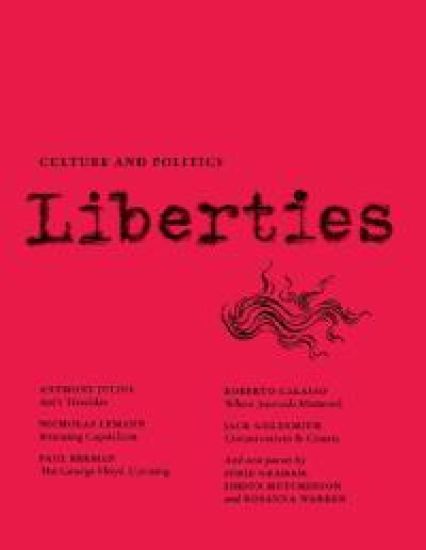
Liberties Journal of Culture and Politics

Liberties Journal of Culture and Politics

Anthony Julius; Nicholas Lemann; Alfred Brendel; Paul Berman; Jorie Graham; Fouad Ajami; Jack Goldsmith; Edward Luttwak; Roberto Calasso; Ishion Hutchinson; Walter Sheidel; Helen Vendler; Robert Alter; Daryl Michael Scott; Rosanna Warren; Alastair Macaulay; David Greenberg

Liberties Journal Foundation
2021
pokkari
Liberties – A Journal of Culture and Politics features original essays and poetry from some of today’s best writers and artists to inspire and impact the intellectual and creative lifeblood of culture and politics. This issue of Liberties includes: Anthony Julius on censorship of the arts; Nicholas Lemann on rescuing capitalism; Alfred Brendel on playing Beethoven; Paul Berman on the George Floyd uprising; Fouad Ajami’s story of an honor killing; Jack Goldsmith on conservatives and the courts; Edward Luttwak on understanding China; Roberto Calasso on when journals mattered; Walter Scheidel on life after covid; Helen Vendler on the poet Robert Hayden; Robert Alter on Lolita today; Daryl Michael Scott on the 13th Amendment; Alastair Macaulay on Balanchine; David Greenberg on renaming our heritage; new poetry from Jorie Graham, Ishion Hutchinson, and Rosanna Warren; and, Leon Wieseltier (editor) and Celeste Marcus (managing editor).
Higher Admissions

Higher Admissions

Nicholas Lemann

PRINCETON UNIVERSITY PRESS
2024
sidottu
How to make American higher education fairerIn the 1930s, American colleges and universities began to screen applications using the SAT, a mass-administered, IQ-descended standardized test. The widespread adoption of the test accompanied the development of the world’s first mass higher education system—and served to promote the idea that the United States was becoming a “meritocracy” in which admission to selective higher education institutions would be granted to those who most deserved it. In Higher Admissions, Nicholas Lemann reflects on the state of America’s aspirational meritocracy and the enduring value and meaning of standardized testing. Lemann writes that the anticipation of the Supreme Court’s 2023 decision banning affirmative action, plus the Covid pandemic, led hundreds of universities to stop requiring standardized admissions tests; now many colleges and universities are reinstituting test requirements. The country is preoccupied with the admissions policies of the most selective universities, but Lemann redirects our attention to an alternate path that American higher education could have taken, and can still take—one that emphasizes selective admission less and a significant upgrade of the entire higher education system more. Lemann argues that to improve the state of higher education overall, we should focus not on the narrow chokepoint of admission to highly selective colleges, but on efforts to create as much meaningful opportunity for flourishing in our vast higher education system for as many people as possible. The book includes thoughtful and challenging responses from Marvin Krislov, Patricia Gándara, and Prudence Carter.
Transaction Man

Transaction Man

Nicholas Lemann

Picador Paper
2020
nidottu
An Amazon Best History Book of 2019 "A splendid and beautifully written illustration of the tremendous importance public policy has for the daily lives of ordinary people." --Ryan Cooper, Washington Monthly Over the last generation, the United States has undergone seismic changes. Stable institutions have given way to frictionless transactions, which are celebrated no matter what collateral damage they generate. The concentration of great wealth has coincided with the fraying of social ties and the rise of inequality. How did all this come about? In Transaction Man, Nicholas Lemann explains the United States'--and the world's--great transformation by examining three remarkable individuals who epitomized and helped create their eras. Adolf Berle, Franklin Delano Roosevelt's chief theorist of the economy, imagined a society dominated by large corporations, which a newly powerful federal government had forced to become benign and stable institutions, contributing to the public good by offering stable employment and generous pensions. By the 1970s, the corporations' large stockholders grew restive under this regime, and their chief theoretician, Harvard Business School's Michael Jensen, insisted that firms should maximize shareholder value, whatever the consequences. Today, Silicon Valley titans such as the LinkedIn cofounder and venture capitalist Reid Hoffman hope "networks" can reknit our social fabric. Lemann interweaves these fresh and vivid profiles with a history of the Morgan Stanley investment bank from the 1930s through the financial crisis of 2008, while also tracking the rise and fall of a working-class Chicago neighborhood and the family-run car dealerships at its heart. Incisive and sweeping, Transaction Man is the definitive account of the reengineering of America and the enormous impact it has had on us all.
American Democracy

American Democracy

Nicholas Lemann

The Library of America
2020
sidottu
From The Federalist to Citizens United, bestselling author Nicholas Lemann presents key writings on five crucial questions confronting American democracy today Amid the frenzied overload of 24-hour cable news and incessant social media, at a time when many of us fear for the future of our democracy, it is becoming harder and harder to think clearly about politics. American Democracy: 21 Historic Answers to 5 Urgent Questions provides an alternative for those who want to step back and look to the past for inspiration and guidance. Edited with perceptive and provocative commentary by bestselling historian and journalist Nicholas Lemann (The Promised Land, Transaction Man), the book presents key writings from the American past that speak to five contemporary flashpoints in our political landscape: race, gender, immigration, and citizenship; opportunity and inequality; the purpose and powers of the federal government; money, special privilege, and corruption; and protest and civil disobedience. Some of the selections are well-known--George Washington's letter to the Hebrew Congregation at Newport, Frederick Douglass's "What to the Slave is the 4th of July," Martin Luther King Jr.'s letter from Birmingham Jail--while others will be new to many readers--Horace Mann argument for public schools as a means of fighting inequality, Jane Addams's perceptive analysis of gender and social class in charity work, Randolph Bourne envisioning a "Trans-National America." American Democracy presents a remarkable range of insightful and eloquent American political writing, while serving as an invaluable resource for concerned citizens who wish to become better-informed participants in the ongoing drama of our democracy.
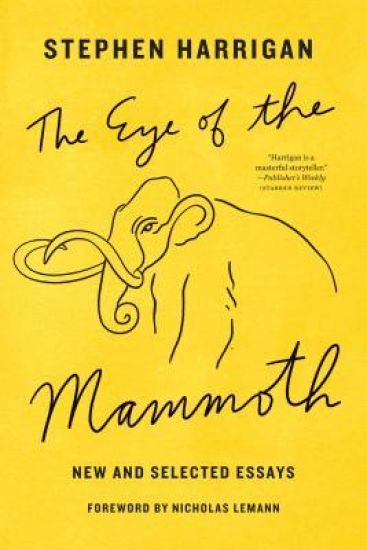
The Eye of the Mammoth

The Eye of the Mammoth

Stephen Harrigan; Nicholas Lemann

University of Texas Press
2019
nidottu
History-natural history, human history, and personal history-and place are the cornerstones of The Eye of the Mammoth. Stephen Harrigan's career has taken him from the Alaska Highway to the Chihuahuan Desert, from the casinos of Monaco to his ancestors' village in the Czech Republic. And now, in this new edition, he movingly recounts in "Off Course" a quest to learn all he can about his father, who died in a plane crash six months before he was born. Harrigan's deceptively straightforward voice belies an intense curiosity about things that, by his own admission, may be "unknowable." Certainly, we are limited in what we can know about the inner life of George Washington, the last days of Davy Crockett, the motives of a caged tiger, or a father we never met, but Harrigan's gift-a gift that has also made him an award-winning novelist-is to bring readers closer to such things, to make them less remote, just as a cave painting in the title essay eerily transmits the living stare of a long-extinct mammoth.
The Shape of the River

The Shape of the River

William G. Bowen; Derek Bok; Nicholas Lemann

Princeton University Press
2019
pokkari
The landmark New York Times bestseller that demonstrates the benefits of race-conscious admissions in higher education First published in 1998, William Bowen and Derek Bok’s The Shape of the River became an immediate landmark in the debate over affirmative action in America. It grounded a contentious subject in concrete data at a time when arguments surrounding it were characterized more by emotion than evidence—and it made a forceful case that race-conscious admissions were successfully helping to promote equal opportunity. Today, the issue of affirmative action remains unsettled. Much has changed, but The Shape of the River continues to present the most compelling data available about the effects of affirmative action. Now with a new foreword by Nicholas Lemann and an afterword by Derek Bok, The Shape of the River is an essential text for anyone seeking to understand race-conscious admissions in higher education.
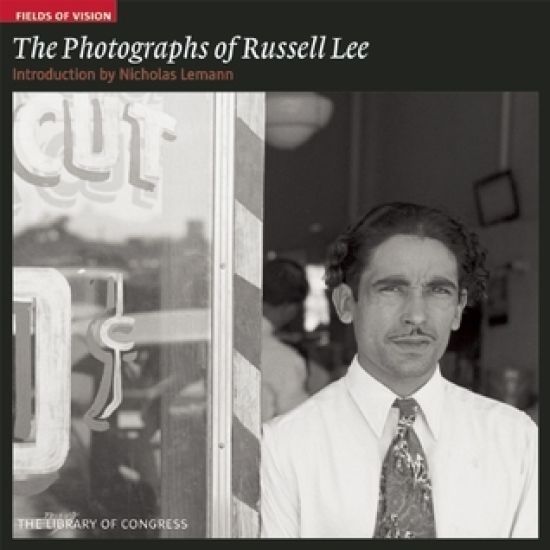
Photographs of Russell Lee: Fields of Vision
Published in association with the Library of Congress, Washington, D. C., "Fields of Vision: Recording a Century of American Life" is a completely new presentation of an historically significant collection of photographs. The 77,000 photographs in the Library of Congress' collection from the Resettlement Administration (RA, 1935-1937), Farm Security Administration (FSA, 1937-1942) and Office of War Information (OWI, 1942-1944) provide a unique and comprehensive view of American life from 1935 to 1944 during the Great Depression. This government photography project was initially conceived to document government loans to farmers and their resettlement in suburban communities, but expanded to create a visual record of agricultural and urban centres in the South, Mid-West and Western United States.
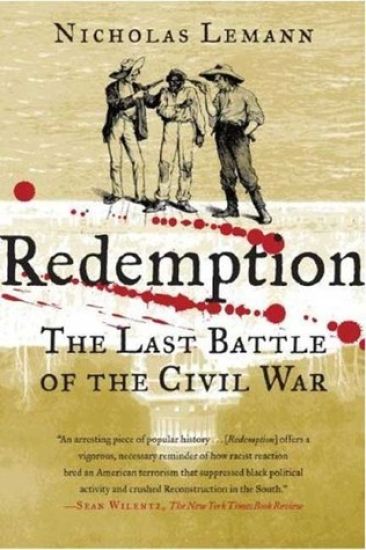
Redemption: The Last Battle of the Civil War

Redemption: The Last Battle of the Civil War

Nicholas Lemann

Farrar, Straus and Giroux
2007
nidottu
"An arresting piece of popular history." --Sean Wilentz, The New York Times Book Review Nicholas Lemann opens this extraordinary book with a riveting account of the horrific events of Easter 1873 in Colfax, Louisiana, where a white militia of Confederate veterans-turned-vigilantes attacked the black community there and massacred hundreds of people in a gruesome killing spree. This began an insurgency that changed the course of American history: for the next few years white Southern Democrats waged a campaign of political terrorism aiming to overturn the Fourteenth and Fifteenth Amendments and challenge President Grant's support for the emergent structures of black political power. Redemption is the first book to describe in uncompromising detail this organized racial violence, which reached its apogee in Mississippi in 1875.
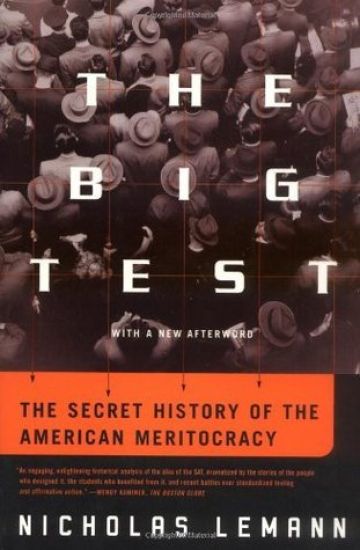
The Big Test

The Big Test

Nicholas Lemann

Farrar, Strauss Giroux-3pl
2000
pokkari
The widely acclaimed study of what's gone wrong in American higher education. What do we know about the history, origin, design, and purpose of the SAT? Who invented it, and why? How did it acquire such a prominent and lasting position in American education? The Big Test reveals the ideas, people, and politics behind a fifty-year-old utopian social experiment that changed this country. Combining vibrant storytelling, vivid portraiture, and thematic analysis, Lemann shows why this experiment did not turn out as planned. It did create a new elite, but it also generated conflict and tension--and America's best educated, most privileged people are now leaders without followers. Drawing on unprecedented access to the Educational Testing Service's archives, Lemann maintains that America's meritocracy is neither natural nor inevitable, and that it does not apportion opportunity equally or fairly. His important study not only asks profound moral and political questions about the past and future of our society but also carries implications for current social and educational policy. As Brent Staples noted in his New York Times editorial column: "Mount Holyoke College in Massachusetts announced that prospective students would no longer be required to submit SAT scores with their applications. . . . Holyoke's president, Joanne Creighton, was personally convinced by reading Nicholas Lemann's book, The Big Test, which documents how the SAT became a tool for class segregation." All students of education, sociology, and recent U. S. history--especially those focused on testing, theories of learning, social stratification, or policymaking--will find this book fascinating and alarming.
The Promised Land

The Promised Land

Nicholas Lemann

Vintage Books
1996
nidottu
A New York Times bestseller, the groundbreaking authoritative history of the migration of African-Americans from the rural South to the urban North. A definitive book on American history, The Promised Land is also essential reading for educators and policymakers at both national and local levels.