Kirjojen hintavertailu – 12 875 066 kirjaa ja 26 kauppaa

Kirjailija

Nicholas Mirzoeff

Kirjat ja teokset yhdessä paikassa: 13 kirjaa, julkaisuja vuosilta 1995–2025, suosituimpiin kuuluu The Right to Look. Vertaile teosten hintoja ja tarkista saatavuus suomalaisista kirjakaupoista.

13 kirjaa

Kirjojen julkaisuvuodet: 1995–2025.

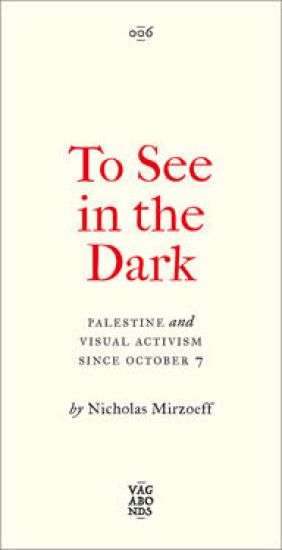
To See In the Dark

To See In the Dark

Nicholas Mirzoeff

PLUTO PRESS
2025
pokkari

Halvin toimitettuna 24,60 €

'Timely and clearly written, To See In the Dark is a manifesto to solidarity' - Stephen Sheehi, co-author of Psychoanalysis Under Occupation To see Palestine is to see the world. Since October 7th 2023, the forces of racial capitalism and settler colonialism have become all too visible in Israel's genocidal war on Gaza. In To See In the Dark, Nicholas Mirzoeff explores how images, and especially video, viewed outside Palestine enabled a dramatic switch in public opinion, leading to a global uprising against the genocide. In this groundbreaking analysis, he connects the personal and the political through his own anti-Zionist Jewishness and its histories of violence. The result is a new collective and anti-colonial way of seeing, intersecting online and embodied experience.
An Introduction to Visual Culture

An Introduction to Visual Culture

Nicholas Mirzoeff

TAYLOR FRANCIS LTD
2023
sidottu
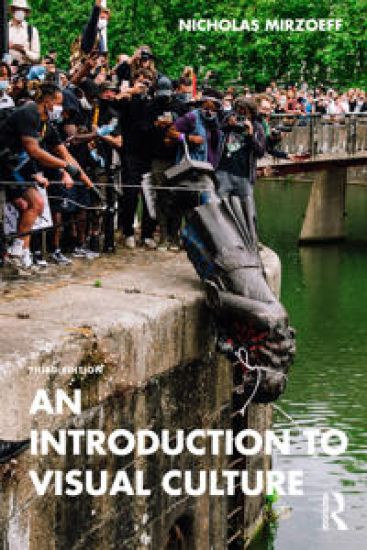
In the fully rewritten third edition of this classic text, Nicholas Mirzoeff introduces visual culture as visual activism, or activating the visible. In this view, visual culture is a practice: a way of doing, making, and seeing. The 12 new chapters begin with five foundational concepts, including Indigenous ways of seeing, visual activism in the wake of slavery, and unfixing the gaze. The second section outlines three currently successful tactics of visual activism: removal of statues and monuments; restitution of cultural property; and practices of repair and reparations. The final section addresses catastrophe and trauma, from Palestine’s Nakba to the climate disaster and the intersections of plague and war. Each section also includes new, in-depth case studies called "Visualizations," ranging from oil painting to Kongo power figures and the mediated practice of taking a knee. Engaging with questions of racializing, colonialism, and undoing gender throughout, this edition maps the activist turn in the field since 2014 and sets directions for its future expansion. This is a key text in visual culture studies and an essential resource for research and teaching in the field.
An Introduction to Visual Culture

An Introduction to Visual Culture

Nicholas Mirzoeff

TAYLOR FRANCIS LTD
2023
nidottu

Halvin toimitettuna 65,80 €

In the fully rewritten third edition of this classic text, Nicholas Mirzoeff introduces visual culture as visual activism, or activating the visible. In this view, visual culture is a practice: a way of doing, making, and seeing. The 12 new chapters begin with five foundational concepts, including Indigenous ways of seeing, visual activism in the wake of slavery, and unfixing the gaze. The second section outlines three currently successful tactics of visual activism: removal of statues and monuments; restitution of cultural property; and practices of repair and reparations. The final section addresses catastrophe and trauma, from Palestine’s Nakba to the climate disaster and the intersections of plague and war. Each section also includes new, in-depth case studies called "Visualizations," ranging from oil painting to Kongo power figures and the mediated practice of taking a knee. Engaging with questions of racializing, colonialism, and undoing gender throughout, this edition maps the activist turn in the field since 2014 and sets directions for its future expansion. This is a key text in visual culture studies and an essential resource for research and teaching in the field.
White Sight

White Sight

Nicholas Mirzoeff

MIT PRESS LTD
2023
sidottu
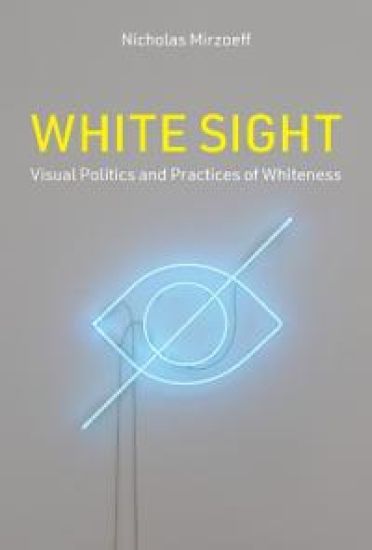
From the author of How to See the World comes a new history of white supremacist ways of seeing—and a strategy for dismantling them. White supremacy is not only perpetuated by laws and police but also by visual culture and distinctive ways of seeing. Nicholas Mirzoeff argues that this form of “white sight” has a history. By understanding that it was not always a common practice, we can devise better ways to dismantle it. Spanning centuries across this wide-ranging text, Mirzoeff connects Renaissance innovations—from the invention of perspective and the erection of Apollo statues as monuments to (white) beauty and power to the rise of racial capitalism dependent on slave labor—with the ever-expanding surveillance technologies of the twenty-first century to show that white sight creates an oppressively racializing world, in which subjects who do not appear as white are under constant threat of violence. Analyzing recent events like the George Floyd protests and the Central Park birdwatching incident, Mirzoeff suggests that we are experiencing a general crisis of white supremacy that presents both opportunities and threats to social justice. If we do not seize this moment to dismantle white sight, then white supremacy might surge back stronger than ever. To that end, he highlights activist interventions to strike the power of the white heteropatriarchal gaze. White Sight is a vital handbook and call to action for anyone who refuses to live under white-dominated systems and is determined to find a just way to see the world.
Silent Poetry

Silent Poetry

Nicholas Mirzoeff

Princeton University Press
2019
pokkari
This book explores the dynamic interaction between art and the sign language of the deaf in France from the philsopheRs to the introduction of the sound motion picture. Nicholas Mirzoeff shows how the French Revolution transformed the ancienT regime metaphor of painting as silent poetry into a nineteenth-century school of over one hundred deaf artists. Painters, sculptors, photographers, and graphic artists all emanated from the Institute for the Deaf in Paris, playing a central role in the vibrant deaf culture of the period. With the rise of Darwinism, eugenics, and race science, however, the deaf found themselves categorized as "savages," excluded and ignored by the hearing. This book is concerned with the process and history of that marginalization, the constitution of a "center" from which the abnormal could be excluded, and the vital role of visual culture within this discourse. Based on groundbreaking archival and pictorial research, Mirzoeff's exciting and intertextual analysis of what he terms the "silent screen of deafness" produces an alternative hIstory of nineteenth-century art that challenges canonical view of the history of art, the inheritance of the Enlightenment, and the functions, status, and meanings of visual culture itself. Fusing methodologies from cultural studies, poststructuralism and art history, his study will be important for students and scholars of art history, cultural and deaf studies, and the history of medicine, and will interest a general audience concerned with the relationship of the deaf and the larger society. Nicholas Mirzoeff is Assistant Professor of Art History at the University of Wisconsin. Originally published in 1995. The Princeton Legacy Library uses the latest print-on-demand technology to again make available previously out-of-print books from the distinguished backlist of Princeton University Press. These editions preserve the original texts of these important books while presenting them in durable paperback and hardcover editions. The goal of the Princeton Legacy Library is to vastly increase access to the rich scholarly heritage found in the thousands of books published by Princeton University Press since its founding in 1905.
Silent Poetry

Silent Poetry

Nicholas Mirzoeff

PRINCETON UNIVERSITY PRESS
2019
sidottu
This book explores the dynamic interaction between art and the sign language of the deaf in France from the philsopheRs to the introduction of the sound motion picture. Nicholas Mirzoeff shows how the French Revolution transformed the ancienT regime metaphor of painting as silent poetry into a nineteenth-century school of over one hundred deaf artists. Painters, sculptors, photographers, and graphic artists all emanated from the Institute for the Deaf in Paris, playing a central role in the vibrant deaf culture of the period. With the rise of Darwinism, eugenics, and race science, however, the deaf found themselves categorized as "savages," excluded and ignored by the hearing. This book is concerned with the process and history of that marginalization, the constitution of a "center" from which the abnormal could be excluded, and the vital role of visual culture within this discourse. Based on groundbreaking archival and pictorial research, Mirzoeff's exciting and intertextual analysis of what he terms the "silent screen of deafness" produces an alternative hIstory of nineteenth-century art that challenges canonical view of the history of art, the inheritance of the Enlightenment, and the functions, status, and meanings of visual culture itself. Fusing methodologies from cultural studies, poststructuralism and art history, his study will be important for students and scholars of art history, cultural and deaf studies, and the history of medicine, and will interest a general audience concerned with the relationship of the deaf and the larger society. Nicholas Mirzoeff is Assistant Professor of Art History at the University of Wisconsin. Originally published in 1995. The Princeton Legacy Library uses the latest print-on-demand technology to again make available previously out-of-print books from the distinguished backlist of Princeton University Press. These editions preserve the original texts of these important books while presenting them in durable paperback and hardcover editions. The goal of the Princeton Legacy Library is to vastly increase access to the rich scholarly heritage found in the thousands of books published by Princeton University Press since its founding in 1905.
How to See the World: An Introduction to Images, from Self-Portraits to Selfies, Maps to Movies, and More
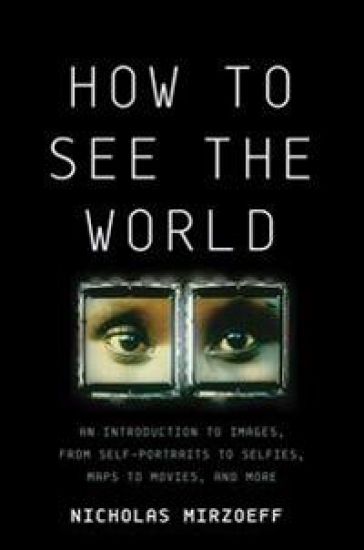
Every two minutes, Americans alone take more photographs than were printed in the entire nineteenth century; every minute, people from around the world upload over 300 hours of video to YouTube; and in 2014, we took over one trillion photographs. From the funny memes that we send to our friends to the disturbing photographs we see in the news, we are consuming and producing images in quantities and ways that could never have been anticipated. In the process, we are producing a new worldview powered by changing demographics -- one where the majority of people are young, urban, and globally connected. In How to See the World, visual culture expert Nicholas Mirzoeff offers a sweeping look at history's most famous images -- from Velezquez's Las Meninas to the iconic "Blue Marble" -- to contextualize and make sense of today's visual world. Drawing on art history, sociology, semiotics, and everyday experience, he teaches us how to close read everything from astronaut selfies to Impressionist self-portraits, from Hitchcock films to videos taken by drones. Mirzoeff takes us on a journey through visual revolutions in the arts and sciences, from new mapping techniques in the seventeenth century to new painting styles in the eighteenth and the creation of film, photography, and x-rays in the nineteenth century. In today's networked world, mobile technology and social media enable us to exercise "visual activism" -- the practice of producing and circulating images to drive political and social change. Whether we are looking at pictures showing the effects of climate change on natural and urban landscapes or an fMRI scan demonstrating neurological addiction, Mirzoeff helps us to find meaning in what we see. A powerful and accessible introduction to this new visual culture, How to See the World reveals how images shape our lives, how we can harness their power for good, and why they matter to us all.
How to See the World

How to See the World

Nicholas Mirzoeff

Pelican
2015
nidottu

Halvin toimitettuna 17,00 €

In recent decades, we have witnessed an explosion in the number of visual images we encounter, as our lives have become increasingly saturated with screens. From Google Images to Instagram, video games to installation art, this transformation is confusing, liberating and worrying all at once, since observing the new visuality of culture is not the same as understanding it. Nicholas Mirzoeff is a leading figure in the field of visual culture, which aims to make sense of this extraordinary explosion of visual experiences. As Mirzoeff reminds us, this is not the first visual revolution; the 19th century saw the invention of film, photography and x-rays, and the development of maps, microscopes and telescopes made the 17th century an era of visual discovery. But the sheer quantity of images produced on the internet today has no parallels. In the first book to define visual culture for the general reader, Mirzoeff draws on art history, theory and everyday experience to provide an engaging and accessible overview of how visual materials shape and define our lives.
The Right to Look

The Right to Look

Nicholas Mirzoeff

Duke University Press
2011
pokkari
In The Right to Look, Nicholas Mirzoeff develops a comparative decolonial framework for visual culture studies, the field that he helped to create and shape. Casting modernity as an ongoing contest between visuality and countervisuality, or “the right to look,” he explains how visuality sutures authority to power and renders the association natural. An early-nineteenth-century concept, meaning the visualization of history, visuality has been central to the legitimization of Western hegemony. Mirzoeff identifies three “complexes of visuality”-plantation slavery, imperialism, and the present-day military-industrial complex-and explains how, within each, power is made to seem self-evident through techniques of classification, separation, and aestheticization. At the same time, he shows how each complex of visuality has been countered-by the enslaved, the colonized, and opponents of war, all of whom assert autonomy from authority by claiming the right to look. Encompassing the Caribbean plantation and the Haitian revolution, anticolonialism in the South Pacific, antifascism in Italy and Algeria, and the contemporary global counterinsurgency, The Right to Look is a work of astonishing geographic, temporal, and conceptual reach.
The Right to Look

The Right to Look

Nicholas Mirzoeff

Duke University Press
2011
sidottu
In The Right to Look, Nicholas Mirzoeff develops a comparative decolonial framework for visual culture studies, the field that he helped to create and shape. Casting modernity as an ongoing contest between visuality and countervisuality, or “the right to look,” he explains how visuality sutures authority to power and renders the association natural. An early-nineteenth-century concept, meaning the visualization of history, visuality has been central to the legitimization of Western hegemony. Mirzoeff identifies three “complexes of visuality”-plantation slavery, imperialism, and the present-day military-industrial complex-and explains how, within each, power is made to seem self-evident through techniques of classification, separation, and aestheticization. At the same time, he shows how each complex of visuality has been countered-by the enslaved, the colonized, and opponents of war, all of whom assert autonomy from authority by claiming the right to look. Encompassing the Caribbean plantation and the Haitian revolution, anticolonialism in the South Pacific, antifascism in Italy and Algeria, and the contemporary global counterinsurgency, The Right to Look is a work of astonishing geographic, temporal, and conceptual reach.
Watching Babylon

Watching Babylon

Nicholas Mirzoeff

Routledge
2004
sidottu
Groundbreaking and compelling, Watching Babylon examines the experience of watching the war against Iraq on television, on the internet, in the cinema and in print media. Mirzoeff shows how the endless stream of images flowing from the Gulf has necessitated a new form of visual thinking, one which recognises that the war has turned images themselves into weapons. Drawing connections between the history and legend of ancient Babylon, the metaphorical Babylon of Western modernity, and everyday life in the modern suburb of Babylon, New York, Mirzoeff explores ancient concerns which have found new resonance in the present day. In the tradition of Walter Benjamin, Watching Babylon illuminates the Western experience of the Iraqi war and makes us re-examine the very way we look at images of conflict.
Watching Babylon

Watching Babylon

Nicholas Mirzoeff

Routledge
2004
nidottu
Groundbreaking and compelling, Watching Babylon examines the experience of watching the war against Iraq on television, on the internet, in the cinema and in print media. Mirzoeff shows how the endless stream of images flowing from the Gulf has necessitated a new form of visual thinking, one which recognises that the war has turned images themselves into weapons. Drawing connections between the history and legend of ancient Babylon, the metaphorical Babylon of Western modernity, and everyday life in the modern suburb of Babylon, New York, Mirzoeff explores ancient concerns which have found new resonance in the present day. In the tradition of Walter Benjamin, Watching Babylon illuminates the Western experience of the Iraqi war and makes us re-examine the very way we look at images of conflict.
Bodyscape

Bodyscape

Nicholas Mirzoeff

Routledge
1995
nidottu
This book explores body images in visual culture, from revolutionary France to contemporary New York. It engages with artists' use of different kinds of body images in painting, sculpture, photography and film, and shows the centrality of the body in the work of artists from da Vinci to Manet.