Kirjailija
Nicholas Perrin
Kirjat ja teokset yhdessä paikassa: 16 kirjaa, julkaisuja vuosilta 2006–2022, suosituimpiin kuuluu Jesus the Priest. Vertaile teosten hintoja ja tarkista saatavuus suomalaisista kirjakaupoista.
16 kirjaa
Kirjojen julkaisuvuodet: 2006–2022.
In this insightful and accessible commentary, Nicholas Perrin explores the many unique pictures of Jesus found in the Gospel of Luke--from being a child in his Father's house to associating with the poor and disreputable, in communion with the Holy Spirit, and, above all, setting out resolutely for Jerusalem to fulfill God's plan for the world. With particular attention to the redemptive-historical storyline and its scriptural roots, Perrin examines how Luke's Gospel is embedded in human history. He also show how it follows a cyclical narrative structure, with each recapitulation expanding the horizons of what has gone before. Part of the Tyndale New Testament commentary series, Luke: An Introduction and Commentary examines the text section-by-section--exploring the context in which it was written, providing astute commentary on Luke's Gospel, and then unpacking the theology. It offers a thorough understanding of the content and structure of Luke, as well as its continued relevance for Christians today. The Tyndale Commentaries are designed to help the reader of the Bible understand what the text says and what it means. The Introduction to each book gives a concise but thorough treatment of its authorship, date, original setting, and purpose. Following a structural Analysis, the Commentary takes the book section by section, drawing out its main themes, and also comments on individual verses and problems of interpretation. Additional Notes provide fuller discussion of particular difficulties.
In this insightful and accessible biblical commentary, Nicholas Perrin explores the many unique pictures of Jesus found in the Gospel of Luke - from being a child in his Father's house to associating with the poor and disreputable, in communion with the Holy Spirit, and, above all, setting out resolutely for Jerusalem to fulfil God's plan for the world. With particular attention to the redemptive-historical storyline and its scriptural roots, Perrin examines how Luke's Gospel is embedded in human history. He also show how it follows a cyclical narrative structure, with each recapitulation expanding the horizons of what has gone before. Part of the Tyndale New Testament commentary series, Luke: An Introduction and Commentary examines the text section-by-section - exploring the context in which it was written, providing astute commentary on Luke's Gospel, and then unpacking the theology. It will leave you with a thorough understanding of the content and structure Gospel of Luke, as well as what it means and its continued relevance for Christians today. The Tyndale New Testament Commentaries are ideal Bible commentaries for students and teachers of theology, as well as being usable for preachers and individual Christians looking to delve deeper into the riches of Scripture and discover its meaning for today. Perceptive, cogent and thorough, Nicholas Perrin's commentary on Luke will give you a renewed appreciation for Luke's Gospel and a greater understanding of why it is such a vital part of Scripture.
The Just Shall Live by Faith
David Paul McDowell; Nicholas Perrin
Wipf Stock Publishers
2020
sidottu
Romans: the apostle Paul's magnum opus. It is a book that has changed the lives of countless men and women throughout the history of the church, and it could change your life as well The Just Shall Live by Faith begins by clearly outlining the whole book of Romans and then sets about explaining each section of the outline in commentary form written from a pastoral perspective, with illustrative material and practical applications. There are questions for each section that can be used for individual study or small-group discussion. It has been field-tested by small groups of women and men, and has proven to be insightful, encouraging, and spiritually challenging. Romans is not a book meant to be casually read. The Just Shall Live by Faith will ensure that you go deep.
The Just Shall Live by Faith
David Paul McDowell; Nicholas Perrin
Wipf Stock Publishers
2020
pokkari
Romans: the apostle Paul's magnum opus. It is a book that has changed the lives of countless men and women throughout the history of the church, and it could change your life as well The Just Shall Live by Faith begins by clearly outlining the whole book of Romans and then sets about explaining each section of the outline in commentary form written from a pastoral perspective, with illustrative material and practical applications. There are questions for each section that can be used for individual study or small-group discussion. It has been field-tested by small groups of women and men, and has proven to be insightful, encouraging, and spiritually challenging. Romans is not a book meant to be casually read. The Just Shall Live by Faith will ensure that you go deep.
What does the Bible say about God's Kingdom and what Kingdom living looks like? In the last hundred and fifty years the concept of the kingdom of God has emerged as one of the most important topics in theology, New Testament studies, and the life of the church. In The Kingdom of God, Nicholas Perrin explores this dominant biblical metaphor, one that is paradoxically the meta-center and the mystery in Jesus' proclamation. After survey interpretations by figures from Ritschl to N. T. Wright, Perrin examines questions such as:What exactly is the kingdom of God? What do different Christian traditions mean when they talk about “the Kingdom”? How should we interpret Jesus’ teachings about the Kingdom? What does it mean for the people of God and what does it mean for how they live in the world? Perrin contends that the kingdom is inaugurated in Jesus' earthly ministry, but its final development awaits later events in history. In between the times, however, the people of God are called to participate in the reign of God by living out the distinctly kingdom-ethic through hope, forgiveness, love, and prayer.____________Part of the Biblical Theology for Life series, this practical and robust book will help you ground your understanding of the Kingdom of God on the solid foundation of biblical exegesis and reflection.
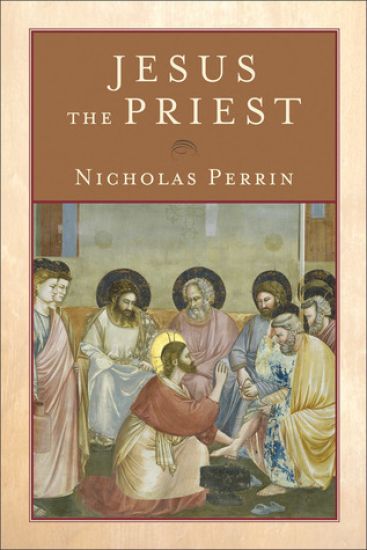
Following his critically acclaimed book Jesus the Temple, Nicholas Perrin offers a fresh paradigm for understanding the historical Jesus. Perrin challenges the "standard reading" of classic texts (including the Parable of the Sower, the Beatitudes, and the Lord's Prayer) to argue that the historical Jesus primarily identified himself not as sage or prophet but as Israel's eschatological high priest. Perrin's insightful theological contribution synthesizes the best in traditional/conservative and liberal reconstructions of Jesus's life and teaching. He identifies Jesus's priesthood as a mediating understanding that sheds crucial light on the kingdom of God.
This major new study advances our understanding of the historical Jesus by exploring the model of Jesus the priest. As priest, Jesus claims to reveal God’s unchanging character through his own person; as priest, too, he announces the impending eschatological climax, constituted by the arrival of the heavenly temple on earth. Focusing on critically assured sayings of Jesus, Perrin argues that the two announcements (the kingdom and Jesus’ priesthood) are mutually confirming and mutually authenticating. The nature of the kingdom is derived from his priestly office; his priestly office is given shape and substance through teachings on the kingdom. Jesus saw himself as the unique eschatological high priest and therefore as the local embodiment of Yahweh. He announced the kingdom of God as the space of true worship; he regarded his life as revealing both the identity of God and the true worship of God.
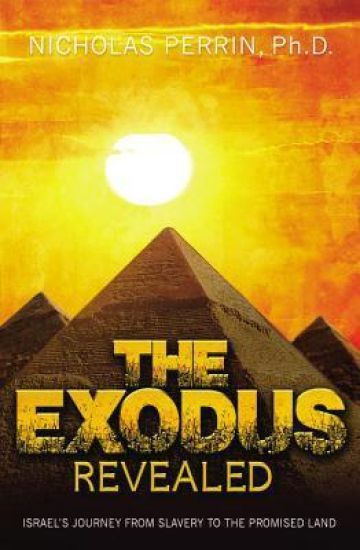
What really happened during Israel's journey from slavery to the promised land? Bible scholar Nicholas Perrin explains the true story of the Exodus while adding helpful background information from biblical history, archaeology, and more. You will . . . ·Explore the unvarnished Bible story of the Exodus ·Learn about ancient Egypt and Pharaoh ·Come to know the man and the mission of Moses ·Find out why the Ten Commandments were given ·Discover God's promise and plan for his people, then and now ·Appreciate why every New Testament writer builds on the Exodus ·See how the Exodus story relates to you, todayYou will gain a much richer understanding of what God has done for you and why the Exodus is the pivotal event in the Old Testament.
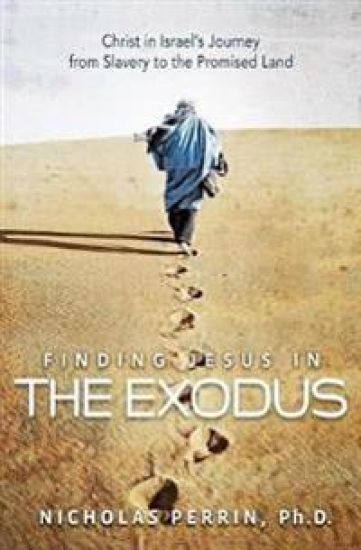
If you want to understand who Christ is, you have to begin by understanding what Jesus meant when he said in Luke 24:27, "And beginning with Moses and all the prophets, he explained to them what was said in all the Scriptures concerning himself" (NIV). In Finding Jesus in Exodus, biblical scholar Nicholas Perrin shows that the Bible's story of the Exodus from beginning to end is filled with prophetic foretellings of the person and work of Christ: ·Moses as a great deliver and prophet ·The voice in the burning bush ·The Passover Lamb of God ·The unleavened bread ·The rock and pillar of cloud ·The red sea crossing ·The manna from heaven You will see all of these and more as examples of Christ in the story of the Exodus.
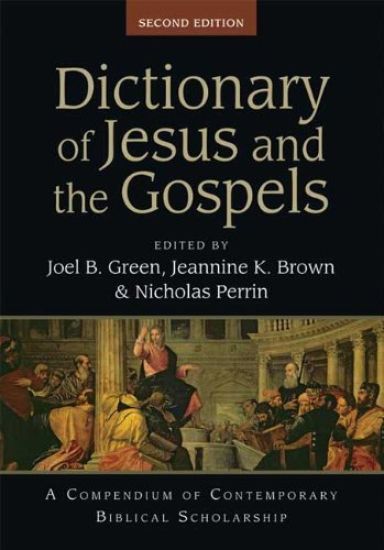
Dictionary of Jesus and the Gospels
Joel B. Green; Jeannine K. Brown; Nicholas Perrin
Inter-Varsity Press
2013
sidottu
The Dictionary of Jesus and the Gospels is unique among reference books on the Bible, the first volume of its kind since James Hastings published his Dictionary of Christ and the Gospels in 1909. In the more than eight decades since Hastings, our understanding of Jesus, the Evangelists and their world has grown remarkably. New interpretive methods illumined the text, the ever-changing profile of modern culture has put new questions to the Gospels, and our understanding of the Judaism of Jesus's day has advanced in ways that could not have been predicted in Hastings's day. But for many readers of the Gospels the new outlook on the Gospels remains hidden within technical journals and academic monographs. The Dictionary of Jesus and the Gospels bridges the gap between scholars and those pastors, teachers, students and lay people desiring in-depth treatment of select topics in an accessible and summary format. The topics range from cross-sectional themes (such as faith, law, Sabbath) to methods of interpretation (such as form criticism, redaction criticism, sociological approaches), from key events (such as the birth, temptation and death of Jesus) to each of the four Gospels as a whole. Some articles - such as the Dead Sea Scrolls, rabbinic traditions and revolutionary movements at the time of Jesus - provide significant background information to the Gospels. Others reflect recent and less familiar issues in Jesus and Gospel studies, such as divine man, ancient rhetoric and the chreiai. Contemporary concerns of general interest are discusses in articles covering such topics as healing, the demonic and the historical reliability of the Gospels. And for those entrusted with communicating the message of the Gospels, there is an extensive article on preaching from the Gospels. The Dictionary of Jesus and the Gospels presents the fruit of evangelical New Testament scholarship at the end of the twentieth century - committed to the authority of Scripture, utilising the best of critical methods, and maintaining dialog with contemporary scholarship and challenges facing the church.
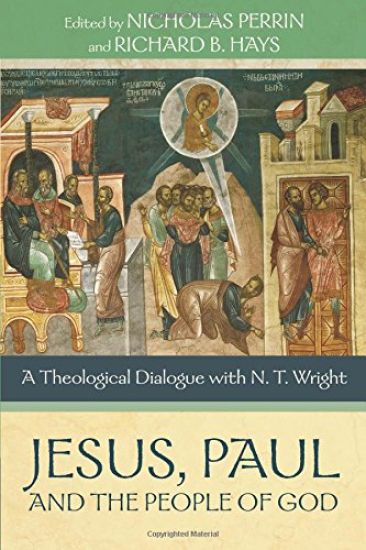
N. T. Wright is widely regarded as the most exciting and influential biblical scholar of the past two decades. In Jesus, Paul and the People of God, an international team of leading scholars assesses the impact and theological significance of N. T. Wright's major publications on the New Testament and Christian origins. The book includes two important new essays by N. T. Wright on the themes of historical Jesus studies and of Pauline studies and the life of the Church. Eight other essays critically interact with these two central themes, enabling the reader to gain a deeper appreciation of the key areas of debate, and of Wright's distinctive contribution to our present understanding. Contributors: Jeremy S. Begbie, Markus Bockmuehl, Richard B. Hays, Edith M. Humphrey, Sylvia C. Keesmaat, Nicholas Perrin, Marianne Meye Thompson, Kevin J. Vanhoozer, Brian J. Walsh.
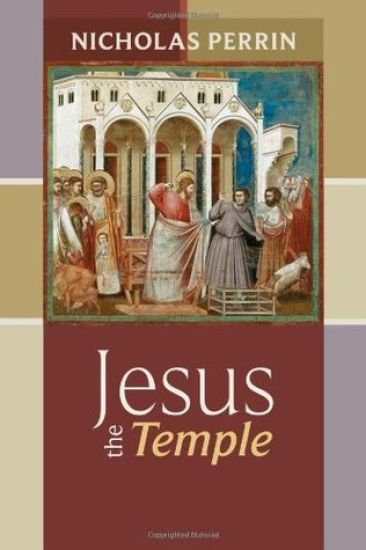
By viewing Jesus as temple, we gain an enriched understanding of his ministry, teachings, death and resurrection. Whereas modern history of Jesus research has tended to separate the historical Jesus from the proclamation of the early church, Perrin's account effectively closes the historical gap between founder and movement.
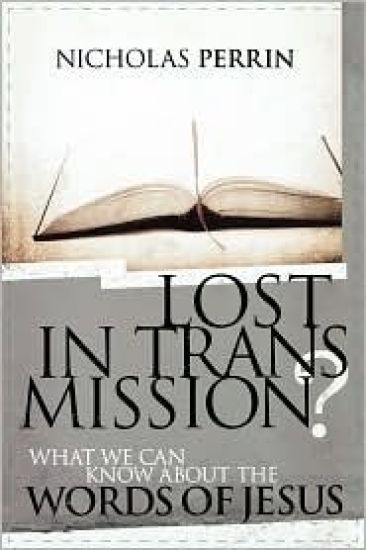
Bart Ehrman, in his New York Times bestseller, Misquoting Jesus, claims that the New Testament cannot wholly be trusted. Cutting and probing with the tools of text criticism, Ehrman suggests that many of its episodes are nothing but legend, fabricated by those who copied or collated its pages in the intervening centuries. The result is confusion and doubt. Can we truly trust what the New Testament says? Now, Wheaton College scholar Nicholas Perrin takes on Ehrman and others who claim that the text of the New Testament has been corrupted beyond recognition. Perrin, in an approachable, compelling style, gives us a layman's guide to textual criticism so that readers can understand the subtleties of Ehrman's critiques, and provides firm evidence to suggest that the New Testament can, indeed, be trusted.
Thomas, the Other Gospel
Nicholas Perrin
Westminster/John Knox Press,U.S.
2007
nidottu
Halvin toimitettuna 40,40 €
Since its discovery in the mid-1940s, the Gospel of Thomas has aroused the interest of scholars and general readers alike. Thomas, the Other Gospel provides a clear, comprehensive, nontechnical guide through the scholarly maze of issues surrounding the Coptic text. Nicholas Perrin argues that the Gospel derives not from the era of Jesus or even the apostles but from the late second century CE. Further, contrary to what many scholars believe, he maintains that the Gospel was originally written in Syriac rather than in Greek, and he concludes that the real value of the Gospel of Thomas lies not in what it might be thought to say about the "real Jesus" but in what it tells us about early Christianity.