Kirjojen hintavertailu – 12 859 829 kirjaa ja 27 kauppaa

Kirjailija

Nicholas R. Lardy

Kirjat ja teokset yhdessä paikassa: 10 kirjaa, julkaisuja vuosilta 1978–2008, suosituimpiin kuuluu Chen Yun's Strategy for China's Development. Vertaile teosten hintoja ja tarkista saatavuus suomalaisista kirjakaupoista.

10 kirjaa

Kirjojen julkaisuvuodet: 1978–2008.

Chen Yun's Strategy for China's Development

Chen Yun's Strategy for China's Development

Nicholas R. Lardy; Kenneth Lieberthal; Dong Chen

M.E. Sharpe
1983
sidottu
Originally published in 1983. Since Mao Zedongfs death the Chinese have been debating the future character of the country’s political and economic system. The present collection of Chen Yun’s writings must be read against the backdrop of the ongoing policy discussion in the 1980s. Chen has been, and remains, an advocate of economic policies that are central to this debate, and since 1978 many of his views have become state policy. In this context the publication in China of this volume of Chen’s writings and speeches from 1956 to 1962 undoubtedly is designed in part to bolster Chen’s point of view in policy discussions. The author cites that the implicit message of this volume, translated here in full, is that had Chen's views been heeded earlier, China would have developed rapidly and successfully
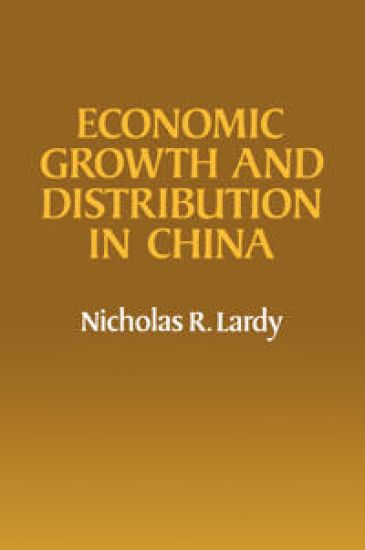
Economic Growth and Distribution in China

Economic Growth and Distribution in China

Nicholas R. Lardy

Cambridge University Press
2006
pokkari
This study maintains that China's system of economic planning tends to mitigate the trade-off between economic growth and equity that has been found to prevail in the early stages of development in most less developed countries. The analysis focuses on the Chinese leadership's attempt to improve economic efficiency by decentralizing economic management without encouraging, as a consequence, increased economic inequality among different regions. By examining the budgetary and planning process, focusing in particular on the fiscal relations between the centre and the far-reaching degree of resource redistribution undertaken by the central government through its control of interprovincial and intersectoral resource transfers. Professor Lardy's analysis highlights the essential features of Chinese economic growth and relates these to the experience of both developing and Soviet-type economies.
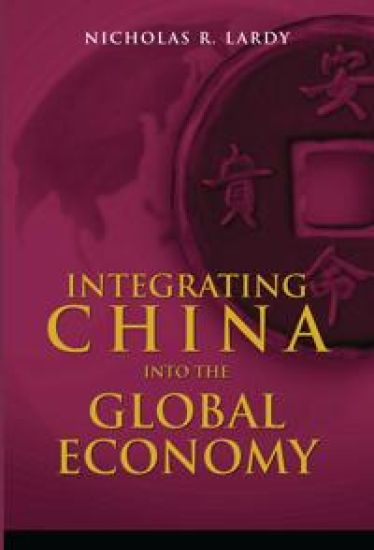
Integrating China into the Global Economy

Integrating China into the Global Economy

Nicholas R. Lardy

Brookings Institution
2001
nidottu
"China's accession to the World Trade Organization (WTO) has been hailed as the biggest coming-out party in the history of capitalism. Its membership eventually will contribute to higher standards of living for its citizens and increased growth for its economy. But why would the Chinese communist regime voluntarily agree to comply with the many complex rules of the global trading system since it has already become the world's seventh largest trading country while avoiding these constraints by remaining outside the system? The answer to this question forms the basis for this new book. Nicholas Lardy explores the many pressures on the Chinese government, both external and internal, to comply with the standards of the rule-based international trading system. Lardy points out that, prior to entry into the WTO, China enjoyed high growth rates and more foreign direct investment than any other emerging economy. He draws on a wealth of scholarship and experience to explain how China's leadership expects to leverage the increased foreign competition inherent in its WTO commitments to accelerate its domestic economic reform program, leading to the shrinkage and transformation of inefficient, money-losing companies and hastening the development of a commercial credit culture in its banks. Lardy answers a number of other questions about China's new WTO membership, including its effects on bilateral trade with the United States; the possibility that China will use its power to reshape the WTO in the future; the degree to which the terms of China's entry were more or less demanding than those for other new members; the ability of China's economy to successfully open to new imports; and the prospects for new growth in various sectors of China's economy made possible by WTO accession. This book will become an important tool for those who wish to understand China's new role in the global trading system, to take advantage of the new opportunities for investment in China, or simply to gain a better understanding of what former President Clinton called a ""once in a generation event."""
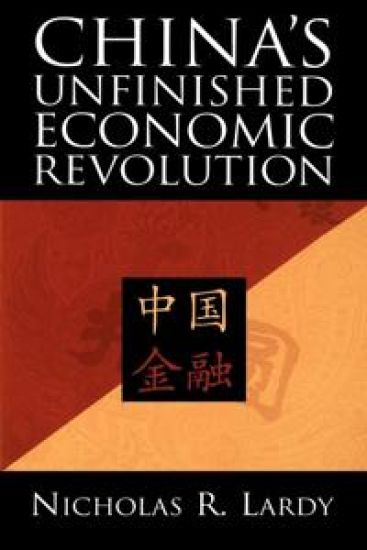
China's Unfinished Economic Revolution

China's Unfinished Economic Revolution

Nicholas R. Lardy

Brookings Institution
1998
nidottu
"China's Unfinished Economic Revolution offers a fundamentally different interpretation of China's economic reform. The common view that China's gradualistic approach has served it well overlooks the fact that state-owned banks for the last two decades have channeled a large share of sharply rising household savings into what are mostly unreformed, money-losing companies. The result is that several of China's largest financial institutions now are insolvent. To avoid a major domestic banking crisis the book argues that China must recapitalize and restructure its domestic banking system and end the long-standing practice of making lending decisions based on political rather than economic criteria. Nicholas Lardy explains that this course will inevitably be costly in political terms, in part because it will lead for a time to a slower rate of economic growth. But the alternative is even less attractive—permanently slower growth, continued macroeconomic instability, an inability to meet the expectations of the international community for the opening of its domestic financial markets, and insufficient resources to deal with severe environmental deterioration, growing water shortages, and a rapidly aging population. This timely book also analyzes the new reform initiatives China has launched in the wake of the Asian financial crisis, suggests additional steps that must be taken, and evaluates the implications for U. S. policy."
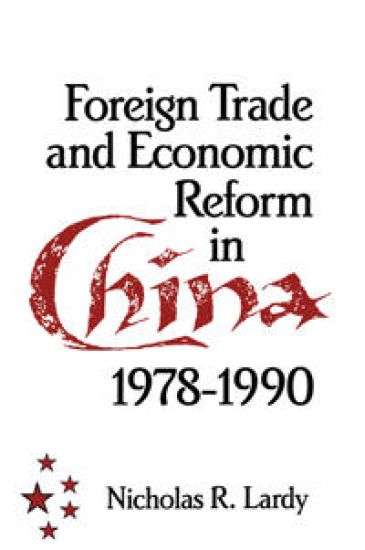
Foreign Trade and Economic Reform in China

Foreign Trade and Economic Reform in China

Nicholas R. Lardy

Cambridge University Press
1993
pokkari
This study explores the relationship between China’s foreign trade reforms and the domestic economic reforms that underlie China’s recent policy of openness. It provides the first comprehensive analysis of how China has emerged, since reform began in 1978, as one of the most dynamic trading nations in the world. It examines both the external policy changes, such as the decentralisation of trading authority and the devaluation of the domestic currency, and internal economic reforms such as the increased use of markets and prices. The volume concludes with an analysis of the sources of China’s export growth and outlines further domestic economic reforms that the author believes will be required to sustain China’s integration into the world economy.
Foreign Trade and Economic Reform in China

Foreign Trade and Economic Reform in China

Nicholas R. Lardy

Cambridge University Press
1991
sidottu
This study, first published in 1992, explores the relationship between China's foreign trade reforms and the domestic economic reforms that underlie China's policy of openness. It provided the first comprehensive analysis of how China emerged, since reform began in 1978, as one of the most dynamic trading nations in the world. It examines both the external policy changes, such as the decentralisation of trading authority and the devaluation of the domestic currency, and internal economic reforms such as the increased use of markets and prices. The volume concludes with an analysis of the sources of China's export growth and outlines further domestic economic reforms that the author believes will be required to sustain China's integration into the world economy.
China's Entry into the World Economy

China's Entry into the World Economy

Nicholas R. Lardy

University Press of America
1987
sidottu
China's new trade and investment policies have led to increased regional economic integration in Northeast Asia and have contributed to the overall economic dynamism of the Pacific region. But whether this trend will continue will depend both on the ultimate success of China's domestic economic reforms and the ability of all of the countries in the region to mitigate remaining political frictions. Co-published with the Asia Society.
Economic Growth and Distribution in China

Economic Growth and Distribution in China

Nicholas R. Lardy

Cambridge University Press
1978
sidottu
This study maintains that China’s system of economic planning tends to mitigate the trade-off between economic growth and equity that has been found to prevail in the early stages of development in most less developed countries. The analysis focuses on the Chinese leadership’s attempt to improve economic efficiency by decentralizing economic management without encouraging, as a consequence, increased economic inequality among different regions. By examining the budgetary and planning process, focusing in particular on the fiscal relations between the centre and the far-reaching degree of resource redistribution undertaken by the central government through its control of interprovincial and intersectoral resource transfers. Professor Lardy’s analysis highlights the essential features of Chinese economic growth and relates these to the experience of both developing and Soviet-type economies. The study begins by exploring the implications of alternative systems of resource allocation in an economy marked by an unusually high degree of inequality in per capita output both across different regions as well as in different sectors. The adoption of a highly centralized system of economic planning in the early 1950s is shown to have stemmed not only from the influence of the Soviet model, but also from a desire to use relatively centralized economic policy instruments to accelerate the growth of less developed regions.