Kirjojen hintavertailu – 12 903 725 kirjaa ja 27 kauppaa

Kirjailija

Nicholas Roerich

Kirjat ja teokset yhdessä paikassa: 81 kirjaa, julkaisuja vuosilta 1997–2026, suosituimpiin kuuluu The Lord God of Truth Within: A Posthumous Sequel to the Dayspring of Youth. Vertaile teosten hintoja ja tarkista saatavuus suomalaisista kirjakaupoista.

81 kirjaa

Kirjojen julkaisuvuodet: 1997–2026.

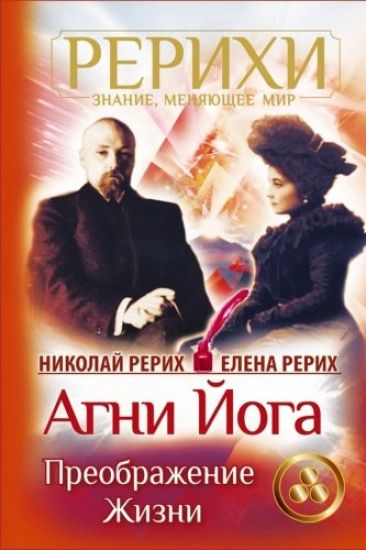
AGNI Joga. Preobrazhenie Zhizni

AGNI Joga. Preobrazhenie Zhizni

Nicholas Roerich; Helena Roerich

Createspace Independent Publishing Platform
2018
nidottu
V jetoj knige chitatel' prodolzhit puteshestvie po mental'no-duhovnomu Ognennomu Miru, napolnennomu "substanciej ognja" (vysshej psihicheskoj jenergiej), put' v kotoryj ukazan Elenoj Rerih, i postignet ego slozhnoe vnutrennee ustrojstvo. Proizvedenija Nikolaja Reriha zastavjat zadumat'sja o roli Kul'tury i Krasoty v istorii i sovremennosti, ob istinnom kosmicheskom prednaznachenii zhenshhiny i glubokom smysle, skrytom za prostymi, na pervyj vzgljad, slovami pritch, skazok i legend.
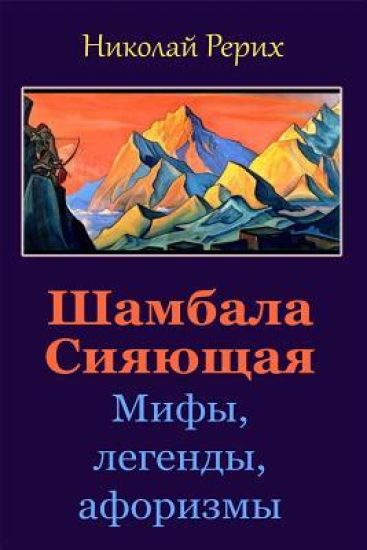
Shambala Sijajushhaja. Mify, Legendy, Aforizmy

Shambala Sijajushhaja. Mify, Legendy, Aforizmy

Nicholas Roerich

Createspace Independent Publishing Platform
2018
nidottu
V jetom sbornike rabot velikogo russkogo hudozhnika, puteshestvennika, myslitelja N. K. Reriha predstavleny proizvedenija raznyh zhanrov - belye stihi, filosofskie pritchi, rasskazy, ocherki, aforizmy. Tematika jetih rabot raznoobrazna - ot legend i pritch do rasskazov o tainstvennyh javlenijah prirody; ot osnov filosofskih uchenij Vostoka do mudryh sovetov i naputstvij. Odno neizmenno: o chem by ni pisal N. K. Rerih, ego proizvedenija vsegda dajut chitateljam vdohnovljajushhij impul's, novoe videnie zhizni i svoego mesta v nej.
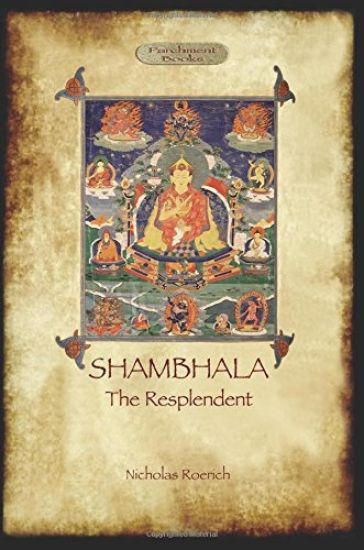
Shambhala the Resplendent

Shambhala the Resplendent

Nicholas Roerich

Parchment Books
2017
pokkari
Born at St. Petersburg in 1874, Nicholas Roerich was a precocious polymath, excelling at painting, poetry, archaeology, anthropology and botany. In adulthood, Roerich began a life-long fascination with eastern mysticism, founding (with his wife Helena) his own school of 'Agni Yoga' in 1920, and embarking, six year's later on an epic five-year expedition through Chinese Turkestan, Altai, Mongolia and Tibet, to study the religions and culture of the region and to search for the fabled city of Shambhala. Hidden between towering, snow-covered peaks, Shambhala is said to be earth's central chakra, a point of balance between this world and the invisible realms, a place where adepts and ascended masters watch over the evolution of humanity and chart its future course. By the end of his expedition, having faced countless dangers and privations, Roerich was certain that he had found clear proof of Shambhala's existence. As he himself said "We know the greatness of Shambhala. We know the reality of this indescribable realm on earth... Shambhala is connected with the heavenly one. And in this link, the two worlds are unified."
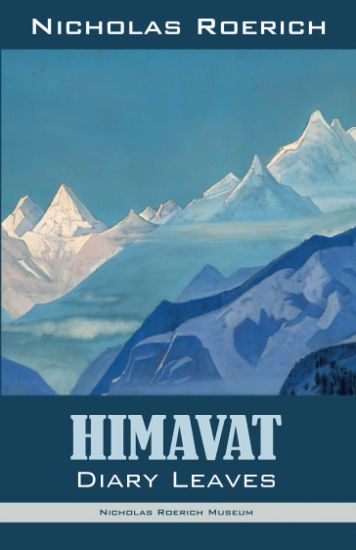
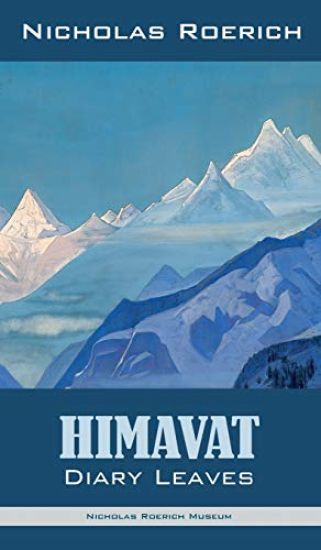
Himavat

Himavat

Nicholas Roerich

Nicholas Roerich Museum
2017
pokkari
Nicholas Roerich (1874-1947) is known first and foremost as a painter. His paintings, of which there are thousands around the world, explore the mythic origins, the natural beauty, and the spiritual strivings of humanity and of the world. But Nicholas Roerich was as prolific a writer as he was a painter. He wrote books, poetry, and almost-daily essays on life and events (called Diary Leaves). Many of these writings have been unavailable for decades. They will therefore be new to many readers. It is our hope that bringing these volumes to light again will expand awareness of the vast range and depth of Roerich's interests and insights into human nature and cultural history.
Himavat

Himavat

Nicholas Roerich

Nicholas Roerich Museum
2017
sidottu
Nicholas Roerich (1874-1947) is known first and foremost as a painter. His paintings, of which there are thousands around the world, explore the mythic origins, the natural beauty, and the spiritual strivings of humanity and of the world. But Nicholas Roerich was as prolific a writer as he was a painter. He wrote books, poetry, and almost-daily essays on life and events (called Diary Leaves). Many of these writings have been unavailable for decades. They will therefore be new to many readers. It is our hope that bringing these volumes to light again will expand awareness of the vast range and depth of Roerich's interests and insights into human nature and cultural history.
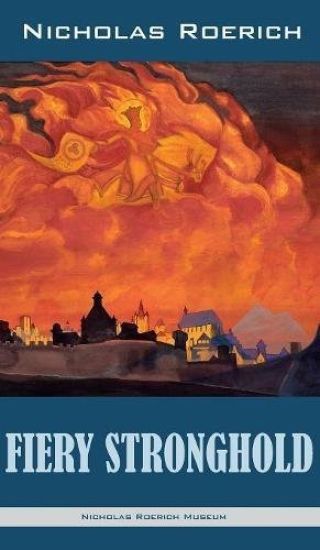
Fiery Stronghold

Fiery Stronghold

Nicholas Roerich

Nicholas Roerich Museum
2017
sidottu
Nicholas Roerich (1874-1947) is known first and foremost as a painter. His paintings, of which there are thousands around the world, explore the mythic origins, the natural beauty, and the spiritual strivings of humanity and of the world. But Nicholas Roerich was as prolific a writer as he was a painter. He wrote books, poetry, and almost-daily essays on life and events (called Diary Leaves). Many of these writings have been unavailable for decades. They will therefore be new to many readers. It is our hope that bringing these volumes to light again will expand awareness of the vast range and depth of Roerich's interests and insights into human nature and cultural history.
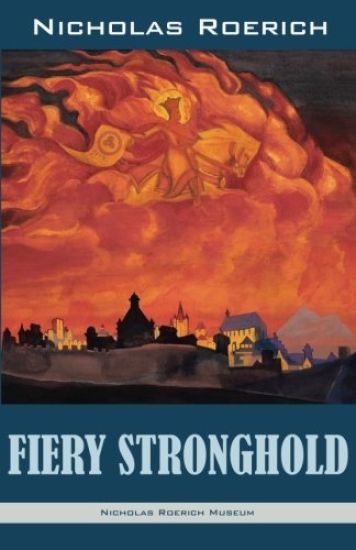
Fiery Stronghold

Fiery Stronghold

Nicholas Roerich

Nicholas Roerich Museum
2017
pokkari
Nicholas Roerich (1874-1947) is known first and foremost as a painter. His paintings, of which there are thousands around the world, explore the mythic origins, the natural beauty, and the spiritual strivings of humanity and of the world. But Nicholas Roerich was as prolific a writer as he was a painter. He wrote books, poetry, and almost-daily essays on life and events (called Diary Leaves). Many of these writings have been unavailable for decades. They will therefore be new to many readers. It is our hope that bringing these volumes to light again will expand awareness of the vast range and depth of Roerich's interests and insights into human nature and cultural history.
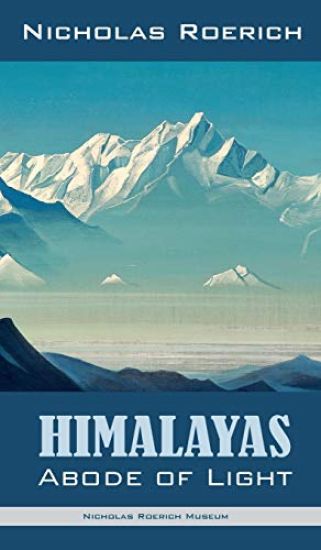
Himalayas - Abode of Light

Himalayas - Abode of Light

Nicholas Roerich

Nicholas Roerich Museum
2017
sidottu
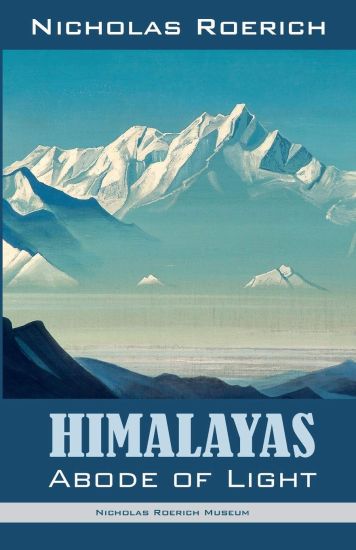
Nicholas Roerich (1874-1947) is known first and foremost as a painter. His paintings, of which there are thousands around the world, explore the mythic origins, the natural beauty, and the spiritual strivings of humanity and of the world. But Nicholas Roerich was as prolific a writer as he was a painter. He wrote books, poetry, and almost-daily essays on life and events (called Diary Leaves). Many of these writings have been unavailable for decades. They will therefore be new to many readers. It is our hope that bringing these volumes to light again will expand awareness of the vast range and depth of Roerich's interests and insights into human nature and cultural history.
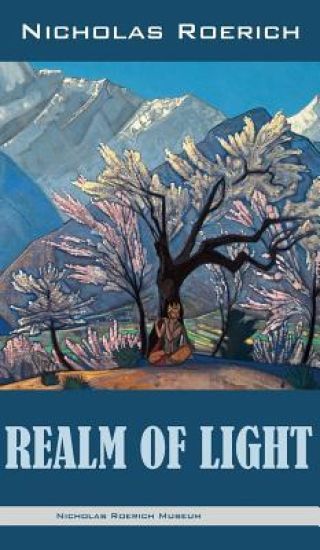
Realm of Light

Realm of Light

Nicholas Roerich

Nicholas Roerich Museum
2017
sidottu
Nicholas Roerich (1874-1947) is known first and foremost as a painter. His paintings, of which there are thousands around the world, explore the mythic origins, the natural beauty, and the spiritual strivings of humanity and of the world. But Nicholas Roerich was as prolific a writer as he was a painter. He wrote books, poetry, and almost-daily essays on life and events (called Diary Leaves). Many of these writings have been unavailable for decades. They will therefore be new to many readers. It is our hope that bringing these volumes to light again will expand awareness of the vast range and depth of Roerich's interests and insights into human nature and cultural history.
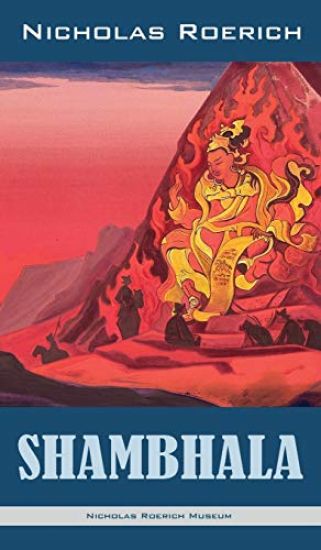
Shambhala

Shambhala

Nicholas Roerich

Nicholas Roerich Museum
2017
sidottu
In "Shambhala" Roerich has recorded the way of his journey through Central Asia and Tibet in the terms of spirit. It is a record of legends, of parables, of notes--the very substance of which the larger reality is composed, and all revealing different facets of the theme of Shambhala. In this book--as in his other books, "Altai-Himalaya" and "Heart of Asia," one realizes that Roerich's vision is manifold. Traveling on his way, he discerns all the beauty of the natural spectacle through which he passes. And in his works--as in his paintings--he records this panorama in successive sparks which flow into a continuous pageantry. But in addition, Roerich perceives also that subtler manifestation of the countries and peoples through which he journeys. He discerns their thoughts; he perceives the pulsating, throbbing hopes and beliefs that sweep like winds across space. And it is this record--so little visible to the many of us--that becomes the vital force of Roerich's message. One must remark the style of Roerich--it has the unrepeatable quality and synthesis of life. He transmits to us the essentials and we discern that these fragments of seeming fantasy are weaving themselves into a pattern of essential truth and essential beauty. Roerich has named this book, "Shambhala" advisedly. Reading it, one realizes that Roerich has woven a wreath which he has offered in full reverence to the great Principle which is Shambhala, the New Era; for truly it is the salutary wind of people's thought and faith which will aid the fires of Shambhala. And once again, as in all the deeds of his inexhaustible creative fervor, Roerich's "Shambhala" pronounces the evocation of the fires of new human achievement and a new human destiny.
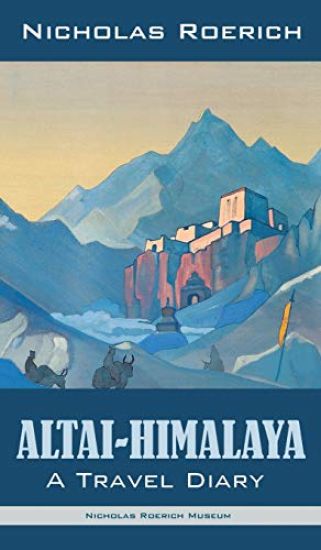
Altai-Himalaya

Altai-Himalaya

Nicholas Roerich

Nicholas Roerich Museum
2017
sidottu
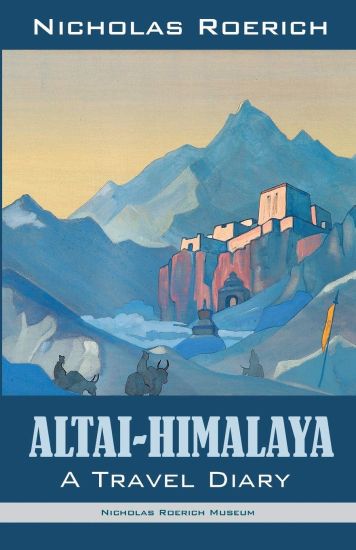
An inspiring record of the Roerich Central Asiatic Expedition (1924-1928) to India, Sikkim, Little Tibet, Chinese Turkestan, Mongolia and Tibet. Nicholas Roerich (1874-1947) is known first and foremost as a painter. His paintings, of which there are thousands around the world, explorethe mythic origins, the natural beauty, and the spiritual strivings ofhumanity and of the world. But Nicholas Roerich was as prolific a writer as he was a painter. He wrote books, poetry, and almost-daily essays on life and events (called Diary Leaves). Many of these writings have been unavailable for decades. They willtherefore be new to many readers. It is our hope that bringing thesevolumes to light again will expand awareness of the vast range and depth of Roerich's interests and insights into human nature and culturalhistory.
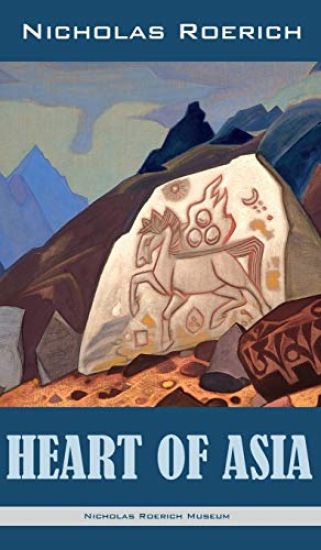
Heart of Asia

Heart of Asia

Nicholas Roerich

Nicholas Roerich Museum
2017
sidottu
Nicholas Roerich was fond of saying, "Blessed be the obstacles--through them we grow." He was well qualified to know, for obstacles were a constant in his life. A superficial glance at his life would reveal only creativity and adventure, far more than is generally allotted to any one person in a lifetime. But beneath that surface lay ever-present difficulty. It is hard to know why certain people are given greater portions of trouble than others. Roerich came from privileged people, and his life could have been easy. But he never chose the smooth path and seemed even to seek out life's obstacles as if he found nourishment in them. He was an indefatigable climber: he climbed mountains, and he also climbed life. Another saying that he liked to repeat, also related to obstacles, was, "It is easier to climb a rocky slope than a smooth one. The rocks provide steps on which one can find the force to move upward. And so it is in life." This book is about a life that was precisely devoted to climbing, to finding the rocks on which to gain a foothold, and to exploration and creative activity. Roerich ranged through Central Asia with the full force of the curious and subjected it to the eye of the scientist, the adventurer, the artist, and the spiritual seeker. Everything was there to be explored, to be dug up, to be recorded on paper and canvas. For him, Central Asia was the repository of the wisdom of the ages, the heart of the planet, the place to which one returns and from which one emerges reborn. Roerich devoted himself to the search for the seed of Good on Earth. He wanted to learn how this seed can be made to flourish, how it can be used to solve humanity's vast array of problems in order to reach the goal of peace and planetary harmony. This search took him to many parts of the world, but Central Asia--the Heart of Asia--was for him the true source, the field in which this seed of Good could be found. Shambhala was a reality to Roerich, an unquestioned fact, the heart of the planet, the place to which we owe our existence, our spiritual survival, and our knowledge. The search for Shambhala is the search for the solution to the problems of existence, for the vanquishing of obstacles, and for the discovery of the great freedom that lies beyond difficulty, tragedy, and destruction. Of course, Heart of Asia can be read as metaphor. Few of us can climb these high passes or search for the great Shambhala, except in our hearts. And therein lies the value of such a book. It is not just a guidebook to the countries traversed. It is a guidebook for our hearts, one in which we can explore just as Roerich did and find everything that he found: the obstacles, troubles, and tragedies, yes, but also the victory and the liberation.

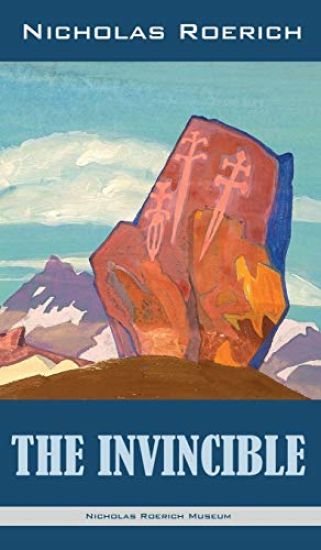
The Invincible

The Invincible

Nicholas Roerich

Nicholas Roerich Museum
2017
sidottu
Nicholas Roerich (1874-1947) is known first and foremost as a painter. His paintings, of which there are thousands around the world, explore the mythic origins, the natural beauty, and the spiritual strivings of humanity and of the world. But Nicholas Roerich was as prolific a writer as he was a painter. He wrote books, poetry, and almost-daily essays on life and events (called Diary Leaves). Many of these writings have been unavailable for decades. They will therefore be new to many readers. It is our hope that bringing these volumes to light again will expand awareness of the vast range and depth of Roerich's interests and insights into human nature and cultural history.
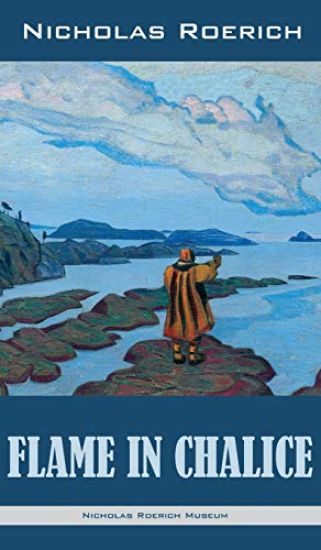
Flame in Chalice

Flame in Chalice

Nicholas Roerich

Nicholas Roerich Museum
2017
sidottu
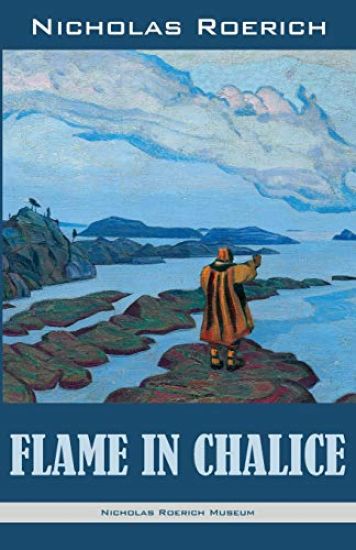
Nicholas Roerich is master of the singing word no less than of the singing form and color. His poetry is direct, simple, arrow-like. It has the same vibrant touch of the master, the same sense of mysticism and cosmic unfoldment found in his paintings. The depth and intensity, the rhythmic sweep and exaltation that mark his work as artist is no less present here. His lyric words, like so many singing arrows, fly straight to their invisible goal. Light rays out powerfully from the lines. It is evident that they have been "made in flame as nature makes." In the poetry of Roerich, finally, there is a fullness and expansion of consciousness, a vibration of light and color, a sense of prophecy and ongoing, of search, discovery and fulfilment that is as much part of his singing word as of the colors and contours of his brush. These poems are true children of the Flame in Chalice.
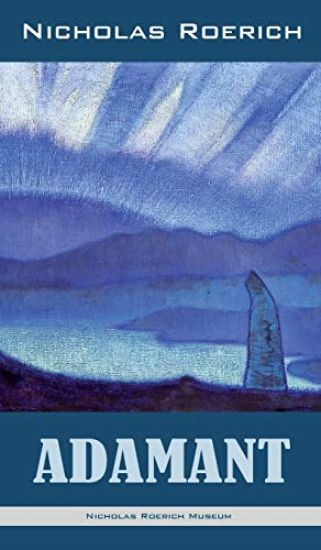
Adamant

Adamant

Nicholas Roerich

Nicholas Roerich Museum
2017
sidottu
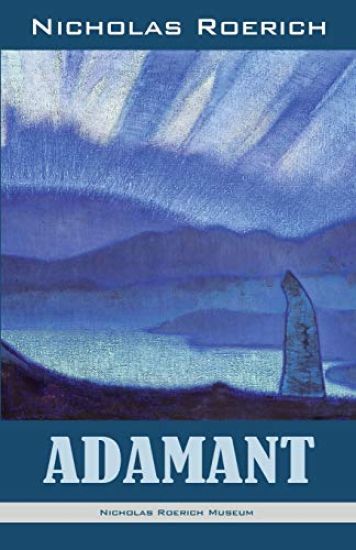
A collection of artistic and philosophical essays of Nicholas Roerich, the keynote of which is the conquering of materialism through beauty and knowledge. Nicholas Roerich (1874-1947) is known first and foremost as a painter. His paintings, of which there are thousands around the world, explorethe mythic origins, the natural beauty, and the spiritual strivings of humanity and of the world. But Nicholas Roerich was as prolific a writer as he was a painter. He wrote books, poetry, and almost-daily essays on life and events (called Diary Leaves). Many of these writingshave been unavailable for decades. They will therefore be new to many readers. It is our hope that bringing these volumes to light again will expand awareness of the vast range and depth of Roerich's interests and insights into human nature and cultural history.
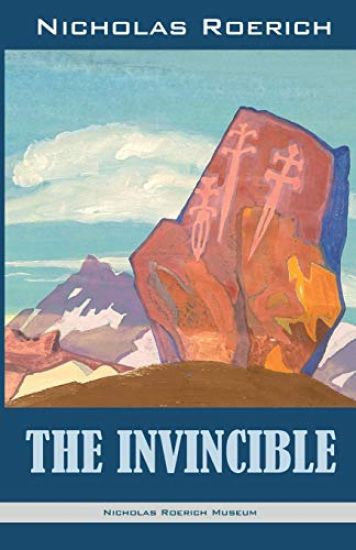
The Invincible

The Invincible

Nicholas Roerich

Nicholas Roerich Museum
2017
pokkari
Nicholas Roerich (1874-1947) is known first and foremost as a painter. His paintings, of which there are thousands around the world, explore the mythic origins, the natural beauty, and the spiritual strivings of humanity and of the world. But Nicholas Roerich was as prolific a writer as he was a painter. He wrote books, poetry, and almost-daily essays on life and events (called Diary Leaves). Many of these writings have been unavailable for decades. They will therefore be new to many readers. It is our hope that bringing these volumes to light again will expand awareness of the vast range and depth of Roerich's interests and insights into human nature and cultural history.
Himalayas - Abode of Light

Himalayas - Abode of Light

Nicholas Roerich

Nicholas Roerich Museum
2017
nidottu
Nicholas Roerich (1874-1947) is known first and foremost as a painter. His paintings, of which there are thousands around the world, explore the mythic origins, the natural beauty, and the spiritual strivings of humanity and of the world. But Nicholas Roerich was as prolific a writer as he was a painter. He wrote books, poetry, and almost-daily essays on life and events (called Diary Leaves). Many of these writings have been unavailable for decades. They will therefore be new to many readers. It is our hope that bringing these volumes to light again will expand awareness of the vast range and depth of Roerich's interests and insights into human nature and cultural history.
Flame in Chalice

Flame in Chalice

Nicholas Roerich

Nicholas Roerich Museum
2017
pokkari
Nicholas Roerich is master of the singing word no less than of the singing form and color. His poetry is direct, simple, arrow-like. It has the same vibrant touch of the master, the same sense of mysticism and cosmic unfoldment found in his paintings. The depth and intensity, the rhythmic sweep and exaltation that mark his work as artist is no less present here. His lyric words, like so many singing arrows, fly straight to their invisible goal. Light rays out powerfully from the lines. It is evident that they have been "made in flame as nature makes." In the poetry of Roerich, finally, there is a fullness and expansion of consciousness, a vibration of light and color, a sense of prophecy and ongoing, of search, discovery and fulfilment that is as much part of his singing word as of the colors and contours of his brush. These poems are true children of the Flame in Chalice.
Altai Himalaya

Altai Himalaya

Nicholas Roerich

Nicholas Roerich Museum
2017
nidottu
An inspiring record of the Roerich Central Asiatic Expedition(1924-1928) to India, Sikkim, Little Tibet, Chinese Turkestan, Mongoliaand Tibet. Nicholas Roerich (1874-1947) is known first and foremost as a painter. His paintings, of which there are thousands around the world, explore the mythic origins, the natural beauty, and the spiritual strivings of humanity and of the world. But Nicholas Roerich was as prolific a writer as he was a painter. He wrote books, poetry, and almost-daily essays on life and events (called Diary Leaves). Many of these writings have been unavailable for decades. They will therefore be new to many readers. It is our hope that bringing these volumes to light again will expand awareness of the vast range and depth of Roerich's interests and insights into human nature and cultural history.
Adamant

Adamant

Nicholas Roerich

Nicholas Roerich Museum
2017
pokkari
A collection of artistic and philosophical essays of Nicholas Roerich, the keynote of which is the conquering of materialism through beauty and knowledge. Nicholas Roerich (1874-1947) is known first and foremost as a painter. His paintings, of which there are thousands around the world, explorethe mythic origins, the natural beauty, and the spiritual strivings of humanity and of the world. But Nicholas Roerich was as prolific a writer as he was a painter. He wrote books, poetry, and almost-daily essays on life and events (called Diary Leaves). Many of these writingshave been unavailable for decades. They will therefore be new to many readers. It is our hope that bringing these volumes to light again will expand awareness of the vast range and depth of Roerich's interests and insights into human nature and cultural history.