Kirjojen hintavertailu – 12 859 818 kirjaa ja 27 kauppaa

Kirjailija

Nicholas Stern

Kirjat ja teokset yhdessä paikassa: 10 kirjaa, julkaisuja vuosilta 1991–2025, suosituimpiin kuuluu The Growth Story of the 21st Century. Vertaile teosten hintoja ja tarkista saatavuus suomalaisista kirjakaupoista.

10 kirjaa

Kirjojen julkaisuvuodet: 1991–2025.

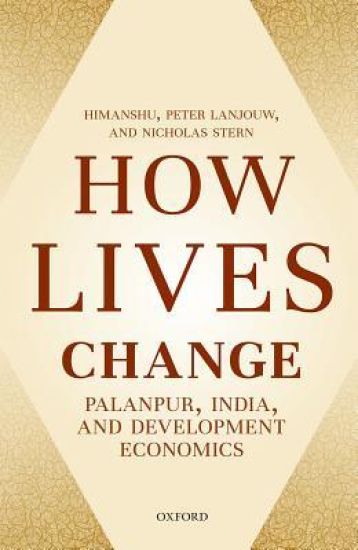
How Lives Change

How Lives Change

Himanshu; Peter Lanjouw; Nicholas Stern

Oxford University Press
2018
sidottu
Development economics is about understanding how and why lives change. How Lives Change: Palanpur, India, and Development Economics studies a single village in a crucially important country to illuminate the drivers of these changes, why some people do better or worse than others, and what influences mobility and inequality. How Lives Change draws on seven decades of detailed data collection by a team of dedicated development economists to describe the evolution of Palanpur's economy, its society, and its politics. The emerging story of integration of the village economy with the outside world is placed against the backdrop of a rapidly transforming India and, in turn, helps to understand the transformation. It puts development economics into practice to assess its performance and potential in a unique and powerful way to show how the development of one village since India's independence can be set in the context of the entire country's story. How Lives Change sets out the role of, and scope for, public policy in shaping the lives of individuals. It describes how changes in Palanpur's economy since the late 1950s were initially driven by the advance of agriculture through land reforms, the expansion of irrigation and the introduction of "green revolution" technologies. Since the mid-1980s, newly emerging off-farm opportunities in nearby towns and outside agriculture became the key driver of growth and change, profoundly influencing poverty, income mobility, and inequality in Palanpur. Village institutions are shown to have evolved in subtle but clear ways over time, both shaping and being shaped by economic change. Individual entrepreneurship and initiative is found to play a critical role in driving and responding to the forces of change; and yet, against a backdrop of real economic growth and structural transformation, this book shows that human development outcomes have shown only weak progress and remain stubbornly resistant to change.
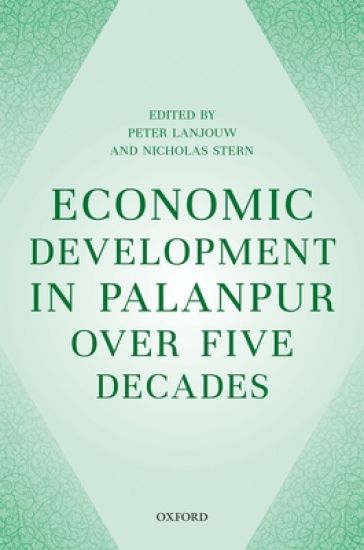
Economic Development in Palanpur over Five Decades

Economic Development in Palanpur over Five Decades

Peter Lanjouw; Nicholas Stern

Oxford University Press
2018
nidottu
This book provides an account of economic development in Palanpur, a village in rural North India, based on five detailed surveys of the village over the period 1957 to 1993. These five decades have seen economic well-being rise in some important respects, but stagnation and even decline in other areas. The analysis presented here focuses on the reasons behind this uneven progress. The authors tie in the background issues of the evolution of poverty and inequality and mobility over time with causal factors such as technological progress, demographic and sectoral changes, the operation of markets, and the role of public action. The richness and unique nature of the qualitative and quantitative data collected and presented by Lanjouw and Stern yields an analysis which illuminates questions of direct importance to researchers in a wide variety of disciplines.
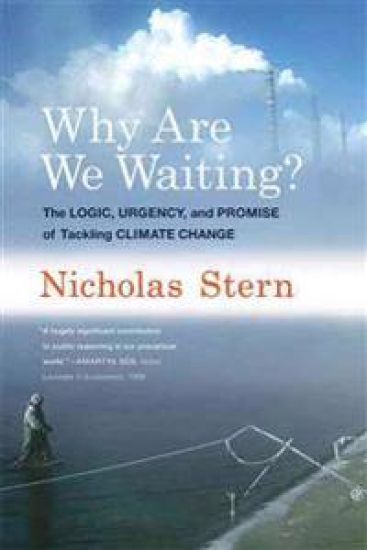
Why Are We Waiting?

Why Are We Waiting?

Nicholas Stern

MIT Press
2016
pokkari
An urgent case for climate change action that forcefully sets out, in economic, ethical, and political terms, the dangers of delay and the benefits of action. The risks of climate change are potentially immense. The benefits of taking action are also clear: we can see that economic development, reduced emissions, and creative adaptation go hand in hand. A committed and strong low-carbon transition could trigger a new wave of economic and technological transformation and investment, a new era of global and sustainable prosperity. Why, then, are we waiting? In this book, Nicholas Stern explains why, notwithstanding the great attractions of a new path, it has been so difficult to tackle climate change effectively. He makes a compelling case for climate action now and sets out the forms that action should take. Stern argues that the risks and costs of climate change are worse than estimated in the landmark Stern Review in 2006-and far worse than implied by standard economic models. He reminds us that we have a choice. We can rely on past technologies, methods, and institutions-or we can embrace change, innovation, and international collaboration. The first might bring us some short-term growth but would lead eventually to chaos, conflict, and destruction. The second could bring about better lives for all and growth that is sustainable over the long term, and help win the battle against worldwide poverty. The science warns of the dangers of neglect; the economics and technology show what we can do and the great benefits that will follow; an examination of the ethics points strongly to a moral imperative for action. Why are we waiting?

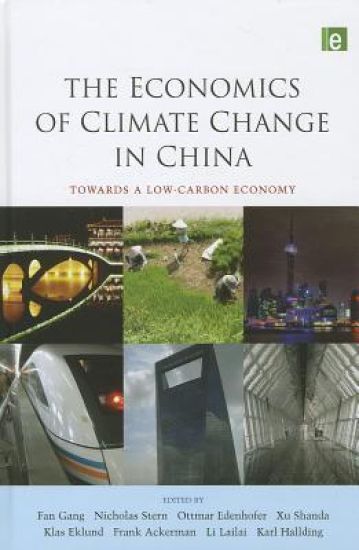
The Economics of Climate Change in China

The Economics of Climate Change in China

Fan Gang; Nicholas Stern; Ottmar Edenhofer; Xu Shanda; Klas Eklund; Frank Ackerman; Lailai Li; Karl Hallding

Earthscan Ltd
2011
sidottu
China faces many modernization challenges, but perhaps none is more pressing than that posed by climate change. China must find a new economic growth model that is simultaneously environmentally sustainable, can free it from its dependency on fossil fuels, and lift living standards for the majority of its population. But what does such a model look like? And how can China best make the transition from its present macro-economic structure to a low-carbon future? This ground-breaking economic study, led by the Stockholm Environment Institute and the Chinese Economists 50 Forum, brings together leading international thinkers in economics, climate change, and development, to tackle some of the most challenging issues relating to China's low-carbon development. This study maps out a deep carbon reduction scenario and analyzes economic policies that shift carbon use, and shows how China can take strong and decisive action to make deep reductions in carbon emission over the next forty years while maintaining high economic growth and minimizing adverse effects of a low-carbon transition. Moreover, these reductions can be achieved within the finite global carbon budget for greenhouse gas emissions, as determined by the hard constraints of climate science. The authors make the compelling case that a transition to a low-carbon economy is an essential part of China's development and modernization. Such a transformation would also present opportunities for China to improve its energy security and move its economy higher up the international value chain. They argue that even in these difficult economic times, climate change action may present more opportunities than costs. Such a transformation, for China and the rest of the world, will not be easy. But it is possible, necessary and worthwhile to pursue.
Blueprint for a Safer Planet

Blueprint for a Safer Planet

Nicholas Stern

Vintage
2010
pokkari
droughts occur in Australia and Darfur... Further substantial climate change is unavoidable and the risks to the natural world, the economy and our everyday lives are immense. Here Lord Stern, a world leading authority on climate change, confronts urgent questions: What are the dangers?
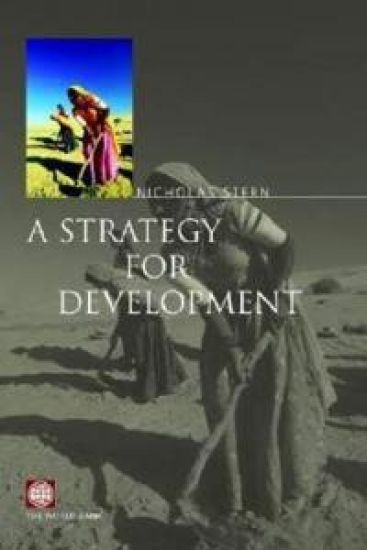
A Strategy for Development

A Strategy for Development

Nicholas Stern

World Bank Publications
2002
nidottu
The speeches in this collection-all delivered since Nicholas Stern became Chief Economist of the World Bank in July 2000-reflect insights that Mr. Stern has gained over more than three decades of study and work in development economics. Together they provide an analysis of development experience and an agenda for action in the coming years. In his introduction, the author explains the evolution of his ideas, starting with early work in Africa and India, within the larger context of changes in development thinking and strategy. The speeches that follow draw on his varied experience and on the research findings and operational experience of the World Bank. The first speech provides an overview of the past five decades of development. Speeches that follow explore current development issues in India, Indonesia, Pakistan, and China. A strategy for development is then outlined: building an economic climate that facilitates investment and growth, and empowering poor people to participate in that growth. A concluding speech examines the role of the international financial institutions in promoting investment and overcoming poverty.
Economic Development in Palanpur over Five Decades

Economic Development in Palanpur over Five Decades

Peter Lanjouw; Nicholas Stern

Clarendon Press
1998
sidottu
This book provides an account of economic development in Palanpur, a village in rural North India, based on five detailed surveys of the village over the period 1957 to 1993. These five decades have seen economic well-being rise in some important respects, but stagnation and even decline in other areas. The analysis presented here focuses on the reasons behind this uneven progress. The authors tie in the background issues of the evolution of poverty and inequality and mobility over time with causal factors such as technological progress, demographic and sectoral changes, the operation of markets, and the role of public action. The richness and unique nature of the qualitative and quantitative data collected and presented by Lanjouw and Stern yields an analysis which illuminates questions of direct importance to researchers in a wide variety of disciplines.
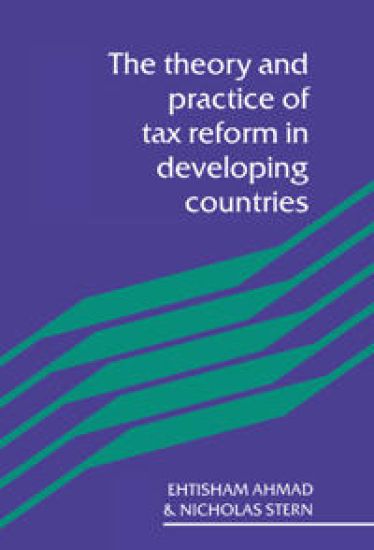
The Theory and Practice of Tax Reform in Developing Countries

The Theory and Practice of Tax Reform in Developing Countries

Etisham Ahmad; Nicholas Stern

Cambridge University Press
1991
pokkari
This 1991 study approaches the subject of tax reform from basic economic principles. The objectives are to develop guidelines for the design of tax policy; to show how the principles can structure systematic research into tax reform in terms of the consequences for households, producers and government; and finally, to combine the guidelines and applied research into a practical tax package for Pakistan. Professors Ahmad and Stern provide a coherent framework to show how principles can be formulated, applied research structured, and policies developed and appraised in a systematic manner. This book will be useful to graduate students, academic economists, and professional economists in international organisations and governments interested in public policy and development planning. The careful application of the ideas presented here should lead to a real improvement in the development of policy and to further empirical and theoretical research.
The Theory and Practice of Tax Reform in Developing Countries

The Theory and Practice of Tax Reform in Developing Countries

Etisham Ahmad; Nicholas Stern

Cambridge University Press
1991
sidottu
This 1991 study approaches the subject of tax reform from basic economic principles. The objectives are to develop guidelines for the design of tax policy; to show how the principles can structure systematic research into tax reform in terms of the consequences for households, producers and government; and finally, to combine the guidelines and applied research into a practical tax package for Pakistan. Professors Ahmad and Stern provide a coherent framework to show how principles can be formulated, applied research structured, and policies developed and appraised in a systematic manner. This book will be useful to graduate students, academic economists, and professional economists in international organisations and governments interested in public policy and development planning. The careful application of the ideas presented here should lead to a real improvement in the development of policy and to further empirical and theoretical research.