
Kirjailija
Nicholson Baker
Kirjat ja teokset yhdessä paikassa: 33 kirjaa, julkaisuja vuosilta 1992–2026, suosituimpiin kuuluu Human Smoke. Vertaile teosten hintoja ja tarkista saatavuus suomalaisista kirjakaupoista.
33 kirjaa
Kirjojen julkaisuvuodet: 1992–2026.

Named a Best Book of 2024 by Slate and a Most Anticipated Book of 2024 by Literary Hub From the acclaimed and bestselling writer Nicholson Baker, a deeply personal account of his journey learning how to paint for the first time, and a meditation on the power of art in times of crisis Nicholson Baker wanted to learn how to paint. In 2019, after years of researching and writing about secret and often horrible government programs for his book Baseless: My Search for Secrets in the Ruins of the Freedom of Information Act, he was wiped out. Having been steeped for so long in the history of war, violence, and conspiracy, the world had lost some of its brightness. Photography had scratched a creative itch for years, but now, Baker was desperate to squeeze more out of what he saw - he wanted to live, slowly, through the snatches of life he was recording in photos. Maybe, he thought, he could learn to paint? The idea consumed him, but he was nagged by an even more debilitating doubt: What if he failed? Finding a Likeness is Baker's record of the years he worked to improve his artistic skills, beginning with his first, humble attempts to set paintbrush to paper. Driven by a natural curiosity and a strong desire to paint faces, clouds, and landscapes that actually resemble faces, clouds, and landscapes, he attends classes from local artists, watches YouTube tutorials, and seeks out master painters from the past and present in the hopes of uncovering their secrets. In his inimitable voice, Baker recounts the highs and lows of the creative process, reflects on memories of growing up as the son of two painters, and learns what it means to really see. Filled with Baker's own art, as well as the work of artists from around the world, Finding a Likeness is a tender and deeply felt testimony to taking a step back and going back to basics. Baker improves dramatically in his craft, but as he considers what it means to try, fail, and try again, he discovers far more than what it takes to paint a cloud - rather, he shows us how to bear witness to the world, to the good and the bad, and to do it all justice with paper and ink.

Baseless: My Search for Secrets in the Ruins of the Freedom of Information ACT
Nicholson Baker
PENGUIN BOOKS
2021
nidottu
"Staggeringly good." --Counterpunch A major new work, a hybrid of history, journalism, and memoir, about the modern Freedom of Information Act--FOIA--and the horrifying, decades-old government misdeeds that it is unable to demystify, from one of America's most celebrated writers Eight years ago, while investigating the possibility that the United States had used biological weapons in the Korean War, Nicholson Baker requested a series of Air Force documents from the early 1950s under the provisions of the Freedom of Information Act. Years went by, and he got no response. Rather than wait forever, Baker set out to keep a personal journal of what it feels like to try to write about major historical events in a world of pervasive redactions, witheld records, and glacially slow governmental responses. The result is one of the most original and daring works of nonfiction in recent memory, a singular and mesmerizing narrative that tunnels into the history of some of the darkest and most shameful plans and projects of the CIA, the Air Force, and the presidencies of Harry Truman and Dwight Eisenhower. In his lucid and unassuming style, Baker assembles what he learns, piece by piece, about Project Baseless, a crash Pentagon program begun in the early fifties that aimed to achieve "an Air Force-wide combat capability in biological and chemical warfare at the earliest possible date." Along the way, he unearths stories of balloons carrying crop disease, leaflet bombs filled with feathers, suicidal scientists, leaky centrifuges, paranoid political-warfare tacticians, insane experiments on animals and humans, weaponized ticks, ferocious propaganda battles with China, and cover and deception plans meant to trick the Kremlin into ramping up its germ-warfare program. At the same time, Baker tells the stories of the heroic journalists and lawyers who have devoted their energies to wresting documentary evidence from government repositories, and he shares anecdotes from his daily life in Maine feeding his dogs and watching the morning light gather on the horizon. The result is an astonishing and utterly disarming story about waiting, bureaucracy, the horrors of war, and, above all, the cruel secrets that the United States government seems determined to keep forever from its citizens.
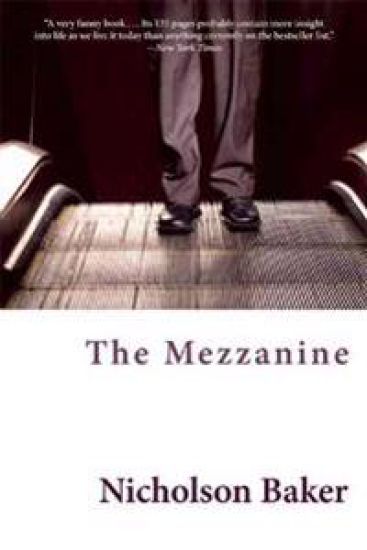
The Mezzanine is the story of one man's lunch hour. Pondering life's littlest questions - why does one shoelace always wear out before the other? Whatever happened to the paper drinking straw - our narrator interrogates the inner-workings of corporate living as he traipses his way down escalators to the first floor and through the mundaneness of office life. Mixing humour with the existentialism that surrounds all our working lives, The Mezzanine is a classic work of modern American literature.
Baseless: My Search for Secrets in the Ruins of the Freedom of Information ACT
Nicholson Baker
PENGUIN PRESS
2020
sidottu
"Staggeringly good." --Counterpunch A major new work, a hybrid of history, journalism, and memoir, about the modern Freedom of Information Act--FOIA--and the horrifying, decades-old government misdeeds that it is unable to demystify, from one of America's most celebrated writers Eight years ago, while investigating the possibility that the United States had used biological weapons in the Korean War, Nicholson Baker requested a series of Air Force documents from the early 1950s under the provisions of the Freedom of Information Act. Years went by, and he got no response. Rather than wait forever, Baker set out to keep a personal journal of what it feels like to try to write about major historical events in a world of pervasive redactions, witheld records, and glacially slow governmental responses. The result is one of the most original and daring works of nonfiction in recent memory, a singular and mesmerizing narrative that tunnels into the history of some of the darkest and most shameful plans and projects of the CIA, the Air Force, and the presidencies of Harry Truman and Dwight Eisenhower. In his lucid and unassuming style, Baker assembles what he learns, piece by piece, about Project Baseless, a crash Pentagon program begun in the early fifties that aimed to achieve "an Air Force-wide combat capability in biological and chemical warfare at the earliest possible date." Along the way, he unearths stories of balloons carrying crop disease, leaflet bombs filled with feathers, suicidal scientists, leaky centrifuges, paranoid political-warfare tacticians, insane experiments on animals and humans, weaponized ticks, ferocious propaganda battles with China, and cover and deception plans meant to trick the Kremlin into ramping up its germ-warfare program. At the same time, Baker tells the stories of the heroic journalists and lawyers who have devoted their energies to wresting documentary evidence from government repositories, and he shares anecdotes from his daily life in Maine feeding his dogs and watching the morning light gather on the horizon. The result is an astonishing and utterly disarming story about waiting, bureaucracy, the horrors of war, and, above all, the cruel secrets that the United States government seems determined to keep forever from its citizens.
The Labyrinth
Harold Rosenberg; Nicholson Baker; Saul Steinberg
The New York Review of Books, Inc
2018
sidottu
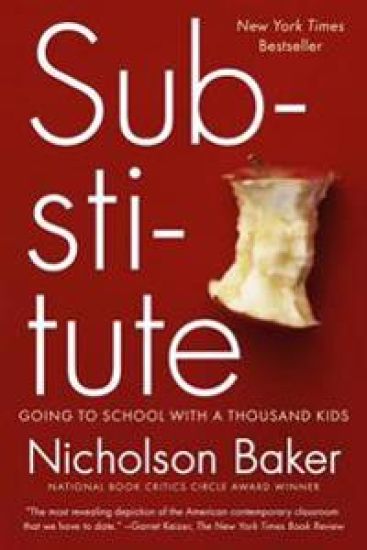
**A New York Times Bestseller** "May be the most revealing depiction of the American contemporary classroom that we have to date." --Garret Keizer, The New York Times Book Review Bestselling author Nicholson Baker, in pursuit of the realities of American public education, signed up as a substitute teacher in a Maine public school district. In 2014, after a brief orientation course and a few fingerprinting sessions, Nicholson Baker became an on-call substitute teacher in a Maine public school district. He awoke to the dispatcher's five-forty a.m. phone call and headed to one of several nearby schools; when he got there, he did his best to follow lesson plans and help his students get something done. What emerges from Baker's experience is a complex, often touching deconstruction of public schooling in America: children swamped with overdue assignments, overwhelmed by the marvels and distractions of social media and educational technology, and staff who weary themselves trying to teach in step with an often outmoded or overly ambitious standard curriculum. In Baker's hands, the inner life of the classroom is examined anew--mundane worksheets, recess time-outs, surprise nosebleeds, rebellions, griefs, jealousies, minor triumphs, kindergarten show-and-tell, daily lessons on everything from geology to metal tech to the Holocaust--as he and his pupils struggle to find ways to get through the day. Baker is one of the most inventive and remarkable writers of our time, and Substitute, filled with humor, honesty, and empathy, may be his most impressive work of nonfiction yet.
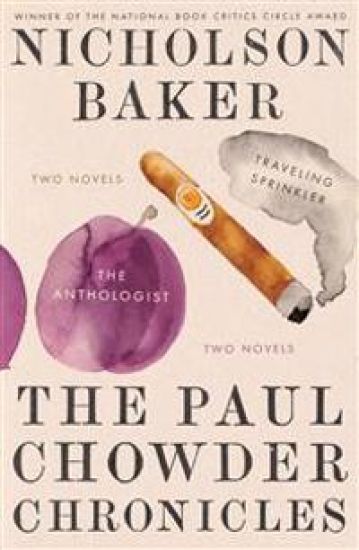
TOGETHER FOR THE FIRST TIME, BOTH OF NICHOLSON BAKER S BRILLIANT NOVELS FEATURING BELOVED HERO AND POET PAUL CHOWDER A New York Times notable book and a national bestseller, Nicholson Baker s The Anthologist introduces his quirkiest and most unforgettable protagonist yet, the erudite, unpretentious, and often hilarious (The New Yorker) Paul Chowder. Chowder really needs to write an introduction to his new anthology of verse, Only Rhyme it s the first work his editor has sent him in months but he s having a hard time getting started. Not only is his career floundering, but his girlfriend, Roz, just moved out. Perhaps unsurprisingly, Chowder can t keep his mind from drifting to the sufferings of the great poets, from Tennyson and Yeats to Roethke, Merwin, to every poet who s been published in The New Yorker. As he ponders the strange power and musicality of language, and adjusts to his newly single life, Chowder s introduction slowly but surely begins to take shape. A wholly entertaining and beguiling love story, and the first novel in the chronicles of Paul Chowder which is followed by Traveling Sprinkler in this same volume The Anthologist is a loving and superbly witty homage to poetryand to life (The Boston Globe)."
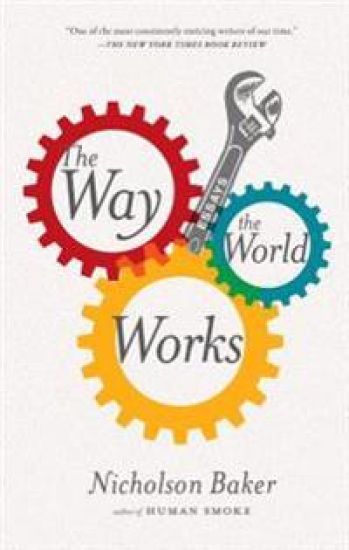
New York Times bestselling author Nicholson Baker has assembled a "provocative and entertaining" (The Wall Street Journal) collection of his most original and brilliant pieces from the last fifteen years. From political controversy to the intimacy of his own life, from forgotten heroes of pacifism to airplane wings, telephones, paper mills, David Remnick, Joseph Pulitzer, the OED, and the manufacture of the Venetian gondola, Nicholson Baker ranges over the map of life to examine what troubles us, what eases our pain, and what brings us joy. The Way the World Works is a keen-minded, generous-spirited compendium by a modern American master.

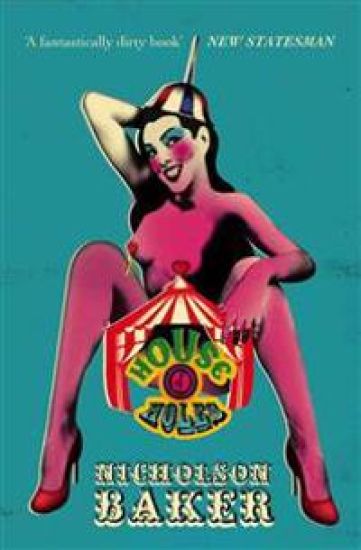
Shandee finds a friendly arm at a granite quarry. Ned drops down a hole in a golf course. Luna meets a man made of light bulbs at a tanning parlor. So begins Nicholson Baker's fuse-blowing, sex-positive escapade, House of Holes. Baker, the bestselling author of The Mezzanine, Vox, and The Fermata, who 'writes like no one else in America' (Newsweek), returns to erotic territory with a gleefully over-the-top novel set in a pleasure resort, where normal rules don't apply. Visitors, pulled in via their drinking straws or the dryers in laundromats, can undergo crotchal transfers . . . make love to trees . . . visit the Groanrooms and the twelve-screen Porndecahedron . . . or pussy-surf the White Lake. It's very expensive, of course, but there are work-study programs. In charge of day-to-day operations is Lila, a former hospital administrator whose breast milk has unusual regenerative properties. Brimful of good-nature, wit, and surreal sexual vocabulary, House of Holesis a modern-day Hieronymous Boschian bacchanal that is sure to surprise, amuse, and arouse.
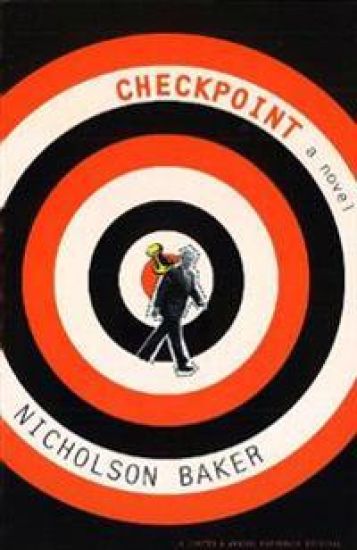
Two men - Jay and Ben - sit in a Washington hotel room. Jay has called his old friend Ben there - to tell him why and how he wants to kill the President. Jay is a bit of a loser (he's lost his girlfriend, his job, his car), generally easy-going, but now he's on edge and he's angry - and he's acquired some radio-controlled flying saws, and is working on a boulder with a depleted uranium centre- but he also has a gun and bullets. Ben is the voice of liberal reason, with a job and a family. Jay switches on a tape machine, and the two men argue. Well, Ben tries feebly to reason or cajole, while Jay rants and rages about everything from the horror of what happened at that southern Iraq checkpoint where US forces opened fire on a Shiite family in a Land Rover, killing most of them, and decapitating two young girls; to the iniquities of the present administration, Bush, Cheney, Rumsfeld et al., and abortion (if they're against abortion, how come they can kill women and children?), not to mention the napalm-like substance ('improved fire jelly') used in bombs in Iraq. Their dialogue veers from chilling and serious to wacky and crazed (Bush, says Jay, is 'one dead armadillo'). Checkpoint is a novel about a man pushed to the extremes, by a writer who is clearly angry. Like Michael Moore's Fahrenheit 9/11, it takes the temperature of America just below the surface and finds it at boiling point.
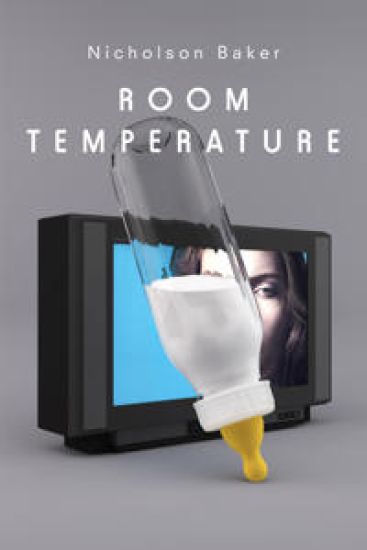
On an autumn day, at around three-fifteen in the afternoon, Mike sits down in the rocking chair to feed his infant daughter, Bug. The novel that unfolds over the next twenty minutes of Mike's life is a warmly comic masterpiece of observation, reflection and digression. Baker brilliantly recreates Mike's roving mind, with its tangential thoughts about peanut butter and its big questions about fatherhood, marriage, and love. The result is surprisingly thrilling to read: funny, linguistically exuberant, tender and alive to the small mysteries and pleasures of everyday life.
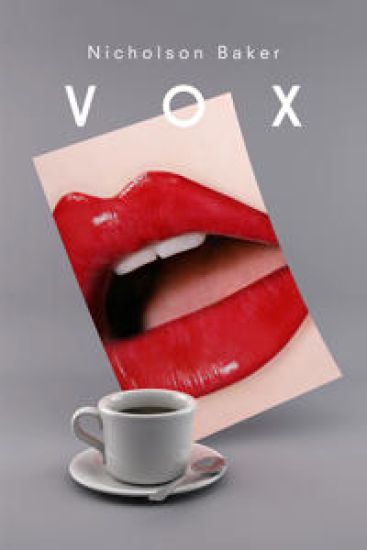
Vox is the story of two voices, his and hers: two strangers who, having met on a telephone chat-line, switch to a private, one-on-one connection - and find it impossible to hang up. Literate, humorous, erotic, Vox is a classic of bedtime reading.
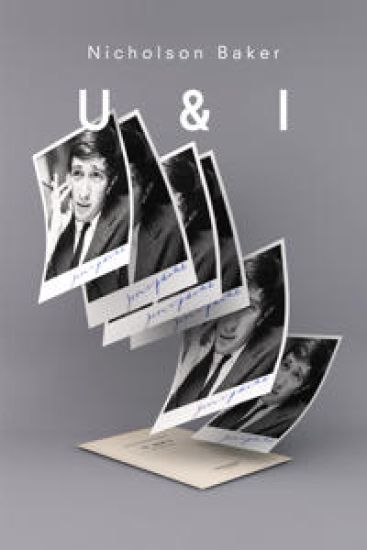
When Nicholson Baker, one of the most linguistically talented writers in America, set out to write a book about John Updike, the result was no ordinary biography. Instead Baker's account of his relationship with his hero is a hilarious story of ambition, obsession, talent and neurosis, alternately self-deprecating and self-aggrandizing. More memoir than literary criticism, Baker is excruciatingly honest, and U & I reveals at least as much about Baker himself as it does about his idol. Written twenty years before Updike's death in 2009, U & I is a very smart and extremely funny exploration of the debts we owe our heroes.
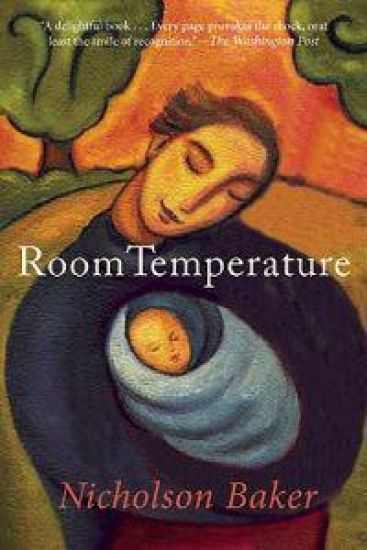
The author of the quirky masterpiece The Mezzanine turns a young father's feeding-time reverie into a dazzling catalog of the minutiae of domestic love. A delightful book, homey and comfortable as a slipper. . . . Every page provokes the shock, or at least the smile, of recognition.--Washington Post.
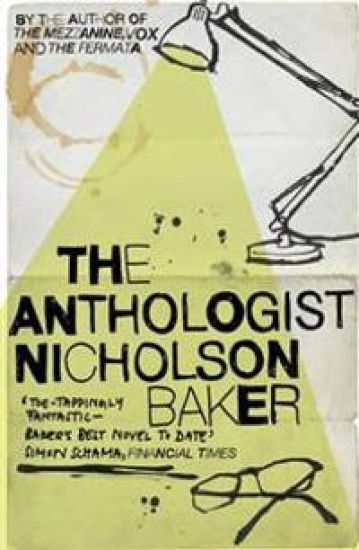
The Anthologist, is narrated by Paul Chowder, a poet of some little reknown who is sitting in his barn most of the time trying to write the introduction to a new anthology of poetry called Only Rhyme. He's having a hard time getting started because his career is falling apart, his girlfriend Roz has recently left him, and he is thinking about the poets throughout history who have suffered far worse and actually deserve to feel sorry for themselves. He has also promised his readers that he will reveal many wonderful secrets and tips and tricks about poetry, and it looks like the introduction will be a little longer than he'd thought. What unfolds is a wholly entertaining and beguiling love story about poetry, among other things; Paul tells us about all of the great poets, from Tennyson, Swinburne, and Yeats to the moderns (Roethke, Bogan, Merwin) to the contemporary scene as well as the editorial staff of The New Yorker's editorial department. And what he reveals about the rhythm and music of poetry itself is astonishing and makes you realize how incredibly important poetry is to our lives. At the same time, Paul manages just barely to realize all of this himself and what results is a tender, wonderfully romantic, often hilarious, and inspired novel.
The Mezzanine
Nicholson Baker
Grove Press / Atlantic Monthly Press
2010
nidottu
Halvin toimitettuna 19,70 €
In his startling, witty, and inexhaustibly inventive first novel--first published in 1986 and now reissued as a Grove Press paperback--the author of Vox and The Fermata uses a one-story escalator ride as the occasion for a dazzling reappraisal of everyday objects and rituals. From the humble milk carton to the act of tying one's shoes, The Mezzanine at once defamiliarizes the familiar world and endows it with loopy and euphoric poetry. Nicholson Baker's accounts of the ordinary become extraordinary through his sharp storytelling and his unconventional, conversational style. At first glance, The Mezzanine appears to be a book about nothing. In reality, it is a brilliant celebration of things, simultaneously demonstrating the value of reflection and the importance of everyday human human experiences.
Human Smoke: The Beginnings of World War II, the End of Civilization
Nicholson Baker
Simon Spotlight Entertainment
2009
pokkari
Halvin toimitettuna 23,60 €
Synopsis coming soon.......
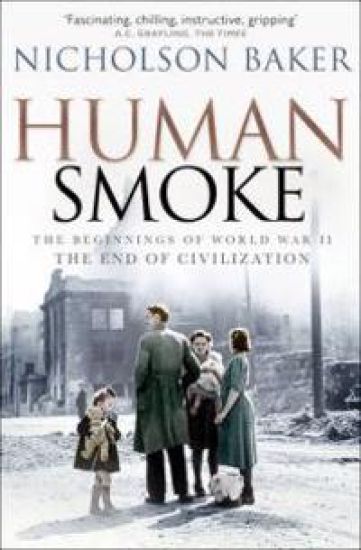
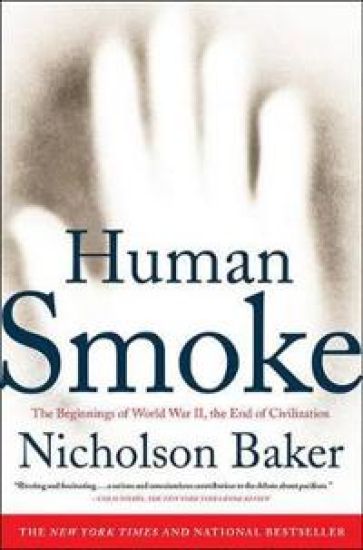
A meticulously researched and revelatory perspective on the political, social, religious and economic events in the years leading up to World War II.