Kirjojen hintavertailu – 12 903 724 kirjaa ja 27 kauppaa

Kirjailija

Nick Barton

Kirjat ja teokset yhdessä paikassa: 5 kirjaa, julkaisuja vuosilta 2006–2026, suosituimpiin kuuluu Guildford F ire Station. Vertaile teosten hintoja ja tarkista saatavuus suomalaisista kirjakaupoista.

5 kirjaa

Kirjojen julkaisuvuodet: 2006–2026.

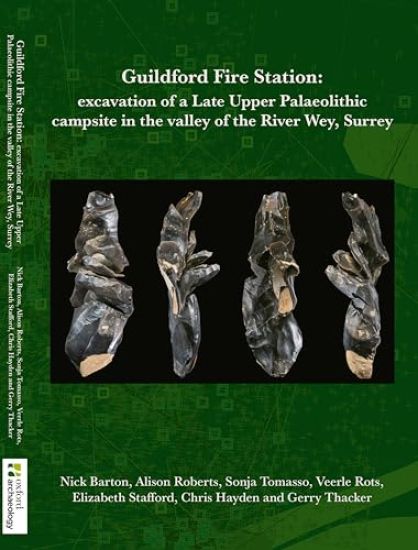
Guildford F ire Station

Guildford F ire Station

Nick Barton; Alison Roberts; Sonja Tomasso; Veerle Rots; Elizabeth Stafford; Christopher Hayden; Gerry Thacker

OXFORD ARCHAEOLOGY
2024
nidottu
Excavations carried out prior to the construction of a new fire station in Guildford, Surrey, revealed a well preserved, in situ Late Upper Palaeolithic flint scatter. The site lay on cold climate fluvial sandy gravels deposited in braided stream systems prior to the onset of the Late Glacial (Windermere) interstadial. Typological analysis of the flint and OSL dates suggest that the scatter itself dates from the first half of the Late Glacial (Windermere) interstadial (c 1415KBP). The lithic assemblage is homogeneous and, apart from initial extraction and nodule testing, all stages of flint manufacture are represented. Two main concentrations of knapping are represented, the main focus of which were the production of blade blanks some of which were removed from the site. Functional analysis of the tools suggests relatively short occupation during which hunting, smallscale craft activities linked with the retooling of hunting weapons and the manufacture of hide items, and limited processing of animal and plant materials took place. The assemblage is comparable to that from Wey Manor Farm, Surrey, 17km further downstream, and raises the question of the relationship between the two sites. Both share technological and typological features in common with the Creswellian, though Wey Manor Farm has a greater diversity in lithic point types. Comparison with Continental assemblages suggests that the Surrey sites share affinities with the Older Azilian or equivalents in northwest France and Germany and implies strong postMagdalenian influences in the Late Upper Palaeolithic of Britain.

Engineering in Jointed and Faulted Rock

Engineering in Jointed and Faulted Rock

Nick Barton; Stavros Bandis

CRC Press
2026
nidottu
Engineering in Jointed and Faulted Rock aims to provide the background knowledge, necessary tools, and guidelines for rationalized and consistent engineering approaches to design and construction in and on jointed and faulted rock. Three avenues will be exploited to that effect: mechanics, empiricism and analysis (including numerical analysis). The book is uniquely dedicated to the theme of engineering in jointed rock to a much greater degree than earlier texts in rock mechanics and rock engineering, and there will be fundamental treatment and examples of the characterization, strength, deformability and permeability of joints and, in separate chapters, the same for rock masses. These fundamentals will be followed by their application in numerical models, for developing the engineering design for rock slopes, tunnels, bridge foundations, dam abutments, nuclear waste disposal, mine shafts and roadways. Empirical design will be validated and improved by numerical modelling where necessary. The text will be permeated with informative and illustrated case records from the authors’ total of 40 countries sphere of experience. Solutions of every-day problems will be interspersed with experiences from the longest tunnel, the widest cavern, the highest dam, the site of the largest underground power house, and the problems with the deepest TBM tunnels. This much needed text on the mechanics of jointed rock, based on extensive experiments and measurements both in the laboratory and in the field, will be indispensable for the rock engineering and rock mechanics community.
Ink Stains Vol. 8: A Dark Fiction Literary Anthology

Ink Stains Vol. 8: A Dark Fiction Literary Anthology

Nick Barton; S. B. Roark

Dark Alley Press
2018
nidottu
The world is a beautiful and terrifying place, where the lands have secrets of their own. There's a rustle in the trees in the French countryside. Is it the wind? Or the soldiers who should have died just once? The fields of India encircle the shaman as he performs rituals that can take away a life or bring it back. The woods next to a lake in New England hide a camp full of archetypes and a psycho who may or may not wear a mask. There's something about a place in time folded into a tale that becomes a character of its own, something that tantalizes and mesmerizes. From the twisting, gravel roads of New Zealand to the dusty, hard-lived ranches of the American West, we travel the world to find the disturbed, the mysterious, and the heart-wrenching. Authors Luke Bandy, Nick Barton, S. B. Roark, Michael D. Burnside, Gwyneth Cooper, Dana Himrich, Brooke Reynolds and introduce us to their worlds and invite us in to see it as they do. We might never be the same.
Revealing Lateglacial Landscapes

Revealing Lateglacial Landscapes

Nick Barton

Blackwell Publishing Ltd
2016
nidottu
As the ice retreated from Northern Europe towards the end of the last Glacial period, humans started to move north and recolonise the landscape. While popular myth paints a picture of harsh conditions with small groups of 'cavemen' living a difficult and marginal existence, it is now being understood that complex and relatively advanced cultures typified these societies. Despite harsh winter conditions the climate allowed a varied environments in which plant and animal biomass levels were surprisingly high. Late Glacial environments are an important component of European courses in Anthropology, Archaeology and Earth Science (Quaternary Geoscience). Barton has an established reputation as a researcher and author and his new book will be widely welcomed throughout Europe.
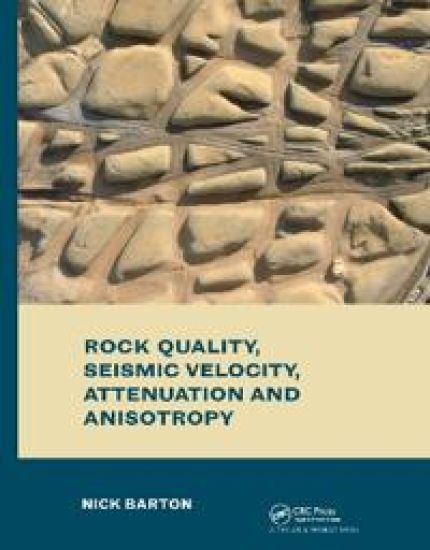
Rock Quality, Seismic Velocity, Attenuation and Anisotropy
Seismic measurements take many forms, and appear to have a universal role in the Earth Sciences. They are the means for most easily and economically interpreting what lies beneath the visible surface. There are huge economic rewards and losses to be made when interpreting the shallow crust or subsurface more, or less accurately, as the case may be. This book describes seismic behaviour at many scales and from numerous fields in geophysics, tectonophysics and rock physics, and from civil, mining and petroleum engineering. Addressing key items for improved understanding of seismic behaviour, it often interprets seismic measurements in rock mechanics terms, with particular attention to the cause of attenuation, its inverse seismic quality, and the anisotropy of fracture compliances and stiffnesses. Reviewed behaviour stretches over ten orders of magnitude, from micro-crack compliance in laboratory tests to cross-continent attenuation. Between these extremes lie seismic investigation of rock joints, boreholes, block tests, dam and bridge foundations, quarry blasting, canal excavations, hydropower and transportation tunnels, machine bored TBM tunnels, sub-sea sediment and mid-ocean ridge measurements, where the emphasis is on velocity-depth-age models. Attenuation of earthquake coda-waves is also treated, including in-well measurements. In the later chapters, there is a general emphasis on deeper, higher stress, larger scale applications of seismic, such as shear-wave splitting for interpreting the attenuation, anisotropy and orientation of permeable 'open' fracture sets in petroleum reservoirs, and the 4D seismic effects of water-flood, oil production and compaction. The dispersive or frequency dependence of most seismic measurements and their dependence on fracture dimensions and fracture density is emphasized. The possibility that shear displacement may be required to explain permeability at depth is quantified. This book is cross-disciplinary, non-mathematical and phenomenological in nature, containing a wealth of figures and a wide review of the literature from many fields in the Earth Sciences. Including a chapter of conclusions and an extensive subject index, it is a unique reference work for professionals, researchers, university teachers and students working in the fields of geophysics, civil, mining and petroleum engineering. It will be particularly relevant to geophysicists, engineering geologists and geologists who are engaged in the interpretation of seismic measurements in rock and petroleum engineering.