Kirjojen hintavertailu – 12 873 135 kirjaa ja 26 kauppaa

Kirjailija

Nick Bostrom

Kirjat ja teokset yhdessä paikassa: 9 kirjaa, julkaisuja vuosilta 2002–2024, suosituimpiin kuuluu Die Zukunft der Menschheit. Vertaile teosten hintoja ja tarkista saatavuus suomalaisista kirjakaupoista.

9 kirjaa

Kirjojen julkaisuvuodet: 2002–2024.

Deep Utopia

Deep Utopia

Nick Bostrom

Ideapress Publishing
2024
sidottu

Halvin toimitettuna 29,50 €

Gold Medal Winner, Living Now Book Awards 2024 Best Books of 2024, Kirkus Reviews Winner, Independent Press Awards 2024 Honorable Mention, Royal Dragonfly Book Awards 2024 (Religion/Spirituality) Winner, PenCraft Book Awards 2024 (Fiction: Intrigue) Best AI Books of 2024, The Information Winner, American Book Fest (Nonfiction: Cross-Genre) Winner, 2025 American Legacy Book Award (Nonfiction: Cross-Genre) Bostrom’s last book, Superintelligence: Paths, Dangers, Strategies (OUP, 2014), sparked a global conversation on AI that continues and widens to this day. That book, which despite its academic style became a New York Times bestseller, focused on what would happen if AI goes wrong. But what if AI goes right? Suppose we succeed in developing superintelligence safely and that we make good use of the almost magical powers this unlocks. We would then achieve full unemployment. More than that, we would transition into a “post-instrumental condition," in which human effort is not needed for any practical purpose. This would be a condition of material abundance. Human nature itself would become fully malleable. In such a solved world, what would be the point of human existence? What could give meaning to our lives? Which old values will we have to sacrifice, and which new values will we be able to realize to wonderful degrees? Deep Utopia—a work that is again years ahead of its time—takes the readers on a journey into some of the most profound questions that arise as we dissolve the limits of our current mode of being. It is a lush, playful, difficult, and human text that interleaves fiction stories and philosophical lectures that show us a glimpse of a different kind of existence–one that might be ours in the not-so-distant future.

Deep Utopia

Deep Utopia

Nick Bostrom

Ideapress Publishing
2024
nidottu

Halvin toimitettuna 31,00 €

A greyhound catching the mechanical lure-what would he actually do with it? Has he given this any thought? Bostrom's previous book, Superintelligence: Paths, Dangers, Strategies changed the global conversation on AI and became a New York Times bestseller. It focused on what might happen if AI development goes wrong. But what if things go right? Suppose that we develop superintelligence safely, govern it well, and make good use of the cornucopian wealth and near magical technological powers that this technology can unlock. If this transition to the machine intelligence era goes well, human labor becomes obsolete. We would thus enter a condition of "post-instrumentality", in which our efforts are not needed for any practical purpose. Furthermore, at technological maturity, human nature becomes entirely malleable. Here we confront a challenge that is not technological but philosophical and spiritual. In such a solved world, what is the point of human existence? What gives meaning to life? What do we do all day? Deep Utopia shines new light on these old questions, and gives us glimpses of a different kind of existence, which might be ours in the future.
Superintelligens : vägar, faror, strategier

Superintelligens : vägar, faror, strategier

Nick Bostrom

Fri Tanke Förlag
2020
pokkari
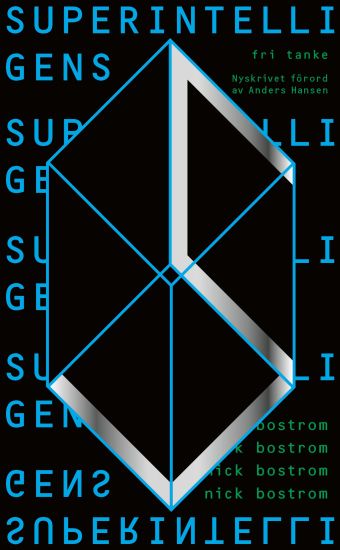
Vad händer om vi en dag utvecklar maskiner med en intelligens överlägsen vår egen? Människor har idag en dominant position på vår planet, inte för att vi är starkare än alla andra levande varelser, utan för att vi är smartare. Men med utvecklingen av artificiell intelligens står vår särställning – och i förlängningen hela den mänskliga civilisationen – på spel. Kan artificiella intelligenser komma att bli lika dominerande som människor är idag? Och om sådana superintelligenser sedan börjar utveckla sig själva, riskerar vi inte då att förlora kontrollen över utvecklingen? Det är viktigare än någonsin att diskutera utvecklingen av artificiell intelligens och vilka möjligheter och risker vi står inför. I denna fascinerande bok presenterar Nick Bostrom, en av världens främsta AI-forskare verksam vid universitetet i Oxford, en framtid där maskiner tänker själva. Bostrom utforskar hur långt bort en sådan framtid verkar vara och diskuterar de existentiella utmaningar mänskligheten då kan komma att ställas inför.
Superintelligence

Superintelligence

Nick Bostrom

Oxford University Press
2016
nidottu

Halvin toimitettuna 21,30 €

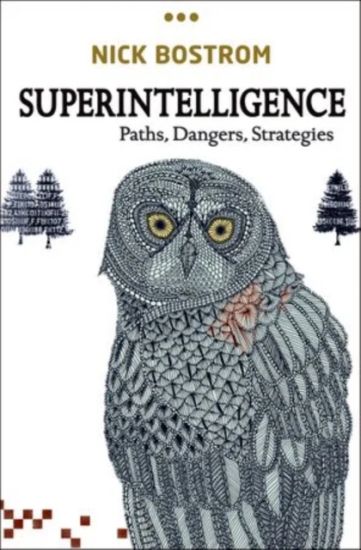
The human brain has some capabilities that the brains of other animals lack. It is to these distinctive capabilities that our species owes its dominant position. Other animals have stronger muscles or sharper claws, but we have cleverer brains. If machine brains one day come to surpass human brains in general intelligence, then this new superintelligence could become very powerful. As the fate of the gorillas now depends more on us humans than on the gorillas themselves, so the fate of our species then would come to depend on the actions of the machine superintelligence. But we have one advantage: we get to make the first move. Will it be possible to construct a seed AI or otherwise to engineer initial conditions so as to make an intelligence explosion survivable? How could one achieve a controlled detonation? To get closer to an answer to this question, we must make our way through a fascinating landscape of topics and considerations. Read the book and learn about oracles, genies, singletons; about boxing methods, tripwires, and mind crime; about humanity's cosmic endowment and differential technological development; indirect normativity, instrumental convergence, whole brain emulation and technology couplings; Malthusian economics and dystopian evolution; artificial intelligence, and biological cognitive enhancement, and collective intelligence. This profoundly ambitious and original book picks its way carefully through a vast tract of forbiddingly difficult intellectual terrain. Yet the writing is so lucid that it somehow makes it all seem easy. After an utterly engrossing journey that takes us to the frontiers of thinking about the human condition and the future of intelligent life, we find in Nick Bostrom's work nothing less than a reconceptualization of the essential task of our time.
Superintelligence

Superintelligence

Nick Bostrom

Oxford University Press
2014
sidottu

Halvin toimitettuna 31,70 €

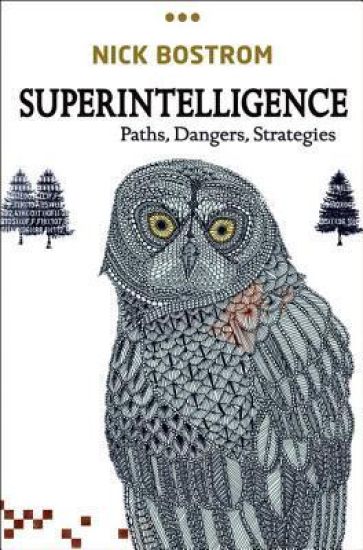
The human brain has some capabilities that the brains of other animals lack. It is to these distinctive capabilities that our species owes its dominant position. Other animals have stronger muscles or sharper claws, but we have cleverer brains. If machine brains one day come to surpass human brains in general intelligence, then this new superintelligence could become very powerful. As the fate of the gorillas now depends more on us humans than on the gorillas themselves, so the fate of our species then would come to depend on the actions of the machine superintelligence. But we have one advantage: we get to make the first move. Will it be possible to construct a seed AI or otherwise to engineer initial conditions so as to make an intelligence explosion survivable? How could one achieve a controlled detonation? To get closer to an answer to this question, we must make our way through a fascinating landscape of topics and considerations. Read the book and learn about oracles, genies, singletons; about boxing methods, tripwires, and mind crime; about humanity's cosmic endowment and differential technological development; indirect normativity, instrumental convergence, whole brain emulation and technology couplings; Malthusian economics and dystopian evolution; artificial intelligence, and biological cognitive enhancement, and collective intelligence. This profoundly ambitious and original book picks its way carefully through a vast tract of forbiddingly difficult intellectual terrain. Yet the writing is so lucid that it somehow makes it all seem easy. After an utterly engrossing journey that takes us to the frontiers of thinking about the human condition and the future of intelligent life, we find in Nick Bostrom's work nothing less than a reconceptualization of the essential task of our time.
Anthropic Bias

Anthropic Bias

Nick Bostrom

Routledge
2010
nidottu
Anthropic Bias explores how to reason when you suspect that your evidence is biased by "observation selection effects"--that is, evidence that has been filtered by the precondition that there be some suitably positioned observer to "have" the evidence. This conundrum--sometimes alluded to as "the anthropic principle," "self-locating belief," or "indexical information"--turns out to be a surprisingly perplexing and intellectually stimulating challenge, one abounding with important implications for many areas in science and philosophy. There are the philosophical thought experiments and paradoxes: the Doomsday Argument; Sleeping Beauty; the Presumptuous Philosopher; Adam & Eve; the Absent-Minded Driver; the Shooting Room. And there are the applications in contemporary science: cosmology ("How many universes are there?", "Why does the universe appear fine-tuned for life?"); evolutionary theory ("How improbable was the evolution of intelligent life on our planet?"); the problem of time's arrow ("Can it be given a thermodynamic explanation?"); quantum physics ("How can the many-worlds theory be tested?"); game-theory problems with imperfect recall ("How to model them?"); even traffic analysis ("Why is the 'next lane' faster?"). Anthropic Bias argues that the same principles are at work across all these domains. And it offers a synthesis: a mathematically explicit theory of observation selection effects that attempts to meet scientific needs while steering clear of philosophical paradox.
Anthropic Bias

Anthropic Bias

Nick Bostrom

Routledge
2002
sidottu
Anthropic Bias explores how to reason when you suspect that your evidence is biased by "observation selection effects"--that is, evidence that has been filtered by the precondition that there be some suitably positioned observer to "have" the evidence. This conundrum--sometimes alluded to as "the anthropic principle," "self-locating belief," or "indexical information"--turns out to be a surprisingly perplexing and intellectually stimulating challenge, one abounding with important implications for many areas in science and philosophy. There are the philosophical thought experiments and paradoxes: the Doomsday Argument; Sleeping Beauty; the Presumptuous Philosopher; Adam & Eve; the Absent-Minded Driver; the Shooting Room. And there are the applications in contemporary science: cosmology ("How many universes are there?", "Why does the universe appear fine-tuned for life?"); evolutionary theory ("How improbable was the evolution of intelligent life on our planet?"); the problem of time's arrow ("Can it be given a thermodynamic explanation?"); quantum physics ("How can the many-worlds theory be tested?"); game-theory problems with imperfect recall ("How to model them?"); even traffic analysis ("Why is the 'next lane' faster?"). Anthropic Bias argues that the same principles are at work across all these domains. And it offers a synthesis: a mathematically explicit theory of observation selection effects that attempts to meet scientific needs while steering clear of philosophical paradox.