Kirjojen hintavertailu – 12 903 725 kirjaa ja 27 kauppaa
Kirjailija
Nick Couldry
Kirjat ja teokset yhdessä paikassa: 32 kirjaa, julkaisuja vuosilta 1999–2026, suosituimpiin kuuluu Predatory AI. Vertaile teosten hintoja ja tarkista saatavuus suomalaisista kirjakaupoista.
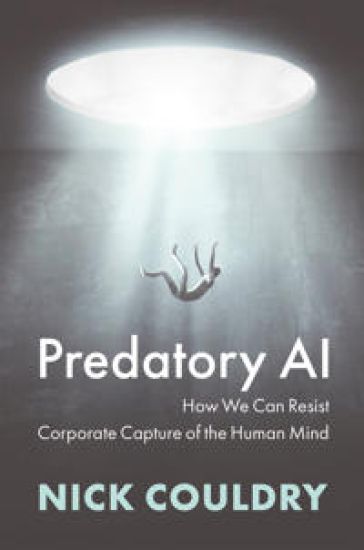
We are told that AI is inevitable, a revolutionary next stage in planetary intelligence. The calculative power that Big Tech is harnessing via its AI products cannot be doubted. But what if humanity is entering into the wrong social contract with AI? A good future for humanity cannot mean inputting our lives into predatory AI models whose terms we don't control. It cannot mean trading away our own cognitive resources – and the power to define the future direction of the human mind – to corporations. It cannot mean ever greater cognitive dependence on business products, while ignoring the implications for environmental sustainability. A good future with AI must mean putting social, community and planetary values first. This book imagines a different social contract with AI, and a different future. It presents clearly the social damage currently being done at work, and particularly the education and creative sectors, by accepting the wrong social contract with AI. And it debunks the philosophical prejudices that block us from valuing our own human cognitive resources. In this second book of his trilogy, Humanising the Future, Nick Couldry argues that the time to renegotiate our contract with AI is now. This book opens a path to doing so.
We are told that AI is inevitable, a revolutionary next stage in planetary intelligence. The calculative power that Big Tech is harnessing via its AI products cannot be doubted. But what if humanity is entering into the wrong social contract with AI? A good future for humanity cannot mean inputting our lives into predatory AI models whose terms we don't control. It cannot mean trading away our own cognitive resources – and the power to define the future direction of the human mind – to corporations. It cannot mean ever greater cognitive dependence on business products, while ignoring the implications for environmental sustainability. A good future with AI must mean putting social, community and planetary values first. This book imagines a different social contract with AI, and a different future. It presents clearly the social damage currently being done at work, and particularly the education and creative sectors, by accepting the wrong social contract with AI. And it debunks the philosophical prejudices that block us from valuing our own human cognitive resources. In this second book of his trilogy, Humanising the Future, Nick Couldry argues that the time to renegotiate our contract with AI is now. This book opens a path to doing so.
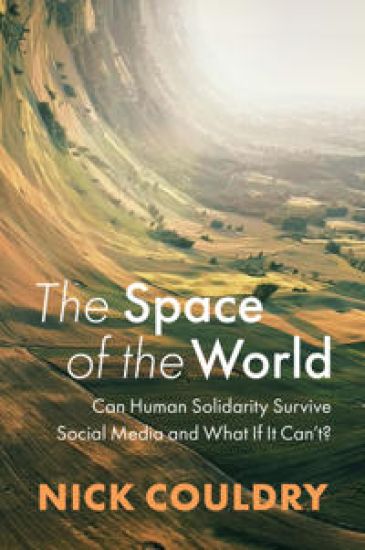
Over the past thirty years, humanity has made a huge mistake. We handed over to big tech decisions that have allowed them to build what has become our "space of the world" – the highly artificial space of social media platforms where much of our social life now unfolds. This has proved reckless and has huge social consequences. The toxic effects on social life, young people’s mental health, and political solidarity are well known, but the key factor underlying all this has been missed: the fact that humanity allowed business to construct our space of the world at all and then exploit it for profit. In the process, we ignored two millennia of political thought about the conditions under which a healthy or even a non-violent politics is possible. We endangered the one resource that is in desperately short supply in the face of catastrophic climate change: solidarity. Is human solidarity possible in a world of continuous digital connection and commercially managed platforms, and what if it isn’t? In the first book of his trilogy, Humanising the Future, Nick Couldry offers a radical new vision of how to design our digital spaces so that they build, rather than erode, both solidarity and community. This trenchant and vividly written book stresses that we cannot afford not to care for our space of the world. We need to rebuild it together.
Over the past thirty years, humanity has made a huge mistake. We handed over to big tech decisions that have allowed them to build what has become our "space of the world" – the highly artificial space of social media platforms where much of our social life now unfolds. This has proved reckless and has huge social consequences. The toxic effects on social life, young people’s mental health, and political solidarity are well known, but the key factor underlying all this has been missed: the fact that humanity allowed business to construct our space of the world at all and then exploit it for profit. In the process, we ignored two millennia of political thought about the conditions under which a healthy or even a non-violent politics is possible. We endangered the one resource that is in desperately short supply in the face of catastrophic climate change: solidarity. Is human solidarity possible in a world of continuous digital connection and commercially managed platforms, and what if it isn’t? In the first book of his trilogy, Humanising the Future, Nick Couldry offers a radical new vision of how to design our digital spaces so that they build, rather than erode, both solidarity and community. This trenchant and vividly written book stresses that we cannot afford not to care for our space of the world. We need to rebuild it together.
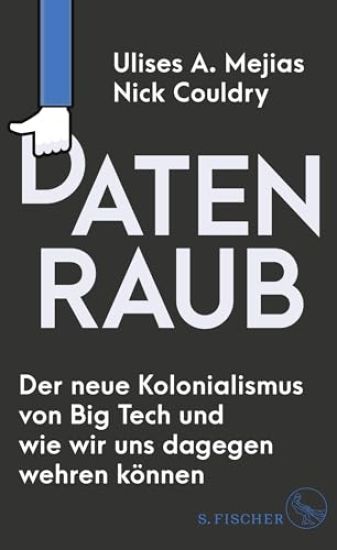
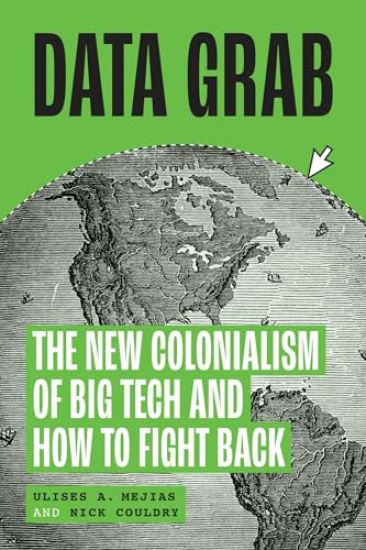
A compelling argument that the extractive practices of today's tech giants are the continuation of colonialism--and a crucial guide to collective resistance. Large technology companies like Meta, Amazon, and Alphabet have unprecedented access to our daily lives, collecting information when we check our email, count our steps, shop online, and commute to and from work. Current events are concerning--both the changing owners (and names) of billion-dollar tech companies and regulatory concerns about artificial intelligence underscore the sweeping nature of Big Tech's surveillance and the influence such companies hold over the people who use their apps and platforms. As trusted tech experts Ulises A. Mejias and Nick Couldry show in this eye-opening and convincing book, this vast accumulation of data is not the accidental stockpile of a fast-growing industry. Just as nations stole territories for ill-gotten minerals and crops, wealth, and dominance, tech companies steal personal data important to our lives. It's only within the framework of colonialism, Mejias and Couldry argue, that we can comprehend the full scope of this heist. Like the land grabs of the past, today's data grab converts our data into raw material for the generation of corporate profit against our own interests. Like historical colonialism, today's tech corporations have engineered an extractive form of doing business that builds a new social and economic order, leads to job precarity, and degrades the environment. These methods deepen global inequality, consolidating corporate wealth in the Global North and engineering discriminatory algorithms. Promising convenience, connection, and scientific progress, tech companies enrich themselves by encouraging us to relinquish details about our personal interactions, our taste in movies or music, and even our health and medical records. Do we have any other choice? Data Grab affirms that we do. To defy this new form of colonialism we will need to learn from previous forms of resistance and work together to imagine entirely new ones. Mejias and Couldry share the stories of voters, workers, activists, and marginalized communities who have successfully opposed unscrupulous tech practices. An incisive discussion of the digital media that's transformed our world, Data Grab is a must-read for anyone concerned about privacy, self-determination, and justice in the internet age.
Your life online is their product. In the past, colonialism was a landgrab of natural resources, exploitative labour and private property from countries around the world. It promised to modernise and civilise, but actually sought to control. It stole from native populations and made them sign contracts they didn’t understand. It took resources just because they were there. Colonialism has not disappeared – it has taken on a new form. In the new world order, data is the new oil. Big Tech companies are grabbing our most basic natural resources – our data – exploiting our labour and connections, and repackaging our information to control our views, track our movements, record our conversations and discriminate against us. Every time we unthinkingly click ‘Accept’ on Terms and Conditions, we allow our most personal information to kept indefinitely, repackaged by big Tech companies to control and exploit us for their own profit. In this searing, cutting-edge guide, two leading global researchers – and founders of the concept of data colonialism – reveal how history can help us both to understand the emerging future and to fight back.
In einer Welt der digitalen Medien und datenbasierten Online-Plattformen muss die Sozialtheorie völlig neu überdacht werden. Fünfzig Jahre nachdem Peter L. Berger und Thomas Luckmann ihren Klassiker „Die Gesellschaftliche Konstruktion der Wirklichkeit“ veröffentlicht haben, gehen zwei führende Medien- und Kommunikationsforscher, Nick Couldry und Andreas Hepp, erneut der Frage nach, wie die soziale Welt von Menschen „geschaffen“ wird. Im Zentrum steht allerdings eine Alltagswelt, die von digitalen Medien und Infrastrukturen durchdrungen ist. Wie verändert sich die soziale Welt, in der wir leben, wenn sie dermaßen auf digitalen Medien und Datenprozessierung fußt? Wie können wir die Konsequenzen dieser tiefgreifenden Mediatisierung für die Gesellschaft, aber auch die Qualität des individuellen Lebens fassen? Ausgehend von der Diskussion einer Vielzahl von Theorien und einer breiten Auswahl an empirischen Studien bietet dieses Buch eine differenzierte Darstellung, wie die „digitale Welt“ historisch entstanden ist und wohin die tiefgreifende Mediatisierung uns führt.
Vi lever i en tid då medierna inte bara spelar en viktig roll utan också formar hela vårt samhälle, inklusive förutsättningarna för organisering och styrning. Medierna har gett oss en värld som alltmer präglas av sammankoppling och ömsesidigt beroende. En ny social ordning, som bygger på våra relationer till medierna, växer fram. Men hur ser den ordningen ut? Vilken makt och vilket inflytande får företag och regeringar över oss? I denna levande och angelägna introduktionsbok beskriver Nick Couldry mediernas roll genom fem dimensioner: sammankoppling, representation, föreställning, delning och styrning. För varje dimension visar han hur viktigt det är att förstå de komplexa och ofta oklara konsekvenser medierna har för vårt samhälle. Boken inleds med ett förord av Stina Bengtsson, professor i medie- och kommunikationsvetenskap vid Södertörns högskola.
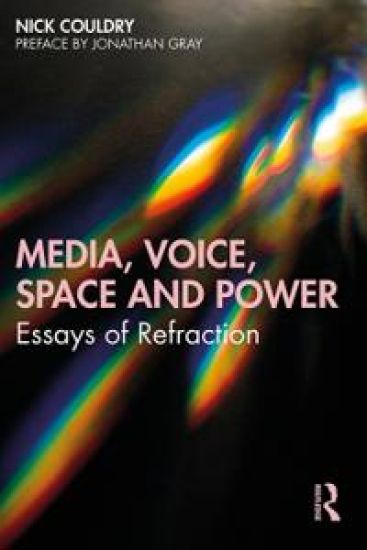
Nick Couldry is one of the world’s leading analysts of media power and voice, and has been publishing widely for 25 years. This volume, published 20 years after The Place of Media Power, brings together a rich collection of essays from his earliest to his latest writings, some of them hard to access, plus two previously unpublished chapters. The book’s 15 chapters cover a variety of themes from voice to space, from Big Data to democracy, and from art to reality television. Taken together, they give a unique insight into the range of Couldry’s interests and passions. Throughout, Couldry’s commitment to connecting media research to wider debates in philosophy and social theory is clear. A substantial Afterword reflects on the common themes that run throughout his work and this volume, and the particular challenges of grasping media’s contribution to social order in an age of datafication. A preface by leading US media scholar Jonathan Gray sets these essays in context. The result is an exciting and clearly-written text that will interest students and researchers of media, culture and social theory across the world.
Nick Couldry is one of the world’s leading analysts of media power and voice, and has been publishing widely for 25 years. This volume, published 20 years after The Place of Media Power, brings together a rich collection of essays from his earliest to his latest writings, some of them hard to access, plus two previously unpublished chapters. The book’s 15 chapters cover a variety of themes from voice to space, from Big Data to democracy, and from art to reality television. Taken together, they give a unique insight into the range of Couldry’s interests and passions. Throughout, Couldry’s commitment to connecting media research to wider debates in philosophy and social theory is clear. A substantial Afterword reflects on the common themes that run throughout his work and this volume, and the particular challenges of grasping media’s contribution to social order in an age of datafication. A preface by leading US media scholar Jonathan Gray sets these essays in context. The result is an exciting and clearly-written text that will interest students and researchers of media, culture and social theory across the world.
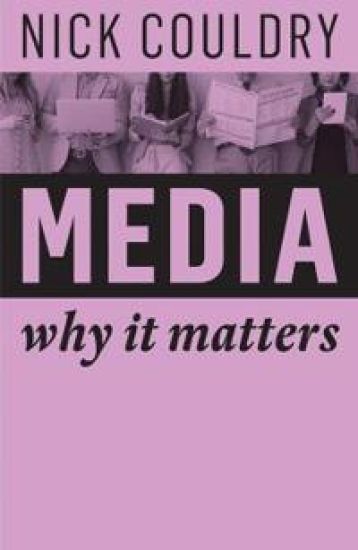
From TV bulletins to social media newsfeeds, the media plays a massive role in shaping the world as we see it. In fact, different media have helped make possible our world of independent nations, binding together disparate communities through shared cultural touchstones, such as the press and national broadcasters. With the transfer of people’s lives to the online world, the media has become crucial to almost every aspect of how human beings live. A new social order is being built through our relations with media, but what power over us does this give to corporations and governments? Nick Couldry explains the significance of five core dimensions of media: representing, connecting, imagining, sharing and governing. He shows that understanding these dynamics is a vital skill that every person needs in the digital age, when the fate of our political worlds and social environment may rest on how we communicate with each other.
From TV bulletins to social media newsfeeds, the media plays a massive role in shaping the world as we see it. In fact, different media have helped make possible our world of independent nations, binding together disparate communities through shared cultural touchstones, such as the press and national broadcasters. With the transfer of people’s lives to the online world, the media has become crucial to almost every aspect of how human beings live. A new social order is being built through our relations with media, but what power over us does this give to corporations and governments? Nick Couldry explains the significance of five core dimensions of media: representing, connecting, imagining, sharing and governing. He shows that understanding these dynamics is a vital skill that every person needs in the digital age, when the fate of our political worlds and social environment may rest on how we communicate with each other.
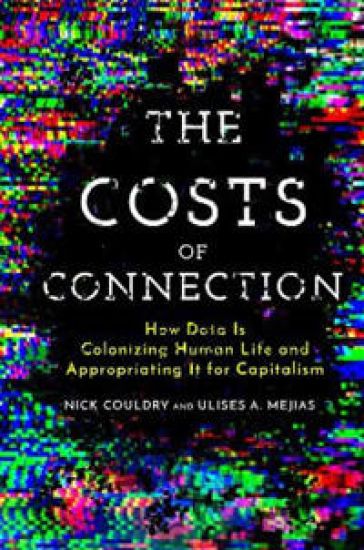
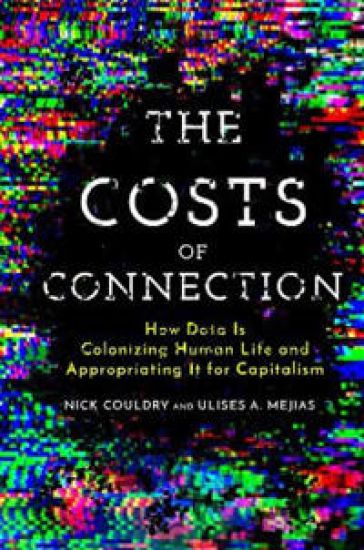
Just about any social need is now met with an opportunity to "connect" through digital means. But this convenience is not free—it is purchased with vast amounts of personal data transferred through shadowy backchannels to corporations using it to generate profit. The Costs of Connection uncovers this process, this "data colonialism," and its designs for controlling our lives—our ways of knowing; our means of production; our political participation. Colonialism might seem like a thing of the past, but this book shows that the historic appropriation of land, bodies, and natural resources is mirrored today in this new era of pervasive datafication. Apps, platforms, and smart objects capture and translate our lives into data, and then extract information that is fed into capitalist enterprises and sold back to us. The authors argue that this development foreshadows the creation of a new social order emerging globally—and it must be challenged. Confronting the alarming degree of surveillance already tolerated, they offer a stirring call to decolonize the internet and emancipate our desire for connection.
Just about any social need is now met with an opportunity to "connect" through digital means. But this convenience is not free—it is purchased with vast amounts of personal data transferred through shadowy backchannels to corporations using it to generate profit. The Costs of Connection uncovers this process, this "data colonialism," and its designs for controlling our lives—our ways of knowing; our means of production; our political participation. Colonialism might seem like a thing of the past, but this book shows that the historic appropriation of land, bodies, and natural resources is mirrored today in this new era of pervasive datafication. Apps, platforms, and smart objects capture and translate our lives into data, and then extract information that is fed into capitalist enterprises and sold back to us. The authors argue that this development foreshadows the creation of a new social order emerging globally—and it must be challenged. Confronting the alarming degree of surveillance already tolerated, they offer a stirring call to decolonize the internet and emancipate our desire for connection.
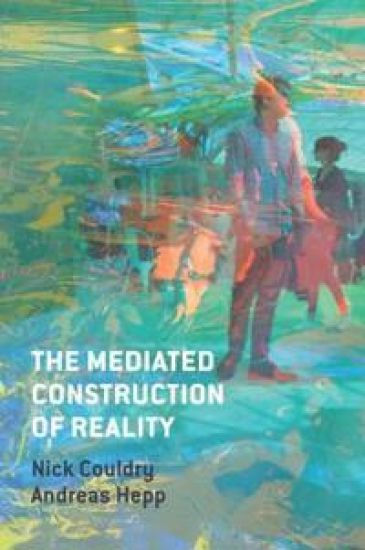
Social theory needs to be completely rethought in a world of digital media and social media platforms driven by data processes. Fifty years after Berger and Luckmann published their classic text The Social Construction of Reality, two leading sociologists of media, Nick Couldry and Andreas Hepp, revisit the question of how social theory can understand the processes through which an everyday world is constructed in and through media. Drawing on Schütz, Elias and many other social and media theorists, they ask: what are the implications of digital media?s profound involvement in those processes? Is the result a social world that is stable and liveable, or one that is increasingly unstable and unliveable?
Social theory needs to be completely rethought in a world of digital media and social media platforms driven by data processes. Fifty years after Berger and Luckmann published their classic text The Social Construction of Reality, two leading sociologists of media, Nick Couldry and Andreas Hepp, revisit the question of how social theory can understand the processes through which an everyday world is constructed in and through media. Drawing on Schütz, Elias and many other social and media theorists, they ask: what are the implications of digital media?s profound involvement in those processes? Is the result a social world that is stable and liveable, or one that is increasingly unstable and unliveable?
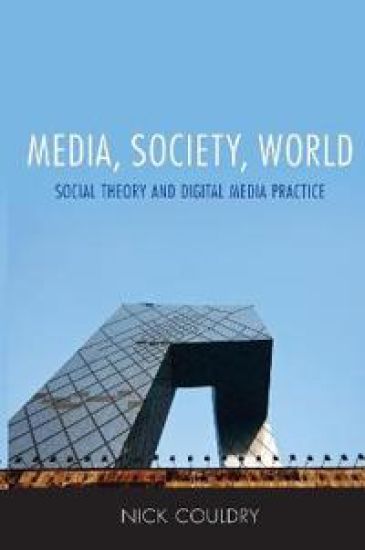
Media are fundamental to our sense of living in a social world. Since the beginning of modernity, media have transformed the scale on which we act as social beings. And now in the era of digital media, media themselves are being transformed as platforms, content, and producers multiply. Yet the implications of social theory for understanding media and of media for rethinking social theory have been neglected; never before has it been more important to understand those implications. This book takes on this challenge. Drawing on Couldry's fifteen years of work on media and social theory, this book explores how questions of power and ritual, capital and social order, and the conduct of political struggle, professional competition, and everyday life, are all transformed by today's complex combinations of traditional and 'new' media. In the concluding chapters Couldry develops a framework for global comparative research into media and for thinking collectively about the ethics and justice of our lives with media. The result is a book that is both a major intervention in the field and required reading for all students of media and sociology.
Media are fundamental to our sense of living in a social world. Since the beginning of modernity, media have transformed the scale on which we act as social beings. And now in the era of digital media, media themselves are being transformed as platforms, content, and producers multiply. Yet the implications of social theory for understanding media and of media for rethinking social theory have been neglected; never before has it been more important to understand those implications. This book takes on this challenge. Drawing on Couldry's fifteen years of work on media and social theory, this book explores how questions of power and ritual, capital and social order, and the conduct of political struggle, professional competition, and everyday life, are all transformed by today's complex combinations of traditional and 'new' media. In the concluding chapters Couldry develops a framework for global comparative research into media and for thinking collectively about the ethics and justice of our lives with media. The result is a book that is both a major intervention in the field and required reading for all students of media and sociology.