Kirjailija
Nick Srnicek
Kirjat ja teokset yhdessä paikassa: 8 kirjaa, julkaisuja vuosilta 2013–2025, suosituimpiin kuuluu Akzeleration. Vertaile teosten hintoja ja tarkista saatavuus suomalaisista kirjakaupoista.
8 kirjaa
Kirjojen julkaisuvuodet: 2013–2025.
Does it ever feel like you have no free time? You come home after work and instead of finding a space of rest and relaxation, you're confronted by a pile of new tasks to complete - cooking, cleaning, looking after the kids, and so on. In this ground-breaking book, Helen Hester and Nick Srnicek lay out how unpaid work in our homes has come to take up an ever-increasing portion of our lives - how the vacuum of free time has been taken up by vacuuming. Examining the history of the home over the past century - from running water to white goods to smart homes - they show how repeated efforts to reduce the burden of this work have faced a variety of barriers, challenges, and reversals. Charting the trajectory of our domestic spaces over the past century, Hester and Srnicek consider new possibilities for the future, uncovering the abandoned ideas of anti-housework visionaries and sketching out a path towards real free time for all, where everyone is at liberty to pursue their passions, or do nothing at all. It will require rethinking our living arrangements, our expectations and our cities.
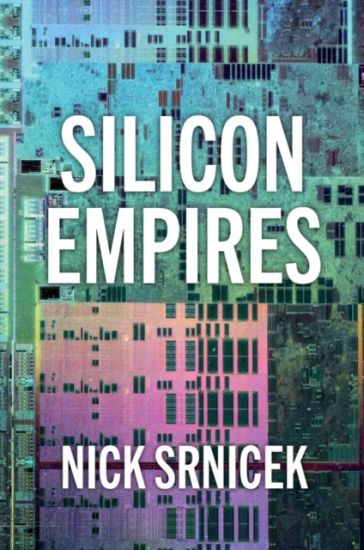
Looking beyond the flurry of rapid changes in artificial intelligence, Silicon Empires uncovers the deep economic forces guiding the expansion of AI. Nick Srnicek offers a clear-eyed view of the landscape of generative AI today, while situating it within the broader context of the recent deep learning and cloud computing paradigms. Far from being a disruptive technology, contemporary AI looks set to consolidate the power and position of Big Tech. Yet this power will not come without effort and costs. Silicon Empires examines the strategies that Big Tech companies are using to expand their control within the AI value chain and across the economy. The implications of this consolidation of power are wide-ranging, particularly in the light of resurgent geopolitical tensions. This book is a must-read for anyone who wants to understand the forces that are shaping the future of AI.
Does it ever feel like you have no free time? You come home after work and instead of finding a space of rest and relaxation, you're confronted by a pile of new tasks to complete - cooking, cleaning, looking after the kids, and so on. In this ground-breaking book, Helen Hester and Nick Srnicek lay out how unpaid work in our homes has come to take up an ever-increasing portion of our lives - how the vacuum of free time has been taken up by vacuuming. Examining the history of the home over the past century - from running water to white goods to smart homes - they show how repeated efforts to reduce the burden of this work have faced a variety of barriers, challenges, and reversals. Charting the trajectory of our domestic spaces over the past century, Hester and Srnicek consider new possibilities for the future, uncovering the abandoned ideas of anti-housework visionaries and sketching out a path towards real free time for all, where everyone is at liberty to pursue their passions, or do nothing at all. It will require rethinking our living arrangements, our expectations and our cities.
What unites Google and Facebook, Apple and Microsoft, Siemens and GE, Uber and Airbnb? Across a wide range of sectors, these firms are transforming themselves into platforms: businesses that provide the hardware and software foundation for others to operate on. This transformation signals a major shift in how capitalist firms operate and how they interact with the rest of the economy: the emergence of ‘platform capitalism’. This book critically examines these new business forms, tracing their genesis from the long downturn of the 1970s to the boom and bust of the 1990s and the aftershocks of the 2008 crisis. It shows how the fundamental foundations of the economy are rapidly being carved up among a small number of monopolistic platforms, and how the platform introduces new tendencies within capitalism that pose significant challenges to any vision of a post-capitalist future. This book will be essential reading for anyone who wants to understand how the most powerful tech companies of our time are transforming the global economy." Also available as an audiobook.
Inventing the Future
Nick Srnicek; Alex Williams
Verso Books
2016
nidottu
Halvin toimitettuna 18,40 €
Neoliberalism isn't working. Austerity is forcing millions into poverty and many more into precarious work, while the left remains trapped in stagnant political practices that offer no respite. Inventing the Future is a bold new manifesto for life after capitalism. Against the confused understanding of our high-tech world by both the right and the left, this book claims that the emancipatory and future-oriented possibilities of our society can be reclaimed. Instead of running from a complex future, Nick Srnicek and Alex Williams demand a postcapitalist economy capable of advancing standards, liberating humanity from work and developing technologies that expand our freedoms. This new edition includes a new chapter where they respond to their various critics.