Kirjojen hintavertailu – 12 859 829 kirjaa ja 27 kauppaa
Kirjailija
Nick Tilley
Kirjat ja teokset yhdessä paikassa: 9 kirjaa, julkaisuja vuosilta 1997–2024, suosituimpiin kuuluu Reducing Burglary. Vertaile teosten hintoja ja tarkista saatavuus suomalaisista kirjakaupoista.
Better Crime Prevention provides a critical guide to theory, research, ethics, and politics in relation to crime prevention policy and practice. It concludes with an agenda for continuous improvement. The book also demonstrates what is involved in doing theoretically informed and realistically applied social science orientated to reducing harms. The focus throughout this book is on ethical and effective ways to reduce crime-related harms. There are chapters on how to target crime prevention efforts, crime prevention theories and frameworks, ethical issues in crime prevention, the practical conduct of crime prevention, evidence-based crime prevention, the politics of crime prevention, and the need for continuous adaptation in crime prevention. Student readers will obtain an overview of, and capacity critically to engage with, crime prevention theory and practice. Policymakers and practitioner readers will be able to make better-informed decisions about what to do and how to allocate crime prevention resources. Social scientists interested in contributing realistically to harm reduction will better understand how they can go about doing so.
Better Crime Prevention provides a critical guide to theory, research, ethics, and politics in relation to crime prevention policy and practice. It concludes with an agenda for continuous improvement. The book also demonstrates what is involved in doing theoretically informed and realistically applied social science orientated to reducing harms. The focus throughout this book is on ethical and effective ways to reduce crime-related harms. There are chapters on how to target crime prevention efforts, crime prevention theories and frameworks, ethical issues in crime prevention, the practical conduct of crime prevention, evidence-based crime prevention, the politics of crime prevention, and the need for continuous adaptation in crime prevention. Student readers will obtain an overview of, and capacity critically to engage with, crime prevention theory and practice. Policymakers and practitioner readers will be able to make better-informed decisions about what to do and how to allocate crime prevention resources. Social scientists interested in contributing realistically to harm reduction will better understand how they can go about doing so.
This chapter is open access under a CC BY license. It is from The Criminal Act: The Role and Influence of Routine Activity Theory, edited by Martin A. Andresen and Graham Farrell. The full volume provides a unique collection of essays in honour of the work of Marcus Felson and his notable contribution to routine activity theory, environmental criminology and the discipline more broadly. This work was published by Saint Philip Street Press pursuant to a Creative Commons license permitting commercial use. All rights not granted by the work's license are retained by the author or authors.
Domestic burglary has fallen significantly over the past 20 years in many countries, but still remains a high volume crime. On top of substantial financial loss and property damage, burglary also leads to high levels of anxiety and fear of crime. The research presented in this book represents the first systematic study of what actually works in security interventions against burglary, with cross-sectional data on different regions and socio-economic population groups. This work provides an overview of the scope of the problem and what can be done about it, drawing on extensive research evidence from projects funded by the Economic and Social Research Council (ESRC) Secondary Data Analysis Initiative (SDAI), and other sources. It reports detailed findings about which interventions are most effective for different population groups and how these measures can be implemented. It includes burglary prevention advice for homeowners, law enforcement and other public agencies, and makes recommendations for future research. In addition to being relevant to concerned citizens, police, policy-makers and crime prevention practitioners, this book will also be of interest to researchers in criminology and criminal justice, particularly those working on security and crime prevention, as well as urban planning and public policy.
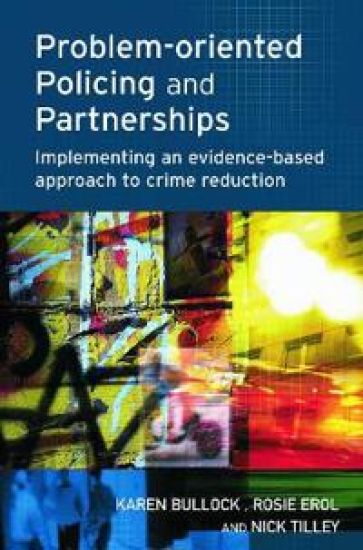
This book makes an important contribution to the literature on problem-oriented policing, aiming to distill the British experience of problem-oriented policing. Drawing upon over 500 entries to the Tilley Award since its inception in 1999, the book examines what can be achieved by problem-oriented policing, what conditions are required for its successful implementation and what has been learned about resolving crime and disorder issues. Examples of problem-oriented policing examined in this book include specific police and partnership initiatives targeting a wide spectrum of individual problems (such as road safety, graffiti and alcohol-related violence), as well as organisational efforts to embed problem-oriented work as a routine way of working (such as improving training and interagency problem solving along with more specific challenges like improving the way that identity parades are conducted. This book will be of particular interest to those working in the field of crime reduction and community safety in the police, local government and other agencies, as well as students taking courses in policing, criminal justice and criminology.
This book provides a concise and up-to-date account of crime prevention theory, practice and research in a form designed to be accessible and interesting to both students and practitioners. Readers will be equipped to think in an informed and critical way about what has been and might be done in practice to prevent crime at local and national levels. What is distinctive in the approach is the emphasis on crime reduction mechanisms, how they may be activated and the intended and unintended patterns of outcome produced. Each of chapters two to five takes this as its organizing principle. The key aim is to clearly convey ideas, arguments and evidence as simply as possible whilst doing justice to the material available.
This book makes an important contribution to the literature on problem-oriented policing, aiming to distill the British experience of problem-oriented policing. Drawing upon over 500 entries to the Tilley Award since its inception in 1999, the book examines what can be achieved by problem-oriented policing, what conditions are required for its successful implementation and what has been learned about resolving crime and disorder issues. Examples of problem-oriented policing examined in this book include specific police and partnership initiatives targeting a wide spectrum of individual problems (such as road safety, graffiti and alcohol-related violence), as well as organisational efforts to embed problem-oriented work as a routine way of working (such as improving training and interagency problem solving along with more specific challenges like improving the way that identity parades are conducted. This book will be of particular interest to those working in the field of crime reduction and community safety in the police, local government and other agencies, as well as students taking courses in policing, criminal justice and criminology.
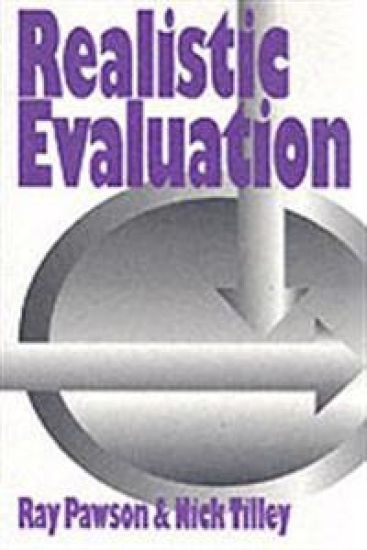
Realistic Evaluation shows how program evaluation needs to be, and can be bettered. It presents a profound yet highly readable critique of current evaluation practice, and goes on to introduce a `manifesto' and `handbook' for a fresh approach. The main body of this book is devoted to the articulation of a new evaluation paradigm, which promises greater validity and utility from the findings of evaluation studies. The authors call this new approach `realistic evaluation'. The name reflects the paradigm's foundation in scientific realist philosophy, its commitment to the idea that programmes deal with real problems rather than mere social constructions, and its primary intention, which is to inform realistic developments in policy making that benefit programme participants and the public. Ray Pawson and Nicholas Tilley argue with passion that scientific evaluation requires a careful blend of theory and method, quality and quantity, ambition and realism. The book offers a complete blueprint for evaluation activities, running from design to data collection and analysis to the cumulation of findings across programmes and onto the realization of research into policy. The argument is developed using practical examples throughout and is grounded in the major fields of programme evaluation. This book will be essential reading for all those involved in the evaluation process especially those researchers, students and practitioners in the core disciplines of sociology, social policy, criminology, health and education. `This book is a must for those engaged in the field, providing a fully illustrated text on evaluation with numerous examples from the criminal justice system. Unusually, it offers something for the academic, practitioner and student alike. I found Pawson and Tilley's latest work on evaluation an enjoyable and informative read. For myself their "realistic evaluation" clarified and formalised a jumbled set of ideas I had already been developing. Although not everyone will agree with the methodology proposed by the authors, this book is a valuable read as it will cause most of us at least to review our methodological stance' - International Journal of Police Science and Management `This is an engaging book with a strong sense of voice and communicative task. The voice is sometimes strident, but always clear. Its communicative qualities are evident equally in its structure: lots of signposting for the reader within and across chapters' - Language Teaching Research `This provocative, elegant and highly insightful book focuses on the effective incorporation of actual practice into the formulation of evaluation methodology. What a pleasure to read sentences like: "The research act involves "learning" a stakeholder's theories, formalizing them, and "teaching" them back to that informant who is then in a position to comment upon, clarify and further refine the key ideas". Pawson and Tilley have given us a wise, witty and persuasive account of how real practitioner experience might be encouraged to intrude on (and modify) researchers' concepts about program processes and outcomes. This holds important promise for achieving something that is devoutly to be wished: closer interaction among at least some researchers and some policy makers' - Eleanor Chelimsky, Past-President of the American Evaluation Association `This is a sustained methodological argument by two wordly-wise social scientists. Unashamedly intellectual, theoretically ambitious yet with a clear but bounded conception of evaluation. It is articulate, occasionally eloquent and always iconoclastic, whilst eschewing "paradigm wars". The Pawson and Tilley "realist" call to arms threatens to take no prisoners among experimentalists, constructivists or pluralists. It is the kind of book that clarifies your thoughts, even when you disagree with everything they say' - Elliot Stern, The Tavistock Institute
Realistic Evaluation shows how program evaluation needs to be, and can be bettered. It presents a profound yet highly readable critique of current evaluation practice, and goes on to introduce a `manifesto' and `handbook' for a fresh approach. The main body of this book is devoted to the articulation of a new evaluation paradigm, which promises greater validity and utility from the findings of evaluation studies. The authors call this new approach `realistic evaluation'. The name reflects the paradigm's foundation in scientific realist philosophy, its commitment to the idea that programmes deal with real problems rather than mere social constructions, and its primary intention, which is to inform realistic developments in policy making that benefit programme participants and the public. Ray Pawson and Nicholas Tilley argue with passion that scientific evaluation requires a careful blend of theory and method, quality and quantity, ambition and realism. The book offers a complete blueprint for evaluation activities, running from design to data collection and analysis to the cumulation of findings across programmes and onto the realization of research into policy. The argument is developed using practical examples throughout and is grounded in the major fields of programme evaluation. This book will be essential reading for all those involved in the evaluation process especially those researchers, students and practitioners in the core disciplines of sociology, social policy, criminology, health and education. `This book is a must for those engaged in the field, providing a fully illustrated text on evaluation with numerous examples from the criminal justice system. Unusually, it offers something for the academic, practitioner and student alike. I found Pawson and Tilley's latest work on evaluation an enjoyable and informative read. For myself their "realistic evaluation" clarified and formalised a jumbled set of ideas I had already been developing. Although not everyone will agree with the methodology proposed by the authors, this book is a valuable read as it will cause most of us at least to review our methodological stance' - International Journal of Police Science and Management `This is an engaging book with a strong sense of voice and communicative task. The voice is sometimes strident, but always clear. Its communicative qualities are evident equally in its structure: lots of signposting for the reader within and across chapters' - Language Teaching Research `This provocative, elegant and highly insightful book focuses on the effective incorporation of actual practice into the formulation of evaluation methodology. What a pleasure to read sentences like: "The research act involves "learning" a stakeholder's theories, formalizing them, and "teaching" them back to that informant who is then in a position to comment upon, clarify and further refine the key ideas". Pawson and Tilley have given us a wise, witty and persuasive account of how real practitioner experience might be encouraged to intrude on (and modify) researchers' concepts about program processes and outcomes. This holds important promise for achieving something that is devoutly to be wished: closer interaction among at least some researchers and some policy makers' - Eleanor Chelimsky, Past-President of the American Evaluation Association `This is a sustained methodological argument by two wordly-wise social scientists. Unashamedly intellectual, theoretically ambitious yet with a clear but bounded conception of evaluation. It is articulate, occasionally eloquent and always iconoclastic, whilst eschewing "paradigm wars". The Pawson and Tilley "realist" call to arms threatens to take no prisoners among experimentalists, constructivists or pluralists. It is the kind of book that clarifies your thoughts, even when you disagree with everything they say' - Elliot Stern, The Tavistock Institute