Kirjojen hintavertailu – 12 859 829 kirjaa ja 27 kauppaa

Kirjailija

Nicky Marsh

Kirjat ja teokset yhdessä paikassa: 4 kirjaa, julkaisuja vuosilta 2007–2023, suosituimpiin kuuluu Credit Culture. Vertaile teosten hintoja ja tarkista saatavuus suomalaisista kirjakaupoista.

4 kirjaa

Kirjojen julkaisuvuodet: 2007–2023.

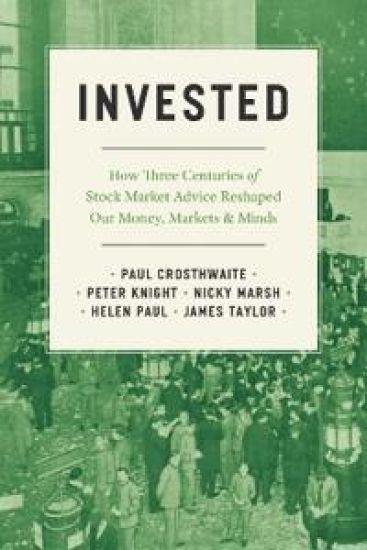
Invested

Invested

Paul Crosthwaite; Peter Knight; Nicky Marsh; Helen Paul; James Taylor

THE UNIVERSITY OF CHICAGO PRESS
2023
nidottu
Invested examines the perennial and nefarious appeal of financial advice manuals. Who hasn’t wished for a surefire formula for riches and a ticket to the good life? For three centuries, investment advisers of all kinds, legit and otherwise, have guaranteed that they alone can illuminate the golden pathway to prosperity—despite strong evidence to the contrary. In fact, too often, they are singing a siren song of devastation. And yet we keep listening. Invested tells the story of how the genre of investment advice developed and grew in the United Kingdom and the United States, from its origins in the eighteenth century through today, as it saturates our world. The authors analyze centuries of books, TV shows, blogs, and more, all promising techniques for amateur investors to master the ways of the market: from Thomas Mortimer’s pathbreaking 1761 work, Every Man His Own Broker, through the Gilded Age explosion of sensationalist investment manuals, the early twentieth-century emergence of a vernacular financial science, and the more recent convergence of self-help and personal finance. Invested asks why, in the absence of evidence that such advice reliably works, guides to the stock market have remained perennially popular. The authors argue that the appeal of popular investment advice lies in its promise to level the playing field, giving outsiders the privileged information of insiders. As Invested persuasively shows, the fantasies sold by these writings are damaging and deceptive, peddling unrealistic visions of easy profits and the certainty of success, while trying to hide the fact that there is no formula for avoiding life’s economic uncertainties and calamities.
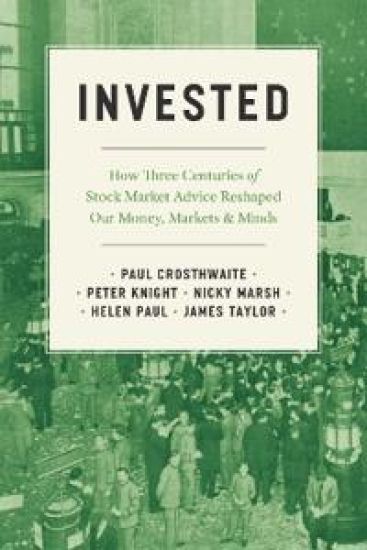
Invested

Invested

Paul Crosthwaite; Peter Knight; Nicky Marsh; Helen Paul; James Taylor

THE UNIVERSITY OF CHICAGO PRESS
2022
sidottu
Invested examines the perennial and nefarious appeal of financial advice manuals. Who hasn’t wished for a surefire formula for riches and a ticket to the good life? For three centuries, investment advisers of all kinds, legit and otherwise, have guaranteed that they alone can illuminate the golden pathway to prosperity—despite strong evidence to the contrary. In fact, too often, they are singing a siren song of devastation. And yet we keep listening. Invested tells the story of how the genre of investment advice developed and grew in the United Kingdom and the United States, from its origins in the eighteenth century through today, as it saturates our world. The authors analyze centuries of books, TV shows, blogs, and more, all promising techniques for amateur investors to master the ways of the market: from Thomas Mortimer’s pathbreaking 1761 work, Every Man His Own Broker, through the Gilded Age explosion of sensationalist investment manuals, the early twentieth-century emergence of a vernacular financial science, and the more recent convergence of self-help and personal finance. Invested asks why, in the absence of evidence that such advice reliably works, guides to the stock market have remained perennially popular. The authors argue that the appeal of popular investment advice lies in its promise to level the playing field, giving outsiders the privileged information of insiders. As Invested persuasively shows, the fantasies sold by these writings are damaging and deceptive, peddling unrealistic visions of easy profits and the certainty of success, while trying to hide the fact that there is no formula for avoiding life’s economic uncertainties and calamities.
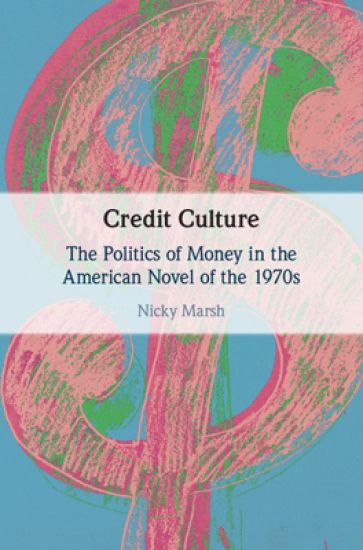
Credit Culture

Credit Culture

Nicky Marsh

Cambridge University Press
2020
sidottu
This book offers a new reading of the relationship between money, culture and literature in America in the 1970s. The gold standard ended at the start of this decade, a moment which is routinely treated as a catalyst for the era of postmodern abstraction. This book provides an alternative narrative, one that traces the racialized and gendered histories of credit offered by the intertextual narratives of writers such as E. L Doctorow, Toni Morrison, Marilyn French, William Gaddis, Thomas Pynchon and Don De Lillo. It argues that money in the 1970s is better read through a narrative of political consolidation than formal rupture as these histories foreground the closing down, rather than opening up, of serious debates about what American money should be and who it should serve. These novels and this moment remain important because they alert us to imagine the alternative histories of credit that were imaginatively proposed but never realized.
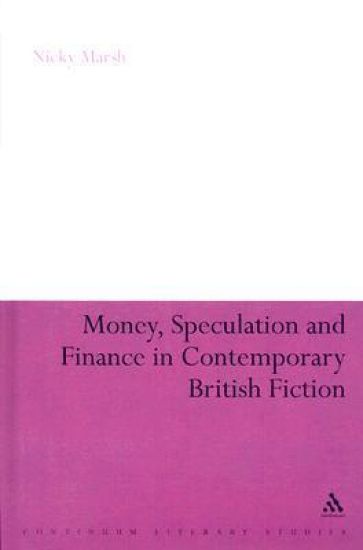
Money, Speculation and Finance in Contemporary British Fiction

Money, Speculation and Finance in Contemporary British Fiction

Nicky Marsh

Continuum International Publishing Group Ltd.
2007
sidottu
This is a key monograph surveying the portrayal of finance and money in British fiction over the last thirty years. Fiction has become increasingly concerned with the political and imaginative significance of finance, speculation and the money markets - from Ian Fleming's "Goldfinger" to Jonathan Coe's "What a Carve Up" and Martin Amis' "Money". This book argues that recent British fiction demystifies the 'weightless' economy of contemporary money and critiques the popular sense of money as being everywhere but nowhere. The monograph provides a comprehensive survey of a large body of fictional texts that have striven to represent and understand the formative significance of finance capital on contemporary culture. In these novels, the implications of finance capitalism for political identity, for class politics, for the sovereignty of the nation state and a new global order are all explored, dramatised and critiqued. Authors covered include Margaret Drabble, Ian McEwan, Jonathan Coe, Alan Hollinghurst, Martin Amis and Malcolm Bradbury.