Kirjojen hintavertailu – 12 903 735 kirjaa ja 27 kauppaa

Kirjailija

Nico Carpentier

Kirjat ja teokset yhdessä paikassa: 7 kirjaa, julkaisuja vuosilta 2006–2024, suosituimpiin kuuluu Iconoclastic Controversies. Vertaile teosten hintoja ja tarkista saatavuus suomalaisista kirjakaupoista.

7 kirjaa

Kirjojen julkaisuvuodet: 2006–2024.

Democracy and Media in Europe

Democracy and Media in Europe

Nico Carpentier; Jeffrey Wimmer

TAYLOR FRANCIS LTD
2024
sidottu
Democracy and Media in Europe: A Discursive-Material Approach is a theoretical reflection on the intersection of democracy and media through a constructionist lens. This focus allows us to understand current political struggles over democracy, and over media’s democratic roles, with the latter ranging from the traditional support for an informed citizenry and the watchdog role, to the organization of agonistic debate and generating fair and dignified representations of society and its many (sub)groups, to the facilitation of maximalist participation in institutionalized politics and media. Moreover, the book’s reconciliation of democratic theory and media theory brings out a detailed theoretical analysis of the core characteristics of the assemblages of democracy and media, their conditions of possibility and the threats to both democracy and media’s democratic roles. This short book provides in-depth reflections on the different positions that can be taken when it comes to the performance of democracy as it intersects with the multitude of media in the 21st century. As such, the volume will be of interest to scholars of media and communication and related fields in the social sciences. The Open Access version of this book, available at http://www.taylorfrancis.com, has been made available under a Creative Commons Attribution-Non Commercial-No Derivatives (CC-BY-NC-ND) 4.0 license.
Iconoclastic Controversies

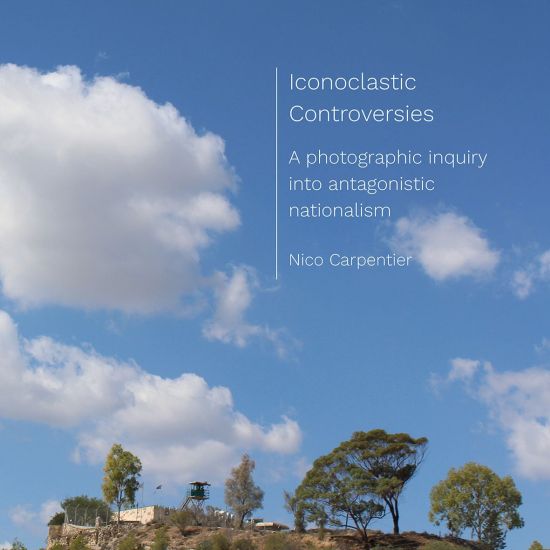
Iconoclastic Controversies

Nico Carpentier

Intellect Books
2021
nidottu
The book combines photography and written text to analyse the role of memorials and commemoration sites in the construction of antagonistic nationalism. Taking Cypriot memorializations as a case study, the book shows how these memorials often support, but sometimes also undermine, the discursive-material assemblage of nationalism.
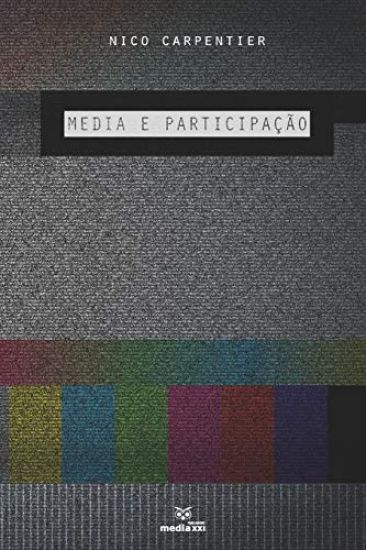
Media E Participação

Media E Participação

Nico Carpentier

Independently Published
2019
nidottu
A participa o est outra vez na moda, mas ao mesmo tempo sempre desempenhou um papel crucial nas nossas sociedades contempor neas, e tem sido omnipresente num n mero surpreendentemente grande de campo societais. No caso da esfera dos media, a sua conjuntura atual considerada a mais participativa de sempre, apesar de a hist ria da sua participa o ser longa e intensa. Para lidar com esses paradoxos, este livro analisa a participa o como um conceito estruturalmente inst vel e como objeto de uma luta pol tico-ideol gica que o faz oscilar entre vers es minimalistas e maximalistas. Esta luta analisada em reflex es te ricas em cinco campos (democracia, arte, desenvolvimento, ordenamento do territ rio e media) e em oito casos diferentes de pr tica dos media. Estes estudos de caso mostram tamb m a rela o pr xima da participa o com o poder, a identidade, a organiza o, a tecnologia e a qualidade.
The Discursive-Material Knot

The Discursive-Material Knot

Nico Carpentier

Peter Lang Publishing Inc
2017
sidottu
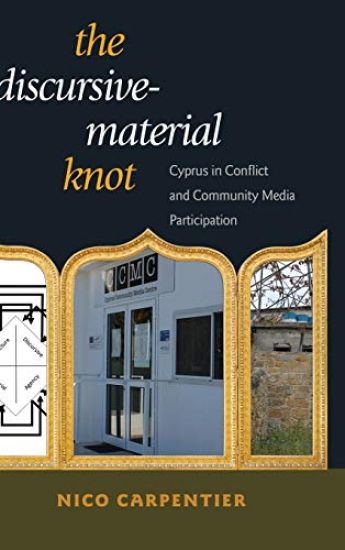
The theoretical framework of the discursive-material knot consists out of a non-hierarchical ontology of the interactions of the discursive and the material, articulating the assemblages that are driven by this ontological setting as restless and contingent, sometimes incessantly changing shapes and sometimes being deeply sedimented. This book acknowledges the importance of discourse studies, in having produced a better understanding of the socio-political role of frameworks of intelligibility, and of materialism theory in highlighting the importance of the agentic role of materials. Still, the combination of the discursive and the material requires our attention in a much more fundamental way; that is where this book’s first platform aims to provide a contribution. These ontological-theoretical reflections are not produced in a void, but they are put to work in this book, first in platform two, which consists of a discursive-material re-reading of three theoretical fields, dealing with practices that are all highly relevant in contemporary democracies: participation, community media and conflict (transformation). Finally, in the third platform, this book turns its attention to a particular social reality, analyzing the logic of the discursive-material knot in the particular context of the Cyprus Problem. This case study fills a gap by bringing community media and conflict transformation together, through the analysis of the role of the Cyprus Community Media Centre (CCMC), and its webradio MYCYradio, in contributing to the transformation of antagonism into agonism. Deploying a discursive-material analysis to study the participation and agonization (and their articulation) in CCMC/MYCYradio shows the complexity and richness of conflict transformation processes, in combination with the importance of organizations such as CCMC/MYCYradio for the betterment of society. The author's website (LINK)
The Discursive-Material Knot

The Discursive-Material Knot

Nico Carpentier

Peter Lang Publishing Inc
2017
nidottu
The theoretical framework of the discursive-material knot consists out of a non-hierarchical ontology of the interactions of the discursive and the material, articulating the assemblages that are driven by this ontological setting as restless and contingent, sometimes incessantly changing shapes and sometimes being deeply sedimented. This book acknowledges the importance of discourse studies, in having produced a better understanding of the socio-political role of frameworks of intelligibility, and of materialism theory in highlighting the importance of the agentic role of materials. Still, the combination of the discursive and the material requires our attention in a much more fundamental way; that is where this book’s first platform aims to provide a contribution. These ontological-theoretical reflections are not produced in a void, but they are put to work in this book, first in platform two, which consists of a discursive-material re-reading of three theoretical fields, dealing with practices that are all highly relevant in contemporary democracies: participation, community media and conflict (transformation). Finally, in the third platform, this book turns its attention to a particular social reality, analyzing the logic of the discursive-material knot in the particular context of the Cyprus Problem. This case study fills a gap by bringing community media and conflict transformation together, through the analysis of the role of the Cyprus Community Media Centre (CCMC), and its webradio MYCYradio, in contributing to the transformation of antagonism into agonism. Deploying a discursive-material analysis to study the participation and agonization (and their articulation) in CCMC/MYCYradio shows the complexity and richness of conflict transformation processes, in combination with the importance of organizations such as CCMC/MYCYradio for the betterment of society. The author's website (LINK)
Reclaiming the Media

Reclaiming the Media

Bart Cammaerts; Nico Carpentier

Intellect Books
2007
nidottu
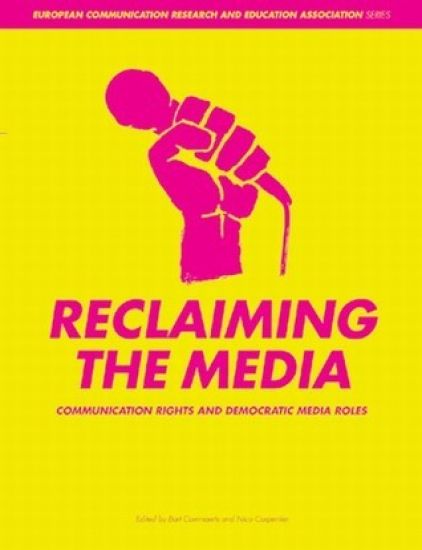
At the beginning of the 21st century, it hardly goes uncontested anymore that media organisations play an important role in democracy. The main questions have now become whether the contemporary media conjuncture offers enough to our democracies, how their democratic investment can be deepened and how our communication rights can be expande. This book aims to look at four thematic areas that structure the opportunities for democratising (media) democracy. A first section is devoted to citizenship and the public spheres, giving special attention to the general theme of communication rights. The second section elaborates further on a notion central to communication rights, namely that of participation. The third section returns to the traditional representational role in relation to democracy and citizenship, scrutinizing and criticizing the democratic efforts of contemporary journalism. The fourth section moves outside of the (traditional) media system, and deals with the diversity of media and communication strategies of activists. This is volume 3 in the European Communication Research and Education Association book series.
Towards a Sustainable Information Society

Towards a Sustainable Information Society

Nico Carpentier; Jan Servaes

Intellect Books
2006
nidottu
The Information Society is one of the recurrent imaginaries to describe present-day structures, discourses and practices. Within its meaning is enshrined the promise of a better world, sometimes naively assuming a technological deus ex machina, in other cases hoping for the creation of policy tools that will overcome a diversity of societal divides. With the two-phased World Summit on the Information Society (WSIS), the United Nations attempted to stimulate the development of such tools. Simultaneously, the WSIS is a large-scale experiment in multistakeholderism. The objective was to create a more balanced decision-making process that would allow the voices of civil society and business actors to be heard in international politics. This book aims to evaluate the potentialities of both the Information Society, and the WSIS in supporting and constructing more democratic, just and developed societies. It is the second book arising from the intellectual work of European Consortium for Communications Research members.