Kirjojen hintavertailu – 12 859 828 kirjaa ja 27 kauppaa

Kirjailija

Nicola J. Watson

Kirjat ja teokset yhdessä paikassa: 8 kirjaa, julkaisuja vuosilta 1994–2023, suosituimpiin kuuluu Literary Tourism, the Trossachs and Walter Scott. Vertaile teosten hintoja ja tarkista saatavuus suomalaisista kirjakaupoista.

8 kirjaa

Kirjojen julkaisuvuodet: 1994–2023.

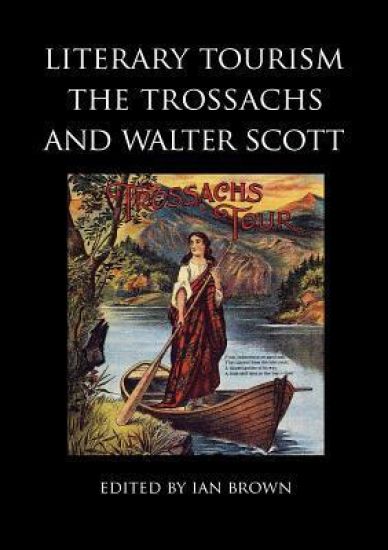
Literary Tourism, the Trossachs and Walter Scott

Literary Tourism, the Trossachs and Walter Scott

Nicola J. Watson; J. Alison; David Hewitt; Michael Newton; Dorothy McMillan; Murdo Ewen Macdonald; Ian Thompson; David Manderson

Scottish Literature International
2012
nidottu
In 1810 a literary phenomenon swept through Britain, Europe and beyond: the publication of Sir Walter Scott's epic poem The Lady of the Lake, set in the wild romantic landscape around Loch Katrine and the Trossachs. The world's first international blockbusting bestseller, in terms of sheer publishing sensation nothing like it was seen until the Harry Potter books. Exploring the potent appeal that links books, places, authors and readers, this collection of eleven essays examines tourism in the Trossachs both before and after 1810, and surveys the indigenous Gaelic culture of the area. It also considers how Sir Walter's writings responded to the landscape, history and literature of the region, and traces his impact on the tourists, authors and artists who thronged in his wake.
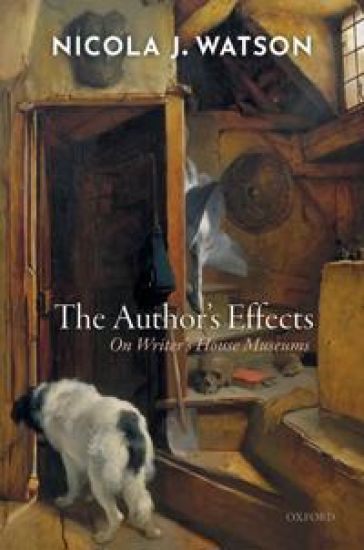
The Author's Effects

The Author's Effects

Nicola J. Watson

Oxford University Press
2023
nidottu
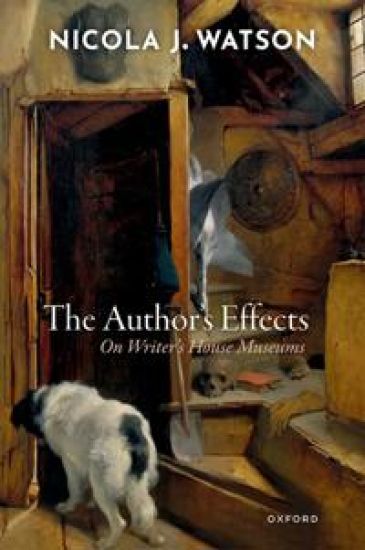
The Author's Effects: On the Writer's House Museum is the first book to describe how the writer's house museum came into being as a widespread cultural phenomenon across Britain, Europe, and North America. Exploring the ways that authorship has been mythologised through the conventions of the writer's house museum, The Author's Effects anatomises the how and why of the emergence, establishment, and endurance of popular notions of authorship in relation to creativity. It traces how and why the writer's bodily remains, possessions, and spaces came to be treasured in the late eighteenth and nineteenth centuries, as a prelude to the appearance of formal writer's house museums. It ransacks more than 100 museums and archives to tell the stories of celebrated and paradigmatic relics—Burns' skull, Keats' hair, Petrarch's cat, Poe's raven, Brontë's bonnet, Dickinson's dress, Shakespeare's chair, Austen's desk, Woolf's spectacles, Hawthorne's window, Freud's mirror, Johnson's coffee-pot and Bulgakov's stove, amongst many others. It investigates houses within which nineteenth-century writers mythologised themselves and their work—Thoreau's cabin and Dumas' tower, Scott's Abbotsford and Irving's Sunnyside. And it tracks literary tourists of the past to such long-celebrated literary homes as Petrarch's Arquà, Rousseau's Ile St Pierre, and Shakespeare's Stratford to find out what they thought and felt and did, discovering deep continuities with the redevelopment of Shakespeare's New Place for 2016.
The Author's Effects

The Author's Effects

Nicola J. Watson

Oxford University Press
2020
sidottu
The Author's Effects: On the Writer's House Museum is the first book to describe how the writer's house museum came into being as a widespread cultural phenomenon across Britain, Europe, and North America. Exploring the ways that authorship has been mythologised through the conventions of the writer's house museum, The Author's Effects anatomises the how and why of the emergence, establishment, and endurance of popular notions of authorship in relation to creativity. It traces how and why the writer's bodily remains, possessions, and spaces came to be treasured in the late eighteenth and nineteenth centuries, as a prelude to the appearance of formal writer's house museums. It ransacks more than 100 museums and archives to tell the stories of celebrated and paradigmatic relics--Burns' skull, Keats' hair, Petrarch's cat, Poe's raven, Brontë's bonnet, Dickinson's dress, Shakespeare's chair, Austen's desk, Woolf's spectacles, Hawthorne's window, Freud's mirror, Johnson's coffee-pot and Bulgakov's stove, amongst many others. It investigates houses within which nineteenth-century writers mythologised themselves and their work--Thoreau's cabin and Dumas' tower, Scott's Abbotsford and Irving's Sunnyside. And it tracks literary tourists of the past to such long-celebrated literary homes as Petrarch's Arquà, Rousseau's Ile St Pierre, and Shakespeare's Stratford to find out what they thought and felt and did, discovering deep continuities with the redevelopment of Shakespeare's New Place for 2016.
Romantics and Victorians

Romantics and Victorians

Nicola J. Watson; Shafquat Towheed

Bloomsbury Academic
2011
sidottu
The second volume in the Reading and Studying Literature series, co-published with the Open University, introduces students to European romanticism and Victorian culture. Each period is discussed in terms of an overarching theme, providing a clear focus for study and discussion and introducing readers to an important theoretical concept in literary studies. European romanticism is approached through a consideration of the evolution of the idea of the romantic author and the romantic inner life, using readings from Wordsworth on Grasmere, Shelley lyric poetry and Thomas de Quincey's Confessions of an English Opium Eater. The book goes on to explore Victorian culture through a reading of ideas of 'home' and 'abroad', in the work of Emily Bronte, Arthur Conan Doyle and Robert Louis Stevenson. The featured theoretical concept of this volume is 'the author'.
Romantics and Victorians

Romantics and Victorians

Nicola J. Watson; Shafquat Towheed

Bloomsbury Academic
2011
nidottu
The second volume in the Reading and Studying Literature series, co-published with the Open University, introduces students to European romanticism and Victorian culture. Each period is discussed in terms of an overarching theme, providing a clear focus for study and discussion and introducing readers to an important theoretical concept in literary studies. European romanticism is approached through a consideration of the evolution of the idea of the romantic author and the romantic inner life, using readings from Wordsworth on Grasmere, Shelley lyric poetry and Thomas de Quincey's Confessions of an English Opium Eater. The book goes on to explore Victorian culture through a reading of ideas of 'home' and 'abroad', in the work of Emily Bronte, Arthur Conan Doyle and Robert Louis Stevenson. The featured theoretical concept of this volume is 'the author'.
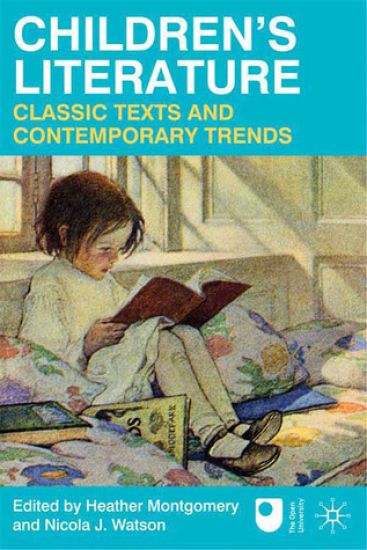
Children's Literature: Classic Texts and Contemporary Trends

Children's Literature: Classic Texts and Contemporary Trends

Heather Montgomery; Nicola J. Watson

Red Globe Press
2009
nidottu
Children's Literature: Classic Texts and Contemporary Trends provides students with high quality critical material on a selection of important classic and contemporary children's books. From Louisa May Alcott's Little Women to J. K. Rowling's Harry Potter and the Philosopher's Stone to Melvin Burgess's Junk, each has been selected because they still find a favoured place on the bookshelves of today's children and because they are widely studied on university courses. These case studies explore children's literature across a variety of genres and ages, bringing together lively and accessible scholarly essays by leading scholars, some reprinted and others newly commissioned. The collection is supported by detailed introductory material, suggestions for further reading and a colour plate section reproducing covers and illustrations.
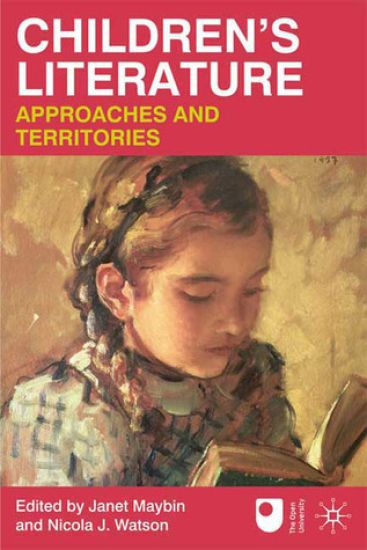
Children's Literature: Approaches and Territories

Children's Literature: Approaches and Territories

Janet Maybin; Nicola J. Watson

Red Globe Press
2009
nidottu
How has children's literature been defined? In what ways has it changed over time? How are the classics of children's literature established? What is the impact of digital media and globalization on books for children? Children's Literature: Approaches and Territories provides a social and literary overview of the field of Anglophone children's literature: its history and genres, its current concerns and its possible future directions. Emphasising how children's literature is embedded in the social life of children and adults, the collection brings together lively and accessible scholarly essays by leading scholars, some reprinted and others newly commissioned. It includes sections on poetry, drama and picture books and is supported by detailed introductory material, suggestions for further reading and a colour plate section reproducing illustrations from key children's texts.
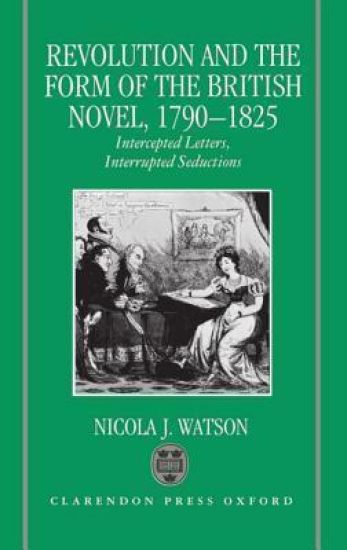
Revolution and the Form of the British Novel, 1790-1825
Whatever happened to the epistolary novel? Why was it that by 1825 the principal narrative form of eighteenth-century fiction has been replaced by the third-person and often historicised models which have predominated ever since? Nicola Watson's original and wide-ranging study charts the suppression of epistolary fiction, exploring the attempted radicalization of the genre by Wollstonecraft and other feminists in the 1790s, its rejection and parody by Jane Austen and Maria Edgeworth, the increasingly discredited role played by letters in the historical novels of Jane Porter and Walter Scott, and their troubling, ghostly presence in the Gothic narratives of James Hogg and Charles Maturin. The shift in narrative method is seen as a response to anxieties about the French Revolution, with the epistolary, feminized, and sentimental plot replaced by a more authoritarian third-person mode as part of a wider redrawing of the relation between the individual and the social consensus. This is a brilliant and innovative reading of the place of the novel in the reformulation of British national identity in the Napoleonic period, throwing new light on writers as diverse as Hazlitt, Charlotte Smith, Walter Scott, Helen Maria Williams, and Byron.