Kirjojen hintavertailu – 12 903 725 kirjaa ja 27 kauppaa
Kirjailija
Nicola Terrenato
Kirjat ja teokset yhdessä paikassa: 4 kirjaa, julkaisuja vuosilta 2009–2020, suosituimpiin kuuluu Italy and the West. Vertaile teosten hintoja ja tarkista saatavuus suomalaisista kirjakaupoista.
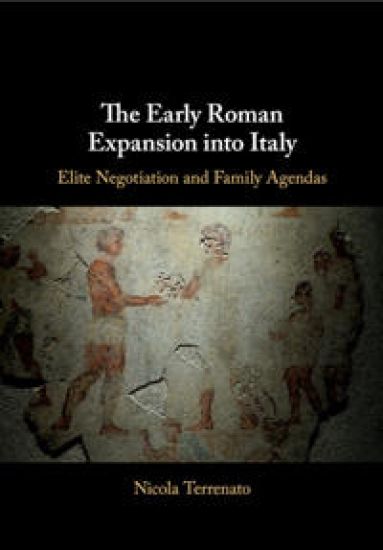
This book presents a radical new interpretation of Roman expansion in Italy during the fourth and third centuries BCE. Nicola Terrenato argues that the process was accomplished by means of a grand bargain that was negotiated between the landed elites of central and southern Italy, while military conquest played a much smaller role than is usually envisaged. Deploying archaeological, epigraphic, and historical evidence, he paints a picture of the family interactions that tied together both Roman and non-Roman aristocrats and that resulted in their pooling power and resources for the creation of a new political entity. The book is written in accessible language, without technical terms or quotations in Latin, and is heavily illustrated.
This book presents a radical new interpretation of Roman expansion in Italy during the fourth and third centuries BCE. Nicola Terrenato argues that the process was accomplished by means of a grand bargain that was negotiated between the landed elites of central and southern Italy, while military conquest played a much smaller role than is usually envisaged. Deploying archaeological, epigraphic, and historical evidence, he paints a picture of the family interactions that tied together both Roman and non-Roman aristocrats and that resulted in their pooling power and resources for the creation of a new political entity. The book is written in accessible language, without technical terms or quotations in Latin, and is heavily illustrated.
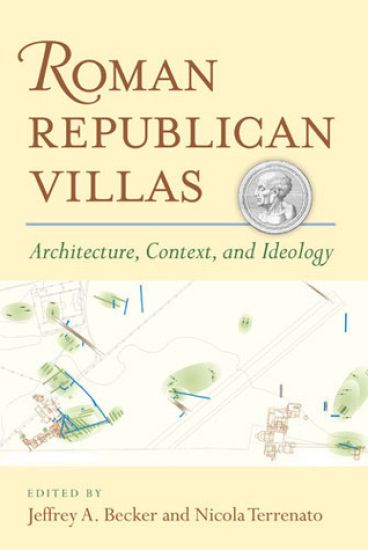
The Roman villa is a classic icon of Western culture, and yet villa can be used to cover a multiplicity of ideas, experiences, and places. In the late Republic and early Imperial periods, villas are inseparable from elite lifestyles, providing a prestigious setting for leisurely and intellectual pursuits. But how did these advanced buildings come about? Roman Republican Villas examines key aspects of early villa culture and architecture, with the goal of understanding the development and deployment of villas in Republican Italy. For instance, where does the "classic" villa architecture originate? How do writers like Cato the Elder or Varro use the villa to their own advantage? How visible are Republican villas in the landscape of central Italy? Traditional theories about villa development have been largely focused on stereotypical ideals of early Roman austerity and industriousness. New work at sites such as the Auditorium, however, proves the existence of luxurious residences already by the 5th-4th c. BCE, even before the Roman conquest of Italy. Such recent developments in archaeological fieldwork have begun to reshape the discourse in such a way that old assumptions are being challenged and, in many cases, found wanting. Within this atmosphere of new discoveries and reconsideration, scholars are uniquely poised to re-examine the villa and the part it played in the culture of Roman Italy, in terms of both the material remains and the literary sources. The villa also plays a prominent role in Republican literature such as the De agri cultura of Cato and the texts of Varro, as the early Latin authors seek to fashion identities for themselves and the city of Rome. Drawing on diverse source materials, the collected essays of Roman Republican Villas help to re-center the discussion of Roman villa culture, particularly in light of new evidence offered both by fieldwork and by new approaches to Republican agricultural writers. This volume brings together scholars of Latin literature, Roman history, and classical archaeology to offer a multidisciplinary approach to the questions connected to the emergence and development of villas and their farming culture. With contributions from leading scholars Jeffrey A. Becker, John Bodel, Stephen L. Dyson, Carin M. C. Green, Brendon Reay, Nicola Terrenato, Mario Torelli, and Rita Volpe, the viewpoints offered build upon previous scholarship and ask challenging questions about how the evidence of Roman villas has traditionally been interpreted.
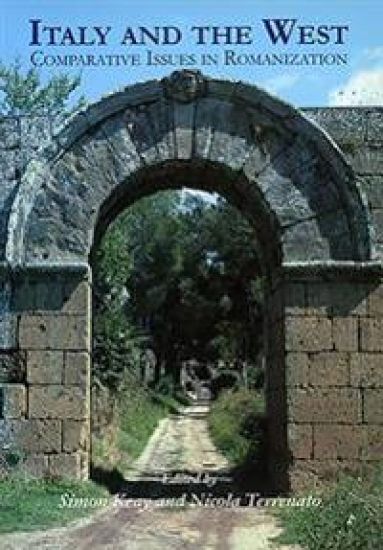
Nineteen papers examining varied responses to Romanization, and how this affects our view of the development of the Roman Empire. The traditional view of Romanization is as the triumph of a superior and more advanced culture over primitive communities, brought about by military expansion and resulting in the creation of a uniform political and cultural entity. It is only in the last twenty years that the variety of responses that Romanization elicited among the various ethnic groups, social classes, genders, spheres, and even within the same person in different conjunctures of his or her life, has begun to be appreciated. The aim of this collection of papers is to further understanding of Romanization at a formative stage; early Roman expansion in Italy. There is much evidence for bi-directional negotiation between Italian communities and Rome. Understanding the motivation of the Italian peoples to become part of a new political entity is crucial to knowing how Roman Italy was kept together for more than half a millennium. Seven papers also examine responses to Romanization in other parts of the Empire.