Kirjojen hintavertailu – 12 903 725 kirjaa ja 27 kauppaa

Kirjailija

Nicole Loraux

Kirjat ja teokset yhdessä paikassa: 11 kirjaa, julkaisuja vuosilta 1981–2021, suosituimpiin kuuluu La Grece Hors d'Elle Et Autres Textes: Ecrits 1973-2003. Vertaile teosten hintoja ja tarkista saatavuus suomalaisista kirjakaupoista.

11 kirjaa

Kirjojen julkaisuvuodet: 1981–2021.

La Grece Hors d'Elle Et Autres Textes: Ecrits 1973-2003
Cet ouvrage rassemble, selon un ordre strictement chronologique, cinquante-six articles ecrits par Nicole Loraux entre 1973 et 2003. Il donne a lire le deploiement discontinu, experimental, de reflexions lisibles sur le meme plan que celui des livres publies, et l'effet d'apres-coup de ces derniers, leur reprise sur d'autres plans - toutes ces lignes dessinant ensemble la vaste cartographie d'une uvre tres singuliere. L'article " La Grece hors d'elle et autres textes ", qui donne son titre a ce recueil, rappelle la methode par laquelle Nicole Loraux n'a pas cesse, selon ses propres mots, de " trouver dans la Grece (et en abondance) de quoi la faire sortir d'elle-meme " en multipliant les strategies comparatistes, les va-et-vient entre les champs disciplinaires les plus divers (philosophie, psychanalyse, ethnologie, philologie). Il en resulte un parcours intellectuel ou apparait, dominante et continue, l'analyse du discours que la cite athenienne a construit a son propre sujet en meme temps que s'approfondit l'eclairage du conflit (stasis) constitutif de la democratie. Enfin, l'attention toujours plus soutenue a " l'operateur feminin ", compris comme facteur de subversion de l'ordre politique de la cite, domine par le masculin, suscite une approche originale et novatrice de la tragedie. Nicole Loraux decouvre la dimension " antipolitique " de l'espace tragique, qui permet aux voix exclues de la parole civique de se faire entendre.
The Experiences of Tiresias

The Experiences of Tiresias

Nicole Loraux

Princeton University Press
2016
sidottu
Nicole Loraux has devoted much of her writing to charting the paths of the Greek "imaginary," revealing a collective masculine psyche fraught with ambivalence as it tries to grasp the differences between nature and culture, body and soul, woman and man. The Experiences of Tiresias, its title referring to the shepherd struck blind after glimpsing Athena's naked body, captures this ambivalence in exploring how the Greek male defines himself in relationship to the feminine. In these essays, Loraux disturbs the idea of virile men and feminine women, a distinction found in official discourse and aimed at protecting the ideals of male identity from any taint of the feminine. Turning to epic and to Socrates, however, she insists on a logic of an inclusiveness between the genders, which casts a shadow over their clear, officially defined borders. The emphasis falls on the body, often associated with feminine vulnerability and weakness, and often dissociated from the ideal of the brave, self-sacrificing male warrior. But heroes such as the Homeric Achilles, who fears yet fights bravely, and Socrates, who speaks of the soul through the language of the body, challenge these representations. The anatomy of pain, the heroics of childbirth, the sorrows of tears, the warrior's wounds, and the madness of the soul: all these experiences are shown to engage with both the masculine and the feminine in ways that do not denigrate the experiences for either gender. Originally published in 1995. The Princeton Legacy Library uses the latest print-on-demand technology to again make available previously out-of-print books from the distinguished backlist of Princeton University Press. These editions preserve the original texts of these important books while presenting them in durable paperback and hardcover editions. The goal of the Princeton Legacy Library is to vastly increase access to the rich scholarly heritage found in the thousands of books published by Princeton University Press since its founding in 1905.
The Experiences of Tiresias

The Experiences of Tiresias

Nicole Loraux

Princeton University Press
2014
pokkari
Nicole Loraux has devoted much of her writing to charting the paths of the Greek "imaginary," revealing a collective masculine psyche fraught with ambivalence as it tries to grasp the differences between nature and culture, body and soul, woman and man. The Experiences of Tiresias, its title referring to the shepherd struck blind after glimpsing Athena's naked body, captures this ambivalence in exploring how the Greek male defines himself in relationship to the feminine. In these essays, Loraux disturbs the idea of virile men and feminine women, a distinction found in official discourse and aimed at protecting the ideals of male identity from any taint of the feminine. Turning to epic and to Socrates, however, she insists on a logic of an inclusiveness between the genders, which casts a shadow over their clear, officially defined borders. The emphasis falls on the body, often associated with feminine vulnerability and weakness, and often dissociated from the ideal of the brave, self-sacrificing male warrior. But heroes such as the Homeric Achilles, who fears yet fights bravely, and Socrates, who speaks of the soul through the language of the body, challenge these representations. The anatomy of pain, the heroics of childbirth, the sorrows of tears, the warrior's wounds, and the madness of the soul: all these experiences are shown to engage with both the masculine and the feminine in ways that do not denigrate the experiences for either gender. Originally published in 1995. The Princeton Legacy Library uses the latest print-on-demand technology to again make available previously out-of-print books from the distinguished backlist of Princeton University Press. These editions preserve the original texts of these important books while presenting them in durable paperback and hardcover editions. The goal of the Princeton Legacy Library is to vastly increase access to the rich scholarly heritage found in the thousands of books published by Princeton University Press since its founding in 1905.
The Divided City

The Divided City

Nicole Loraux

Zone Books
2006
pokkari
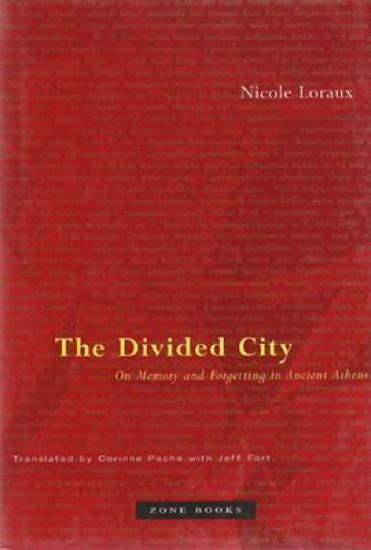
An exploration of the roles of conflict and forgetting in ancient Athens. Athens, 403 B. C. E. The bloody oligarchic dictatorship of the Thirty is over, and the democrats have returned to the city victorious. Renouncing vengeance, in an act of willful amnesia, citizens call for--if not invent--amnesty. They agree to forget the unforgettable, the "past misfortunes," of civil strife or stasis. More precisely, what they agree to deny is that stasis--simultaneously partisanship, faction, and sedition--is at the heart of their politics. Continuing a criticism of Athenian ideology begun in her pathbreaking study The Invention of Athens, Nicole Loraux argues that this crucial moment of Athenian political history must be interpreted as constitutive of politics and political life and not as a threat to it. Divided from within, the city is formed by that which it refuses. Conflict, the calamity of civil war, is the other, dark side of the beautiful unitary city of Athens. In a brilliant analysis of the Greek word for voting, diaphora, Loraux underscores the conflictual and dynamic motion of democratic life. Voting appears as the process of dividing up, of disagreement--in short, of agreeing to divide and choose. Not only does Loraux reconceptualize the definition of ancient Greek democracy, she also allows the contemporary reader to rethink the functioning of modern democracy in its critical moments of internal stasis.
The Invention of Athens

The Invention of Athens

Nicole Loraux

Zone Books
2006
pokkari
A revised edition of a groundbreaking work tracing the rhetoric, politics, and ideology of funeral orations in ancient Greece, arguing that they served to celebrate the city of Athens and the Athenian citizen. How does the funeral oration relate to democracy in ancient Greece? How did the death of an individual citizen-soldier become the occasion to praise the city of Athens? In The Invention of Athens, Nicole Loraux traces the different rhetoric, politics, and ideology of funeral orations-epitaphioi-from Thucidydes, Gorgias, Lysias, and Demosthenes to Plato. Arguing that the ceremony of public burial began circa 508-460 BCE, Loraux demonstrates that the institution of the funeral oration developed under Athenian democracy. A secular, not a religious phenomenon, a literary genre with fixed rhetoric effects, the funeral oration was inextricably linked to the epainos-praise of the city-rather than to a ritualized lament for the dead as is commonly assumed. Above all, the funeral oration celebrated the city of Athens and the Athenian citizen. Loraux interprets the speeches from literary, anthropological, and political perspectives. She explains how these acts of secular speech invented an image of Athens often at odds with the presumed ideals of democracy. To die in battle for the city was presented as an act of civic choice-the "fine" death that defined the citizen-soldier's noble, aristocratic ethos. At the same time, the funeral oration cultivated an image of democracy at a time when there was, for example, no formal theory of a respect for law and liberty, the supremacy of the collective and public over the individual and the private, or freedom of speech. This new edition of The Invention of Athens includes significant revisions made by Nicole Loraux in 1993. Her aim in editing the original text was to render this groundbreaking work accessible to nonspecialists. Loraux's introduction to this revised volume, as well as important revisions to the 1986 English translation, make this publication an important addition to scholarship in the humanities and the social sciences.
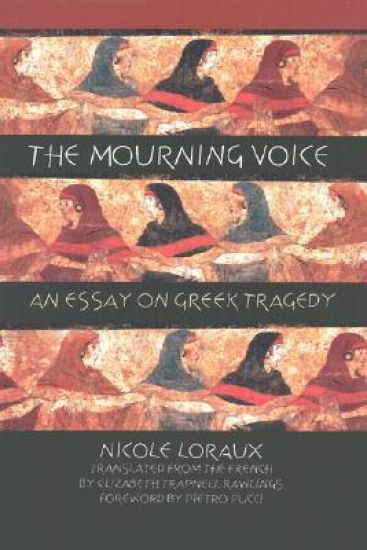
The Mourning Voice

The Mourning Voice

Nicole Loraux; Pietro Pucci

Cornell University Press
2002
sidottu
In The Mourning Voice, Nicole Loraux presents a radical challenge to what has become the dominant view of tragedy in recent years: that tragedy is primarily a civic phenomenon, infused with Athenian political ideology, which envisions its spectators first and foremost as citizens, members of the political collective. Instead, Loraux maintains, the spectator addressed by tragedy is the individual defined primarily in terms of his or her humanity, rather than in terms of affiliation with a political group. The plays, she says, involve the spectators in the emotional expressiveness of tragic suffering, thereby creating a theatrical identity. Aroused by the experience of suffering, the audience is reminded that it is witnessing a theatrical representation of the instability of the human condition—a state that Loraux asserts tragedy is uniquely suited to convey.
The Divided City

The Divided City

Nicole Loraux

Zone Books
2002
sidottu
An exploration of the roles of conflict and forgetting in ancient Athens. Athens, 403 B. C. E. The bloody oligarchic dictatorship of the Thirty is over, and the democrats have returned to the city victorious. Renouncing vengeance, in an act of willful amnesia, citizens call for--if not invent--amnesty. They agree to forget the unforgettable, the "past misfortunes," of civil strife or stasis. More precisely, what they agree to deny is that stasis--simultaneously partisanship, faction, and sedition--is at the heart of their politics. Continuing a criticism of Athenian ideology begun in her pathbreaking study The Invention of Athens, Nicole Loraux argues that this crucial moment of Athenian political history must be interpreted as constitutive of politics and political life and not as a threat to it. Divided from within, the city is formed by that which it refuses. Conflict, the calamity of civil war, is the other, dark side of the beautiful unitary city of Athens. In a brilliant analysis of the Greek word for voting, diaphora, Loraux underscores the conflictual and dynamic motion of democratic life. Voting appears as the process of dividing up, of disagreement--in short, of agreeing to divide and choose. Not only does Loraux reconceptualize the definition of ancient Greek democracy, she also allows the contemporary reader to rethink the functioning of modern democracy in its critical moments of internal stasis.
Mothers in Mourning

Mothers in Mourning

Nicole Loraux

Cornell University Press
1998
pokkari
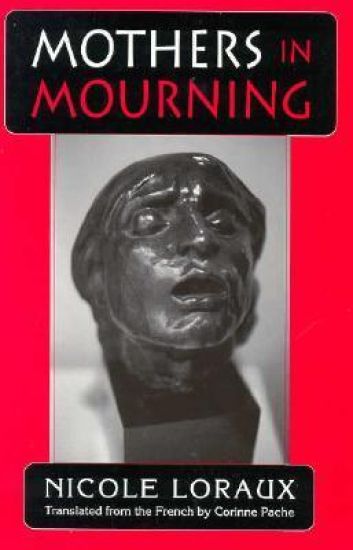
"Nicole Loraux brilliantly elucidates how Athenian politics were 'gendered' in the Classical period. She investigates the Athenian state's interdiction of ritualized mourning by women, in a city where public mourning constituted a vital act of civic self-definition and solidarity. "As Loraux shows, the silencing and exclusion of female—especially maternal—claims to a crucial relationship with the city's fallen war heroes served, and was reinforced by, the ideologically charged, distinctively Athenian notion of the polis as mother of its citizens. But, Loraux points out, the voice and audience that were denied the bereaved women in the political arena were made available to them in the Athenian theater. She focuses on the representation of mothers in mourning in the myths that are the substance of epic poetry and, principally, in Athenian drama, where the dire, menacing implications of their relentless grief are exposed and played out. "Using evidence from sources as diverse as legal inscriptions, forensic oratory, ancient historiography, and early religious treatises, Loraux once again illuminates the culture of democracy, specifically the institutional suppression of women as a political and social force in the most flourishing period of Athenian history."—Laura M. Slatkin, University of Chicago This volume includes translations of the book "Les meres en deuil" and the essay "De l'amnistie et de son contraire."
The Children of Athena

The Children of Athena

Nicole Loraux; Froma I. Zeitlin

Princeton University Press
1994
pokkari
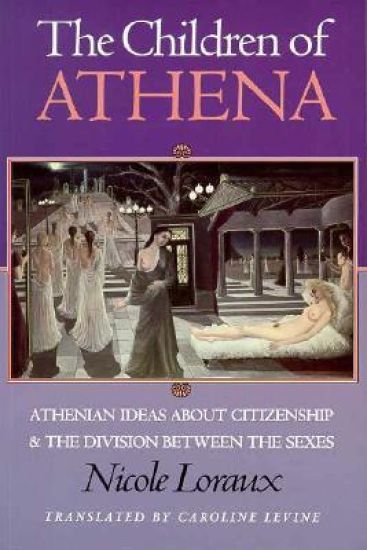
According to one myth, the first Athenian citizen was born from the earth after the sperm of a rejected lover, the god Hephaistos, dripped off the virgin goddess Athena's leg and onto fertile soil. Henceforth Athenian citizens could claim to be truly indigenous to their city and to have divine origins that bypassed maternity. In these essays, the renowned French Hellenist Nicole Loraux examines the implication of this and other Greek origin myths as she explores how Athenians in the fifth century forged and maintained a collective identity.
Tragic Ways of Killing a Woman

Tragic Ways of Killing a Woman

Nicole Loraux

Harvard University Press
1991
nidottu
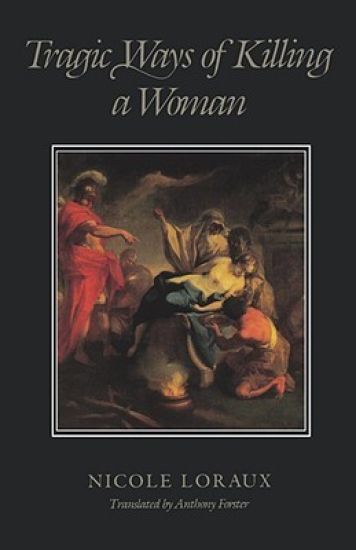
In ordinary life an Athenian woman was allowed no accomplishments beyond leading a quiet and exemplary existence as wife and mother. Her glory was to have no glory. In Greek tragedy, however, women die violently and, through violence, master their own fate. It is a genre that delights in blurring the formal frontier between masculine and feminine. Through the subtlety of her reading of these powerful and ambiguous texts, Nicole Loraux elicits an array of insights into Greek attitudes toward death, sexuality, and gender.