Kirjojen hintavertailu – 12 903 724 kirjaa ja 27 kauppaa

Kirjailija

Nicole Pohl

Kirjat ja teokset yhdessä paikassa: 8 kirjaa, julkaisuja vuosilta 2001–2025, suosituimpiin kuuluu Women, Transnational Networks and Patriotism in Northern and Central Europe, 1763-1814. Vertaile teosten hintoja ja tarkista saatavuus suomalaisista kirjakaupoista.

8 kirjaa

Kirjojen julkaisuvuodet: 2001–2025.

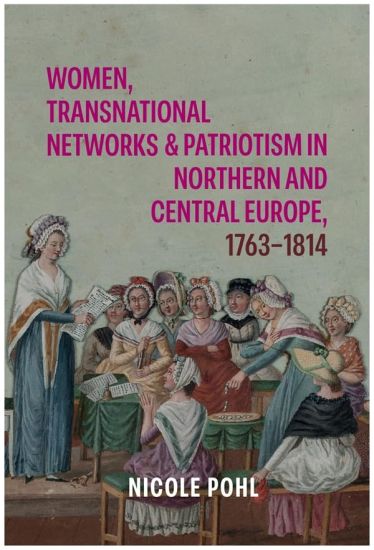
Women, Transnational Networks and Patriotism in Northern and Central Europe, 1763-1814

Women, Transnational Networks and Patriotism in Northern and Central Europe, 1763-1814

Nicole Pohl

BOYDELL BREWER LTD
2025
sidottu

Halvin toimitettuna 126,10 €

A gateway to the complex world of eighteenth-century sociability of elite women and of their lasting impact on modern concepts of national identity and community. In the dynamic intellectual and social landscape of eighteenth-century Northern Europe, the interplay between patriotism, nationalism, and cosmopolitanism was pivotal in shaping the era's cultural and political discourse. This study delves into the intricate networks of elite women who navigated and influenced these concepts through their participation in salons and literary circles. By examining figures such as Anna Amalia of Weimar, Dorothea von Kurland, members of the Bluestockings, Friederike Brun and the grande Dame of eighteenth-century salon world, Mme de Staël, the narrative uncovers how these women fostered transnational dialogues and cultural exchanges that were crucial in redefining public spirit and national identity. Grounded in extensive archival research and touching on the lives of over twenty-five individuals, the work highlights the nuanced roles these women played as cultural mediators and agents of change across national borders, challenging the traditional male-dominated historiography. The exploration of their contributions offers fresh insights into the interconnectedness of European intellectual life and the critical role of gender in shaping historical discourses. This book not only broadens our understanding of the Enlightenment but also provides a rich, interdisciplinary perspective on the socio-political transformations of the era.
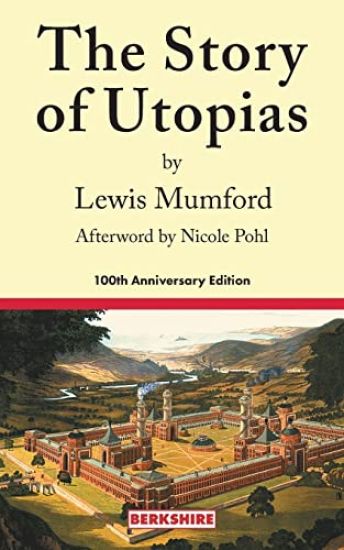
The Story of Utopias

The Story of Utopias

Lewis Mumford; Nicole Pohl; Karen Christensen

Berkshire Publishing Group
2022
pokkari
This survey of utopias, which spans from Plato to the twentieth century, was Lewis Mumford's first success. He was particularly interested in what he calls utopias of reconstruction, models for reshaping an imperfect world. Beginning with a survey of famous utopian ideas and writings, he moves from Plato's Republic, More's Utopia, Andre 's Christianopolis, Bacon's New Atlantis, Campanella's City of the Sun, Fourier's phalanxes, Cabet's Icaria, Bellamy's Looking Backward, Morris's News from Nowhere, and finally on to H. G. Wells's utopian fiction. He then produces the essence of a checklist for assessing how closely a society comes to utopian ideals, looking at work and standards of living, housing, democratic (or not) governance, sex and marriage, the raising of children, our relationship with nature, and the importance of the arts and creativity. A century later, the book stands not only as an introduction to the work of a maverick scholar who had worldwide influence, but also suggests ways to approach a future even more challenging than that faced by Mumford's post-war generation. Mumford delves into issues that remain relevant today: social equity in his chapter on the country house, for example, and the relationship between science and the arts in his concluding chapter about how we can find, or build, utopia. Mumford was thinking, as many of us are, about the practical lessons offered by imagined utopias. He posits that there are utopias of escape and utopias of "reconstruction," and was particularly interested in these utopias of reconstruction, models for reshaping an imperfect world: The utopia of reconstruction is what its name implies: a vision of a reconstituted environment which is better adapted to the nature and aims of the human beings who dwell within it than the actual one; and not merely better adapted to their actual nature, but better fitted to their possible developments. If the first utopia of escape] leads backward into the utopian's ego, the second leads outward-outward into the world. In contrast with The Waste Land by T. S. Eliot, also published in 1922 by Boni & Liveright and republished by Berkshire Publishing Group in 2022, The Story of Utopias is largely about this idea of reconstruction, rather than the disillusion that Eliot's poem so powerfully captures.
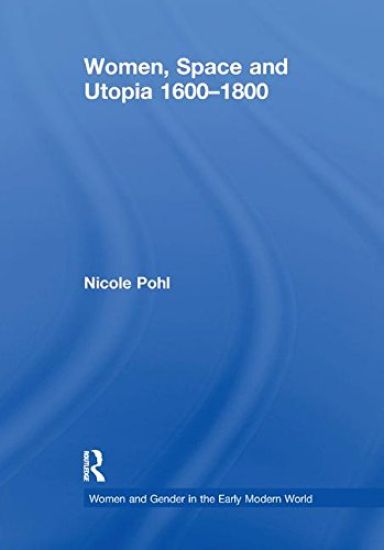
Women, Space and Utopia 1600–1800
The first full length study of women's utopian spatial imagination in the seventeenth and eigtheenth centuries, this book explores the sophisticated correlation between identity and social space. The investigation is mainly driven by conceptual questions and thus seeks to link theoretical debates about space, gender and utopianism to historiographic debates about the (gendered) social production of space. As Pohl's primary aim is to demonstrate how women writers explore the complex (gender) politics of space, specific attention is given to spaces that feature widely in contemporary utopian imagination: Arcadia, the palace, the convent, the harem and the country house. The early modern writers Lady Mary Wroth and Margaret Cavendish seek to recreate Paradise in their versions of Eden and Jerusalem; the one yearns for Arcadia, the other for Solomon's Temple. Margaret Cavendish and Mary Astell redefine the convent as an emancipatory space, dismissing its symbolic meaning as a confining and surveilled architecture. The utopia of the country house in the work of Delarivier Manley, Sarah Scott and Mary Hamilton will reveal how women writers resignify the traditional metonym of the country estate. The study will finish with an investigation of Oriental tales and travel writing by Ellis Cornelia Knight, Lady Mary Montagu, Elizabeth Craven and Lady Hester Stanhope who unveil the seraglio as a location for a Western, specifically masculine discourse on Orientalism, despotism and female sexuality and offers their own utopian judgment.
The Letters of Sarah Scott

The Letters of Sarah Scott

Nicole Pohl

Pickering Chatto (Publishers) Ltd
2013
muu
Sarah Robinson Scott was a writer, translator and social reformer. While Scott’s legacy presents her as a committed Anglican philanthropist, the letters she wrote reveal her to have been a witty, even savage, commentator on eighteenth-century life. This is the first edition of Scott’s letters to be published and presents all extant copies.
The Letters of Sarah Scott Vol 2
Sarah Robinson Scott was a writer, translator and social reformer. While Scott’s legacy presents her as a committed Anglican philanthropist, the letters she wrote reveal her to have been a witty, even savage, commentator on eighteenth-century life. This is the first edition of Scott’s letters to be published and presents all extant copies.
The Letters of Sarah Scott Vol 1
Sarah Robinson Scott was a writer, translator and social reformer. While Scott’s legacy presents her as a committed Anglican philanthropist, the letters she wrote reveal her to have been a witty, even savage, commentator on eighteenth-century life. This is the first edition of Scott’s letters to be published and presents all extant copies.
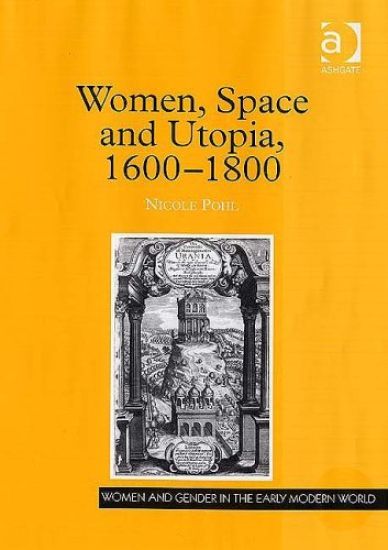
Women, Space and Utopia 1600–1800

Women, Space and Utopia 1600–1800

Nicole Pohl

Ashgate Publishing Limited
2006
sidottu
The first full length study of women's utopian spatial imagination in the seventeenth and eigtheenth centuries, this book explores the sophisticated correlation between identity and social space. The investigation is mainly driven by conceptual questions and thus seeks to link theoretical debates about space, gender and utopianism to historiographic debates about the (gendered) social production of space. As Pohl's primary aim is to demonstrate how women writers explore the complex (gender) politics of space, specific attention is given to spaces that feature widely in contemporary utopian imagination: Arcadia, the palace, the convent, the harem and the country house. The early modern writers Lady Mary Wroth and Margaret Cavendish seek to recreate Paradise in their versions of Eden and Jerusalem; the one yearns for Arcadia, the other for Solomon's Temple. Margaret Cavendish and Mary Astell redefine the convent as an emancipatory space, dismissing its symbolic meaning as a confining and surveilled architecture. The utopia of the country house in the work of Delarivier Manley, Sarah Scott and Mary Hamilton will reveal how women writers resignify the traditional metonym of the country estate. The study will finish with an investigation of Oriental tales and travel writing by Ellis Cornelia Knight, Lady Mary Montagu, Elizabeth Craven and Lady Hester Stanhope who unveil the seraglio as a location for a Western, specifically masculine discourse on Orientalism, despotism and female sexuality and offers their own utopian judgment.
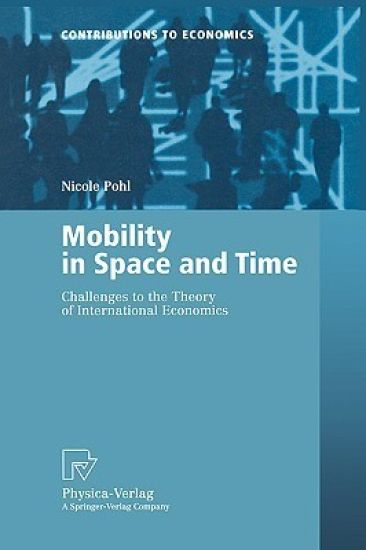
Mobility in Space and Time

Mobility in Space and Time

Nicole Pohl

Physica-Verlag GmbH Co
2001
nidottu
The pure theory of international economics operates within a methodological framework of (static) equilibrium modelling. This sets a number of restrictions to its capability to explain empirical economic phenomena. A huge part of the scientific discourse takes place within this equilibrium framework. This is also true for new approaches like e.g. the New Economic Geography and models operating with market structures of oligopoly. This is why it is a courageous effort to try to cross the apparently unalterable borders set by equilibrium modelling. Most certainly this cannot be an end in itself. Especially the pure theory of international economics is still in many fields lacking adequate possibilities to deal with phenomena in space and time. These two dimensions have in common that they make the introduction of specific facets of movement, change, evolution - and therefore "mobility" - possible. Besides this "dynamic" component a point of view that includes space and time challenges us to find new possibilities to model heterogeneous agents. If these ideas are not so revolutionary in their content, the attempt to introduce them into a formal model is a big challenge. Moreover, it poses the question about the role of a theory of "international" economics in such a wider framework.