Kirjojen hintavertailu – 12 903 725 kirjaa ja 27 kauppaa

Kirjailija

Nicole Rafter

Kirjat ja teokset yhdessä paikassa: 8 kirjaa, julkaisuja vuosilta 1998–2016, suosituimpiin kuuluu Encyclopedia of Women and Crime. Vertaile teosten hintoja ja tarkista saatavuus suomalaisista kirjakaupoista.

8 kirjaa

Kirjojen julkaisuvuodet: 1998–2016.

The Criminal Brain

The Criminal Brain

Nicole Rafter; Chad Posick; Michael Rocque

New York University Press
2016
pokkari
A lively, up-to-date overview of the newest research in biosocial criminology What is the relationship between criminality and biology? Nineteenth-century phrenologists insisted that criminality was innate, inherent in the offender's brain matter. While they were eventually repudiated as pseudo-scientists, today the pendulum has swung back. Both criminologists and biologists have begun to speak of a tantalizing but disturbing possibility: that criminality may be inherited as a set of genetic deficits that place one at risk to commit theft, violence, or acts of sexual deviance. But what do these new theories really assert? Are they as dangerous as their forerunners, which the Nazis and other eugenicists used to sterilize, incarcerate, and even execute thousands of supposed "born" criminals? How can we prepare for a future in which leaders may propose crime-control programs based on biology? In this second edition of The Criminal Brain, Nicole Rafter, Chad Posick, and Michael Rocque describe early biological theories of crime and provide a lively, up-to-date overview of the newest research in biosocial criminology. New chapters introduce the theories of the latter part of the 20th century; apply and critically assess current biosocial and evolutionary theories, the developments in neuro-imaging, and recent progressions in fields such as epigenetics; and finally, provide a vision for the future of criminology and crime policy from a biosocial perspective. The book is a careful, critical examination of each research approach and conclusion. Both compiling and analyzing the body of scholarship devoted to understanding the criminal brain, this volume serves as a condensed, accessible, and contemporary exploration of biological theories of crime and their everyday relevance.
The Criminal Brain

The Criminal Brain

Nicole Rafter; Chad Posick; Michael Rocque

New York University Press
2016
sidottu
A lively, up-to-date overview of the newest research in biosocial criminology What is the relationship between criminality and biology? Nineteenth-century phrenologists insisted that criminality was innate, inherent in the offender's brain matter. While they were eventually repudiated as pseudo-scientists, today the pendulum has swung back. Both criminologists and biologists have begun to speak of a tantalizing but disturbing possibility: that criminality may be inherited as a set of genetic deficits that place one at risk to commit theft, violence, or acts of sexual deviance. But what do these new theories really assert? Are they as dangerous as their forerunners, which the Nazis and other eugenicists used to sterilize, incarcerate, and even execute thousands of supposed "born" criminals? How can we prepare for a future in which leaders may propose crime-control programs based on biology? In this second edition of The Criminal Brain, Nicole Rafter, Chad Posick, and Michael Rocque describe early biological theories of crime and provide a lively, up-to-date overview of the newest research in biosocial criminology. New chapters introduce the theories of the latter part of the 20th century; apply and critically assess current biosocial and evolutionary theories, the developments in neuro-imaging, and recent progressions in fields such as epigenetics; and finally, provide a vision for the future of criminology and crime policy from a biosocial perspective. The book is a careful, critical examination of each research approach and conclusion. Both compiling and analyzing the body of scholarship devoted to understanding the criminal brain, this volume serves as a condensed, accessible, and contemporary exploration of biological theories of crime and their everyday relevance.
The Crime of All Crimes

The Crime of All Crimes

Nicole Rafter

New York University Press
2016
sidottu
Cambodia. Rwanda. Armenia. Nazi Germany. History remembers these places as the sites of unspeakable crimes against humanity, and indisputably, of genocide. Yet, throughout the twentieth century, the world has seen many instances of violence committed by states against certain groups within their borders—from the colonial ethnic cleansing the Germans committed against the Herero tribe in Africa, to the Katyn Forest Massacre, in which the Soviets shot over 20,000 Poles, to anti-communist mass murders in 1960s Indonesia. Are mass crimes against humanity like these still genocide? And how can an understanding of crime and criminals shed new light on how genocide—the "crime of all crimes"—transpires? In The Crime of All Crimes, criminologist Nicole Rafter takes an innovative approach to the study of genocide by comparing eight diverse genocides--large-scale and small; well-known and obscure—through the lens of criminal behavior. Rafter explores different models of genocidal activity, reflecting on the popular use of the Holocaust as a model for genocide and ways in which other genocides conform to different patterns. For instance, Rafter questions the assumption that only ethnic groups are targeted for genocidal "cleansing," and she also urges that actions such as genocidal rape be considered alongside traditional instances of genocidal violence. Further, by examining the causes of genocide on different levels, Rafter is able to construct profiles of typical victims and perpetrators and discuss means of preventing genocide, in addition to delving into the social psychology of genocidal behavior and the ways in which genocides are brought to an end. A sweeping and innovative investigation into the most tragic of events in the modern world, The Crime of All Crimes will fundamentally change how we think about genocide in the present day.
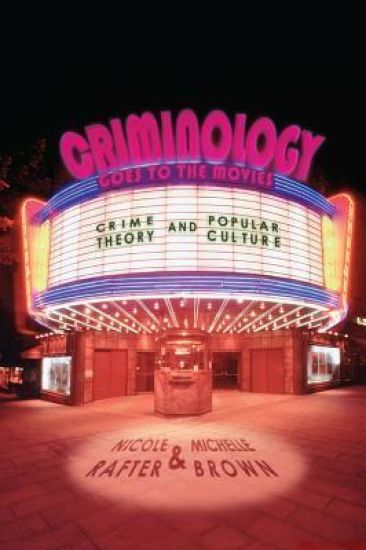
Criminology Goes to the Movies

Criminology Goes to the Movies

Nicole Rafter; Michelle Brown

New York University Press
2011
pokkari

Halvin toimitettuna 38,20 €

Investigating cinema under the magnifying glass From a look at classics like Psycho and Double Indemnity to recent films like Traffic and Thelma & Louise, Nicole Rafter and Michelle Brown show that criminological theory is produced not only in the academy, through scholarly research, but also in popular culture, through film. Criminology Goes to the Movies connects with ways in which students are already thinking criminologically through engagements with popular culture, encouraging them to use the everyday world as a vehicle for theorizing and understanding both crime and perceptions of criminality. The first work to bring a systematic and sophisticated criminological perspective to bear on crime films, Rafter and Brown's book provides a fresh way of looking at cinema, using the concepts and analytical tools of criminology to uncover previously unnoticed meanings in film, ultimately making the study of criminological theory more engaging and effective for students while simultaneously demonstrating how theories of crime circulate in our mass-mediated worlds. The result is an illuminating new way of seeing movies and a delightful way of learning about criminology.
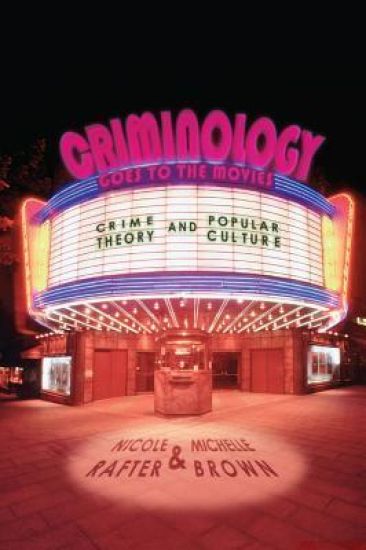
Criminology Goes to the Movies

Criminology Goes to the Movies

Nicole Rafter; Michelle Brown

New York University Press
2011
sidottu
Investigating cinema under the magnifying glass From a look at classics like Psycho and Double Indemnity to recent films like Traffic and Thelma & Louise, Nicole Rafter and Michelle Brown show that criminological theory is produced not only in the academy, through scholarly research, but also in popular culture, through film. Criminology Goes to the Movies connects with ways in which students are already thinking criminologically through engagements with popular culture, encouraging them to use the everyday world as a vehicle for theorizing and understanding both crime and perceptions of criminality. The first work to bring a systematic and sophisticated criminological perspective to bear on crime films, Rafter and Brown's book provides a fresh way of looking at cinema, using the concepts and analytical tools of criminology to uncover previously unnoticed meanings in film, ultimately making the study of criminological theory more engaging and effective for students while simultaneously demonstrating how theories of crime circulate in our mass-mediated worlds. The result is an illuminating new way of seeing movies and a delightful way of learning about criminology.
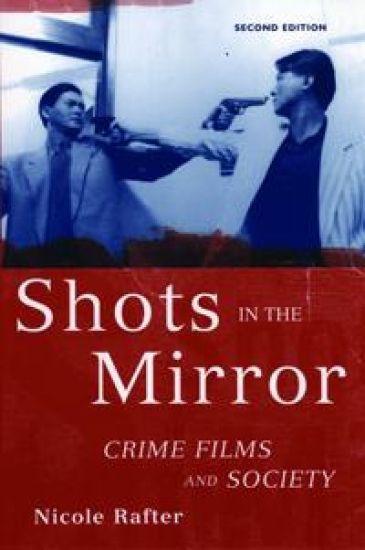
Shots in the Mirror

Shots in the Mirror

Nicole Rafter

Oxford University Press Inc
2006
nidottu

Halvin toimitettuna 64,80 €

Movies play a central role in shaping our understanding of crime and the world generally, helping us define what is good and bad, desirable and unworthy, lawful and illicit, strong and weak. Crime films raise controversial issues about the distribution of social power and the meanings of deviance, and they provide a safe space for fantasies of rebellion, punishment, and the restoration of order. In the first comprehensive study of its kind, well-known criminologist Nicole Rafter examines the relationship between society and crime films from the perspectives of criminal justice, film history and technique, and sociology. Shots in the Mirror begins with an overview of the history of crime films and the emergence of various genres, surveying important films from the silent era, the early gangster films of the '30s, classic film noir, the work of Hitchcock, and recent innovations by Scorsese, Tarrentino, and the Coen brothers. Keeping pace with the evolution of crime films, Shots in the Mirror has been updated to respond to recent developments, trends, and shifting circumstances in the genre. This new edition expands the scope and increases the depth and variety of the previous edition by including foreign films in addition to American movies. Rafter also integrates an entirely new body of literature into the study, reflecting the rapid expansion of scholarship on law-related films over the past three years. She has added a chapter on psycho movies, a previously unrecognized subcategory of crime films. Another new chapter, "The Alternative Tradition and Films of Moral Ambiguity," focuses on recent sex crime films. This new final chapter grows organically out of the first edition's distinction between traditional crime films, with their easy solutions to social problems, and those more unusual critical films which belong to the bleaker, morally ambiguous, alternative tradition. Rafter examines more than three hundred films in this study, considering what they have to say, socially and ideologically, about the causes of crime, and adding valuable contributions to the on-going debate on whether media representations of violence cause crime. Shots in the Mirror is both a marvelous history of crime films and a trenchant analysis of their complex relationship to larger society.
Encyclopedia of Women and Crime

Encyclopedia of Women and Crime

Nicole Rafter

Oryx Press Inc
2000
sidottu
This is the first reference work to offer the wealth of material on women and crime to a general audience. More than 200 authoritative contributors from the United States, Canada, the United Kingdom, and Australia examine the subject from the perspectives of offenders, offenses, and theories on offending, victims and victimology, the criminal justice system, punishment and treatment.
Creating Born Criminals

Creating Born Criminals

Nicole Rafter

University of Illinois Press
1998
nidottu
Genetic screening, new reproductive technologies, gene therapies, and the reality of cloning all make biological solutions to human social problems seem possible. Creating Born Criminals shows how history can guide us in our response to the reemergence of eugenics. The first social history origins and content, showing their undue influence on crime control in the United States.