Kirjojen hintavertailu – 12 859 827 kirjaa ja 27 kauppaa

Kirjailija

Nigel Inkster

Kirjat ja teokset yhdessä paikassa: 7 kirjaa, julkaisuja vuosilta 2012–2023, suosituimpiin kuuluu Drugs, Insecurity and Failed States. Vertaile teosten hintoja ja tarkista saatavuus suomalaisista kirjakaupoista.

7 kirjaa

Kirjojen julkaisuvuodet: 2012–2023.

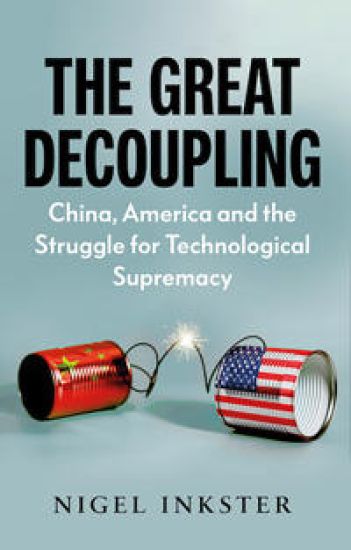
The Great Decoupling

The Great Decoupling

Nigel Inkster

C HURST CO PUBLISHERS LTD
2023
nidottu
For much of recorded history, China was a leading science and technology power. But just as the West rose, China turned in on itself, and missed the Industrial Revolution. The result was the ‘Hundred Years of Humiliation’, and a long struggle for a modern, yet distinctly Chinese, civilisational identity. Today, technological innovation has returned to the core of national pride and ambition. Since the 1980s, reforms have transformed China into the world’s second largest economy and a major global power. Cyber space and other advanced technologies have become a battleground for international dominance; but today’s world relies on global supply chains and interstate collaboration—at least, for now. Growing tension between the USA and China could result in the two superpowers decoupling their technology—with significant consequences for humanity’s future. The Great Decoupling shows that this technology contest, and how it plays out, will shape the geopolitics of the twenty-first century.

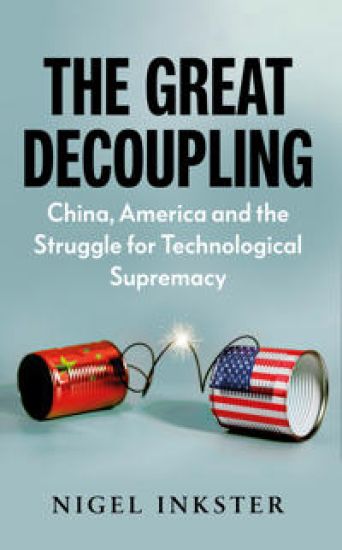
The Great Decoupling

The Great Decoupling

Nigel Inkster

C Hurst Co Publishers Ltd
2020
sidottu
For much of recorded history, China was a leading science and technology power. But just as the West rose, China turned in on itself, and missed the Industrial Revolution. The result was the ‘Hundred Years of Humiliation’, and a long struggle for a modern, yet distinctly Chinese, civilisational identity. Today, technological innovation has returned to the core of national pride and ambition. Since the 1980s, reforms have transformed China into the world’s second largest economy and a major global power. Cyber space and other advanced technologies have become a battleground for international dominance; but today’s world relies on global supply chains and interstate collaboration—at least, for now. Growing tension between the USA and China could result in the two superpowers decoupling their technology—with significant consequences for humanity’s future. The Great Decoupling shows that this technology contest, and how it plays out, will shape the geopolitics of the twenty-first century.
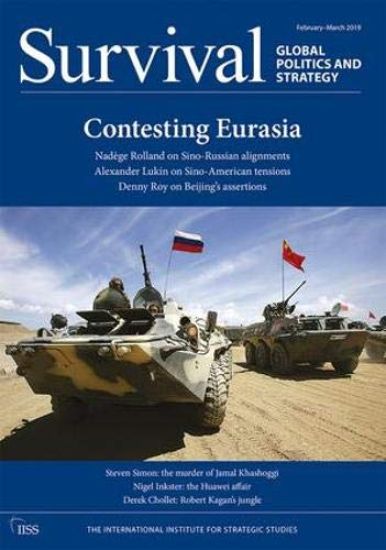
Survival 61.1

Survival 61.1

Nadege Rolland; Alexander Lukin; Denny Roy; Steven Simon; Nigel Inkster; Derek Chollet

Routledge
2019
nidottu
Survival, the bi-monthly publication from The International Institute for Strategic Studies, is a leading forum for analysis and debate of international and strategic affairs. With a diverse range of authors, thoughtful reviews and review essays, Survival is scholarly in depth while vivid, well-written and policy-relevant in approach. Shaped by its editors to be both timely and forward-thinking, the publication encourages writers to challenge conventional wisdom and bring fresh, often controversial, perspectives to bear on the strategic issues of the moment.
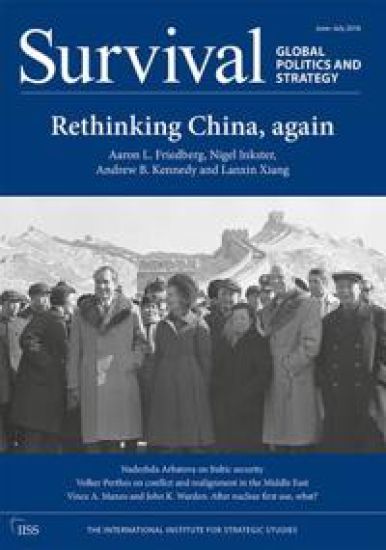
Survival 60.3

Survival 60.3

Aaron L. Friedbury; Nigel Inkster; Andrew B. Kennedy; Lanxin Xiang; Nadezhda Arbatova; Volker Perthes; Vince A. Manzo; John K. Warden

Routledge
2018
nidottu
Survival, the bi-monthly publication from The International Institute for Strategic Studies, is a leading forum for analysis and debate of international and strategic affairs. With a diverse range of authors, thoughtful reviews and review essays, Survival is scholarly in depth while vivid, well-written and policy-relevant in approach. Shaped by its editors to be both timely and forward-thinking, the publication encourages writers to challenge conventional wisdom and bring fresh, often controversial, perspectives to bear on the strategic issues of the moment.
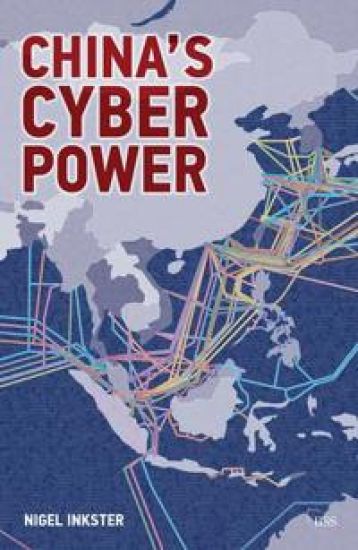
China’s Cyber Power

China’s Cyber Power

Nigel Inkster

Routledge
2016
nidottu
China’s emergence as a major global power is reshaping the cyber domain. The country has the world’s largest internet-user community, a growing economic footprint and increasingly capable military and intelligence services. Harnessing these assets, it is pursuing a patient, assertive foreign policy that seeks to determine how information and communications technologies are governed and deployed. This policy is likely to have significant normative impact, with potentially adverse implications for a global order that has been shaped by Western liberal democracies. And, even as China goes out into the world, there are signs that new technologies are becoming powerful tools for domestic social control and the suppression of dissent abroad. Western policymakers are struggling to meet this challenge. While there is much potential for good in a self-confident China that is willing to invest in the global commons, there is no guarantee that the country’s growth and modernisation will lead inexorably to democratic political reform. This Adelphi book examines the political, historical and cultural development of China’s cyber power, in light of its evolving internet, intelligence structures, military capabilities and approach to global governance. As China attempts to gain the economic benefits that come with global connectivity while excluding information seen as a threat to stability, the West will be forced to adjust to a world in which its technological edge is fast eroding and can no longer be taken for granted.
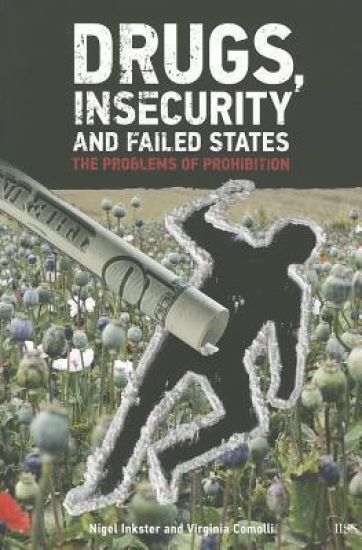
Drugs, Insecurity and Failed States

Drugs, Insecurity and Failed States

Nigel Inkster; Virginia Comolli

Routledge
2012
nidottu
The world’s wealthiest nations have expended vast blood and treasure in tracking and capturing traffickers, dealers and consumers of narcotics, as well as destroying crops and confiscating shipments. Yet the global trade in illicit drugs is thriving, with no apparent change in the level of consumption despite decades of prohibition. This Adelphi argues that the present enforcement regime is not only failing to win the ‘War on Drugs’; it is also igniting and prolonging that conflict on the streets of producer and transit countries, where the supply chain has become interwoven with state institutions and cartels have become embroiled in violence against their rivals and with security forces. What can be done to secure the worst affected regions and states, such as Latin America and Afghanistan? By examining the destabilising affects of prohibition, as well as alternative approaches such as that adopted by the authorities in Portugal, this book shows how progress may be made by treating consumption as a healthcare issue rather than a criminal matter, thereby freeing states to tackle the cartels and traffickers who hold their communities to ransom.