Kirjojen hintavertailu – 12 903 725 kirjaa ja 27 kauppaa

Kirjailija

Nigel Maxted

Kirjat ja teokset yhdessä paikassa: 7 kirjaa, julkaisuja vuosilta 1997–2020, suosituimpiin kuuluu Plant Genetic Conservation. Vertaile teosten hintoja ja tarkista saatavuus suomalaisista kirjakaupoista.

7 kirjaa

Kirjojen julkaisuvuodet: 1997–2020.

Plant Genetic Conservation

Plant Genetic Conservation

Nigel Maxted; Danny Hunter; Rodomiro Ortiz

Cambridge University Press
2020
sidottu
Plant diversity sustains all animal life, and the genetic diversity within plants underpins global food security. This text provides a practical and theoretical introduction to the strategies and actions to adopt for conserving plant genetic variation, as well as explaining how humans can exploit this diversity for sustainable development. Notably readable, it initially offers current knowledge on the characterization and evaluation of plant genetic resources. The authors then discuss strategies from in situ and ex situ conservation to crop breeding, exploring how these can be used to improve food security in the face of increasing agrobiodiversity loss, human population growth and climate change. Each chapter draws on examples from the literature or the authors' research and includes further reading references. Containing other useful features such as a glossary, it is invaluable for professionals and undergraduate and graduate students in plant sciences, ecology, conservation, genetics and natural resource management.
Plant Genetic Conservation

Plant Genetic Conservation

Nigel Maxted; Danny Hunter; Rodomiro Ortiz

Cambridge University Press
2020
pokkari
The need to understand the genetic diversity of plants has become a crucial part of conservation efforts, in part, because plants provide us with much of our food, construction materials, medicines and many other products. The authors of this book introduce essential theories and techniques needed to describe plant genetic diversity and explain how this data can be used to plan conservation strategies and implement sustainable exploitation of plant resources.
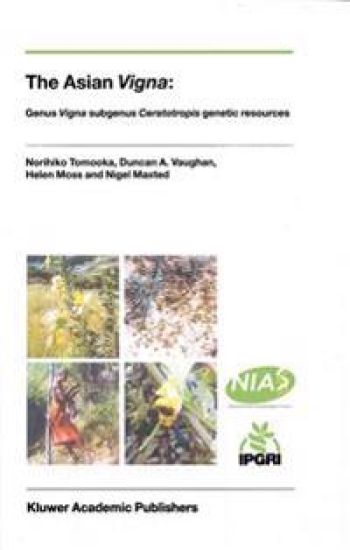
The Asian Vigna

The Asian Vigna

Norihiko Tomooka; D. Vaughan; Helen Moss; Nigel Maxted

Springer
2012
nidottu
The Asian beans and grams, the species of Vigna (subgenus Ceratotropis), include several legumes that are an essential component in the diets of a large proportion of Asia's population, and interest in these legumes is growing as ethnic cuisine spreads worldwide. However, this important group of legumes is little known compared to the closely related Phaseolus beans and soybean. That deficiency is addressed for the first time in this fully illustrated comprehensive conservation, genetics, taxonomic, and agricultural monograph on the genetic resources of the Asian Vigna. The book deals with the phylogeny of the group from the perspectives of morphological and molecular analyses, ex situ and in situ conservation, eco-geographical analyses, and research. In addition, morphological descriptions, keys, and eco-geographic details of each species in the group are provided. This genetic resources handbook and guide to the Asian Vigna will be a valuable reference for agriculturists, conservationists, taxonomists, other scientists, and students interested in the legumes and plant genetic resources.
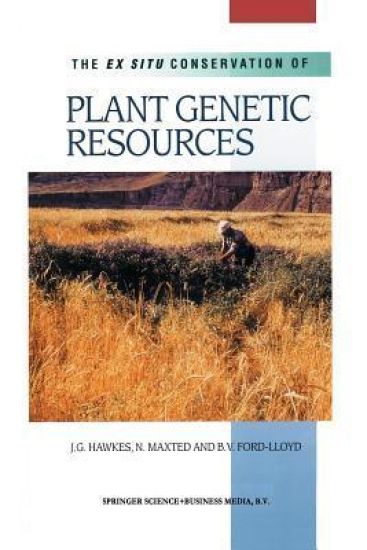
The Ex Situ Conservation of Plant Genetic Resources

The Ex Situ Conservation of Plant Genetic Resources

J.G. Hawkes; Nigel Maxted; B.V. Ford-Lloyd

Springer
2012
nidottu
It is a distressing truism that the human race during the last millennium has caused the exponential loss of plant genetic diversity throughout the world. This has had direct and negative economic, political and social consequences for the human race, which at the same time has failed to exploit fully the positive benefits that might result from conserving and exploiting the world's plant genetic resources. However, a strong movement to halt this loss of plant diversity and enhance its utilisation for the benefit of all humanity has been underway since the 1960's (Frankel and Bennett, 1970; Frankel and Hawkes, 1975). This initiative was taken up by the Convention on Biological Diversity (CBD, 1992) that not only expounds the need to conserve biological diversity but links conservation to exploitation and development for the benefit of all. Article 8 of the Convention clearly states the need to develop more effective and efficient guidelines to conserve biological diversity, while Article 9, along with the FAO International Undertaking on Plant Genetic Resources, promotes the adoption of a complementary approach to conservation that incorporates both ex situ and in situ techniques.
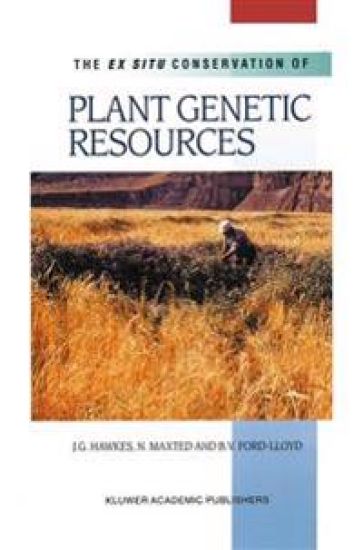
The Ex Situ Conservation of Plant Genetic Resources

The Ex Situ Conservation of Plant Genetic Resources

J.G. Hawkes; Nigel Maxted; B.V. Ford-Lloyd

Springer
2000
sidottu
It is a distressing truism that the human race during the last millennium has caused the exponential loss of plant genetic diversity throughout the world. This has had direct and negative economic, political and social consequences for the human race, which at the same time has failed to exploit fully the positive benefits that might result from conserving and exploiting the world's plant genetic resources. However, a strong movement to halt this loss of plant diversity and enhance its utilisation for the benefit of all humanity has been underway since the 1960's (Frankel and Bennett, 1970; Frankel and Hawkes, 1975). This initiative was taken up by the Convention on Biological Diversity (CBD, 1992) that not only expounds the need to conserve biological diversity but links conservation to exploitation and development for the benefit of all. Article 8 of the Convention clearly states the need to develop more effective and efficient guidelines to conserve biological diversity, while Article 9, along with the FAO International Undertaking on Plant Genetic Resources, promotes the adoption of a complementary approach to conservation that incorporates both ex situ and in situ techniques.
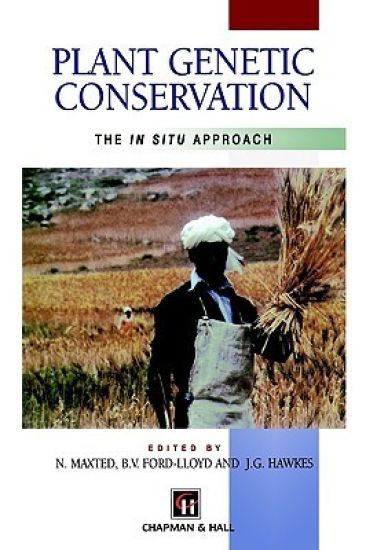
Plant Genetic Conservation

Plant Genetic Conservation

Nigel Maxted; B.V. Ford-Lloyd; J.G. Hawkes

Chapman and Hall
1997
nidottu
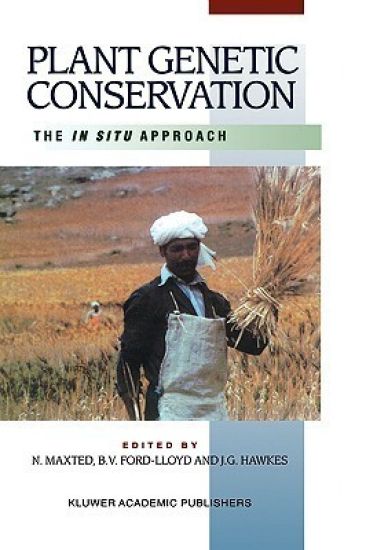
The recent development of ideas on biodiversity conservation was already being considered almost three-quarters of a century ago for crop plants and the wild species related to them, by the Russian geneticist N.!. Vavilov. He was undoubtedly the first scientist to understand the impor­ tance for humankind of conserving for utilization the genetic diversity of our ancient crop plants and their wild relatives from their centres of diversity. His collections showed various traits of adaptation to environ­ mental extremes and biotypes of crop diseases and pests which were unknown to most plant breeders in the first quarter of the twentieth cen­ tury. Later, in the 1940s-1960s scientists began to realize that the pool of genetic diversity known to Vavilov and his colleagues was beginning to disappear. Through the replacement of the old, primitive and highly diverse land races by uniform modem varieties created by plant breed­ ers, the crop gene pool was being eroded. The genetic diversity of wild species was equally being threatened by human activities: over-exploita­ tion, habitat destruction or fragmentation, competition resulting from the introduction of alien species or varieties, changes and intensification of land use, environmental pollution and possible climate change.
Plant Genetic Conservation

Plant Genetic Conservation

Nigel Maxted; B.V. Ford-Lloyd; J.G. Hawkes

Chapman and Hall
1997
sidottu
The recent development of ideas on biodiversity conservation was already being considered almost three-quarters of a century ago for crop plants and the wild species related to them, by the Russian geneticist N.!. Vavilov. He was undoubtedly the first scientist to understand the impor­ tance for humankind of conserving for utilization the genetic diversity of our ancient crop plants and their wild relatives from their centres of diversity. His collections showed various traits of adaptation to environ­ mental extremes and biotypes of crop diseases and pests which were unknown to most plant breeders in the first quarter of the twentieth cen­ tury. Later, in the 1940s-1960s scientists began to realize that the pool of genetic diversity known to Vavilov and his colleagues was beginning to disappear. Through the replacement of the old, primitive and highly diverse land races by uniform modem varieties created by plant breed­ ers, the crop gene pool was being eroded. The genetic diversity of wild species was equally being threatened by human activities: over-exploita­ tion, habitat destruction or fragmentation, competition resulting from the introduction of alien species or varieties, changes and intensification of land use, environmental pollution and possible climate change.