Kirjojen hintavertailu – 12 859 827 kirjaa ja 27 kauppaa

Kirjailija

Nigel Pennick

Kirjat ja teokset yhdessä paikassa: 23 kirjaa, julkaisuja vuosilta 1997–2026, suosituimpiin kuuluu The Secret Lore of London. Vertaile teosten hintoja ja tarkista saatavuus suomalaisista kirjakaupoista.

23 kirjaa

Kirjojen julkaisuvuodet: 1997–2026.

Runic Book of Days

Runic Book of Days

S. Kelley Harrell; Nigel Pennick

Destiny Books,U.S.
2018
pokkari

Halvin toimitettuna 19,50 €

A step-by-step guide to working with the runes throughout the year. The Old Norse runes, known as the Elder Futhark, have long joined forces with the cycles of the seasons to offer powerful initiations, guidance, and wisdom. Aligning the sacred festivals, plantings, and harvests of ancient runic calendars with our modern 12-month calendar, Kelley Harrell reveals how the runes can once again offer initiations as well as instruct us on the holy days and creative rhythms of today. Drawing on her more than 25 years of shamanic practice and runic study, Harrell offers a step-by-step primer to work with the runes throughout the year. She explains how the 24 runes of the Elder Futhark follow a seasonal progression in which each stave rules the calendar for a half-month. She explores the meaning of each rune in detail and presents structured runic devotionals for each half-month, interwoven with guidance on how to make the best use of the life force available during each season, as well as runic initiation rituals for the 8 pagan Sabbats, or holy days, such as the Summer Solstice (Litha) and Beltane (May Day). By moving through Nature’s cycle with the runes, each year becomes a reliable and trackable process of personalized growth and spiritual connection. Progressing through the teachings of each stave while honoring the seasons, Harrell’s year with the runes becomes an initiation into a direct relationship with powers of Nature.
The Secret Lore of London

The Secret Lore of London

Nigel Pennick; John Matthews; Caroline Wise; Caitlín Matthews; Carol Clancy; R.J. Stewart; Bernard Nesfield-Cookson; Gareth Knight; Robert Stephenson; Geraldine Beskin; Chesca Potter; William Stukeley; Lewis Spence; Harold Bayley; Alan V. Insole; Ross Nichols

Coronet Books
2016
pokkari
With a foreword by Iain Sinclair. London is an ancient city, whose foundation dates back literally thousands of years into the legendary prehistory of these islands. Not surprisingly it has accumulated a large number of stories, both historic and mythical, during this period, many of which, though faithfully recorded at the time, have lain almost forgotten in dusty libraries throughout the city. The Secret Lore of London is a guide to the legends, including a discussion of their importance as part of the oral tradition of Britain, combining Prehistoric, Celtic, Arthurian, Roman, Saxon and Norman levels - each of which has contributed to the many-layered life of the city. The first part contains a unique selection of essays (some printed here for the first time) by experts in their fields, each of whom possesses a unique interest in the legends of these islands, and who have written widely on associated themes. The second part of the book will consist of a Gazetteer of the sites mentioned which are still in existence, together with various other sites of associated interest, compiled by the Editor, the contributors, and members of the London Earth Mysteries Group. This part will be fully updated and extended to include many more sites. The result is a wide ranging and wholly fascinating book, with wide sales application possible. A series of appendixes will include William Stukley's extraordinary document The Brill, which relates to the ancient prehistoric sites around the area of present day St. Pancras, and excerpts from some of the best known 19th and early 20th century works on Legendary London by Lewis Spence and Harold BayleyContributors to the book are: Nigel PennickJohn MatthewsCaroline WiseCaitlín MatthewsCarol Clancy R. J. StewartBernard Nesfield-CooksonGareth KnightRobert StephensonGeraldine BeskinChesca PotterWilliam StukeleyLewis SpenceHarold BayleyAlan V. InsoleRoss Nichols
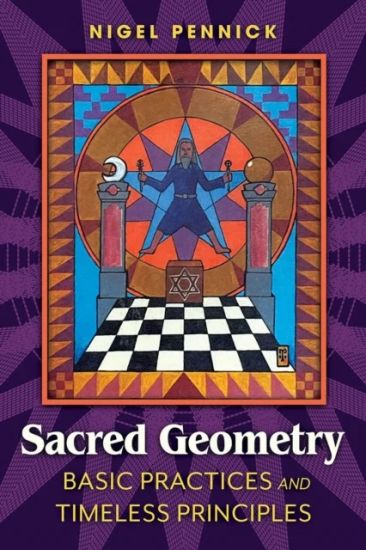
Sacred Geometry

Sacred Geometry

Nigel Pennick

INNER TRADITIONS BEAR AND COMPANY
2026
pokkari
A practical introduction to the history, principles, and tradition of sacred geometry • Traces the origins and core concepts of sacred geometry from ancient Egypt, Mesopotamia, and Britain through the Renaissance and modern science • Reveals how geometric forms, proportions, and measurements shape sacred architecture, ritual objects, and esoteric symbolism • Applies foundational principles such as the Golden Section, Platonic solids, and ad quadratum methods to understand the connection between spiritual practice and cosmic order Sacred geometry is a universal language that links the structure of the cosmos, sacred sites, and spiritual symbolism. Nigel Pennick introduces the basic principles and esoteric secrets of this ancient tradition. Pennick explores how sacred geometry shaped temples, pyramids, ziggurats, and cathedrals, showing how builders encoded metaphysical knowledge into architecture and ritual objects. He shares accounts of sacred geometry in Ancient Egypt, Mesopotamia, Israel, and Greece, as well as its influence on Medieval and Renaissance architecture, Freemasonry, and Baroque city planning. You will learn practical ways to apply this knowledge by crafting geometric sigils and amulets, and how to use proportional systems for harmonious design. By connecting ancient traditions with modern discoveries, the author shows how sacred geometry remains a foundation for meaningful architecture and spiritual understanding. In addition, Pennick provides you with tools to integrate sacred geometry into your personal, spiritual, and creative practices. This concise guide to basic practices and timeless principles reveals the enduring significance of sacred geometry as a bridge between the material and the spiritual worlds.
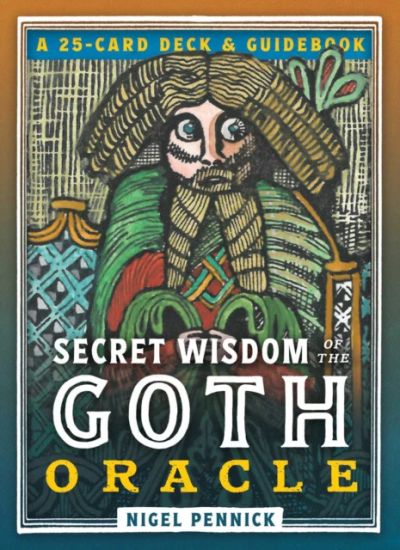
Secret Wisdom of the Goth Oracle

Secret Wisdom of the Goth Oracle

Nigel Pennick

INNER TRADITIONS BEAR AND COMPANY
2026
muu
Using the Gothic alphabet for runic divination • Examines the divinatory meanings of the 25 Gothic staves and how they correspond with the 24 runes of the Norse Futhark • Provides a series of rune spreads and several divination techniques for different approaches to questioning and gaining insight • Explores the Goths’ spiritual beliefs, cosmology, and magical systems Originating in Scandinavia, the ancient Goths viewed runes as mystical symbols from the spirit realm, using them to read the cycles of fate, known as Orlög. As the Goths migrated across Europe into North Africa, they adopted a new alphabet to mask their Pagan origins. Yet the staves, or characters of the Gothic alphabet, were rooted in the sacred runes and still used for divining, leading the Roman Catholic Church to declare the Gothic alphabet “heretical” 1400 years ago. Revealing here for the first time the system of seership embedded in the Gothic alphabet, Nigel Pennick examines the 25 Gothic staves and compares their divinatory insights with those of the traditional Futhark of the 24 Norse runes. Pennick considers each stave alone and as part of its aett, the three divisions of the runic alphabet. He provides rune spreads and reading techniques, including the Raed Waen divinatory rite, and explores how new meanings arise as staves are combined in dyads or triads.
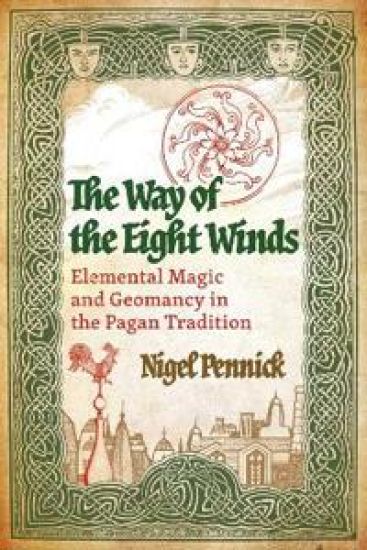
The Way of the Eight Winds

The Way of the Eight Winds

Nigel Pennick

INNER TRADITIONS BEAR AND COMPANY
2025
pokkari
A guide to the history and practice of traditional European nature-based spirituality • Examines the Eight Directions and the powers of their Winds, the Tides of the Day, and the eightfold year of modern Pagan practice • Explores geomancy practices, how to work with spirits of place, and the power of mountains, rivers, caves, standing stones, and crossroads • Shares spiritual exercises, including runic practices and divination techniques, as well as how to craft your own magical tools In this guide to the Way of the Eight Winds, Nigel Pennick explores the history and practice of traditional European Pagan spirituality, a path that recognizes and celebrates our relationship with the Cosmos and the creativity of Nature. The author looks at the Eight Directions and the powers of their Winds, the Tides of the Day, stations and houses of the Sun, and the eightfold year of modern Pagan practice. He explores practices for restoring a connection with sacred places in the landscape and the eldritch powers that inhabit them, including working with spirits of place (the Anima Loci), interpreting the lore of trees, and recognizing magical, otherworldly, and auspicious features. He describes divination techniques, including ostenta and signs, as well as sigils and emblems that emerge from the Wildwood. He explores geomancy and the magic of the landscape, including both natural and man-made features such as standing stones and crossroads. He shares spiritual exercises, including meditations, runic practices, and geomantic walking, and explores how to craft your own magical tools and build labyrinths, from small talismanic ones to those large enough to be danced in. With re-enchantment of life as the goal, Pennick emphasizes the Way of the Eight Winds as a spiritual path that reconnects us to Nature, brings us back to the present, and helps us see the world our ancestors venerated.
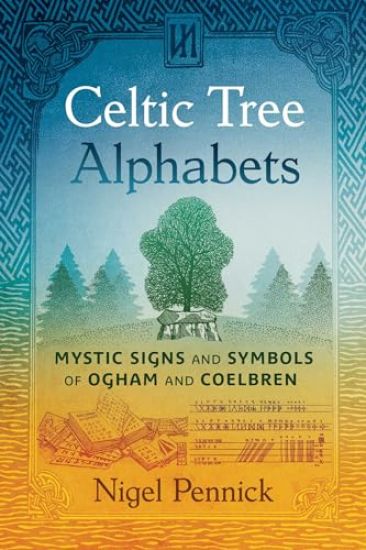
Celtic Tree Alphabets

Celtic Tree Alphabets

Nigel Pennick

INNER TRADITIONS BEAR AND COMPANY
2024
pokkari

Halvin toimitettuna 24,60 €

A guide to the ancient wisdom of the Ogham and Coelbren symbols as well as Celtic tree lore Emerging from the sacred forests of ancient Britain and Ireland, the Celtic tree alphabets known as Ogham and Coelbren are symbolic systems that encapsulate the ancestral spiritual wisdom of the British Isles, including Druidic teachings and ways of thinking. Like the trees of old growth forests, for which they are named, these ancient symbols represent the voices of elemental powers and speak to the inner, untamed part of the human soul, offering the possibility of deep psychic transformation. Presenting a wide-ranging exploration of Celtic tree lore and tree alphabets, Nigel Pennick examines the Ogham tree alphabet of Ireland and west Britain as well as the Bardic secret alphabet of Wales known as Coelbren. He explains how ancient tradition maintains these symbols were a gift from the wilderness and were created by Ogma, the God of Speech and Poetry. He explains how, like Norse Runes, each Ogham character is a meditative symbol in its own right, embodying a creative energy available to all. He provides a full explanation for each character of the Celtic tree alphabets and their historic variants, including each symbol’s corresponding trees, colors, birds, cryptic codes, and esoteric inner meanings. He details the correspondences and cosmologies contained within the Oghams and Coelbren and explores the practice of Ogham cryptography as well as their use in spiritual invocation, divination, and symbolic art. He also discusses ceremonies that aid in reconnecting with nature and the wilderness, such as “maying” and greenwood marriages, and the use of magical binding knots and colors in Celtic tradition. This handbook for learning Ogham and Coelbren also offers a comprehensive understanding of the ancient Celtic worldview, allowing you to apply their wisdom in modern life.
Fortuna

Fortuna

Nigel Pennick

INNER TRADITIONS BEAR AND COMPANY
2024
pokkari
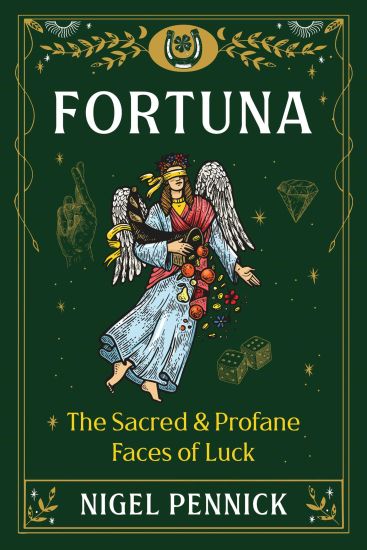
Traces the history of good fortune traditions from sacred divination to modern gambling. Some believe that our future is predetermined, while others assert that we have free will and our future can take many different courses depending on our actions. In ancient times, it was believed that the will of the gods determined people’s lives, and divination or sacrifices to the gods could change or improve one’s future. Of the deities devoted to luck and the future, the Roman goddess Fortuna is most famous, having two shrines in Italy where divination was conducted under her guardianship. Tracing the history of the culture of good fortune from sacred divination to profane gambling, Nigel Pennick explores the many ways people through the centuries have sought to divine the future, ensure protection, and draw the full benefits from days of good omen. He shows how dice were originally considered sacred objects of divination and reveals the divinatory geomancy techniques and meanings of a dice oracle. In addition to dice, he looks at how cowrie shells, bones, coins, cards, sticks, and stones can be used to form meaningful patterns for interpretation and how these cultural divination practices were often accompanied by texts or oral traditions that explained the meanings of the patterns, such as the Chinese I Ching and the West African verses of the Sixteen Cowries. He also looks at medieval grimoires for fortune-telling, lottery books, and dice books. Exploring how dice became a means of gaming and gambling, the author details the forms of trickery and “crooked dice” used in games of craps by cheating gamblers and the Dream Books or Policy Books that served as oracles for those who played the “Numbers Racket.” He examines how gambling gave rise to specialized lucky charms, luck-ensuring rituals, and even mascots. He also explores the emergence of ideas of randomness as they relate to divination and magic. Revealing how divination and gambling are two sides of the same coin, the author shows how, whether you are a gambler relying on Lady Luck or a diviner querying the gods, we’re all looking to Fortuna in the quest for a better, richer life.
Runes and Astrology

Runes and Astrology

Nigel Pennick

INNER TRADITIONS BEAR AND COMPANY
2023
pokkari
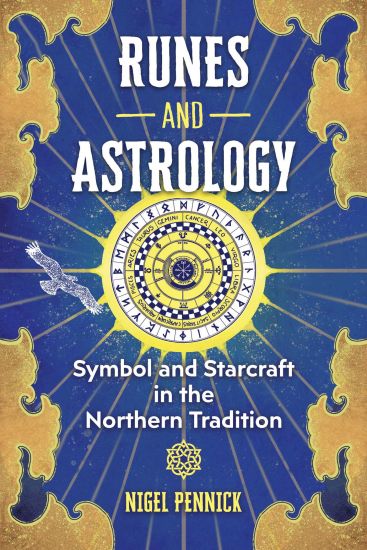
Explores how runes relate to the cycles of time. Detailing the significance of natural time cycles in the Northern Tradition, Nigel Pennick explores how the stars, planets, seasons, months, and the precessional year relate to the runes. The author explains how the runes are more than just an ancient European alphabet—they encapsulate particular spiritual and symbolic meanings to individually and collectively express deep eternal truths. Discussing the pagan wheel of the year, whose eightfold path later served the Church as the basis for the eight holy celebrations of its religious calendar, he looks at the meanings and temporal qualities of the 24 runes of the Elder Futhark and their rapport with ancient timekeeping and star-reading methods. He offers charts and calculations to discern which rune is the primary influence on a particular day, week, month, season, or year. He also examines runic elemental and color associations and their esoteric spatial roles, where they represent the four directions, the eight airts, and other cycles critical to understanding the sacred nature of the material world. Exploring runic astrology, Pennick looks at the runes as they relate to the planets and their cycles. He then presents ways to use this knowledge for calculating runic birth charts and runic horoscopes. Revealing the importance of the patterns and cycles of time operating in our world, the author provides a means for reconnecting with these primal principles—which underlie our existence as beings in time—through the ancient wisdom of runes.
Wyrd Times

Wyrd Times

Nigel Pennick

Arcana Europa
2023
pokkari
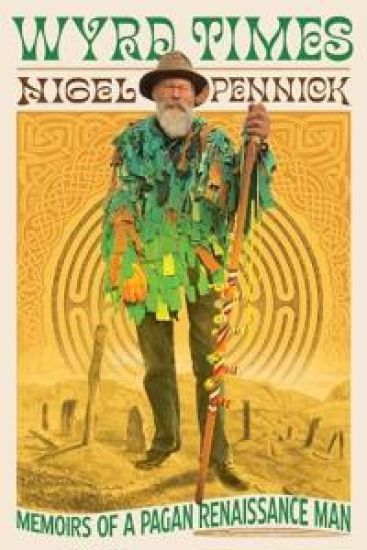
Many readers will know Nigel Pennick as the author of over fifty books on geomancy, folklore, paganism, and the runes. But who is Nigel Pennick? In this comprehensive and convivial memoir, Pennick describes his formative years growing up in a London devastated by the Blitz. Beyond the obvious physical destruction wrought by the war, it was a world characterized by severe psychological trauma. For the adults in his life, this could lead to a spirit of callousness and disregard for human life. For his young contemporaries, it was the catalyst to question every received opinion and established institution. During his time as a biology student and scientific researcher, Pennick threw himself into the realms of alternative publishing, avant-garde art, and experimental music. Unlike the American counterculture, however, the British underground embraced elements of localism, ruralism, and the supernatural, which resonated in Pennick's consciousness (the recent popularity of the "folk horror" genre of film and literature is proof positive that these ideas have lost none of their imaginative appeal). While he rejected the naive political utopianism of his peers and shunned the excesses of the drug culture, it was these deeper themes of tradition and the spirit of place that would inform his career as a writer over the last half-century. But Wyrd Times is more than just an inventory of Pennick's intellectual interests. Abundantly illustrated with rare material from his private archives, it is a rollicking ride through a personal universe populated with Dadaists and Diggers; dowsers and ley hunters; witches and toadmen; heathens, football hooligans, UFO fanatics, and eccentric outsiders of every stripe. What's more, it is a virtual catalog of the incredible array of roles Pennick himself has played throughout this unfolding drama: researcher and lecturer, scientist and magician, mummer and musician, artist and craftsman, and far-ranging traveler between worlds-both seen and unseen. Throughout it all, Pennick's unique perspective and wry sense of humor shine forth, illuminating topics like art, religion, tradition, the nature of fate and mortality, and an undying spirit of personal resistance. Nigel Pennick is the author of Elemental Magic (2020), A History of Pagan Europe (with Prudence Jones, 1995), Pagan Magic of the Northern Tradition (2015), The Spiritual Power of Masks (2022), Witchcraft and Secret Societies of Rural England (2019), and many more. His book The Eldritch World (2019) is available from Arcana Europa.
Creating Places of Power

Creating Places of Power

Nigel Pennick

INNER TRADITIONS BEAR AND COMPANY
2022
pokkari
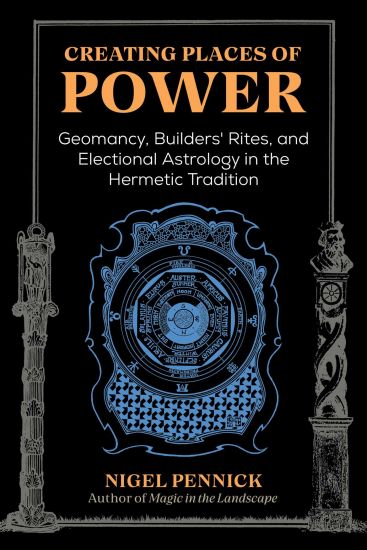
An exploration of the traditional rites of auspicious building and crafting• Explains the ceremonial beginnings and Hermetic principles in the laying out of foundations not only for sacred buildings like temples but also for homes and barns• Examines the principles and ceremonies of electional astrology and details how to compute natural time, as opposed to clock time• Shares examples from ancient Egypt, Iran, India, and Europe that range from the Stone Age to the Renaissance and include secret societiesWhen we make things--whether a building, a sacred space, or a magical object--there is a precise moment when the artifact comes into being as a separate entity. That moment in time possesses its own unique quality, and because of this, there is a right time to do something and a wrong time. And, as Nigel Pennick reveals, we have the power to select favorable moments for our creations, just as our ancestors did. Illustrating ancient principles of divination, chronomancy, and electional astrology, Pennick examines all the factors behind the ancestral art of geomancy: the auspicious creation and alignment of sacred buildings as places of power. Sharing examples from ancient Egypt, Iran, India, and Europe that range from the Stone Age to the modern day, including secret societies like the Rosicrucians and the Freemasons, he explains how many cities were constructed on specially selected sites and founded ritually at precise, predetermined moments. Looking at the traditional rites of creating places of power, Pennick explains the ceremonial beginnings and Hermetic principles in the laying out of foundations as well as the use of sacrifice in the building of many notable structures. Examining the role of sacred geometry in geomancy, Pennick explains the Hermetic meaning assigned to each direction in traditional European cultures as well as the principles of natural measures and the science of understanding lucky and unlucky days. Revealing how geomantic principles are rooted in the structure of the world and the cosmic patterns of space and time, the author shows how they transcend the ages and are just as meaningful today as they were to our ancestors.
The Spiritual Power of Masks

The Spiritual Power of Masks

Nigel Pennick

INNER TRADITIONS BEAR AND COMPANY
2022
pokkari

Halvin toimitettuna 28,50 €

Explores ancient mask customs, rituals, and traditions throughout Europe, from Scandinavia and England to Germany and France to Greece and Rome• Reveals how mask rituals are akin to shamanic journeying and allow the mask wearer to personify an ancestral presence, spirit, deity, or power • Examines animal guising and shows how mask customs are tied to creation myths and the ancestral founders of a people, tribe, city, or nation • Looks at morris dancers and mummers in the UK, Krampuslauf and Perchtenlauf in Germanic areas, the Gorgon myths of Greece, Norse Berserker rituals, and the annual Black Forest rite to awaken ensouled masks every spring There is a spiritual power in masks that transports one into realms unseen and gives voice to things unspoken. Within the context of ritual, putting on a mask places the wearer at the intersection between the present and the past, the living and the dead, this world and the Otherworld. Masks make it possible to activate ancient archetypes, with the mask wearer reanimating or personifying an ancestral presence or spirit, a deity or power, an animal or a being of the eldritch world. In this illustrated study, Nigel Pennick explores the magical and spiritual aspects of mask wearing from ancient times to the present. He examines the many mask traditions around Europe and shows how mask rituals are similar to shamanic journeying and near-death experiences and can induce ecstatic states that allow the power signified by the mask to take possession of the individual wearing it. He also looks at the practice of dressing up as sacred animals and mask wearing as it relates to ostenta, events that occur suddenly and without warning that are considered a token or sign from the Otherworld. Unveiling the sacred power of masks, the author shows how masks allow us to transport into realms unseen, embody ancestors and otherworldly entities, and connect with traditions that stretch back to time immemorial.
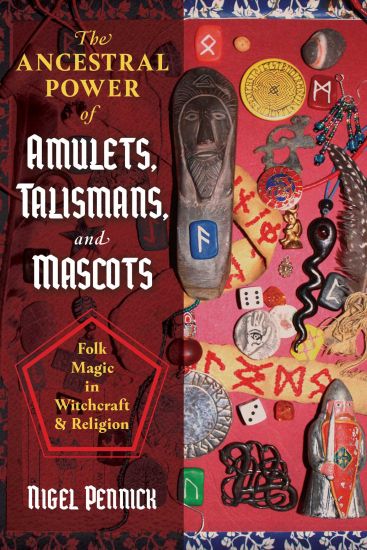
The Ancestral Power of Amulets, Talismans, and Mascots
An illustrated exploration of the origins and history of amulets, lucky charms, talismans, and mascots• Looks at the age-old spiritual principles, folklore, and esoteric traditions behind the creation of magical objects as well as the use of numbers, colors, sigils, geometric emblems, knots, crosses, pentagrams, and other symbols • Explores hundreds of artifacts, such as hagstones, Norse directional amulets, car hood mascots, objects made from bones and teeth, those connected with plants and animals, charms associated with gambling, and religious relics • Includes photos of artifacts from the author’s extensive collection Offering an illustrated exploration of the origins and history of amulets, lucky charms, talismans, and mascots, including photos of unique and original artifacts from his extensive collection, Nigel Pennick examines these objects from a magical perspective, from ancient Egypt to the present. He looks at the age-old spiritual principles, folklore, and esoteric traditions behind their creation as well as the use of numbers, colors, sigils, geometric emblems, knots, crosses, pentagrams, and other symbols. Pennick explores magical charms and objects manufactured from bones, teeth, claws, and horns and those that include symbols of the human body. He also discusses religious relics as well as the combining of charms to make more powerful objects, from the bind runes of the Norse and the crowns of ancient Egypt to the Mojo hand and the medicine pouch. Revealing the lasting power of amulets, talismans, charms, and mascots, Pennick shows that these objects and symbols have retained their magic across the centuries.
Elemental Magic

Elemental Magic

Nigel Pennick

Destiny Books,U.S.
2020
pokkari
Learn how to use the principles and practices of natural magic for personal development and spiritual empowerment • Offers detailed descriptions of the magical properties of minerals, animals, plants, and the earth’s cycles and how to use them in your own practice • Explores the magical laws of nature and how to guide your inner energy to work in concert with cosmic energies • Details how to design your own ceremonies, practice elemental meditations, and craft your own magical talismans, wands, and divining rods An expert on European rural folk magic traditions, author Nigel Pennick presents a comprehensive introduction to the principles, rituals, practices, and magical tools required to draw on the magic inherent in the natural world. He explains how people throughout the centuries have built a relationship with the elemental energies around them using simple, everyday practices in order to attune themselves to nature, the seasons, and the cosmos for magical purposes. The author explores earth, mineral, and plant magic as well as the magical properties of the earth’s cycles and concentrated places of power within the landscape. He examines magical workings with animals, drawing on authentic traditions such as the Toadsmen or Toadswomen, whose power is given by toads, and the Berserker qualities conferred by magical bondings with wild animals like bears and wolves. He explains how to craft your own magical talismans, wands, and divining rods; design your own ceremonies; practice elemental meditations; fortify your health with herbs and crystals; and set an altar with the right food and drink for your intention. Pennick also describes how the practical techniques of natural elemental magic work through interactions between the inner world of the mind and spirit, the outer world, and the otherworldly. He shows that having a deeper understanding of the interconnectedness of all things and the inner power of these magical elements strengthens the practitioner’s harmony with nature, and thus their power. By harnessing the elemental energies around us, we can work with nature for personal development, spiritual empowerment, and the successful achievement of our desires
Magic in the Landscape

Magic in the Landscape

Nigel Pennick

Destiny Books,U.S.
2020
pokkari

Halvin toimitettuna 22,50 €

Learn to cultivate a traditional, beneficial relationship with the land by embracing the forgotten practices of our ancestors • Details the ancient art of geomancy and Earth magic, including how to work with ley lines, astrology, and the four directions to honor a space and make it a place of power • Explores the magic of the land around us and how our ancestors interacted with Earth energies and the forces of Nature • Discusses the power of boundaries and magic circles, the proper “feng shui” of graveyards and cemeteries, and magically powerful places such as crossroads, fairgrounds, and the mystic triangles found in “no-man’s lands” Our ancestors were deeply aware of the magical power of their local landscape, no matter where they lived. Every interaction with their environment--from building to farming to the layout of ancient cities--took into account terrestrial energies, ancestral memory, and the many seen and unseen presences in Nature. They developed sophisticated procedures for orienting their living spaces and respectfully working with the magic of the landscape. Yet, much of the art of geomancy and of working with the forces of Nature has been forgotten by modern builders, architects, foresters, gardeners, and homeowners. The treatment of land as mere property has led to a loss of its meaning for those who dwell upon it. Our landscape has become disenchanted. In this book, geomancy expert and scholar Nigel Pennick details the ancient and sacred practices of geomancy and Earth magic and reveals how we can reenchant and reconnect to the sacred landscape that surrounds us, whether you live rurally, in the suburbs, or in cities. Pennick begins with a vivid look at our modern “wasteland” and what he calls “the ensouled world,” with specific examples from Britain and Iceland of our ancestors’ way of perceiving the world they lived in. Exploring the art of geomancy, he examines how its techniques work with ley lines, astrology, and the old understanding of the four directions and the eight winds to honor a space and make it a place of power. He looks at the power of boundaries and magic circles, including laying ghosts and dismissing spirits, as well as the proper “feng shui” for cemeteries and graveyards. The author then takes the reader back into the traditional landscape to discuss magically powerful places, such as crossroads, the occult nature of the “fairground,” and the mystic triangles found in what are popularly known as “no-man’s lands.” Revealing how the landscape can be reenchanted, Pennick shows how the magic of place is a living system that each of us can interact with.
Operative Witchcraft

Operative Witchcraft

Nigel Pennick

Destiny Books,U.S.
2019
pokkari
A comprehensive look at the history and practices of rural English witchcraft • Explores witch’s familiars and fetches, animal magic, and the forms of witchcraft practiced by rural tradespeople, such as blacksmiths, herbalists, and artisans • Offers practical insight into spells, charms, folk incantations, herbal medicine practices, amulets, sigils, and tools of the craft • Details the evolution of public perception of witchcraft throughout England’s history, including the laws against witchcraft in place until the 1950s and witchcraft’s contentious relationship with the Christian church In this practical guide, Nigel Pennick takes the reader on a journey through the practice of operative witchcraft in the British Isles from the Middle Ages and the Elizabethan era to the decriminalization of witchcraft in the 1950s and its practice today. Highlighting uniquely English traditions, Pennick explores fetches and witch’s familiars, animal magic, and the forms of witchcraft practiced by rural tradespeople, such as blacksmiths, herbalists, and artisans, to enhance their professional work and compel others to do their bidding, both man and beast. He provides actual spells, charms, and folk incantations, along with details about the magical use of a variety of herbs, including nightshades, the creation of amulets and sigils, protection against the Evil Eye, and the use of aromatic oils. Pennick explains the best times of day for different types of magic, how to identify places of power, and the use of the paraphernalia of operative witchcraft, such as the broom, the witches’ dial, and pins, nails and thorns. He explores the belief in three different types of witches: white witches, who offer help and healing for a fee; black witches, who harm others; and gray witches, who practice both white and black magic. Examining witchcraft’s contentious relationship with the Christian church, he investigates the persecution of witches throughout the UK and the British West Indies up until the mid-20th century. He offers a look into the changing public perceptions of witchcraft and the treatment of its followers as well as revealing how English churchmen would offer magical solutions to the perceived threat of black witchcraft. Painting an in-depth picture of English witchcraft, including how it relates to and differs from modern Wicca, Pennick reveals the foundation from which modern witchcraft arose. He shows how this context is necessary to effectively use these ancient skills and techniques and how the evolution of witchcraft will continue harmonizing the old ways with the new.
Witchcraft and Secret Societies of Rural England
A comprehensive account of the rich folk culture preserved in the rural secret societies of the British Isles Centuries ago the remote, marshy plains of eastern England--the Fens--were drained to create agricultural land. The Fens remained isolated up until the nineteenth century, and it was this very isolation that helped preserve the ancient traditions of this area, traditions ruthlessly eradicated elsewhere in the British Isles. These magical folk traditions also owe their survival to secret rural societies, from craft guilds and trade unions to Morris dancers and village bands. Exploring the folk customs and magical traditions of guilds and rural fraternities such as the Shoemakers and Horsemen and the secrets guarded by the Free Gardeners, Witches, Toadmen, and Bonesmen, Nigel Pennick shows how the common working people of the Fens belonged to secret societies based on their specific trade. He details the hidden aspects of rural life that most historians ignore--the magical current that flowed through the lives of working people--and describes the secret rites, ceremonies, oaths, and initiation rituals of the guilds and fraternities to which the folk belonged. Drawing not only on scholarly research but also his personal contacts within these still living traditions, Pennick explains their use of masks, black face, and other disguises to avoid persecution and describes how wise woman healers and witches in rural villages were sought-after for their remedies. He shares the secrets of the toad-bone rite, which gave the Toadman control over animals and members of the opposite sex, and explores the guardian spirits thought to inhabit the Fens, including those of the Wild Hunt. Providing insight into a world that has largely disappeared, one whose magic still echoes in lore and legend, Pennick shows that the rites, customs, and ceremonies of guilds and rural fraternities connect individuals to a wider community and, through collective action, to the power of Nature and the Cosmos.
Runic Lore and Legend

Runic Lore and Legend

Nigel Pennick

Destiny Books,U.S.
2019
pokkari
A practical guide to the Anglo-Saxon Futhark and how runes were used in Old England In the early Anglo-Saxon period, the region of Great Britain known as Northumbria was a kingdom in its own right. These lands, in what is now northern England and southeast Scotland, were the targets of the first Viking raids on Britain. This violent influx, followed by the establishment of trade routes with the Norse, brought the runes to the region, where they intermingled with local magical traditions and legends, resulting in the development of a practical runic wisdom entirely unique to Northumbria. In this guide to the Wyrdstaves, or runic practices, of Old Northumbria, Nigel Pennick examines the thirty-three runes of the Anglo-Saxon Futhark and how they were used in Old England for weaving the web of Wyrd. Sharing runic lore and legends from the area, he explains how the Northumbrian runes are unique because they contain elements from all the cultures of the region, including the Picts, Britons, Romans, Angles, Scots, and Norse. He illustrates how each rune in this tradition is a storehouse of ancient knowledge, detailing the meanings, historical uses, symbolism, and related tree and plant spirits for each of the thirty-three runes. The author describes the Northumbrian use of runes in magic and encryption and explores geomancy divination practices, the role of sacred numbers, and the power of the eight airts, or directions. He also shows how the Northumbrian runes have a close relationship with Ogam, the tree alphabet of the ancient Celts. Providing a magical history of Northumbria, as well as a look at the otherworldly beings who call these lands home, including boggarts, brownies, and dragons, Pennick explains how traditional spirituality is intimately tied to the landscape and the cycle of the seasons. He reveals how the runic tradition is still vibrantly alive in this area and ready for us to reawaken to it.
Pagan Magic of the Northern Tradition

Pagan Magic of the Northern Tradition

Nigel Pennick

Inner Traditions Bear and Company
2015
pokkari
In the pre-Christian societies of Northern Europe, magic was embedded in the practical skills of everyday life. Everything in Nature was ensouled with an inner spirit, as was anything made by hand. People believed in magic because it worked and because it was part of the functionality of their day-to-day lives. Many of these practical observances and customs continue to the present day as rural traditions, folk customs, household magic, and celebrations of the high and holy days of the calendar. Exploring the magical pagan traditions of the people now called Celtic, Germanic, Scandinavian, Slavonic, and Baltic, Nigel Pennick examines the underlying principle of the Northern Tradition--the concept of Wyrd--and how it empowers the arts of operative magic, such as direct natural magic and talismanic or sigil magic. Sigil magic involves the powers contained in objects, which can be channeled after the appropriate ritual. Runes are the most powerful sigils in the Northern Tradition and were used to ward off illness, danger, hostile magic, and malevolent spirits. Emphasizing the importance of the cycles of Nature to the tradition, Pennick explores the eightfold sun dials and the four ways the solar year is defined. He looks at the days of the week and their symbolic association with different deities as well as why particular acts are performed on certain days and what the customary lucky and unlucky days are. He also examines sacred spaces, household magic, protection spells, and the role of music in the Northern Tradition. Pennick shows how anyone can participate authentically in the magic of the Northern Tradition if they take care to do things properly, with respect, and on the right day.
The Book of Primal Signs

The Book of Primal Signs

Nigel Pennick

Inner Traditions Bear and Company
2014
pokkari
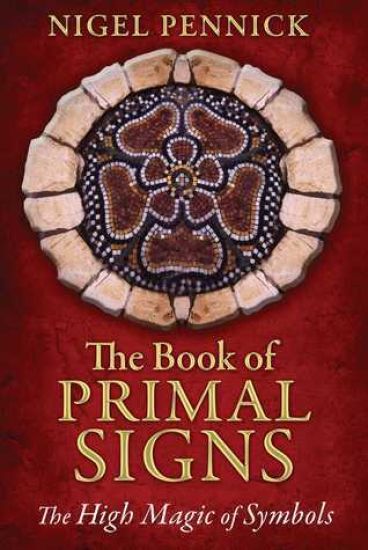
From ancient rock and cave art to the contemporary brand logos of politics and business, human beings have always created symbols to denote specific ideas, groups, or important objects as well as to convey deeper information than can be communicated in words. Many glyphs have retained their meanings over millennia whereas some have modern meanings vastly different from the original connotation. In this study of symbols, Nigel Pennick explores glyphs as agents of higher consciousness and ports of access to the collective unconscious, acknowledging the continuity of tradition, both deliberate and not, as well as how interpretations of some symbols, such as the swastika, have changed dramatically. With more than 300 unique woodcuts, drawings, calligraphy, and photographs--many never before reproduced--Pennick examines ancient and enduring glyphs in detail, such as the circle, cross, eye, pentagram, fleur de lis, tree of life, and horseshoe, as well as several families of symbols, such as craftsmen’s marks, runes, symbolic beasts, human heads and skulls, and the sigils of Mammon. The author explains the multiple forms and uses of each from ancient times to the present day, reflecting their roots in the Western Mystery tradition. He explores the symbols of high magic such as the glyph of John Dee’s monad, those of folk magic such as the traditional cock on the weather vane, and the creation of modern glyphs such as the peace sign and the anarchy symbol. Contrasting the hi-jacked use of power symbols in modern advertising with the vital role of symbols in traditional arts and crafts, Pennick reveals how symbols link the cosmic with the terrestrial and allow us to infuse the mundane with the numinous.
Secrets of King's College Chapel

Secrets of King's College Chapel

Nigel Pennick

Aeon Books Ltd
2012
nidottu
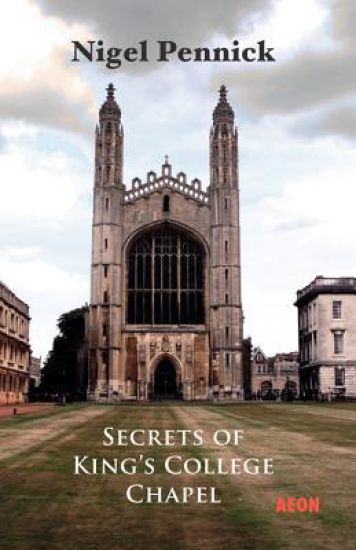
Today, King's College Chapel is the iconic image of the City of Cambridge. The chapel was founded in 1446 by the mystically-inclined King Henry VI, known in his time as "the royal saint". The king gave his builders complete instructions for a magnificent chapel of cathedral dimensions, every part of which had a mystical and spiritual meaning. This "final flowering of the Great Work' was designed from the principles of sacred geometry, laid out and orientated by the ancient geomantic practice of the operative masons who built it. This book gives an historic overview of the chapel, and a summary of its construction, notable for its stunningly beautiful fan-vaulting and exceptional stained glass which still exists in its entirety. Although the chapel's original significance as a symbolic structure has been eroded over the centuries, it remains a place of wonder and reverence for countless thousands of visitors and those who watch on television the annual Christmas carol festival broadcast from there every year.