Kirjojen hintavertailu – 12 903 725 kirjaa ja 27 kauppaa

Kirjailija

Nigel Thrift

Kirjat ja teokset yhdessä paikassa: 20 kirjaa, julkaisuja vuosilta 1994–2022, suosituimpiin kuuluu Shaping the Day. Vertaile teosten hintoja ja tarkista saatavuus suomalaisista kirjakaupoista.

20 kirjaa

Kirjojen julkaisuvuodet: 1994–2022.

Seeing Like a City

Seeing Like a City

Ash Amin; Nigel Thrift

Polity Press
2016
sidottu
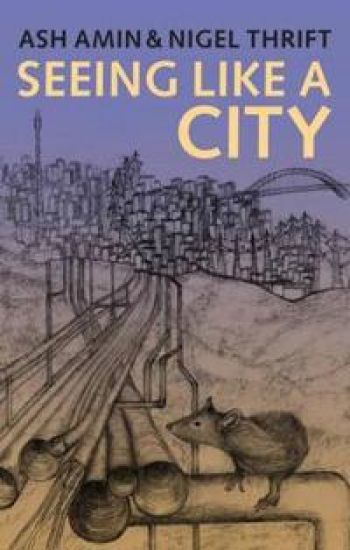
Seeing like a city means recognizing that cities are living things made up of a tangle of networks, built up from the agency of countless actors. Cities must not be considered as expressions of larger paradigms or sites of human effort and organization alone. Within their density, size and sprawl can be found a world of symbols, bodies, buildings, technologies and infrastructures. It is the machine-like combination, interaction and confrontation of these different elements that make a city. Such a view locates urban outcomes and influences in the character of these networks, which together power urban life, allocating resources, shaping social opportunities, maintaining order and simply enabling life. More than the silent stage on which other powers perform, such networks represent the essence of the city. They also form an important political project, a politics of small interventions with large effects. The increasing evidence for an Anthropocene bears out the way in which humanity has stamped its footprint on the planet by constructing urban forms that act as systems for directing life in ways that create both immense power and immense constraint.
Seeing Like a City

Seeing Like a City

Ash Amin; Nigel Thrift

Polity Press
2016
nidottu

Halvin toimitettuna 32,70 €

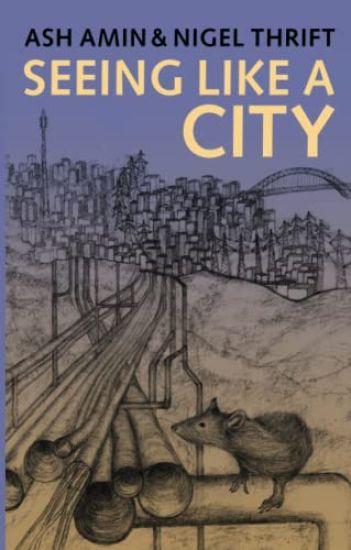
Seeing like a city means recognizing that cities are living things made up of a tangle of networks, built up from the agency of countless actors. Cities must not be considered as expressions of larger paradigms or sites of human effort and organization alone. Within their density, size and sprawl can be found a world of symbols, bodies, buildings, technologies and infrastructures. It is the machine-like combination, interaction and confrontation of these different elements that make a city. Such a view locates urban outcomes and influences in the character of these networks, which together power urban life, allocating resources, shaping social opportunities, maintaining order and simply enabling life. More than the silent stage on which other powers perform, such networks represent the essence of the city. They also form an important political project, a politics of small interventions with large effects. The increasing evidence for an Anthropocene bears out the way in which humanity has stamped its footprint on the planet by constructing urban forms that act as systems for directing life in ways that create both immense power and immense constraint.
Arts of the Political

Arts of the Political

Nigel Thrift; Ash Amin

Duke University Press
2013
sidottu
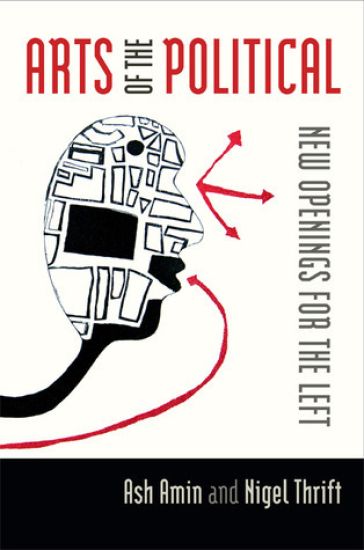
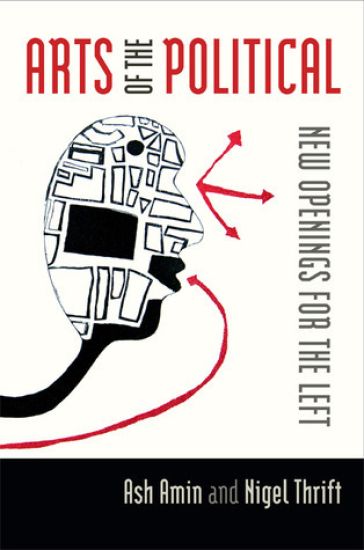
In the West, "the Left," understood as a loose conglomeration of interests centered around the goal of a fairer and more equal society, still struggles to make its voice heard and its influence felt, even amid an overwhelming global recession. In Arts of the Political: New Openings for the Left, Ash Amin and Nigel Thrift argue that only by broadening the domain of what is considered political and what can be made into politics will the Left be able to respond forcefully to injustice and inequality. In particular, the Left requires a more imaginative and experimental approach to the politics of creating a better society. The authors propose three political arts that they consider crucial to transforming the Left: boosting invention, leveraging organization, and mobilizing affect. They maintain that successful Left political movements tend to surpass traditional notions of politics and open up political agency to these kinds of considerations. In other words, rather than providing another blueprint for the future, Amin and Thrift concentrate their attention on a more modest examination of the conduct of politics itself and the ways that it can be made more effective.
Arts of the Political

Arts of the Political

Nigel Thrift; Ash Amin

Duke University Press
2013
pokkari
In the West, "the Left," understood as a loose conglomeration of interests centered around the goal of a fairer and more equal society, still struggles to make its voice heard and its influence felt, even amid an overwhelming global recession. In Arts of the Political: New Openings for the Left, Ash Amin and Nigel Thrift argue that only by broadening the domain of what is considered political and what can be made into politics will the Left be able to respond forcefully to injustice and inequality. In particular, the Left requires a more imaginative and experimental approach to the politics of creating a better society. The authors propose three political arts that they consider crucial to transforming the Left: boosting invention, leveraging organization, and mobilizing affect. They maintain that successful Left political movements tend to surpass traditional notions of politics and open up political agency to these kinds of considerations. In other words, rather than providing another blueprint for the future, Amin and Thrift concentrate their attention on a more modest examination of the conduct of politics itself and the ways that it can be made more effective.
Shaping the Day

Shaping the Day

Paul Glennie; Nigel Thrift

Oxford University Press
2011
nidottu
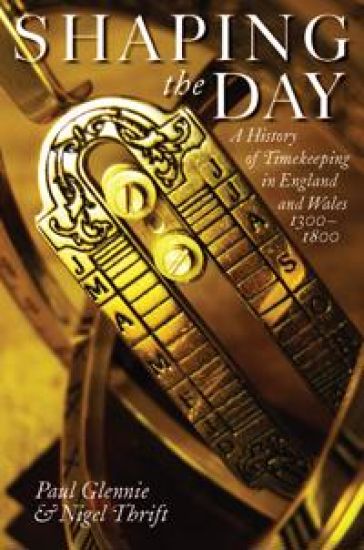
Timekeeping is an essential activity in the modern world and we take it for granted that our lives our shaped by the hours of the day. Yet what seems so ordinary today is actually the extraordinary outcome of centuries of technical innovation and circulation of ideas about time. Shaping the Day is a pathbreaking study of the practice of timekeeping in England and Wales between 1300 and 1800. Drawing on many unique historical sources, ranging from personal diaries to housekeeping manuals, Paul Glennie and Nigel Thrift illustrate how a particular kind of common sense about time came into being, and how it developed during this period. Many remarkable figures make their appearance, ranging from the well-known, such as Edmund Halley, Samuel Pepys, and John Harrison, who solved the problem of longitude, to less familiar characters, including sailors, gamblers, and burglars. Overturning many common perceptions of the past-for example, that clock time and the industrial revolution were intimately related-this unique historical study engages all readers interested in how 'telling the time' has come to dominate our way of life.
Shaping the Day

Shaping the Day

Paul Glennie; Nigel Thrift

Oxford University Press
2009
sidottu
Timekeeping is an essential activity in the modern world, and we take it for granted that our lives are shaped by the hours of the day. Yet what seems so ordinary today is actually the extraordinary outcome of centuries of technical innovation and circulation of ideas about time. Shaping the Day is a pathbreaking study of the practice of timekeeping in England and Wales between 1300 and 1800. Drawing on many unique historical sources, ranging from personal diaries to housekeeping manuals, Paul Glennie and Nigel Thrift illustrate how a particular kind of common sense about time came into being, and how it developed during this period. Many remarkable figures make their appearance, ranging from the well-known, such as Edmund Halley, Samuel Pepys, and John Harrison, who solved the problem of longitude, to less familiar characters, including sailors, gamblers, and burglars. Overturning many common perceptions of the past-for example, that clock time and the industrial revolution were intimately related-this unique historical study will engage all readers interested in how 'telling the time' has come to dominate our way of life.
Cities

Cities

Ash Amin; Nigel Thrift

JOHN WILEY AND SONS LTD
2002
nidottu

Halvin toimitettuna 32,10 €

This book develops a fresh and challenging perspective on the city. Amin and Thrift maintain that the traditional divide between the city and the countryside has been perforated through urban encroachment, the thickening of the links between the two, and urbanization as a way of life.
Cities

Cities

Ash Amin; Nigel Thrift

Polity Press
2002
sidottu
This book develops a fresh and challenging perspective on the city. Drawing on a wide and diverse range of material and texts, it argues that too much contemporary urban theory is based on nostalgia for a humane, face-to-face and bounded city. Amin and Thrift maintain that the traditional divide between the city and the rest of the world has been perforated through urban encroachment, the thickening of the links between the two, and urbanization as a way of life. They outline an innovative sociology of the city that scatters urban life along a series of sites and circulations, reinstating previously suppressed areas of contemporary urban life: from the presence of non-human activity to the centrality of distant connections. The implications of this viewpoint are traced through a series of chapters on power, economy and democracy. This concise and accessible book will be of interest to students and scholars in sociology, geography, urban studies, cultural studies and politics. .
The Pursuit of Possibility

The Pursuit of Possibility

Nigel Thrift

Bristol University Press
2022
nidottu
Are British research universities losing their way or are they finding a new way? Nigel Thrift, a well-known academic and a former Vice-Chancellor, explores recent changes in the British research university that threaten to erode the quality of these higher education institutions. He considers what a research university has now become by examining the quandaries that have arisen from a succession of misplaced strategies and false expectations. Challenging both higher education policy and leadership, he argues that the focus on student number growth and a series of research policy missteps has upset research universities’ priorities just at a point in the history of planetary breakdown when their research is most needed.
The Pursuit of Possibility

The Pursuit of Possibility

Nigel Thrift

Bristol University Press
2022
sidottu
Are British research universities losing their way or are they finding a new way? Nigel Thrift, a well-known academic and a former Vice-Chancellor, explores recent changes in the British research university that threaten to erode the quality of these higher education institutions. He considers what a research university has now become by examining the quandaries that have arisen from a succession of misplaced strategies and false expectations. Challenging both higher education policy and leadership, he argues that the focus on student number growth and a series of research policy missteps has upset research universities’ priorities just at a point in the history of planetary breakdown when their research is most needed.
Killer Cities

Killer Cities

Nigel Thrift

SAGE Publications Ltd
2021
nidottu
Killer Cities uses a combination of social theory, polemic and close attention to empirical detail to tell the story of how and why cities cause mass animal death and, in the process, hasten the destruction of the planet. This book is not just a lament, however. It is an attempt to navigate out of this mess of planned and unplanned violence towards a world in which cities no longer act as killers but become aligned with the lives of other beings. It offers pragmatic ways of diminishing the death toll and changing mindsets without ever minimizing the dilemmas that inevitably will have to be faced. Killer cities can be rehabilitated so that they offer brighter paths towards the future - for animals, for human beings, and for the planet. A new urban geography could be within our grasp. Indeed, it has to be, for all of our sakes.
Killer Cities

Killer Cities

Nigel Thrift

SAGE Publications Ltd
2021
sidottu
Killer Cities uses a combination of social theory, polemic and close attention to empirical detail to tell the story of how and why cities cause mass animal death and, in the process, hasten the destruction of the planet. This book is not just a lament, however. It is an attempt to navigate out of this mess of planned and unplanned violence towards a world in which cities no longer act as killers but become aligned with the lives of other beings. It offers pragmatic ways of diminishing the death toll and changing mindsets without ever minimizing the dilemmas that inevitably will have to be faced. Killer cities can be rehabilitated so that they offer brighter paths towards the future - for animals, for human beings, and for the planet. A new urban geography could be within our grasp. Indeed, it has to be, for all of our sakes.
The Price of War

The Price of War

Nigel Thrift; Dean Forbes

Routledge
2015
nidottu
Much rare material is incorporated in this unique account of urbanization in a developing country that was ravaged by war for twenty years. With due emphasis on the experience of Hanoi and Ho Chi Minh City (Saigon), the authors present an account of what happened to the towns and cities of Vietnam between the establishment of Ho Chi Minh's socialist state in 1954 and the mid 1980s. The story is introduced through a general theoretical and empirical account of urbanization in socialist Third World countries. The book stresses the importance of the turmoil created by warfare in directing urbanization, but it also refers to the more conventially studied determinants of the process such as the institution of a planned economy. As one of the few books highlighting the impact of warfare on urban settlements, The Price of War will interest all those interested in urbanization, development and South-East Asia. This book was first published in 1986.
Non-Representational Theory

Non-Representational Theory

Nigel Thrift

Routledge
2007
nidottu
This astonishing book presents a distinctive approach to the politics of everyday life. Ranging across a variety of spaces in which politics and the political unfold, it questions what is meant by perception, representation and practice, with the aim of valuing the fugitive practices that exist on the margins of the known. It revolves around three key functions. It:introduces the rather dispersed discussion of non-representational theory to a wider audienceprovides the basis for an experimental rather than a representational approach to the social sciences and humanitiesbegins the task of constructing a different kind of political genre. A groundbreaking and comprehensive introduction to this key topic, Thrift’s outstanding work brings together further writings from a body of work that has come to be known as non-representational theory. This noteworthy book makes a significant contribution to the literature in this area and is essential reading for researchers and postgraduates in the fields of social theory, sociology, geography, anthropology and cultural studies.
Non-Representational Theory

Non-Representational Theory

Nigel Thrift

Routledge
2007
sidottu
This astonishing book presents a distinctive approach to the politics of everyday life. Ranging across a variety of spaces in which politics and the political unfold, it questions what is meant by perception, representation and practice, with the aim of valuing the fugitive practices that exist on the margins of the known. It revolves around three key functions. It:introduces the rather dispersed discussion of non-representational theory to a wider audienceprovides the basis for an experimental rather than a representational approach to the social sciences and humanitiesbegins the task of constructing a different kind of political genre. A groundbreaking and comprehensive introduction to this key topic, Thrift’s outstanding work brings together further writings from a body of work that has come to be known as non-representational theory. This noteworthy book makes a significant contribution to the literature in this area and is essential reading for researchers and postgraduates in the fields of social theory, sociology, geography, anthropology and cultural studies.
The Price of War

The Price of War

Nigel Thrift; Dean Forbes

Routledge
2006
sidottu
Much rare material is incorporated in this unique account of urbanization in a developing country that was ravaged by war for twenty years. With due emphasis on the experience of Hanoi and Ho Chi Minh City (Saigon), the authors present an account of what happened to the towns and cities of Vietnam between the establishment of Ho Chi Minh's socialist state in 1954 and the mid 1980s. The story is introduced through a general theoretical and empirical account of urbanization in socialist Third World countries. The book stresses the importance of the turmoil created by warfare in directing urbanization, but it also refers to the more conventially studied determinants of the process such as the institution of a planned economy. As one of the few books highlighting the impact of warfare on urban settlements, The Price of War will interest all those interested in urbanization, development and South-East Asia. This book was first published in 1986.
Knowing Capitalism

Knowing Capitalism

Nigel Thrift

SAGE Publications Inc
2005
sidottu
'This is an ambitious, original, and complex treatment of key aspects of contemporary capitalism. It makes a major contribution because it profoundly destabilizes the scholarship on globalization, the so-called new economy, information technology, distinct contemporary business cultures and practices' - Saskia Sassen, author of Globalization and its Discontents 'Nigel Thrift offers us the sort of cultural analysis of global capitalism that has long been needed - one that emphasizes the innovative energy of global capitalism. The book avoids stale denouncements and offers instead a view of capitalism as a form of practice' - Karin Knorr Cetina, Professor of Sociology, University of Konstanz, Germany Capitalism is well known for producing a form of existence where `everything solid melts into air'. But what happens when capitalism develops theories about itself? Are we moving into a condition in which capitalism can be said to possess a brain? These questions are pursued in this sparkling and thought-provoking book. Thrift looks at what he calls 'the cultural circuit of capitalism', the mechanism for generating new theories of capitalism. The book traces the rise of this circuit back to the 1960s when a series of institutions locked together to interrogate capitalism, to the present day, when these institutions are moving out to the Pacific basin and beyond. What have these theories produced? How have they been implicated in the speculative bubbles that characterized the late twentieth century? What part have they played in developing our understanding of human relations? Building on an inter-disciplinary approach which embraces the core social sciences, Thrift outlines an exciting new theory for understanding capitalism. His book is of interest to readers in geography, social theory, anthropology and cultural economics.
Knowing Capitalism

Knowing Capitalism

Nigel Thrift

SAGE Publications Inc
2005
nidottu
'This is an ambitious, original, and complex treatment of key aspects of contemporary capitalism. It makes a major contribution because it profoundly destabilizes the scholarship on globalization, the so-called new economy, information technology, distinct contemporary business cultures and practices' - Saskia Sassen, author of Globalization and its Discontents 'Nigel Thrift offers us the sort of cultural analysis of global capitalism that has long been needed - one that emphasizes the innovative energy of global capitalism. The book avoids stale denouncements and offers instead a view of capitalism as a form of practice' - Karin Knorr Cetina, Professor of Sociology, University of Konstanz, Germany Capitalism is well known for producing a form of existence where `everything solid melts into air'. But what happens when capitalism develops theories about itself? Are we moving into a condition in which capitalism can be said to possess a brain? These questions are pursued in this sparkling and thought-provoking book. Thrift looks at what he calls 'the cultural circuit of capitalism', the mechanism for generating new theories of capitalism. The book traces the rise of this circuit back to the 1960s when a series of institutions locked together to interrogate capitalism, to the present day, when these institutions are moving out to the Pacific basin and beyond. What have these theories produced? How have they been implicated in the speculative bubbles that characterized the late twentieth century? What part have they played in developing our understanding of human relations? Building on an inter-disciplinary approach which embraces the core social sciences, Thrift outlines an exciting new theory for understanding capitalism. His book is of interest to readers in geography, social theory, anthropology and cultural economics.
Money/Space

Money/Space

Andrew Leyshon; Nigel Thrift

Routledge
1997
nidottu
Bringing together in one volume the most important writings of Andrew Leyshon and Nigel Thrift on money and finance, including the unpublished classic "Sexy-Greedy" this collection examines the economic, social and cultural manifestations that go to make up the multiple vision of money. Money, it seems is the great God of our age. It is also an economy, a sociology, an anthropolgy and a geography. Linking money with the emergent patterns of global spatial order. Money/Space analyses the restructuring of financial markets in a range of spatial scales; global, national and local.
Writing the Rural

Writing the Rural

Paul J Cloke; Marcus A Doel; David Matless; Nigel Thrift; Martin Phillips

SAGE Publications Ltd
1994
nidottu
This book arises out of an ESRC project devoted to an examination of the economic, social and cultural impacts of the 'service class' on rural areas. The research was an attempt to document these impacts through close empirical work in a set of three rural communities, but something happened on the way. The authors found that the 'rural' became a real sticking point. Respondents used it in different ways - as a bludgeon, as a badge, as a barometer - to signify many different things - security, identity, community, domesticity, gender, sexuality, ethnicity - nearly always by drawing on many different sources - the media, the landscape, friends and kin, animals. It became abundantly clear that the 'rural', whatever chameleon form it took, was a prime and deeply felt determinant of the actions of many respondents. Yet it was also clear that to the authors they possessed no theoretical framework that could allow them to negotiate the 'rural' to deconstruct its diverse nature as a category. Rather each of the extended essays in the book is an attempt by each author to draw out one aspect of the 'rural' by drawing on different traditions in social and cultural theory.