Kirjojen hintavertailu – 12 859 818 kirjaa ja 27 kauppaa

Kirjailija

Niko Huttunen

Kirjat ja teokset yhdessä paikassa: 5 kirjaa, julkaisuja vuosilta 2009–2020, suosituimpiin kuuluu Hyvä osa. Vertaile teosten hintoja ja tarkista saatavuus suomalaisista kirjakaupoista.

5 kirjaa

Kirjojen julkaisuvuodet: 2009–2020.

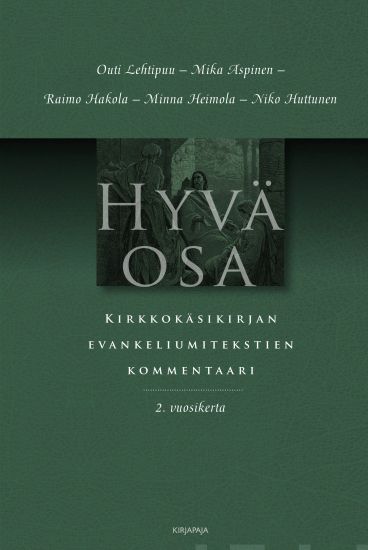
Hyvä osa

Hyvä osa

Outi Lehtipuu; Mika Aspinen; Raimo Hakola; Minna Heimola; Niko Huttunen

KIRJAPAJA
2016
sidottu

Halvin toimitettuna 48,40 €

Uuden testamentin neljä evankeliumia ovat Raamatun keskeisintä aineistoa. Jokaiselle pyhäpäivälle on määritelty oma tekstinsä, josta saarnataan kirkoissa joka puolella Suomea. Suomalaiset raamatuntutkijat ovat kirjoittaneet toisen vuosikerran teksteihin ajantasaisen suomalaisen kommentaariteoksen. Teoksen myötä evankeliumitekstien kommentaarisarja valmistuu: sarjan aiemmat osat ovat Alussa oli Sana (2013) ja Maan suola (2014).
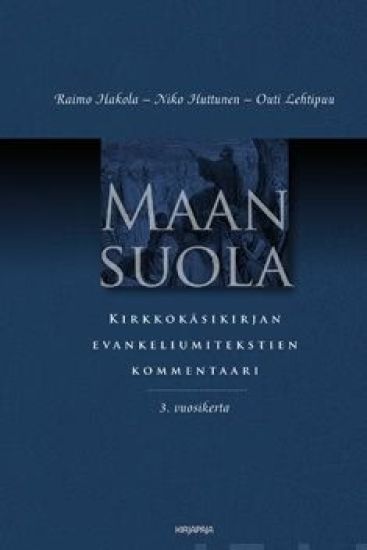
Maan suola

Maan suola

Raimo Hakola; Niko Huttunen; Outi Lehtipuu

KIRJAPAJA
2014
nidottu
Uuden testamentin neljä evankeliumia ovat Raamatun keskeisintä aineistoa. Jokaiselle pyhäpäivälle on määritelty oma tekstinsä, josta saarnataan kirkoissa joka puolella Suomea. Tutkijat Raimo Hakola, Niko Huttunen ja Outi Lehtipuu ovat kirjoittaneet kolmannen vuosikerran teksteihin ajantasaisen suomalaisen kommentaariteoksen. Teos on samaa sarjaa kuin aiemmin ilmestynyt ensimmäisen vuosikerran tekstien kommentaari Alussa oli Sana (Kirjapaja 2013). - "Hakolan ja Lehtipuun teos on tullut huutavaan tarpeeseen. - On toivottavaa, että Hakola, Lehtipuu ja kustantaja päätyvät julkaisemaan myös toisen ja kolmannen vuosikerran evankeliumien selitykset." - Sini Hulmi, Teologinen Aikakauskirja 4/2013.
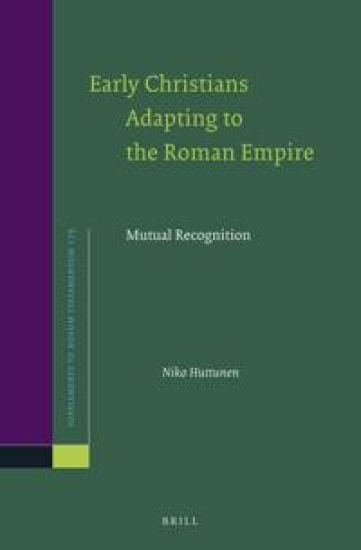
Early Christians Adapting to the Roman Empire
In Early Christians Adapting to the Roman Empire: Mutual Recognition Niko Huttunen challenges the interpretation of early Christian texts as anti-imperial documents. He presents examples of the positive relationship between early Christians and the Roman society. With the concept of “recognition” Huttunen describes a situation in which the parties can come to terms with each other without full agreement. Huttunen provides examples of non-Christian philosophers recognizing early Christians. He claims that recognition was a response to Christians who presented themselves as philosophers. Huttunen reads Romans 13 as a part of the ancient tradition of the law of the stronger. His pioneering study on early Christian soldiers uncovers the practical dimension of recognizing the empire.
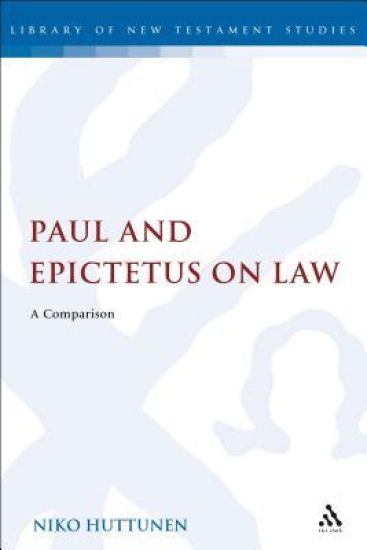
Paul and Epictetus on Law

Paul and Epictetus on Law

Niko Huttunen

T. T.Clark Ltd
2019
nidottu
Paul's relationship with covenantal nomism has long been the subject of lively discussion. In this book Niko Huttunen presents a challenging new path to complement the general scholarly picture of Paul's teaching on law. Acknowledging that Stoicism permeated Paul's intellectual milieu, Huttunen compares Paul's sayings of law with those of Epictetus drawing comparisons as a result of careful methodological considerations. Pauline law is generally focused upon Paul's sayings on and relationship with the Torah. It is Huttunen's contention that Paul's ideas on law have clearer affinities with Stoic ideas than with the Torah. Throughout the course of the book Huttunen displays Paul's interpretation of the Torah with Stoic methods (1 Cor. 7-9), asserts that in some passages (Rom. 1-2 and Rom. 7) Paul's thinking is Stoic, not Platonic and demonstrates that Paul's famous "I"-passage (Rom. 7.7-25) owes much to Stoic anthropology and psychology. Where the latter is concerned Huttunen suggests that Epictetus' use of the first person presents a good analogy for Paul's employment of "I" as a rhetorical device. In further passages (e.g. Rom. 13-15) the comparison with Epictetus opens a window into ancient intellectual thinking in general. Epictetus' ideas of moral progress present an analogy both to the "works of law" and to Paul's moral exhortation. There are also similarities between Paul's figure of Christ and Epictetus' figure of Heracles. The comparison suggests further comparisons between Paul's treatment of law and other philosophers and schools.
Paul and Epictetus on Law

Paul and Epictetus on Law

Niko Huttunen

T. T.Clark Ltd
2009
sidottu
Paul's relationship with covenantal nomism has long been the subject of lively discussion. In this book Niko Huttunen presents a challenging new path to complement the general scholarly picture of Paul's teaching on law. Acknowledging that Stoicism permeated Paul's intellectual milieu, Huttunen compares Paul's sayings of law with those of Epictetus drawing comparisons as a result of careful methodological considerations. Pauline law is generally focused upon Paul's sayings on and relationship with the Torah. It is Huttunen's contention that Paul's ideas on law have clearer affinities with Stoic ideas than with the Torah. Throughout the course of the book Huttunen displays Paul's interpretation of the Torah with Stoic methods (1 Cor. 7-9), asserts that in some passages (Rom. 1-2 and Rom. 7) Paul's thinking is Stoic, not Platonic and demonstrates that Paul's famous "I"-passage (Rom. 7.7-25) owes much to Stoic anthropology and psychology. Where the latter is concerned Huttunen suggests that Epictetus' use of the first person presents a good analogy for Paul's employment of "I" as a rhetorical device. In further passages (e.g. Rom. 13-15) the comparison with Epictetus opens a window into ancient intellectual thinking in general. Epictetus' ideas of moral progress present an analogy both to the "works of law" and to Paul's moral exhortation. There are also similarities between Paul's figure of Christ and Epictetus' figure of Heracles. The comparison suggests further comparisons between Paul's treatment of law and other philosophers and schools.