Kirjojen hintavertailu – 12 903 725 kirjaa ja 27 kauppaa

Kirjailija

Nikos Papastergiadis

Kirjat ja teokset yhdessä paikassa: 9 kirjaa, julkaisuja vuosilta 1999–2023, suosituimpiin kuuluu Cosmopolitanism and Culture. Vertaile teosten hintoja ja tarkista saatavuus suomalaisista kirjakaupoista.

9 kirjaa

Kirjojen julkaisuvuodet: 1999–2023.

The Cosmos in Cosmopolitanism

The Cosmos in Cosmopolitanism

Nikos Papastergiadis

JOHN WILEY AND SONS LTD
2023
nidottu
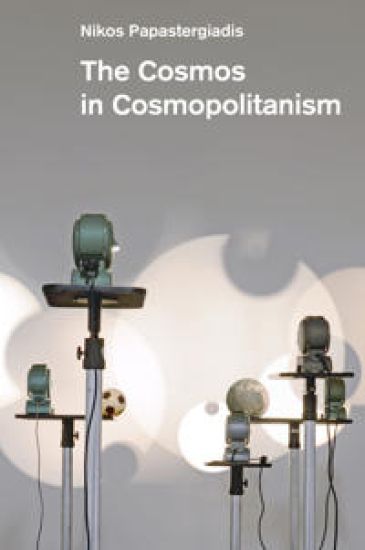
Cosmopolitanism is commonly associated today with the idea that the forces of globalization could be tempered by new forms of cosmopolitan governance, an idea that was popular among some political theorists in the late twentieth century but seems increasingly unrealistic today. Rather than discarding the idea of cosmopolitanism, Nikos Papastergiadis seeks to reinvigorate it by examining the ways in which visual artists have explored themes associated with the cosmos. Kant regarded cosmopolitanism as the goal for humanity, but he turned his attention away from the connection to the cosmos and directed it toward the practical rules for peaceful co-existence. However, these two concerns are not in conflict. Today a new vision of the cosmos is being developed by artists, among others – one that brings together the cosmos and the polis. Scholars from the South are decolonizing the mindset which divided the world and split us from our common connections, while others are using art to highlight the existential threats we now face as a species. By developing a distinctive form of aesthetic cosmopolitanism, this book shows that the idea of the cosmos is more important than ever today, and vital for our attempts to rethink our place as one species among others in a universe that extends far beyond our world.
The Cosmos in Cosmopolitanism

The Cosmos in Cosmopolitanism

Nikos Papastergiadis

JOHN WILEY AND SONS LTD
2023
sidottu
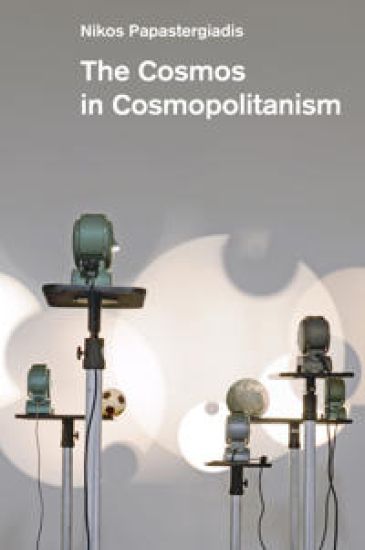
Cosmopolitanism is commonly associated today with the idea that the forces of globalization could be tempered by new forms of cosmopolitan governance, an idea that was popular among some political theorists in the late twentieth century but seems increasingly unrealistic today. Rather than discarding the idea of cosmopolitanism, Nikos Papastergiadis seeks to reinvigorate it by examining the ways in which visual artists have explored themes associated with the cosmos. Kant regarded cosmopolitanism as the goal for humanity, but he turned his attention away from the connection to the cosmos and directed it toward the practical rules for peaceful co-existence. However, these two concerns are not in conflict. Today a new vision of the cosmos is being developed by artists, among others – one that brings together the cosmos and the polis. Scholars from the South are decolonizing the mindset which divided the world and split us from our common connections, while others are using art to highlight the existential threats we now face as a species. By developing a distinctive form of aesthetic cosmopolitanism, this book shows that the idea of the cosmos is more important than ever today, and vital for our attempts to rethink our place as one species among others in a universe that extends far beyond our world.

Museums of the Commons

Museums of the Commons

Nikos Papastergiadis

TAYLOR FRANCIS LTD
2021
nidottu
Museums of the Commons examines L’Internationale, an ongoing confederation between six museums and contemporary art institutions in Europe. Drawing on extensive interviews with the directors, curators, public programs officers in all the museums, as well as artists, critics and members associated with them, the book provides a transversal account that connects the ideas across the various institutions and situates this in the wider visual and social context. Chronicling the challenges faced by the museums, Papastergiadis goes on to situate their responses within the wider political and cultural context that is shaping the future of all contemporary art museums. Five key domains of research are explored within the book: the genealogy of the museum; the need for alternative models of trans-institutional governance; examples of innovation in the spaces of aesthetic production; experimentation in the forms of partnership and engagement with constituents; and finally, examination of the impact of a collaborative and collective regime of artistic practices. Museums of the Commons provides a multi-perspectival account of a trans-institutional and transnational collaboration, which will be of great interest to academics, researchers and postgraduate students working in the fields of Museum Studies, Cultural Studies, Art History, Media and Communication.
Museums of the Commons

Museums of the Commons

Nikos Papastergiadis

Routledge
2020
sidottu
Museums of the Commons examines L’Internationale, an ongoing confederation between six museums and contemporary art institutions in Europe. Drawing on extensive interviews with the directors, curators, public programs officers in all the museums, as well as artists, critics and members associated with them, the book provides a transversal account that connects the ideas across the various institutions and situates this in the wider visual and social context. Chronicling the challenges faced by the museums, Papastergiadis goes on to situate their responses within the wider political and cultural context that is shaping the future of all contemporary art museums. Five key domains of research are explored within the book: the genealogy of the museum; the need for alternative models of trans-institutional governance; examples of innovation in the spaces of aesthetic production; experimentation in the forms of partnership and engagement with constituents; and finally, examination of the impact of a collaborative and collective regime of artistic practices. Museums of the Commons provides a multi-perspectival account of a trans-institutional and transnational collaboration, which will be of great interest to academics, researchers and postgraduate students working in the fields of Museum Studies, Cultural Studies, Art History, Media and Communication.
Ambient Screens and Transnational Public Spaces

Ambient Screens and Transnational Public Spaces

Nikos Papastergiadis

Hong Kong University Press
2017
sidottu
Large public screens have now become a ubiquitous part of the contemporary cityscape. Far from being simply oversized televisions, the media experts contributing to Ambient Screens and Transnational Public Spaces put forward a strong case that such screens could serve as important sites for cultural exchange. Advances in digital technology spell the possibilities of conducting mobile modes of interaction across national boundaries, and in the process expose the participants to novel sensory experiences, giving rise to a new form of public culture. Understanding this phenomenon calls for a reconceptualization of "public space" and "ambience," as well as connecting the two concepts with each other. This pioneering study of the impact of media platforms on urban cultural life presents a theoretical analysis and a history of screens, followed by discussions of site-specific urban screen practices on five continents. There is also a substantial examination of the world's first real-time cross-cultural exchange via the networking of large public screens located in Melbourne and Seoul.
Cosmopolitanism and Culture

Cosmopolitanism and Culture

Nikos Papastergiadis

Polity Press
2012
sidottu
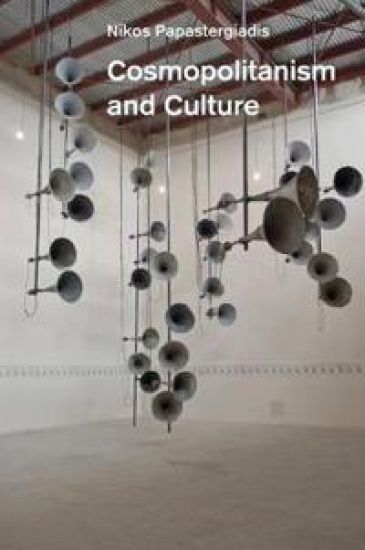
Today, more than at any other point in history, we are aware of the cultural impact of global processes. This has created new possibilities for the development of a cosmopolitan culture but, at the same time, it has created new risks and anxieties linked to immigration and the accommodation of strangers. This book examines how the images of the terrorist and the refugee, by being dispersed across almost all aspects of social life, have resulted in the production of ‘ambient fears’, and it explores the role of artists in reclaiming the conditions of hospitality. Since 9/11 contemporary artists have confronted the issues of globalization by creating situations in which strangers can enter into dialogue with each other, collaborating with diverse networks to forms new platforms for global knowledge. Such knowledge does not depend upon the old model of establishing a supposedly objective and therefore universal framework, but on the capacity to recognize, and mutually negotiate, situated differences. From artworks that incorporate new media techniques to collective activism Papastergiadis claims that there is a new cosmopolitan imaginary that challenges the conventional divide between art and politics. Through the analysis of artistic practices across the globe this book extends the debates on culture and cosmopolitanism from the ethics of living with strangers to the aesthetics of imagining alternative visions of the world. Timely and wide-ranging, this book will be essential reading for students and scholars in sociology and cultural studies and will be of interest to anyone concerned with the changing forms of art and culture in our contemporary global age.
Cosmopolitanism and Culture

Cosmopolitanism and Culture

Nikos Papastergiadis

Polity Press
2012
nidottu
Today, more than at any other point in history, we are aware of the cultural impact of global processes. This has created new possibilities for the development of a cosmopolitan culture but, at the same time, it has created new risks and anxieties linked to immigration and the accommodation of strangers. This book examines how the images of the terrorist and the refugee, by being dispersed across almost all aspects of social life, have resulted in the production of ‘ambient fears’, and it explores the role of artists in reclaiming the conditions of hospitality. Since 9/11 contemporary artists have confronted the issues of globalization by creating situations in which strangers can enter into dialogue with each other, collaborating with diverse networks to forms new platforms for global knowledge. Such knowledge does not depend upon the old model of establishing a supposedly objective and therefore universal framework, but on the capacity to recognize, and mutually negotiate, situated differences. From artworks that incorporate new media techniques to collective activism Papastergiadis claims that there is a new cosmopolitan imaginary that challenges the conventional divide between art and politics. Through the analysis of artistic practices across the globe this book extends the debates on culture and cosmopolitanism from the ethics of living with strangers to the aesthetics of imagining alternative visions of the world. Timely and wide-ranging, this book will be essential reading for students and scholars in sociology and cultural studies and will be of interest to anyone concerned with the changing forms of art and culture in our contemporary global age.
The Turbulence of Migration

The Turbulence of Migration

Nikos Papastergiadis

Polity Press
1999
nidottu
This text traces the impact of the movement of people, ideas and capital across the globe. It provides a clear mapping of earlier patterns of global migration and presents an account of new "chaotic" forms of movement around the world, drawing on the concept of deterritorialization.