Kirjojen hintavertailu – 12 903 725 kirjaa ja 27 kauppaa

Kirjailija

Nilanjana Chatterjee

Kirjat ja teokset yhdessä paikassa: 4 kirjaa, julkaisuja vuosilta 2022–2024, suosituimpiin kuuluu Controlling Reproduction. Vertaile teosten hintoja ja tarkista saatavuus suomalaisista kirjakaupoista.

4 kirjaa

Kirjojen julkaisuvuodet: 2022–2024.

Reading Jhumpa Lahiri

Reading Jhumpa Lahiri

Nilanjana Chatterjee

TAYLOR FRANCIS LTD
2024
nidottu
This book is an innovative and rigorous study of Jhumpa Lahiri's Indian American female characters' lived and imagined diasporic house space, using domesticity and the house as an analytical tool to explore their hidden domestic spaces. The book explores how the house as a spatial construct, shares a symbiotic relationship with its inhabitants, and through their implicit and explicit response to various parts of their diasporic house space, interprets their maladies, limitations and opportunities. Indian American diasporic women, especially homemakers, have long been grappling with issues of socio-cultural invisibility as they have no other space to interact with except their houses in the hostland, now more than ever, during the global corona crisis. A reading of this multi-layered relationship between houses and their women will help readers understand not only the political, intellectual, emotional and sexual dispositions of middleclass Indian women in America, but also social, cultural and economic positions they occupy within the hostland. The book shows the represented domestic interstices and looks at them as signifiers of distinct individual trajectories, wherein lies embedded the women inhabitants’ oppositions beneath the acceptance of normative Indian family values in diaspora. It also offers elemental insights into ways in which migration acts as an opportunity for establishing new, often hybridized, identities, for which it is important to realise their connections with their house space. Presenting an alternative methodology for reading real and imagined lives of women in Indian American diaspora, the book proposes an unconventional mode of understanding diasporic realities and representations in cultural studies that is not readily apparent. It will be of interest to researchers in the field of South Asian Studies, Diaspora Studies, Migration Studies, Culture Studies, Feminist Writings, Gender Studies and Asian Literature. Foreword by Bill Ashcroft
Controlling Reproduction

Controlling Reproduction

Nancy E. Riley; Nilanjana Chatterjee

JOHN WILEY AND SONS LTD
2022
nidottu

Halvin toimitettuna 30,20 €

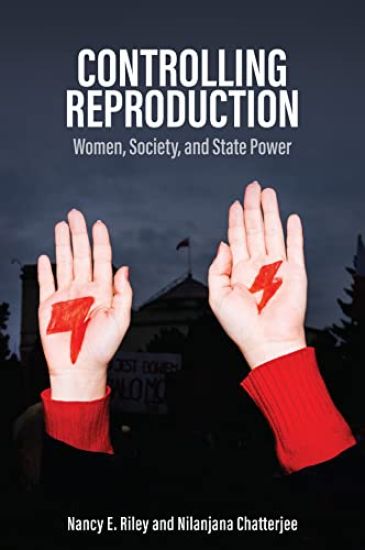
Controlling reproduction – who has children, how many, and when – is important to states, communities, families, and individuals across the globe. However, the stakes are even higher than might at first be appreciated: control over reproduction is an incredibly powerful tool. Contests over reproduction necessarily involve control over women and their bodies. Yet because reproduction is so intertwined with other social processes and institutions, controlling it also extends far into most corners of social, economic, and political life. Nancy Riley and Nilanjana Chatterjee explore how various social institutions beyond the individual – including state, religion, market, and family – are involved in the negotiation of reproductive power. They draw on examples from across the world, such as direct fertility policies in China and Romania, the influence of the Catholic Church in Poland and Brazil, racial discrimination and resistance in Mexico and the US, and how Japan and Norway use laws intended to encourage gender equality to indirectly shape reproduction. This engaging book sheds new light on the operations of power and gender in society. It will appeal to students taking courses on reproduction in departments of sociology, anthropology, and gender studies.
Controlling Reproduction

Controlling Reproduction

Nancy E. Riley; Nilanjana Chatterjee

JOHN WILEY AND SONS LTD
2022
sidottu
Controlling reproduction – who has children, how many, and when – is important to states, communities, families, and individuals across the globe. However, the stakes are even higher than might at first be appreciated: control over reproduction is an incredibly powerful tool. Contests over reproduction necessarily involve control over women and their bodies. Yet because reproduction is so intertwined with other social processes and institutions, controlling it also extends far into most corners of social, economic, and political life. Nancy Riley and Nilanjana Chatterjee explore how various social institutions beyond the individual – including state, religion, market, and family – are involved in the negotiation of reproductive power. They draw on examples from across the world, such as direct fertility policies in China and Romania, the influence of the Catholic Church in Poland and Brazil, racial discrimination and resistance in Mexico and the US, and how Japan and Norway use laws intended to encourage gender equality to indirectly shape reproduction. This engaging book sheds new light on the operations of power and gender in society. It will appeal to students taking courses on reproduction in departments of sociology, anthropology, and gender studies.
Reading Jhumpa Lahiri

Reading Jhumpa Lahiri

Nilanjana Chatterjee

TAYLOR FRANCIS LTD
2022
sidottu
This book is an innovative and rigorous study of Jhumpa Lahiri's Indian American female characters' lived and imagined diasporic house space, using domesticity and the house as an analytical tool to explore their hidden domestic spaces. The book explores how the house as a spatial construct, shares a symbiotic relationship with its inhabitants, and through their implicit and explicit response to various parts of their diasporic house space, interprets their maladies, limitations and opportunities. Indian American diasporic women, especially homemakers, have long been grappling with issues of socio-cultural invisibility as they have no other space to interact with except their houses in the hostland, now more than ever, during the global corona crisis. A reading of this multi-layered relationship between houses and their women will help readers understand not only the political, intellectual, emotional and sexual dispositions of middleclass Indian women in America, but also social, cultural and economic positions they occupy within the hostland. The book shows the represented domestic interstices and looks at them as signifiers of distinct individual trajectories, wherein lies embedded the women inhabitants’ oppositions beneath the acceptance of normative Indian family values in diaspora. It also offers elemental insights into ways in which migration acts as an opportunity for establishing new, often hybridized, identities, for which it is important to realise their connections with their house space. Presenting an alternative methodology for reading real and imagined lives of women in Indian American diaspora, the book proposes an unconventional mode of understanding diasporic realities and representations in cultural studies that is not readily apparent. It will be of interest to researchers in the field of South Asian Studies, Diaspora Studies, Migration Studies, Culture Studies, Feminist Writings, Gender Studies and Asian Literature. Foreword by Bill Ashcroft