Kirjojen hintavertailu – 12 859 819 kirjaa ja 27 kauppaa

Kirjailija

Nina Berberova

Kirjat ja teokset yhdessä paikassa: 12 kirjaa, julkaisuja vuosilta 1999–2026, suosituimpiin kuuluu Chajkovskij. Istorija odinokoj zhizni. Vertaile teosten hintoja ja tarkista saatavuus suomalaisista kirjakaupoista.

12 kirjaa

Kirjojen julkaisuvuodet: 1999–2026.

Chajkovskij. Istorija odinokoj zhizni
Nina Berberova (1901-1993) - prozaik, poet, "pervaja parizhskaja dama russkoj literatury", avtor sensatsionnoj avtobiografii "Kursiv moj" (1969). V 1930-kh Berberova pishet belletrizovannuju biografiju Petra Ilicha Chajkovskogo. Ona sozdaet portret zhivogo cheloveka, portret bez maski, no sokhranjaet takt i vernost faktam. Vechnaja chuzhestranka, ona rasskazyvaet o russkom kompozitore tak, budto nikogda ne pokidala Rossii..." Muzyka slishkom silno dejstvovala na Pera, osobenno kogda on "fantaziroval" na rojale. On krichal v bessonnitsu: "O, eta muzyka, eta muzyka!"- Nichego ne slyshno, nikakoj muzyki net, - otvechala Fanni, prizhimaja ego k sebe. - Ona u menja zdes, zdes! - krichal on, rydaja i khvataja sebja za golovu. - Ona ne daet mne pokoja. No skvoz eti detskie bessonnitsy, skvoz trudnosti dnej na nego teper vse chasche nakhodila kakaja-to gordelivaja radost, slovno on chto-to reshil pro sebja, chto-to iskal, dolgo, ochen dolgo - iskal i nashel, ozaril kakoj-to temnyj ugol v sebe. On mog etim strannym, zvuchnym jazykom rasskazyvat o sebe nakonets po-nastojaschemu - no glavnoe ne to, chtoby ego ponjali, glavnoe - samomu vyskazatsja na nem". Nina Berberova

Aleksandr Blok i ego vremja
Nina Berberova (1901-1993) - prozaik i poet, "pervaja parizhskaja dama russkoj literatury", avtor sensatsionnoj avtobiografii "Kursiv moj" (1969). V knige "Aleksandr Blok i ego vremja", napisannoj v 1947 godu po-frantsuzski i dlja frantsuzskikh chitatelej Nina Berberova vossozdaet zhizn poeta na fone sobytij kontsa XIX - pepvoj chetvepti XX veka."... I moskovskim, i peterburgskim simvolistam odno kazalos nesomnennym: Blok uzhe ne byl pevtsom Prekrasnoj Damy; on stal chelovekom sovremennoj Rossii; s bolnoj sovestju, polnyj neutolimoj toski, on trezvo smotrel v buduschee. On pereros svoju shkolu, pereros uchitelej: on ne strashilsja slov, ne stydilsja slez".
The Last and the First

The Last and the First

Nina Berberova

Pushkin Press
2021
nidottu
On a crisp September morning, trouble comes to the Gorbatovs' farm. Having fled revolution and civil war in Russia, the family has worked tirelessly to establish themselves as crop farmers in Provence, their hopes of returning home a distant dream. While young Ilya Stepanovich is committed to this new way of life, his step-brother Vasya looks only to the past. With the arrival of a letter from Paris, a plot to lure Vasya back to Russia begins in earnest, and Ilya must set out for the capital to try to preserve his family's fragile stability. The first novel by the celebrated Russian writer Nina Berberova, The Last and the First is an elegant and devastating portrayal of the internal struggles of a generation of émigrés. Appearing for the first time in English in a stunning translation by the prize-winning Marian Schwartz, it shows Berberova in full command of her gifts as a writer of masterful poise and psychological insight.
"My dear, close and distant friend" : Nina Berberova's letters to Sergej Rittenberg (1947-1975)
Nina Berberova (1901–1993) almost appears to have lived several lives. First, she was a young writer in the revolutionary Russia. Then she witnessed the hectic 1920s in Berlin and achieved her literary breakthrough in interwar Paris with psychologically finely-honed novels and short stories set in the Russian émigré community. Finally, she went on in the latter half of the century to a career as a Slavist in the United States. She had her eyes on Russia the whole time. As an academic she studied the cracks in the ideological wall and seems early on to have foreseen her return to her homeland. At last, as she approached the age of ninety, she had vanquished the Soviet Union and could go back in triumph in the “revolutionary” year of 1989. In addition to everything else Berberova was an avid letter writer who maintained a great many correspondences. For nearly thirty years she was friends with her Russian – and Petersburgian –countryman Sergej Rittenberg (1899–1975) in Stockholm, to whom she sent more than 150 letters and postcards between 1947 and 1975. A reflection of her thoughts and reading interests, they also provide a glimpse into the genesis of her huge memoir The Italics Are Mine (Kursiv moj). This volume presents Berberova’s letters with an introduction and extensive commentaries by Professor Magnus Ljunggren.
Billancourt Tales

Billancourt Tales

Nina Berberova

New Directions Publishing Corporation
2009
nidottu
These fine stories, sometimes amusing, sometimes sad, portray a wide range of human emotions. All show Berberova at her very best, “as graceful and subtle as Chekhov” (Anne Tyler).
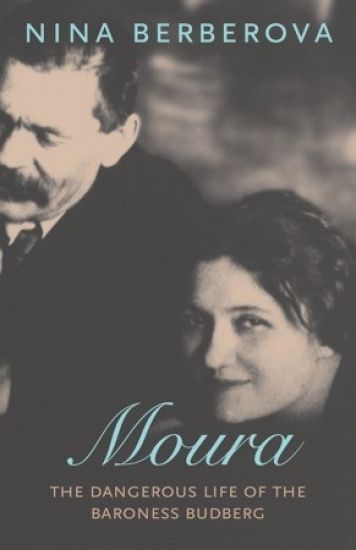
Moura

Moura

Nina Berberova

The New York Review of Books, Inc
2005
sidottu
Baroness Maria Ignatievna Zakrevskaya Benckendorff Budberg hailed from the Russian aristocracy and lived in the lap of luxury--until the Bolshevik Revolution forced her to live by her wits. Thereafter her existence was a story of connivance and stratagem, a succession of unlikely twists and turns. Intimately involved in the mysterious Lockhart affair, a conspiracy which almost brought down the fledgling Soviet state, mistress to Maxim Gorky and then to H. G. Wells, Moura was a woman of enormous energy, intelligence, and charm whose deepest passion was undoubtedly the mythologization of her own life. Recognized as one of the great masters of Russian twentieth-century fiction, Nina Berberova here proves again that she is the unsurpassed chronicler of the lives of Soviet migr s. In Moura Budberg, a woman who shrouded the facts of her life in fiction, Berberova finds the ideal material from which to craft a triumph of literary portraiture, a book as engaging and as full of life and incident as any one of her celebrated novels.
The Accompanist

The Accompanist

Nina Berberova; Marian Schwartz

New Directions Publishing Corporation
2003
nidottu
A spellbinding short novel set in post-revolutionary Russia about a young girl's jealousy. The fifth book of Nina Berberova to be published by New Directions, The Accompanist, written in 1936, proved to be a literary phenomenon in Europe where it was first published. A spellbinding, short novel set in post-revolutionary RussiaThe Accompanist portrays with extraordinary sensitivity the entangled relationships of three intriguing characters. Sonechka is a talented but shy young pianist hired by a beautiful soprano (Maria Nikolaevna) and her devoted, bourgeois husband. Maria is everything Sonechka is notglamorous and flamboyant. Her voice brings with it "something immortal and indisputable, something which gives reality to the human being's dream of having wings." Doomed to live in her mentor's shadow, the young girl secretly schemes to expose the singer's infidelities. But as she awaits her chance, the diva's husband takes matters into his own hands, bringing events to a surprising resolution. This intense and beautiful little novel was published in America almost fifty years after it was written; sadly out of print for a number of years, it is a wonderfully compelling and crucial addition to Nina Berberova's growing number of published fictional works.
The Book of Happiness

The Book of Happiness

Nina Berberova

NEW DIRECTIONS PUBLISHING CORPORATION
2002
nidottu
An outstanding novel about a young Russian woman's life in exile after the Russian Revolution. The Book of Happiness is one of the outstanding novels the great Russian writer Nina Berberova wrote during the years she lived in Paris, and the most autobiographical. "All Berberova's characters live raw, unfurnished lives, in poverty, on the edge of cities, with little sense of belongingexcept in moments of epiphanyto their time and in life itself" (The Observer). Such a character is Vera, the protagonist of The Book of Happiness. At the novel's opening, Vera is summoned to the scene of a suicide, that of her childhood companion, Sam Adler, whose family left Russia in the early days of the revolution and whom Vera has not seen in many years. His death reduces Vera to a flood of tears and memories of the times before Sam's departure, and thoughts about how her life has gone sinceher move to Paris where she lives tied to a brilliant but demanding invalid husband. Berberova spins the story with a wonderful unsentimental poignancy, making it a beautiful testament to the indestructibility of happiness.
Billancourt Tales

Billancourt Tales

Nina Berberova; Marian Schwartz

New Directions Publishing Corporation
2002
sidottu
Now added to the quartet of books by Nina Berberova that New Directions has presented for the delight of American readers is this delectable baker's dozen Billancourt Tales. These are thirteen stories (Berberova called them "Fiestas") chosen from those she wrote in Paris between 1928 and 1940 for the emigre newspaper The Latest News. In her preface Berberova mentions how she found what to write about through her discovery of Billancourt, a highly industrialized suburb of Paris. Here thousands of exiled Russians--White Guards and civilians--were finding work and establishing homes away from home with their Russian churches, schools, and small business ventures. Berberova thought the significance of the tales was in their historical and sociological aspects rather than in their artistry but the reader will demur, for these are fine stories, the kind that have led to comparisons to Chekhov. They portray a wide range of human beings and the twists and turns of their various lives. There is Ivan Pavlovich making a success of his rabbit farm but procrastinating too long about a proposal of marriage; Kondurin, happy to play the piano in restaurants rather than working as a bookkeeper--his only problem is the restaurants keep going out of business; and Gavrilovich who loses a job as an actor in the movies because the scene requires him to steal a lady's purse and even though it is make believe he just can't do it. All in all a group of very Russian tales very well told.
The Tattered Cloak and Other Stories

The Tattered Cloak and Other Stories

Nina Berberova; Marian Schwartz

New Directions Publishing Corporation
2001
nidottu
The greatest collection by one of the great Russian writers is now back in print. First published in Europe in the 1930s and '40s, these searing, evocative stories by the late emigre writer Nina Berberova (1901-1993) are portraits of the lives of Russian exiles in Paris on the eve of World War II. The protagonists range from housekeepers and waiters to shabby-genteel aristocrats and intellectualsbut all are united in a haunting displacement from their pasts, and all share a troubling uncertainty about the future.
Cape of Storms

Cape of Storms

Nina Berberova; Marian Schwartz

NEW DIRECTIONS PUBLISHING CORPORATION
1999
sidottu
In Cape of Storms, Nina Berberova portrays a very specific generation--one born in Russia, displaced by the Revolution, and trying to adapt to a new home, Paris. Three sisters--Dasha, Sonia, and Zai--share the same father, Tiagen, an attractive, weak-willed, womanizing White Russian, but each thinks differently about her inner world of beliefs and aspirations, and consequently each follows a different path. Dasha marries and leaves for a bourgeois expatriate life in colonial Africa. Zai, the youngest, and an appealing adolescent, flirts with becoming an actress or a poet. Sonia, the middle daughter, completes a university degree but falls victim to a shocking tragedy. Cape of Storms is a shattering book that opens with a hair-raising scene in which Dasha witnesses her mother's murder at the hands of Bolshevik thugs, and ends with the Blitzkrieg sweeping toward Paris. It is unparalleled in Berberova's work for its many shifts of mood and viewpoint and secures the author's place as "Chekhov's most vital inheritor" (Boston Review).
The Book of Happiness

The Book of Happiness

Nina Berberova; Marian Schwartz

NEW DIRECTIONS PUBLISHING CORPORATION
1999
sidottu
The Book of Happiness is one of the outstanding novels the great Russian writer Nina Berberova wrote during the years she lived in Paris, and the most autobiographical. "All Berberova's characters-including Berberova herself-live raw, unfurnished lives, in poverty, on the edge of cities, with little sense of belonging-except in moments of epiphany-to their time and in life itself" (The Observer). Such a character is Vera, the protagonist of The Book of Happiness. She is seen first in Paris where she leads a dreary life tied down by a demanding invalid husband. She is summoned to the scene of a suicide, that of her childhood's boon companion, Sam Adler, whose family left Russia in the early days of the revolution and whom Vera has not seen in many years. His death reduces Vera to a flood of tears and memories of the times before Sam's departure, and thoughts about how her life has gone since. Not a cheerful prospect. Berberova spins the story with a wonderful unsentimental poignancy. The Book of Happiness is the second book from New Directions by this fine and unique writer-one who had an overview of the entire 20th century-from pre-revolutionary St. Petersburg, through exile in Paris, to the United States where she lived for some forty years before her death in 1993.