Kirjojen hintavertailu – 12 903 742 kirjaa ja 27 kauppaa

Kirjailija

Niv Horesh

Kirjat ja teokset yhdessä paikassa: 13 kirjaa, julkaisuja vuosilta 2009–2023, suosituimpiin kuuluu Superpower, China? Historicizing Beijing's New Narratives Of Leadership And East Asia's Response Thereto. Vertaile teosten hintoja ja tarkista saatavuus suomalaisista kirjakaupoista.

13 kirjaa

Kirjojen julkaisuvuodet: 2009–2023.

Explorations in World History

Explorations in World History

Niv Horesh

SPRINGER VERLAG, SINGAPORE
2023
sidottu
This book provides an analysis of the latest research findings in the field of world history, and includes terse articulations of modernity vis-à-vis empire. In doing so, the author brings together insights from both the disciplines of history and international relations into world systems, emphasising economic aspects, and offering a road map for the evolution of the field of world history. The book achieves this by critically analysing the works of Peter Fibiger Bang, Christopher Alan Bayly, Walter Scheidel, Krishnan Kumar, Xin Fan, Christopher A. Ford and Diego Olstein. The author includes discussions such as how the Roman empire impacted all subsequent Western empires, both early and modern, and current debates in world history and politics such as China’s rise.
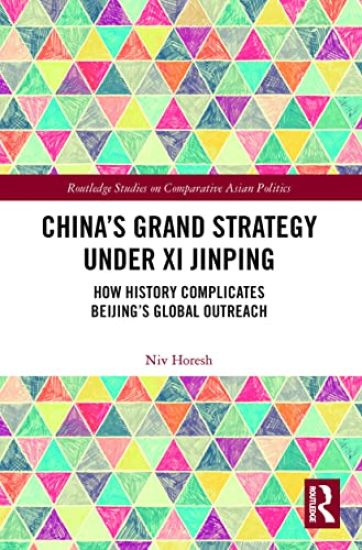
China’s Grand Strategy Under Xi Jinping

China’s Grand Strategy Under Xi Jinping

Niv Horesh

TAYLOR FRANCIS LTD
2022
nidottu
This book attempts to identify change and continuity in PRC grand strategy, and the extent to which Chinese imperial history complicates PRC global outreach in the Xi Jinping era. Empires convey the wish to make the world a better place – even in the midst of oppression – and are eschatological in their rhetoric. However, empires that last longer have been more pragmatic in their grand strategy; sometimes appropriating the aura of past golden ages, and at other times learning from the mistakes of their predecessors. To date, Chinese strategic thinkers are preoccupied with learning lessons from the disintegration of the USSR and fascinated by the secrets of American power. Interdisciplinary in its reach, analysing grand strategy through both rhetoric and praxis, this book unpacks the Chinese world view through critical examination of the latest history textbooks currently in use in PRC middle schools. It also brings new evidence to bear on the debate in the West about Chinese strategic culture. Finally, it compares historical Japanese OFDI patterns with China in order to understand what makes the Chinese economy unique. China’s Grand Strategy Under Xi Jinping is aimed towards students and scholars of history, international business and wider Chinese studies.
Empires in World History

Empires in World History

Niv Horesh

Palgrave Macmillan
2021
sidottu
This study focuses on Empires, from an economic historical perspective. In doing so, it relates current debates in international relations (IR) and politics to the vexed legacy of empires in the past. The book includes analyses of the comparative scholarly literature on Empire in Antiquity, and Empire in the Early Modern and Modern Ages, asking the question if the United Sates is an Empire, and if China an emerging Empire. It contributes to the field given its interdisciplinarity, bringing together both historical and IR insights into world systems in times past. In addition it draws out four key points of separateness between pre-modern and modern empires, and emphases specific economic data. Further to that, the book advances the notion of the emergence of “empires from within” in the 21st century, that is nation-states becoming more multi-ethnic while often stepping back from globalization. And finally it offers future scenarios for the evolution of empires in a Schumpeterian post-industrial world.
How China's Rise is Changing the Middle East

How China's Rise is Changing the Middle East

Anoushiravan Ehteshami; Niv Horesh

Routledge
2021
nidottu
This book explores the extent to which China’s rise is changing the economic, security, political, and social-cultural aspects of the Middle East – a region of significant strategic importance to the West and of increasing importance to the East. With its growing dependence on Middle East oil and gas, China has more at stake in this region than any other Asian power and, not surprisingly, has begun increasing its engagement with the region, with profound implications for other stakeholders. The book charts the history of China’s links with the Middle East, discusses China’s involvement with each of the major countries of the region, considers how China’s rise is reshaping Middle Easterners’ perceptions of China and the Chinese people, and examines the very latest developments.
China’s Grand Strategy Under Xi Jinping
This book attempts to identify change and continuity in PRC grand strategy, and the extent to which Chinese imperial history complicates PRC global outreach in the Xi Jinping era. Empires convey the wish to make the world a better place – even in the midst of oppression – and are eschatological in their rhetoric. However, empires that last longer have been more pragmatic in their grand strategy; sometimes appropriating the aura of past golden ages, and at other times learning from the mistakes of their predecessors. To date, Chinese strategic thinkers are preoccupied with learning lessons from the disintegration of the USSR and fascinated by the secrets of American power. Interdisciplinary in its reach, analysing grand strategy through both rhetoric and praxis, this book unpacks the Chinese world view through critical examination of the latest history textbooks currently in use in PRC middle schools. It also brings new evidence to bear on the debate in the West about Chinese strategic culture. Finally, it compares historical Japanese OFDI patterns with China in order to understand what makes the Chinese economy unique. China’s Grand Strategy Under Xi Jinping is aimed towards students and scholars of history, international business and wider Chinese studies.
How China's Rise is Changing the Middle East

How China's Rise is Changing the Middle East

Anoushiravan Ehteshami; Niv Horesh

Routledge
2019
sidottu
This book explores the extent to which China’s rise is changing the economic, security, political, and social-cultural aspects of the Middle East – a region of significant strategic importance to the West and of increasing importance to the East. With its growing dependence on Middle East oil and gas, China has more at stake in this region than any other Asian power and, not surprisingly, has begun increasing its engagement with the region, with profound implications for other stakeholders. The book charts the history of China’s links with the Middle East, discusses China’s involvement with each of the major countries of the region, considers how China’s rise is reshaping Middle Easterners’ perceptions of China and the Chinese people, and examines the very latest developments.
An East Asian Challenge to Western Neoliberalism

An East Asian Challenge to Western Neoliberalism

Niv Horesh; Kean Fan Lim

Routledge
2019
nidottu
Analysts generally agree that, in the long term, the biggest challenge to American hegemony is not military, but rather China’s economic rise. This perception is spread in no small measure because Xi Jinping has – in the face of patent military inferiority – conducted himself much more boldly on the world stage than Hu Jintao. Meanwhile, China has also begun conjuring up an alternative vision for global leadership, now widely termed as the ‘China model’. This book therefore offers a critical and comprehensive explanation of the China model and its origins. Using a range of case studies, covering varying historical and geographical approaches, it debates whether the Chinese experience in the last three decades of economic reform should be interpreted as an answer to the reigning hegemony of neoliberalism, or rather a further reinforcement of it. To answer these questions, it provides an investigation into what China may have learned from its East Asian neighbours’ earlier economic successes. It also examines how it is responding to and might even reconfigure the world political-economic system as it develops fresh and potentially more powerful regulatory capacities. Providing a multi-dimensional analysis of the ‘China model’, the book will be of interest to students and scholars of Chinese Economics, Economic Geography and Chinese Studies.
An East Asian Challenge to Western Neoliberalism

An East Asian Challenge to Western Neoliberalism

Niv Horesh; Kean Fan Lim

Routledge
2017
sidottu
Analysts generally agree that, in the long term, the biggest challenge to American hegemony is not military, but rather China’s economic rise. This perception is spread in no small measure because Xi Jinping has – in the face of patent military inferiority – conducted himself much more boldly on the world stage than Hu Jintao. Meanwhile, China has also begun conjuring up an alternative vision for global leadership, now widely termed as the ‘China model’. This book therefore offers a critical and comprehensive explanation of the China model and its origins. Using a range of case studies, covering varying historical and geographical approaches, it debates whether the Chinese experience in the last three decades of economic reform should be interpreted as an answer to the reigning hegemony of neoliberalism, or rather a further reinforcement of it. To answer these questions, it provides an investigation into what China may have learned from its East Asian neighbours’ earlier economic successes. It also examines how it is responding to and might even reconfigure the world political-economic system as it develops fresh and potentially more powerful regulatory capacities. Providing a multi-dimensional analysis of the ‘China model’, the book will be of interest to students and scholars of Chinese Economics, Economic Geography and Chinese Studies.
Superpower, China? Historicizing Beijing's New Narratives Of Leadership And East Asia's Response Thereto

Superpower, China? Historicizing Beijing's New Narratives Of Leadership And East Asia's Response Thereto

Niv Horesh; Hyun Jin Kim; Peter Mauch

WSPC co-published with Now Publisher
2014
sidottu
This book sets out to answer how China's rise can best be understood from both East Asian and Western perspectives. It also assesses the prospect of realignment away from the US hegemony in East Asia in light of persistent regional rivalries. Throughout the book, the authors show that for China's neighbours, as well as for its own intellectuals, historicizing the country's rise provides one way of understanding its current ascendant trajectory, on the one hand, and acute social problems, on the other. To which historical precedent should one turn? Did Japanese Prime Minister Abe Shinzo get it right when he recently likened the contemporary Sino-Japanese relationship to that of Germany and Britain on the eve of World War I? Is Harvard Law School's Noah Feldman correct in his assertion that China and the United States are on the verge not of a Cold War but of a “Cool War,” in which a “classic struggle for power is unfolding at the same time as economic cooperation is becoming deeper? The authors examine these questions and also focus on other observations that becloud China's rise.
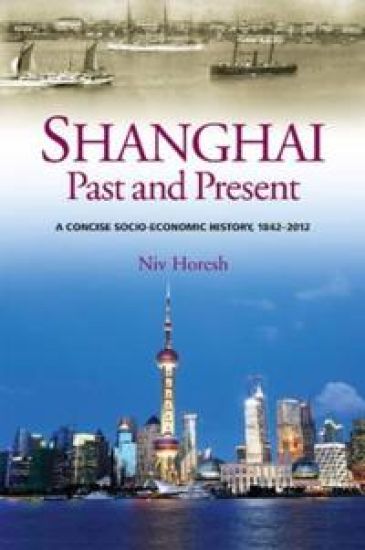
Shanghai, Past and Present

Shanghai, Past and Present

Niv Horesh

LIVERPOOL UNIVERSITY PRESS
2014
nidottu
This book sets out to explain how Shanghai emerged from relative obscurity in 1842 to become one of the world's best-known finance and industry hubs. As China's largest city, Shanghai today plays a central economic role, much as it did in the 1920s. The author provides a concise diachronic survey of the economic history of modern Shanghai, setting out how the city's urban infrastructure, municipal institutions, consumer culture and industry have shaped, and have been shaped by, this economic power house. The work is aimed at a broad readership of all who are interested in Asian history, and tackles a range of themes including: the city's millionaires, then and now; racial tensions and quotidian liaisons between Europeans and Asians before World War II; and the gambling and prostitution industry. The post-war era is portrayed in comparative discussions on Shanghai under Mao Zedong, and during the reform era. These discussions bring the narrative up to date to cover important events such as the designation of the Pudong precinct as the city's new engine of growth in 1991. The city's illustrious pre-war past is compared with its present ambitions to become Asia's leading financial centre. The book employs insights from studies frameworks of new institutional economics as well as from the development trajectory of other world cities by way of better understanding Shanghai's historic distinctness, its relative weaknesses and contemporary strengths.
Shanghai, Past and Present

Shanghai, Past and Present

Niv Horesh

LIVERPOOL UNIVERSITY PRESS
2014
sidottu
This book sets out to explain how Shanghai emerged from relative obscurity in 1842 to become one of the world's best-known finance and industry hubs. As China's largest city, Shanghai today plays a central economic role, much as it did in the 1920s. The author provides a concise diachronic survey of the economic history of modern Shanghai, setting out how the city's urban infrastructure, municipal institutions, consumer culture and industry have shaped, and have been shaped by, this economic power house. The work is aimed at a broad readership of all who are interested in Asian history, and tackles a range of themes including: the city's millionaires, then and now; racial tensions and quotidian liaisons between Europeans and Asians before World War II; and the gambling and prostitution industry. The post-war era is portrayed in comparative discussions on Shanghai under Mao Zedong, and during the reform era. These discussions bring the narrative up to date to cover important events such as the designation of the Pudong precinct as the city's new engine of growth in 1991. The city's illustrious pre-war past is compared with its present ambitions to become Asia's leading financial centre. The book employs insights from studies frameworks of new institutional economics as well as from the development trajectory of other world cities by way of better understanding Shanghai's historic distinctness, its relative weaknesses and contemporary strengths.
Chinese Money in Global Context

Chinese Money in Global Context

Niv Horesh

Stanford University Press
2013
sidottu
Chinese Money in Global Context: Historic Junctures Between 600 BCE and 2012 offers a groundbreaking interpretation of the Chinese monetary system, charting its evolution by examining key moments in history and placing them in international perspective. Expertly navigating primary sources in multiple languages and across three millennia, Niv Horesh explores the trajectory of Chinese currency from the birth of coinage to the current global financial crisis. His narrative highlights the way that Chinese money developed in relation to the currencies of other countries, paying special attention to the origins of paper money; the relationship between the West's ascendancy and its mineral riches; the linkages between pre-modern finance and political economy; and looking ahead to the possible globalization of the RMB, the currency of the People's Republic of China. This analysis casts new light on the legacy of China's financial system both retrospectively and at present—when China's global influence looms large.
Shanghai's Bund and Beyond

Shanghai's Bund and Beyond

Niv Horesh

Yale University Press
2009
sidottu
As China emerges as a global powerhouse, this timely book examines its economic past and the shaping of its financial institutions. The first comparative study of foreign banking in prewar China, the book surveys the impact of British overseas bank notes on China's economy before the outbreak of the Sino-Japanese War in 1937. Focusing on the two leading British banks in the region, it assesses the favorable and unfavorable effects of the British presence in China, with particular emphasis on Shanghai, and traces instructive links between the changing political climate and banknote circulation volumes. Drawing on recently declassified archival materials, Niv Horesh revises previous assumptions about China's prewar economy, including the extent of foreign banknote circulation and the economic significance of the May Thirtieth Movement of 1925.