Kirjojen hintavertailu – 12 859 828 kirjaa ja 27 kauppaa

Kirjailija

Nnamdi Nwulu

Kirjat ja teokset yhdessä paikassa: 19 kirjaa, julkaisuja vuosilta 2020–2026, suosituimpiin kuuluu Networks in Motion: Electric Vehicle Intelligence. Vertaile teosten hintoja ja tarkista saatavuus suomalaisista kirjakaupoista.

19 kirjaa

Kirjojen julkaisuvuodet: 2020–2026.

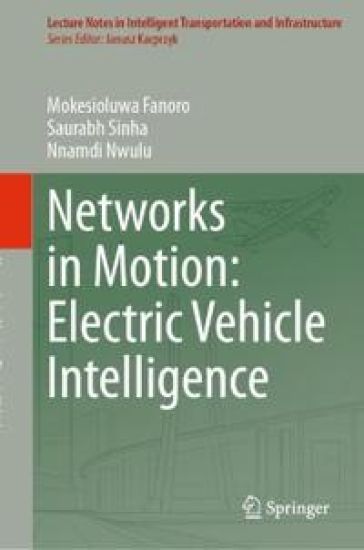
Networks in Motion: Electric Vehicle Intelligence

Networks in Motion: Electric Vehicle Intelligence

Mokesioluwa Fanoro; Sinha Saurabh; Nnamdi Nwulu

Springer Nature Switzerland AG
2026
Sidottu
This book presents a ‘Network of Networks’ analogy to conceptualise autonomous electric vehicle (AEV) systems, integrating wireless sensor networks (WSNs), autonomous driving systems, cybersecurity, machine learning architectures, and urban systems as interdependent components within a cohesive model. It formulates a system-level architecture that captures the interactions across these domains, reflecting the operational realities of AEVs within complex, connected environments. Drawing on complex systems theory, it conceptualises the AEV–WSN relationship as a coupled system, situates urban environments as adaptive systems, and examines key architectural considerations and trade-offs in the design of reliable autonomous mobility platforms. It further introduces the e-drive stack as an architectural extension of conventional autonomous driving frameworks, embedding cybersecurity, energy efficiency, and privacy as primary design parameters. This book is intended for researchers in transportation systems, urban studies, computer science, electrical and electronic engineering, and artificial intelligence.
Power Systems 4.0

Power Systems 4.0

Mutegi Mbae; Nnamdi Nwulu

Taylor & Francis
2026
Nidottu
The book starts by examining the fundamentals and concepts of power systems, from analog to digital systems to the advent of smart grids. It explains the explosive adoption of renewable energy, its impact on existing transmission and distribution systems, and mitigation strategies, while also looking at the future grid. Finally, the book explores the advent of the Fourth Industrial Revolution (4IR), its impact on existing grid optimization and control, its effects on generation, transmission, and distribution systems, utility business models, and the legal and regulatory space. Features: Walks the reader through power system evolution and grid modernization from analog to digital to 4IR systems Explains the unique combination of 4IR and power systems Ties smart grid to related aspects of optimization, control, grid operation and emerging technologies Explores power system control and optimization tools in depth Examines the exponential growth of renewables, challenges to the grid, opportunities and mitigation strategies This book is aimed at undergraduate students, graduate students, and researchers in power engineering and systems.
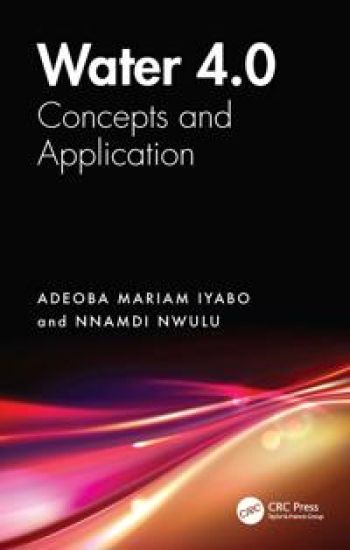
Water 4.0

Water 4.0

Adeoba Mariam Iyabo; Nnamdi Nwulu

TAYLOR FRANCIS LTD
2026
sidottu
The book guides readers through the key issues within water supply systems, and how it has seen several technological advancements over the years. It examines the application of the Fourth Industrial Revolution to water systems operation with the advent of big data and computational information. The importance of interconnectivity and data analytics through automation, digitalization and machine learning are also explored to scale up water supply operations. Features: • Examines the application of fourth industrial revolution to water systems operation. • Applies the concept of intelligent computing through the exploration of big data and modeling to water supply network management. • Discusses the application of automation in Water Supply Network Management with practical examples. • Explores the use of automatic and electronic devices to monitor and control water loss. • Reviews the historical development of technology from first to fourth industrial revolution. The book is aimed at graduate and postgraduate students, and researchers in water and environmental engineering, including researchers, policymakers, and industry practitioners.
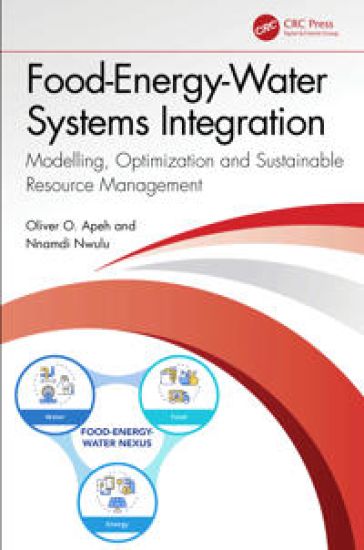
Food-Energy-Water Systems Integration

Food-Energy-Water Systems Integration

Oliver O. Apeh; Nnamdi Nwulu

TAYLOR FRANCIS LTD
2025
sidottu
This book analyses the challenges and opportunities within the food-energy-water nexus, offering actionable insights into workable resource management practices. By bridging the gap between practical utilisation and science, the book produces a link that integrates food, energy, and water to improve the sustainability of these natural resources. It offers a possible effective basis aimed at fostering innovative and collaborative research in this sector. Features: Emphasises the sustainability of natural resources, encouraging readers to understand the importance of harmonising food, energy, and water demands for sustainable development. Provides methodologies and practical tools to measure and enhance nexus performance for resource optimisation across different locations. Integrates interdisciplinary perspectives, drawing from engineering, environmental science, economics, and policy research to provide a holistic view of the nexus. Examines the development of the nexus, offering insights into past trends, current conditions, and prospective states. Outlines actionable strategies for optimising the application and management of food, energy, and water resources. The book is aimed at graduate and postgraduate students, researchers in environmental engineering, including policymakers, and industry practitioners seeking innovative approaches to resource management within the food-energy-water nexus.
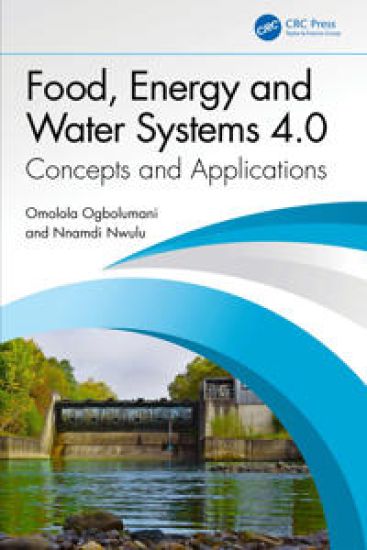
Food, Energy and Water Systems 4.0

Food, Energy and Water Systems 4.0

Ogbolumani Omolola; Nnamdi Nwulu

TAYLOR FRANCIS LTD
2025
sidottu
This book examines the complex interactions between food, energy, and water (FEW) resources within the framework of the Fourth Industrial Revolution (4IR). It traces the historical evolution of FEW 4.0, analyses its key components, and explores its applications in reshaping resource management practices by integrating emerging technologies like Internet of Things (IoT), Artificial Intelligence (AI), and Blockchain technologies. By harnessing the intricate nexus of FEW resources and emerging technologies, it offers opportunities for sustainable development and addresses pressing challenges. Features:Explores the historical development and integration of food, energy, and water systems within the context of the 4IR. Discusses the disruptive effects of Industry 4.0 on FEW systems, emphasizing digitalization, AI, IoT, and sustainable practices. Examines the use of emerging technologies such as precision agriculture, blockchain, and green energy integration in in optimizing FEW systems. Analyses FEW 4.0 governance frameworks, policy implications, and socioeconomic and environmental impacts to offer actionable insights. Provides theoretical frameworks, real-world case studies, and forward-looking perspectives to understand FEW 4.0’s transformative potential. This book is aimed at undergraduate and postgraduate students in environmental engineering, as well as policymakers and industry practitioners focused on sustainability and resource management.
Power Systems 4.0

Power Systems 4.0

Mutegi Mbae; Nnamdi Nwulu

TAYLOR FRANCIS LTD
2025
sidottu
The book starts by looking at the fundamentals and concepts of power systems, from analog to digital systems to the advent of smart grids. It explains issue of explosion of adoption of renewable energy, impact on existing transmission and distribution systems, and mitigation, and takes a look at the future grid. Finally, the book explores the advent of the Fourth Industrial Revolution (4IR); its impact on the existing grid optimization and control; its impact on the generation, transmission, and distribution systems; utility business models; and the legal and regulatory space. Features:Walks the reader through power system evolution and grid modernization from analog to digital to 4IR systems Explains the exclusive combination of 4IR and power systemsTies smart grid to related aspects of optimization, control, grid operation and emerging technologiesDigs deeper into power system control and optimization toolsLooks at the exponential growth of renewables, challenges to the grid, opportunities and mitigationThis book is aimed at undergraduate students, graduate students, and researchers in power engineering and systems.
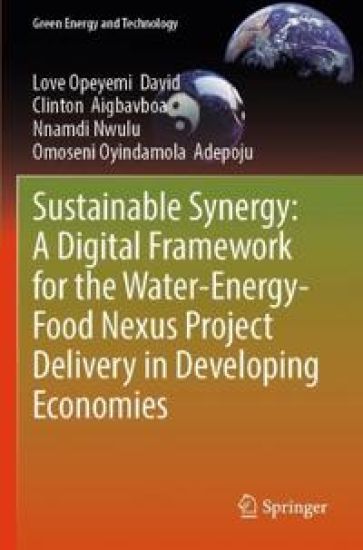
Sustainable Synergy: A Digital Framework for the Water-Energy-Food Nexus Project Delivery in Developing Economies

Sustainable Synergy: A Digital Framework for the Water-Energy-Food Nexus Project Delivery in Developing Economies

Love Opeyemi David; Clinton Aigbavboa; Nnamdi Nwulu; Omoseni Oyindamola Adepoju

Springer International Publishing AG
2024
sidottu
This book introduces a comprehensive and sustainable project delivery framework tailored for managing the Water, Energy and Food (WEF) nexus in developing economies. Its primary objectives include establishing the determinants of the nexus, exploring the sustainability dynamics of the resources, delineating the role of digital technologies in WEF nexus projects, evaluating the interoperation of the three resources with sustainable development goals (SDGs) and subsequently formulating a sustainable project delivery framework. Timely in its release, the book provides essential policy directions and technological perspectives within the realms of sustainability. Water, energy, and food (WEF) resources constitute vital components pivotal for a nation's socio-economic development and fundamental for human survival due to their intricate interdependencies. Recognizing their paramount importance, the World Economic Forum underscores their role in a country's growth trajectory. However, the sustainable management of WEF resources in the era of the Fourth Industrial Revolution necessitates an integrative framework for project delivery. Unfortunately, a significant gap exists in understanding the determinants of the nexus between water, energy, and food resources, resulting in insecurity in their management. Compounding this challenge, the emergence of new technologies in the fourth industrial revolution has not received adequate consideration for ensuring resource security. The book adopts a meticulous approach, conducting an in-depth review of existing models, frameworks, and theories. Furthermore, it supplements this analysis with an insightful interview case study. Notably, this pioneering work distinguishes itself as the first to view WEF resources as interconnected nexus projects, with a keen acknowledgment of the indispensable role played by digital technology. Moreover, its targeted focus on addressing the unique challenges prevalent in developing economies adds a layer of specificity often absent in existing literature on the WEF nexus. Researchers seeking a deeper understanding of the integration between the WEF nexus and digital technologies will find substantial value in the contents of this book. The book is divided into five sections, providing a systematic exploration of the subject. The sections cover background information on WEF resources and its nexus, underpinning theories of resource interaction, theoretical frameworks relevant to the nexus, the role of digital technologies in managing the WEF nexus, interoperation of sustainability and SDG with the nexus, presentation of an in-depth case study and conclude with valuable insights and recommendations.
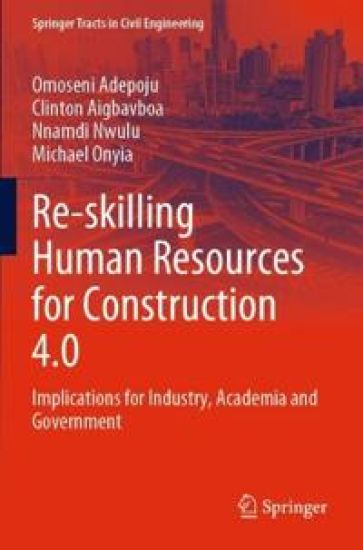
Re-skilling Human Resources for Construction 4.0

Re-skilling Human Resources for Construction 4.0

Omoseni Adepoju; Clinton Aigbavboa; Nnamdi Nwulu; Michael Onyia

Springer Nature Switzerland AG
2022
nidottu
This book examines the burgeoning revolution in the construction industry known as Construction 4.0, the attendant need for re-skilling human resources, and key stakeholders' roles in developing the required skills for Construction 4.0. It views the lack of 21st-century skills and skills gap in the industry as significant challenges limiting the uptake and implementation of Construction 4.0 technologies, especially in developing countries. In order to determine the skills required, this book examines the critical technologies of Construction 4.0, such as building information modelling (BIM), robotic construction, 3D printing and drones, which have transformed the construction industry, thereby creating digital, intelligent and sustainable construction solutions. Furthermore, the book considers the benefits, risks and relevant skills required to implement Construction 4.0 technologies.
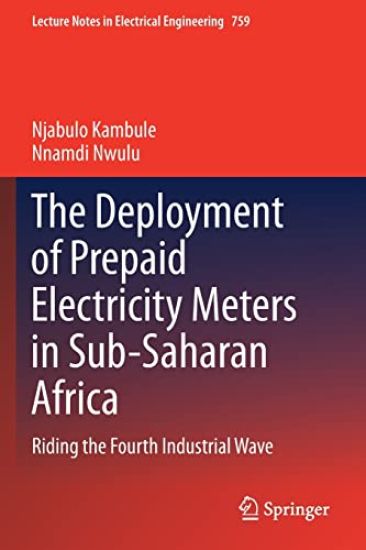
The Deployment of Prepaid Electricity Meters in Sub-Saharan Africa

The Deployment of Prepaid Electricity Meters in Sub-Saharan Africa

Njabulo Kambule; Nnamdi Nwulu

Springer Nature Switzerland AG
2022
nidottu
This book provides a novel and holistic perspective on the deployment of prepaid electricity meter technology among energy impoverished (vulnerable) households based in developing or under-developed communities of Sub-Saharan Africa. It explores and reviews the nexus between the technology and socio-economic development, technology acceptance and rejection in low-income households, and ultimately proposes a contextual model to avert or assuage energy poverty in the region using the technology. Science is applied as a convenient, valid, and reliable model to generate bespoke, contextual, and relevant knowledge for policy makers on the development of prepaid meter market in the region. The knowledge shared contributes to extant discourse and debates around the effectiveness of the technology within indigent household settings. The book is intended for energy/electricity utilities, prepaid electricity businesses, policy developers, and other interested parties whose work is related to prepaid electricity meters.
Re-skilling Human Resources for Construction 4.0

Re-skilling Human Resources for Construction 4.0

Omoseni Adepoju; Clinton Aigbavboa; Nnamdi Nwulu; Michael Onyia

Springer Nature Switzerland AG
2021
sidottu
This book examines the burgeoning revolution in the construction industry known as Construction 4.0, the attendant need for re-skilling human resources, and key stakeholders' roles in developing the required skills for Construction 4.0. It views the lack of 21st-century skills and skills gap in the industry as significant challenges limiting the uptake and implementation of Construction 4.0 technologies, especially in developing countries. In order to determine the skills required, this book examines the critical technologies of Construction 4.0, such as building information modelling (BIM), robotic construction, 3D printing and drones, which have transformed the construction industry, thereby creating digital, intelligent and sustainable construction solutions. Furthermore, the book considers the benefits, risks and relevant skills required to implement Construction 4.0 technologies.
The Deployment of Prepaid Electricity Meters in Sub-Saharan Africa

The Deployment of Prepaid Electricity Meters in Sub-Saharan Africa

Njabulo Kambule; Nnamdi Nwulu

Springer Nature Switzerland AG
2021
sidottu
This book provides a novel and holistic perspective on the deployment of prepaid electricity meter technology among energy impoverished (vulnerable) households based in developing or under-developed communities of Sub-Saharan Africa. It explores and reviews the nexus between the technology and socio-economic development, technology acceptance and rejection in low-income households, and ultimately proposes a contextual model to avert or assuage energy poverty in the region using the technology. Science is applied as a convenient, valid, and reliable model to generate bespoke, contextual, and relevant knowledge for policy makers on the development of prepaid meter market in the region. The knowledge shared contributes to extant discourse and debates around the effectiveness of the technology within indigent household settings. The book is intended for energy/electricity utilities, prepaid electricity businesses, policy developers, and other interested parties whose work is related to prepaid electricity meters.
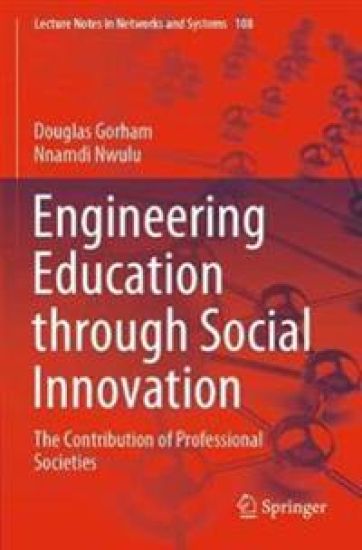
Engineering Education through Social Innovation

Engineering Education through Social Innovation

Douglas Gorham; Nnamdi Nwulu

Springer Nature Switzerland AG
2021
nidottu
This book explores the nexus between professional technical societies and engineering education by examining several societies’ efforts to promote and support engineering and engineering education in the areas of pre-university education, university education and informal education through programs and activities designed to leverage social innovation. Professional societies are in a unique position to support and contribute to engineering education, and have dedicated substantial resources to social responsibility programs and activities that promote engineers and engineering. The book is chiefly intended for engineers, engineering educators, staff members of professional technical societies, and for the broad range of scholars whose work involves technology education and education policy.
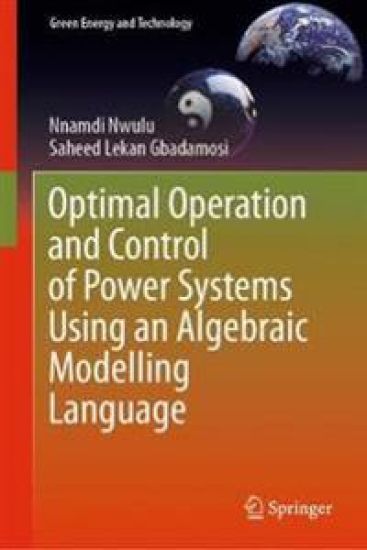
Optimal Operation and Control of Power Systems Using an Algebraic Modelling Language

Optimal Operation and Control of Power Systems Using an Algebraic Modelling Language

Nnamdi Nwulu; Saheed Lekan Gbadamosi

Springer Nature Switzerland AG
2021
sidottu
This book presents mathematical models of demand-side management programs, together with operational and control problems for power and renewable energy systems. It reflects the need for optimal operation and control of today’s electricity grid at both the supply and demand spectrum of the grid. This need is further compounded by the advent of smart grids, which has led to increased customer/consumer participation in power and renewable energy system operations. The book begins by giving an overview of power and renewable energy systems, demand-side management programs and algebraic modeling languages. The overview includes detailed consideration of appliance scheduling algorithms, price elasticity matrices and demand response incentives. Furthermore, the book presents various power system operational and control mathematical formulations, incorporating demand-side management programs. The mathematical formulations developed are modeled and solved using the Advanced Interactive Multidimensional Modeling System (AIMMS) software, which offers a powerful yet simple algebraic modeling language for solving optimization problems. The book is extremely useful for all power system operators and planners who are concerned with optimal operational procedures for managing today’s complex grids, a context in which customers are active participants and can curb/control their demand. The book details how AIMMS can be a useful tool in optimizing power grids and also offers a valuable research aid for students and academics alike.
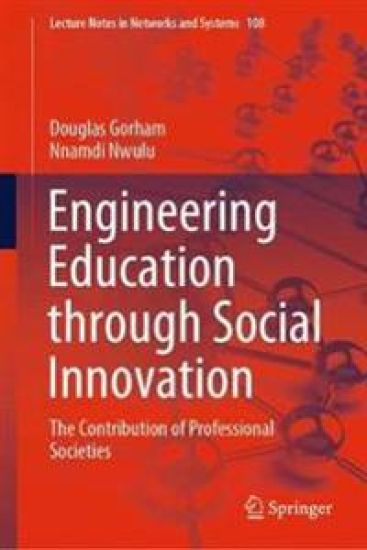
Engineering Education through Social Innovation

Engineering Education through Social Innovation

Douglas Gorham; Nnamdi Nwulu

Springer Nature Switzerland AG
2020
sidottu
This book explores the nexus between professional technical societies and engineering education by examining several societies’ efforts to promote and support engineering and engineering education in the areas of pre-university education, university education and informal education through programs and activities designed to leverage social innovation. Professional societies are in a unique position to support and contribute to engineering education, and have dedicated substantial resources to social responsibility programs and activities that promote engineers and engineering. The book is chiefly intended for engineers, engineering educators, staff members of professional technical societies, and for the broad range of scholars whose work involves technology education and education policy.