Kirjailija
Noam Chomsky
Kirjat ja teokset yhdessä paikassa: 246 kirjaa, julkaisuja vuosilta 1968–2026, suosituimpiin kuuluu On Cuba. Vertaile teosten hintoja ja tarkista saatavuus suomalaisista kirjakaupoista.
246 kirjaa
Kirjojen julkaisuvuodet: 1968–2026.
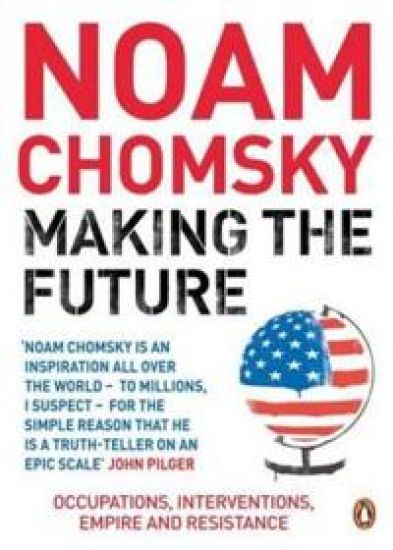
Making the Future is the latest collection of essays from Noam Chomsky, one of our most vital and provocative voices of political dissent. Taking up the thread from 2007's Interventions, these penetrating and compelling articles examine numerous topics, including the financial crisis, Obama's presidency, WikiLeaks and the on-going conflicts in the Middle East. Restating and refining his commitment to democracy and finding inspiration in the popular uprisings of the Arab Spring, Making the Future is Chomsky's fiercely-argued and timely comment on a fast-changing world. Praise for Noam Chomsky:'Chomsky is one of a small band of individuals fighting a whole industry. And that makes him not only brilliant, but heroic' Arundhati Roy'Noam Chomsky is a global phenomenon . . . he may be the most widely read American voice on foreign policy on the planet today' New York Times Book Review'Noam Chomsky is an inspiration all over the world - to millions I suspect - for the simple reason that he is a truth-teller on an epic scale' John Pilger
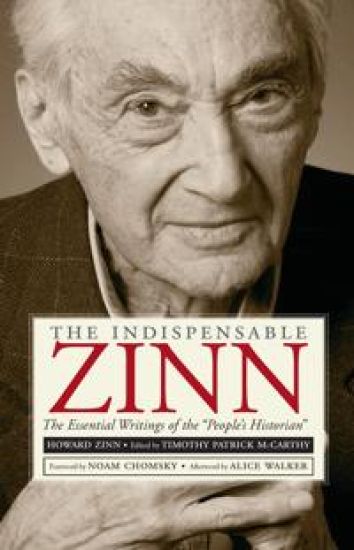
When Howard Zinn died in 2010, millions of readers mourned the loss of the influential historian whose famed approach of telling history from the perspective of the people who lived it, rather than oppressive powerbrokers, inspired activists, historians and academics. This concise and accessible reader combines Zinn's most notable works, including memoir, plays and his infamous People's History of the United States, with an introduction by Alice Walker and an afterword by Noam Chomsky.
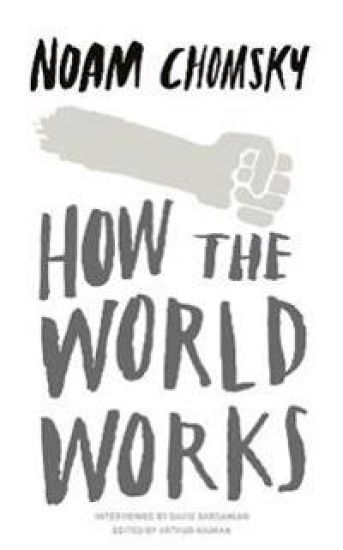
‘One of the greatest, most radical public thinkers of our time’ ARUNDHATI ROY Discover the essential guide to Chomsky and his brilliant ideas on the global state of affairsAn extraordinary collection of Chomsky's speeches and his interviews with David Barsamian, edited by Arthur Naiman. With exceptional clarity and power of argument, Noam Chomsky lays bare as no one else can the realities of contemporary geopolitics. Including classic essays such as:* What Uncle Sam Really Wants* The Prosperous Few and the Restless Many* Secrets, Lies and Democracy* The Common Good
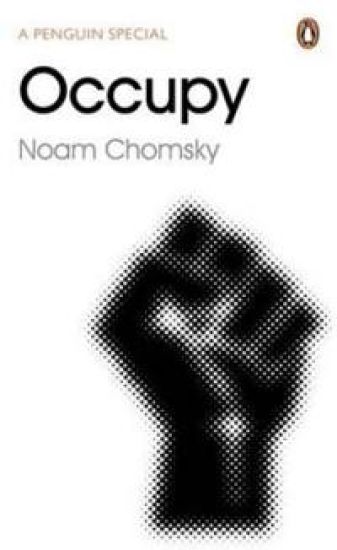
Occupy gives Noam Chomsky's thoughts on a movement which swept the world 'Occupy is the first major public response to thirty years of class war.'Since its appearance in Zuccotti Park, New York, in September 2011, the Occupy movement has spread to hundreds of towns and cities across the world. No longer occupying small tent camps, the movement now occupies the global conscience as its messages spread from street protests to op-ed pages to the highest seats of power. From the movement's onset, Noam Chomsky has supported its critique of corporate corruption and encouraged its efforts to increase civic participation, economic equality, democracy and freedom. Through talks and conversations with movement supporters, Occupy presents Chomsky's latest thinking on the central issues, questions and demands that are driving ordinary people to protest. How did we get to this point? How are the wealthiest 1% influencing the lives of the other 99%? How can we separate money from politics? What would a genuinely democratic election look like? How can we redefine basic concepts like 'growth' to increase equality and quality of life for all? Occupy is another vital contribution from Chomsky to the literature of defiance and protest, and a red-hot rallying call to forge a better, more egalitarian future.
Taken together, Chomsky's essays present a powerful counter-narrative to official accounts of the major political events of the past four years: the wars in Afghanistan and Iraq; the U. S. presidential race; the ascendancy of China; Latin America's leftward turn; the threat of nuclear proliferation in Iran and North Korea; Israel's invasion of Gaza and expansion of settlements in Jerusalem and the West Bank; developments in climate change; the world financial crisis; the Arab Spring; the assassination of Osama bin Laden; and the Occupy protests. Laced throughout his critiques are expressions of commitment to democracy and the power of popular struggles. "Progressive legislation and social welfare," writes Chomsky, "have been won by popular struggles, not gifts from above. Those struggles follow a cycle of success and setback. They must be waged every day, not just once every four years, always with the goal of creating a genuinely responsive democratic society, from the voting booth to the workplace." Making the Future is a follow-up to Interventions, published by City Lights in 2007 and banned from Guantanamo Bay by U. S. military censors. Both books are drawn from articles Chomsky has been writing regularly for the New York Times Syndicate, but which go largely ignored by newspapers in the United States. Making the Future offers fierce, accessible, timely, gloves-off political writing by one of America's foremost intellectual and political dissidents. Making the Future presents more than fifty concise and persuasively argued commentaries on U. S. politics and policies, written between 2007 and 2011. "Unwavering political contrarian Noam Chomsky smart-bombs the U. S. military's global Interventions (City Lights). Shock and awe!"--Vanity Fair " ...he has emerged as one of the left's most implacable voices, challenging the often hidden structures that lie behind the abuse of power." --Paul V. Griffith, Chapter 16 "Making the Future is an impressive collection of articles shedding light on and challen- ging the current political, economic, and military world order. To make sense of the complex mechanisms at play, Chomsky adopts a fundamentally interdisciplinary approach: he juggles with history, sociology of the media, critical theory, and political philosophy." --Juliana Bidadanure, Global Discourse, 2013 Noam Chomsky is a world-renowned author, linguist, and advocate for democracy. He is the critically acclaimed author of many books, including Hegemony or Survival, Imperial Ambitions, Failed States, Manufacturing Consent, and Media Control. He lives in Massachusetts where he is Institute Professor Emeritus in the Department of Linguistics and Philosophy at MIT.
Noam Chomsky is one of the most influential thinkers of our time, yet his views are often misunderstood. In this previously unpublished series of interviews, Chomsky discusses his iconoclastic and important ideas concerning language, human nature and politics. In dialogue with James McGilvray, Professor of Philosophy at McGill University, Chomsky takes up a wide variety of topics – the nature of language, the philosophies of language and mind, morality and universality, science and common sense, and the evolution of language. McGilvray's extensive commentary helps make this incisive set of interviews accessible to a variety of readers. The volume is essential reading for those involved in the study of language and mind, as well as anyone with an interest in Chomsky's ideas.
How do we understand the ethics of humanitarian intervention in today's world? After Western intervention in Libya's civil war this new edition of A New Generation Draws the Line provides timely answers. In a new chapter on recent interventions Chomsky dissects the meaning of the 'right to protect' principle. Other chapters examine the West's uses and abuses of 'humanitarian intervention' including detailed studies of East Timor and Kosovo. The actions of Muammar Gaddafi and the trial of Serbian military commander Ratko Mladic have energised narratives about the role of the 'civilised' West. In this book, Chomsky deploys his forensic method - asking the difficult questions the West would prefer to avoid.
Routledge Revivals presents a reissue of Noam Chomksy’s MA thesis, written in 1951, and first published in 1979. Morphophonemics of Modern Hebrew is a landmark study in linguistics and generative phonology, which provides not only an analysis of morphophonemics but of the entire grammar of Modern Hebrew from syntax to phonology. Professor Chomsky’s goal in this thesis is nothing less than a complete generative grammar of the Hebrew language. This work is of singular importance as it contains the genesis of the author’s work in the field of generative grammar which has had such a profound impact upon the study of linguistics. This reissue of a truly pioneering work will be of great interest to all those concerned with generative grammar and its origins, and with the progression of thought of one of the greatest minds of our time.
How the World Works
Noam Chomsky; David Barsamian; Arthur Naiman
Soft Skull Press
2011
nidottu
Halvin toimitettuna 22,70 €
According to The New York Times, Noam Chomsky is arguably the most important intellectual alive. But he isn t easy to read . . . or at least he wasn t until these books came along. Made up of intensively edited speeches and interviews, they offer something not found anywhere else: pure Chomsky, with every dazzling idea and penetrating insight intact, delivered in clear, accessible, reader-friendly prose. Published as four short books in the famous Real Story seriesWhat Uncle Sam Really Wants; The Prosperous Few and the Restless Many; Secrets, Lies and Democracy; and The Common Goodthey ve collectively sold almost 600,000 copies. And they continue to sell year after year after year because Chomsky s ideas become, if anything, more relevant as time goes by. For example, twenty years ago he pointed out that in 1970, about 90% of international capital was used for trade and long-term investmentmore or less productive thingsand 10% for speculation. By 1990, those figures had reversed. As we know, speculation continued to increase exponentially. We re paying the price now for not heeding him them."
In 9-11, published in November 2001 and arguably the single most influential post 9-11 book, internationally renowned thinker Noam Chomsky bridged the information gap around the World Trade Center attacks, cutting through the tangle of political opportunism, expedient patriotism, and general conformity that choked off American discourse in the months immediately following. Chomsky placed the attacks in context, marshaling his deep and nuanced knowledge of American foreign policy to trace the history of American political aggression--in the Middle East and throughout Latin America as well as in Indonesia, in Afghanistan, in India and Pakistan--at the same time warning against America's increasing reliance on military rhetoric and violence in its response to the attacks, and making the critical point that the mainstream media and public intellectuals were failing to make: any escalation of violence as a response to violence will inevitably lead to further, and bloodier, attacks on innocents in America and around the world. This new edition of 9-11, published on the tenth anniversary of the attacks and featuring a new preface by Chomsky, reminds us that today, just as much as ten years ago, information and clarity remain our most valuable tools in the struggle to prevent future violence against the innocent, both at home and abroad.
Co-authored by two leading voices in the struggle to liberate Palestine, a clear-sighted and essential analysis of the political context around this region at a desperate impasseFrom the targeting of schools and hospitals, to the indiscriminate use of white phosphorus, Israel's conduct in 'Operation Cast Lead' has rattled even some of its most strident supporters. In Gaza in Crisis, Noam Chomsky and Ilan Pappé survey the fallout from that devastation, and place the massacre in Gaza in the context of Israel's long-standing war against the Palestinians. It is a rigorous, historically informed and much-needed analysis of the situation and will be welcomed by all those eager for Chomsky's and Pappé's insights into yet another political catastrophe. 'Noam Chomsky is a global phenomenon . . . he may be the most widely read American voice on foreign policy on the planet today' The New York Times Book Review 'Ilan Pappé is Israel's bravest, most principled, most incisive historian' John Pilger
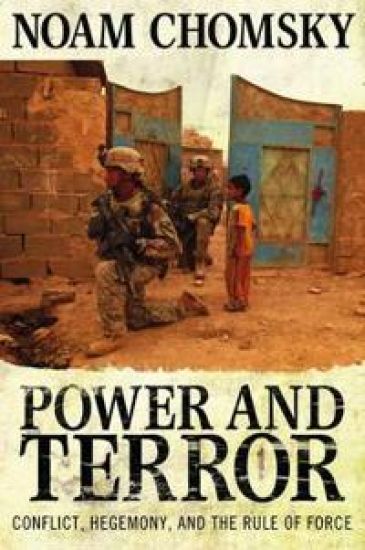
The ten years of US foreign policy since 9/11 have been characterised by war, torture and rendition. In Power and Terror, Noam Chomsky places these developments in the context of America's long history of aggression and imperialism. Arguing that the US is responsible for much of the terror that it claims to be fighting, Chomsky elegantly explains US actions abroad and their deadly consequences. Including talks, question and answer sessions and unpublished essays, this collection offers the perfect introduction to Chomsky for those unfamiliar with his work, as well as a handy reference guide for seasoned activists. As Obama continues, and in some ways escalates, Bush's militarism, Power and Terror is a timely reminder of why it is so important to insist that the United States lives up to the moral standards it demands of others.
Hopes and Prospects is Noam Chomsky's indispensable analysis of the world at present and a roadmap for the futureIn Hopes and Prospects, Noam Chomsky examines the challenges of our early twenty-first century. He explores obstacles and threats such as the widening gap between North and South America, US exceptionalism (which continues under Obama), the fiascos of Iraq and Afghanistan, the US-Israeli assault on Gaza and the recent financial bailouts. He sees hope for the future and opportunities to move forward, however - in the democratic wave in Latin America and in the global solidarity movements which suggest 'real progress towards freedom and justice'. Hopes and Prospects is essential reading for anyone wishing to understand the primary challenges facing the human race in the coming years.'A treasure-trove of truths that shouldn't be left buried in our sandpit of propaganda and lies' Johann Hari, Independent'Noam Chomsky is a global phenomenon . . . he may be the most widely read American voice on foreign policy on the planet today' The New York Times Book Review'The west's most prominent critic of US imperialism . . . the closest thing in the English-speaking world to an intellectual superstar' Guardian
People-first Economics (new Edition)
Noam Chomsky
New Internationalist Publications Ltd
2010
nidottu
The updated second edition of the acclaimed anthology of radical writing about the economic crisis, which sees this as an historic opportunity to build a new model with humans rather than profit at its heart. The book has been expanded to include new contributions by Joseph Stiglitz, Walden Bello and Jayati Ghosh.
In this urgent new book, Noam Chomsky surveys the dangers and prospects of our early twenty-first century. Exploring challenges such as the growing gap between North and South, American exceptionalism (including under President Barack Obama), the fiascos of Iraq and Afghanistan, the U. S.-Israeli assault on Gaza, and the recent financial bailouts, he also sees hope for the future and a way to move forward?in the democratic wave in Latin America and in the global solidarity movements that suggest "real progress toward freedom and justice." Hopes and Prospects is essential reading for anyone who is concerned about the primary challenges still facing the human race. "This is a classic Chomsky work: a bonfire of myths and lies, sophistries and delusions. Noam Chomsky is an enduring inspiration all over the world?to millions, I suspect?for the simple reason that he is a truth-teller on an epic scale. I salute him." ? John Pilger "In dissecting the rhetoric and logic of American empire and class domination, at home and abroad, Chomsky continues a longstanding and crucial work of elucidation and activism...the writing remains unswervingly rational and principled throughout, and lends bracing impetus to the real alternatives before us." ? Publisher's Weekly "Chomsky’s commentary is razor sharp and offers a compendium of facts that make a well-supported?and undoubtedly controversial?claim of the incongruity between US actions and the democratic ideals it professes.... A valuable resource for both academics and everyday concerned citizens." ? ForeWord Professor emeritus at the Massachusetts Institute of Technology, Noam Chomsky is widely regarded to be one of the foremost critics of U. S. foreign policy in the world. He has published numerous groundbreaking books, articles, and essays on global politics, history, and linguistics. Among his recent books are The New York Times bestsellers Hegemony or Survival and Failed States.
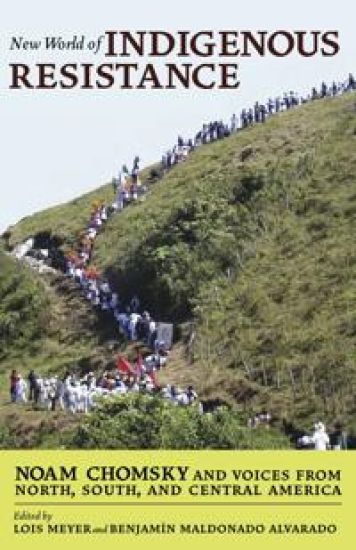
Indigenous societies throughout Latin America are facing difficult choices. After centuries of colonization, the ongoing struggle to preserve communal knowledge, rituals, language, traditions, and teaching and learning practices has taken on even more significance in the increasingly standardized world of globalization. For many indigenous societies, protecting community-based customs has involved the rejection of state-provided education, raising a series of interconnected issues regarding autonomy, modernity and cultural sustainability. In New World of Indigenous Resistance, these questions are approached from multiple perspectives by means of an innovative exchange between linguist and human rights advocate Noam Chomsky, and more than twenty scholars, activists and educators from across the Americas. Two interviews with Chomsky open the exchange with lessons from world history, linguistics, economics and anti-authoritarian philosophy, parallel histories of peoples worldwide who have resisted state power while attempting to sustain or even revitalize community traditions. In response to Chomsky's ideas, voices from Argentina, Bolivia, Ecuador, Guatemala, Mexico, Panama, Peru, the United States, and Uruguay dray from their first-hand experience and scholarship, speaking to, with, and at times against Chomsky's views. In a final interview Chomsky reflects upon the commentaries; the result is a nuanced intellectual and political exchange--a compelling conversation that offers a contemporary vision of indigenous resistance, survival and hope. "Two direct interviews with Chomsky enhance this articulate examination of challenges facing indigenous peoples today, including a positive viewpoint of means by which indigenous cultures can resist total assimilation, endure and spread hope. Highly recommended." --Midwest Book Review "The key issue facing indigenous peoples as they gain new rights and raise their profile within Latin America's newly democratic states is how to reconcile the cultural inheritance that makes them indigenous with forces that aim to tether them to national identities or unleash upon them the corrosive acculturation implied by globalization... This collection of commentaries -- framed by the wisdom of Noam Chomsky -- offers an excellent point of departure for the student interested in addressing such questions. With a significant focus on education, the writers address the thorny yet timeless issue of how to reconcile the ancient with the modern... If there is one theme that emerges, it is of the potential for inter-communal co-operation and the concrete benefits diversity can bring to Latin American social life." --Gavin O'Toole, Latin American Review of Books "This book is unique, thought-provoking and inspiring. The voices included in this edited collection, most of them unheard in mainstream Western academia, not only denounce the crimes committed against Indigenous peoples, but also reflect decades of Indigenous struggle, resistance, hope and commitment... This book speaks to students, teachers, administrators and researchers from different disciplines and invites them to work together and follow the exemplary struggles of Indigenous peoples in different parts of America." -Teachers College Record

In this extraordinarily original and profound work, Noam Chomsky discusses themes in the study of language and mind since the end of the sixteenth century in order to explain the motivations and methods that underlie his work in linguistics, the science of mind, and even politics. This edition includes a new and specially written introduction by James McGilvray, contextualising the work for the twenty-first century. It has been made more accessible to a larger audience; all the French and German in the original edition has been translated, and the notes and bibliography have been brought up to date. The relationship between the original edition (published in 1966) and contemporary biolinguistic work is also explained. This challenging volume is an important contribution to the study of language and mind, and to the history of these studies since the end of the sixteenth century.
In this all-new collection of conversations, Noam Chomsky explores immediate and urgent international concerns including Iran's challenge to the United States, the deterioration of the Israel-Palestine conflict, the ongoing occupations of Iraq and Afghanistan, the rise of China, and the growing power of the left in Latin America, as well as the Democratic victory in the US midterm elections and its ramifications for the future. As always, Chomsky presents his own ideas vividly and accessibly, with uncompromising principles and valuable insights. These interviews will inspire a new generation of readers, as well as long-term Chomsky fans eager for his latest thinking on the many crises the world now confronts.