Kirjojen hintavertailu – 12 903 725 kirjaa ja 27 kauppaa
Kirjailija
Noël Carroll
Kirjat ja teokset yhdessä paikassa: 41 kirjaa, julkaisuja vuosilta 1990–2025, suosituimpiin kuuluu La Philosophie Des Films. Vertaile teosten hintoja ja tarkista saatavuus suomalaisista kirjakaupoista.
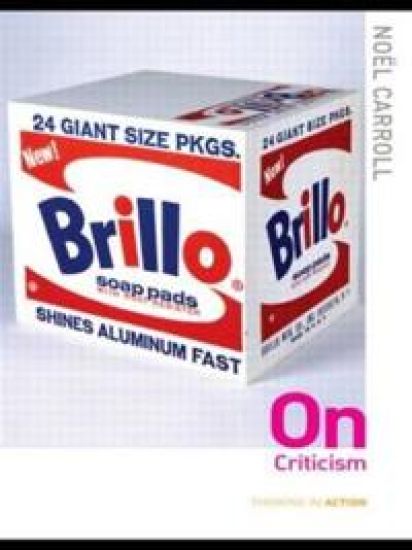
In a recent poll of practicing art critics, 75 percent reported that rendering judgments on artworks was the least significant aspect of their job. This is a troubling statistic for philosopher and critic Noel Carroll, who argues that that the proper task of the critic is not simply to describe, or to uncover hidden meanings or agendas, but instead to determine what is of value in art. Carroll argues for a humanistic conception of criticism which focuses on what the artist has achieved by creating or performing the work. Whilst a good critic should not neglect to contextualize and offer interpretations of a work of art, he argues that too much recent criticism has ignored the fundamental role of the artist's intentions. Including examples from visual, performance and literary arts, and the work of contemporary critics, Carroll provides a charming, erudite and persuasive argument that evaluation of art is an indispensable part of the conversation of life.
In a recent poll of practicing art critics, 75 percent reported that rendering judgments on artworks was the least significant aspect of their job. This is a troubling statistic for philosopher and critic Noel Carroll, who argues that that the proper task of the critic is not simply to describe, or to uncover hidden meanings or agendas, but instead to determine what is of value in art. Carroll argues for a humanistic conception of criticism which focuses on what the artist has achieved by creating or performing the work. Whilst a good critic should not neglect to contextualize and offer interpretations of a work of art, he argues that too much recent criticism has ignored the fundamental role of the artist's intentions. Including examples from visual, performance and literary arts, and the work of contemporary critics, Carroll provides a charming, erudite and persuasive argument that evaluation of art is an indispensable part of the conversation of life.
Philosophy of Motion Pictures is a first-of-its-kind, bottom-up introduction to this bourgeoning field of study. Topics include film as art, medium specificity, defining motion pictures, representation, editing, narrative, emotion and evaluation. Clearly written and supported with a wealth of examplesExplores characterizations of key elements of motion pictures –the shot, the sequence, the erotetic narrative, and its modes of affective address
Philosophy of Motion Pictures is a first-of-its-kind, bottom-up introduction to this bourgeoning field of study. Topics include film as art, medium specificity, defining motion pictures, representation, editing, narrative, emotion and evaluation. Clearly written and supported with a wealth of examplesExplores characterizations of key elements of motion pictures –the shot, the sequence, the erotetic narrative, and its modes of affective address
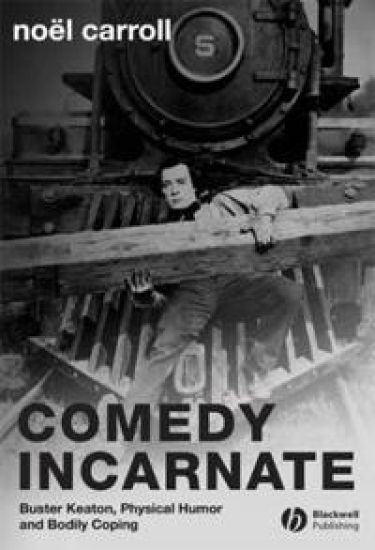
COMEDY INCARNATE COMEDY INCARNATEBuster Keaton, Physical Humor and Bodily Coping “Buster Keaton was an engineer of the comic, a craftsman of gags, a mechanic of humor. While Carroll does not aspire to be as funny as Keaton, he can match (and follow) him in intricate and brilliant analysis, providing a logic of illogic. A book that will change how we think about slapstick and film style.” Tom Gunning, University of Chicago “Comedy Incarnate is a brilliant, inventive and lucid examination of Buster Keaton’s The General. Through close textual analysis, Carroll opens up a wide expanse of historical and theoretical territory – positioning The General in relation to the writings of Merleau-Ponty, Bergson, and Poulet, as well as to the films of Chaplin, Lloyd, and Langdon.” Lucy Fischer, University of Pittsburgh “Building on Keaton’s directorial practice as a sort of civil engineer who engaged a mechanical universe, Carroll . . . investigates how Keaton’s emphasis on gags and their intelligibility characterize the film in specific ways. In so doing he opens up an understanding of how Keaton’s comedy of body intelligence works, especially in contrast to contemporaries like Charlie Chaplin and Harold Lloyd, and he shows how intelligence – the artist’s and the viewer’s – informs laughter.” CHOICE Comedy Incarnate explores the intricacies of Buster Keaton’s unique visual style to discover what provokes laughter in his timeless films, paying special attention to The General. Keaton’s precise body comedy, coupled with his unconventional directorial decisions, suggests a new way of analyzing the film in terms of its visual elements as opposed to its narrative. Written by one of America’s foremost film theorists, this in-depth examination of the comedy of the steam, steel, and railroad era will provide a fresh vantage point for analysis of film and comedy itself.
Noël Carroll, a brilliant and provocative philosopher of film, has gathered in this book eighteen of his most recent essays on cinema and television—what Carroll calls “moving images.” The essays discuss topics in philosophy, film theory, and film criticism. Drawing on concepts from cognitive psychology and analytic philosophy, Carroll examines a wide range of fascinating topics. These include film attention, the emotional address of the moving image, film and racism, the nature and epistemology of documentary film, the moral status of television, the concept of film style, the foundations of film evaluation, the film theory of Siegfried Kracauer, the ideology of the professional western, and films by Sergei Eisenstein and Yvonne Rainer. Carroll also assesses the state of contemporary film theory and speculates on its prospects. The book continues many of the themes of Carroll’s earlier work Theorizing the Moving Image and develops them in new directions. A general introduction by George Wilson situates Carroll’s essays in relation to his view of moving-image studies.
Beyond Aesthetics brings together philosophical essays addressing art and related issues by one of the foremost philosophers of art at work today. Countering conventional aesthetic theories - those maintaining that authorial intention, art history, morality and emotional responses are irrelevant to the experience of art - Noël Carroll argues for a more pluralistic and commonsensical view in which all of these factors can play a legitimate role in our encounter with art works. Throughout, the book combines philosophical theorizing with illustrative examples including works of high culture and the avant-garde, as well as works of popular culture, jokes, horror novels, and suspense films.
Beyond Aesthetics brings together philosophical essays addressing art and related issues by one of the foremost philosophers of art at work today. Countering conventional aesthetic theories - those maintaining that authorial intention, art history, morality and emotional responses are irrelevant to the experience of art - Noël Carroll argues for a more pluralistic and commonsensical view in which all of these factors can play a legitimate role in our encounter with art works. Throughout, the book combines philosophical theorizing with illustrative examples including works of high culture and the avant-garde, as well as works of popular culture, jokes, horror novels, and suspense films.
Philosophy of Art is a textbook for undergraduate students interested in the topic of philosophical aesthetics. It introduces the techniques of analytic philosophy as well as key topics such as the representational theory of art, formalism, neo-formalism, aesthetic theories of art, neo-Wittgensteinism, the Institutional Theory of Art. as well as historical approaches to the nature of art. Throughout, abstract philosophical theories are illustrated by examples of both traditional and contemporary art including frequent reference to the avant-garde in this way enriching the readers understanding of art theory as well as the appreciation of art. Unique features of the textbook are:* chapter summaries* summaries of major theories of art and suggested analyses of the important categories used when talking and thinking of art* annotated suggested readings at the ends of chapters. Also available in this series:Epistemology Pb: 0-415-13043-3: £12.99Ethics Pb: 0-415-15625-4: £11.99Metaphysics Pb: 0-415-14034-X: £12.99Philosophy of Mind Pb: 0-415-13060-3: £11.99Philosophy of Religion Pb: 0-415-13214-2: £12.99
Philosophy of Art is a textbook for undergraduate students interested in the topic of philosophical aesthetics. It introduces the techniques of analytic philosophy as well as key topics such as the representational theory of art, formalism, neo-formalism, aesthetic theories of art, neo-Wittgensteinism, the Institutional Theory of Art. as well as historical approaches to the nature of art. Throughout, abstract philosophical theories are illustrated by examples of both traditional and contemporary art including frequent reference to the avant-garde in this way enriching the readers understanding of art theory as well as the appreciation of art. Unique features of the textbook are:* chapter summaries* summaries of major theories of art and suggested analyses of the important categories used when talking and thinking of art* annotated suggested readings at the ends of chapters. Also available in this series:Epistemology Pb: 0-415-13043-3: £12.99Ethics Pb: 0-415-15625-4: £11.99Metaphysics Pb: 0-415-14034-X: £12.99Philosophy of Mind Pb: 0-415-13060-3: £11.99Philosophy of Religion Pb: 0-415-13214-2: £12.99
A wisp of steam, lightly dusted with ash, trickled upward from the northwest crater of Soufri re Hills. The volcano had officially awakened. An unlikely combination of events combine to provide the backdrop for an attack upon the Queen of England: a wayward satellite ending its life in a spectacular way, a young couple sailing too close to an active volcano, terrorists hiding out within the volcano's Exclusion Zone awaiting the right moment to strike.
Interpreting the Moving Image is a collection of essays by one of the most astute critics of cinema at work today. This volume provides a close analysis of major films of both the narrative and the avant-garde traditions. Written in accessible and engaging language, it also serves as a guide to such classics as The Cabinet of Dr Caligari and Citizen Kane, as well as the art of cinema in the post-modern era.
We live in a world dominated by mass art. Movies, TV, pulp literature, comics, rock music -- both broadcast and recorded -- surround us everywhere in the industrialized world and beyond. However, despite the fact that for the majority mass art supplies the primary source of aesthetic experience, the area has been neglected entirely by analytic philosophers of art. In A Philosophy of Mass Art, Noël Carroll, a leading figure in the field of aesthetic philosophy, attempts to address this lacuna. He shows why philosophers have previously resisted and/or misunderstood mass art and he develops frameworks for understanding the relation of mass art to the emotions, morality, and ideology; discussing the accounts of such theorists in the field as Collingwood, Adorno, Benjamin, McCluhan, and Fiske. Mixing conceptual analysis with many vivid examples, the author proposes the first significant attempt at a philosophy of mass art in the analytical tradition, concluding there are strong grounds for approaching mass art in the same fashion as high art.
A selection of essays written by one of the leading critics of film over the last two decades, this volume examines theoretical aspects of film and television through penetrating analyses of such genres as soap opera, documentary, comedy, and such topics as ‘sight gags’, film metaphor, point-of-view editing, and movie music. Throughout, individual films are considered in depth. Carroll’s essays, moreover, represent the cognitivist turn in film studies, containing in-depth criticism of existing approaches to film theory, and heralding a new approach.
A selection of essays written by one of the leading critics of film over the last two decades, this volume examines theoretical aspects of film and television through penetrating analyses of such genres as soap opera, documentary, comedy, and such topics as ‘sight gags’, film metaphor, point-of-view editing, and movie music. Throughout, individual films are considered in depth. Carroll’s essays, moreover, represent the cognitivist turn in film studies, containing in-depth criticism of existing approaches to film theory, and heralding a new approach.
Since the 1970s, film scholars have been searching for a unified theory that will explain all types of film, their production and their reception; the field has been dominated by structuralist Marxism, varieties of cultural theory and the psychoanalytic ideas of Freud and Lacan. The authors of this text ask why not employ many theories tailored to specific goals, rather than search for a unified theory. They offer directions for understanding film, presenting essays by 27 scholars on topics as diverse as film scores, audience response and the national film industries of Russia, Scandinavia, the US and Japan. Using historical, philosophical, psychological and feminist methods, the book examines issues such as: what goes on when viewers perceive a film?; how do filmmakers exploit conventions?; how do movies create illusions?; and how does a film arouse emotion?