Kirjojen hintavertailu – 12 859 828 kirjaa ja 27 kauppaa

Kirjailija

Noel Castree

Kirjat ja teokset yhdessä paikassa: 13 kirjaa, julkaisuja vuosilta 2003–2026, suosituimpiin kuuluu David Harvey. Vertaile teosten hintoja ja tarkista saatavuus suomalaisista kirjakaupoista.

13 kirjaa

Kirjojen julkaisuvuodet: 2003–2026.

David Harvey

David Harvey

Noel Castree; Greig Charnock; Brett Christophers

TAYLOR FRANCIS LTD
2022
nidottu

Halvin toimitettuna 33,30 €

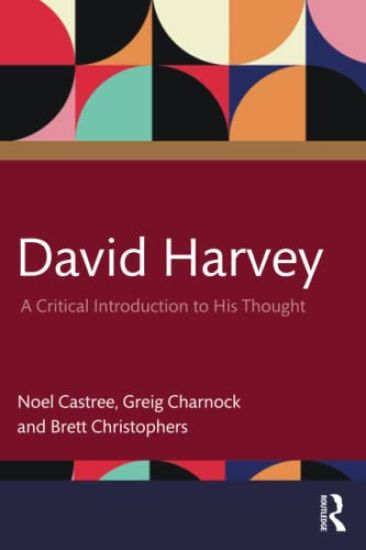
David Harvey is among the most influential Marxist thinkers of the last half century. This book offers a lucid and authoritative introduction to his work, with a structure designed to reflect the enduring topics and insights that serve to unify Harvey’s writings over a long period of time. Harvey’s writings have exerted huge influence within the social sciences and the humanities. In addition, his work now commands a global readership among Left political activists and those interested in current world affairs. Harvey’s central preoccupation is capitalism and the impacts of its growth-obsessed, contradictory dynamics. His name is synonymous with key analytical concepts like ‘the spatial fix’ and ‘accumulation by dispossession’. This critical introduction to his thought is an essential companion for both new and more experienced readers. The critique of capitalism is one of the most important undertakings of our time, and Harvey’s work offers powerful tools to help us see why a ‘softer’ capitalism is insufficient and a post-capitalist future is necessary. This book is an important resource for scholars and graduate students in geography, politics and many other disciplines across the social sciences and humanities.
David Harvey

David Harvey

Noel Castree; Greig Charnock; Brett Christophers

TAYLOR FRANCIS LTD
2022
sidottu
David Harvey is among the most influential Marxist thinkers of the last half century. This book offers a lucid and authoritative introduction to his work, with a structure designed to reflect the enduring topics and insights that serve to unify Harvey’s writings over a long period of time. Harvey’s writings have exerted huge influence within the social sciences and the humanities. In addition, his work now commands a global readership among Left political activists and those interested in current world affairs. Harvey’s central preoccupation is capitalism and the impacts of its growth-obsessed, contradictory dynamics. His name is synonymous with key analytical concepts like ‘the spatial fix’ and ‘accumulation by dispossession’. This critical introduction to his thought is an essential companion for both new and more experienced readers. The critique of capitalism is one of the most important undertakings of our time, and Harvey’s work offers powerful tools to help us see why a ‘softer’ capitalism is insufficient and a post-capitalist future is necessary. This book is an important resource for scholars and graduate students in geography, politics and many other disciplines across the social sciences and humanities.
The Anthropocene

The Anthropocene

Martin Mahony; Noel Castree

TAYLOR FRANCIS LTD
2026
nidottu
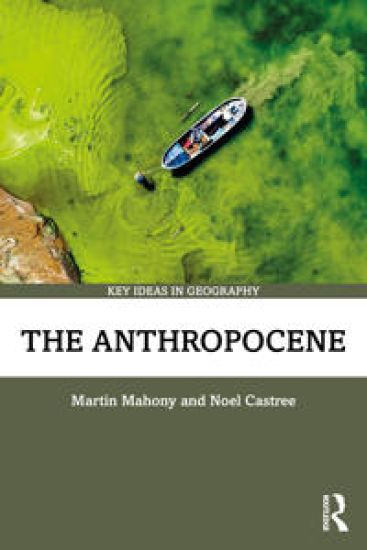
'The Anthropocene' is one of the most important scientific concepts of our time. It is also one of the most contested. This book offers the most advanced yet accessible introduction to the complex and often heated debates about the meaning, nature and implications of the Anthropocene. Drawing on the work of physical and human geographers, alongside geographically-informed contributions from natural and physical scientists, sociologists, historians, anthropologists, philosophers, and others, this book maps and critically evaluates the implications of the Anthropocene for the discipline of Geography and for geographical thinking across other fields. It asks: Does the Anthropocene mark the start of the greatest environmental crisis in history? Which humans are most responsible? What impacts is it having on human well-being and the natural world? What needs to be done to mitigate its threats, and who will bear the costs? How does ‘the Anthropocene’ challenge the conduct of research, policy and activism around issues like environmental justice, resilience, nature conservation, or decolonisation? Is 'the Anthropocene' even the best name for this new age? Essential reading for university students and researchers in Geography and beyond, this book also appeals to general readers interested in understanding how human actions are reshaping the Earth and what this means for the future of people and planet.
The Anthropocene

The Anthropocene

Martin Mahony; Noel Castree

TAYLOR FRANCIS LTD
2026
sidottu
'The Anthropocene' is one of the most important scientific concepts of our time. It is also one of the most contested. This book offers the most advanced yet accessible introduction to the complex and often heated debates about the meaning, nature and implications of the Anthropocene. Drawing on the work of physical and human geographers, alongside geographically-informed contributions from natural and physical scientists, sociologists, historians, anthropologists, philosophers, and others, this book maps and critically evaluates the implications of the Anthropocene for the discipline of Geography and for geographical thinking across other fields. It asks: Does the Anthropocene mark the start of the greatest environmental crisis in history? Which humans are most responsible? What impacts is it having on human well-being and the natural world? What needs to be done to mitigate its threats, and who will bear the costs? How does ‘the Anthropocene’ challenge the conduct of research, policy and activism around issues like environmental justice, resilience, nature conservation, or decolonisation? Is 'the Anthropocene' even the best name for this new age? Essential reading for university students and researchers in Geography and beyond, this book also appeals to general readers interested in understanding how human actions are reshaping the Earth and what this means for the future of people and planet.
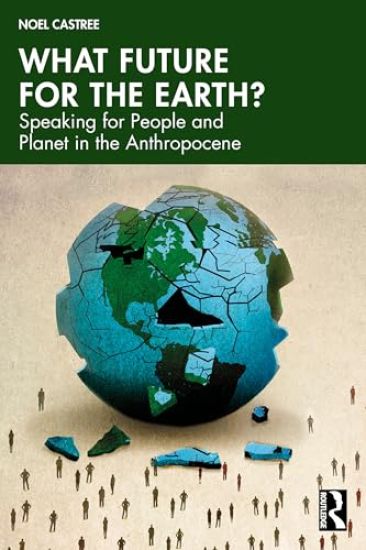
What Future For the Earth?

What Future For the Earth?

Noel Castree

TAYLOR FRANCIS LTD
2026
nidottu
· What are humans doing to our one and only planet? · In an age of scepticism, division and rancour, whose claims and counter-claims about human impacts should we believe? · What questions do we need to ask about global environmental change? · How do we grope towards actionable answers in a disunited world? The scale, scope and magnitude of human impacts on the Earth are unprecedented. Geoscientists warn of a perilous future in which the Earth System has been forced out its interglacial Holocene state. But geoscience can’t tell us what the root causes of anthropogenic planetary change are, nor how humanity should best respond to it. It’s for others to do this analytical and normative work. What Future For the Earth? examines a growing landscape of thought ranged across the social sciences, humanities and the arts. Setting geoscience in its wider institutional and epistemological context, this multidisciplinary book addresses a set of key societal questions arising from escalating Earth System change. It offers an advanced introduction to concepts, arguments and propositions ventured by environmentally-minded historians, geographers, anthropologists, sociologists, political theorists and many others. Placing capitalism and ‘strong anthropocentrism’ at the centre of analysis, What Future For The Earth? tackles a set of big issues, such as how we should think about time and future, about ‘environmental crisis’ and the moral status of the non-human world. The book lends shape to an urgent debate about the many profound implications of what people are doing to our one and only planet. Who gets to speak for the Earth and its inhabitants, how and to what ends? Who gets to identify causes, propose solutions and enact them? As the technological power of certain private firms and many national governments grows prodigiously, these questions focus our attention on how influential actors can be held accountable and a more just world be created. University students and instructors across a wide range of disciplines will find this book of interest, as will general readers concerned about climate change, biodiversity loss and related problems. This book identifies issues of common concern and outlines ways of addressing them in a world riven by conflict and dissent yet in need of urgent, cooperative action among otherwise different peoples.
What Future For the Earth?

What Future For the Earth?

Noel Castree

TAYLOR FRANCIS LTD
2026
sidottu
· What are humans doing to our one and only planet? · In an age of scepticism, division and rancour, whose claims and counter-claims about human impacts should we believe? · What questions do we need to ask about global environmental change? · How do we grope towards actionable answers in a disunited world? The scale, scope and magnitude of human impacts on the Earth are unprecedented. Geoscientists warn of a perilous future in which the Earth System has been forced out its interglacial Holocene state. But geoscience can’t tell us what the root causes of anthropogenic planetary change are, nor how humanity should best respond to it. It’s for others to do this analytical and normative work. What Future For the Earth? examines a growing landscape of thought ranged across the social sciences, humanities and the arts. Setting geoscience in its wider institutional and epistemological context, this multidisciplinary book addresses a set of key societal questions arising from escalating Earth System change. It offers an advanced introduction to concepts, arguments and propositions ventured by environmentally-minded historians, geographers, anthropologists, sociologists, political theorists and many others. Placing capitalism and ‘strong anthropocentrism’ at the centre of analysis, What Future For The Earth? tackles a set of big issues, such as how we should think about time and future, about ‘environmental crisis’ and the moral status of the non-human world. The book lends shape to an urgent debate about the many profound implications of what people are doing to our one and only planet. Who gets to speak for the Earth and its inhabitants, how and to what ends? Who gets to identify causes, propose solutions and enact them? As the technological power of certain private firms and many national governments grows prodigiously, these questions focus our attention on how influential actors can be held accountable and a more just world be created. University students and instructors across a wide range of disciplines will find this book of interest, as will general readers concerned about climate change, biodiversity loss and related problems. This book identifies issues of common concern and outlines ways of addressing them in a world riven by conflict and dissent yet in need of urgent, cooperative action among otherwise different peoples.
Making Sense of Nature

Making Sense of Nature

Noel Castree

Routledge
2013
sidottu
We listen to a cacophony of voices instructing us how to think and feel about nature, including our own bodies. The news media, wildlife documentaries, science magazines, and environmental NGOs are among those clamouring for our attention. But are we empowered by all this knowledge or is our dependence on various communities allowing our thoughts, sentiments and activities to be unduly governed by others? Making Sense of Nature shows that what we call ‘nature’ is made sense of for us in ways that make it central to social order, social change and social dissent. By utilising insights and extended examples from anthropology, cultural studies, human geography, philosophy, politics, sociology, science studies, this interdisciplinary text asks whether we can better make sense of nature for ourselves, and thus participate more meaningfully in momentous decisions about the future of life – human and non-human – on the planet. This book shows how ‘nature’ can be made sense of without presuming its naturalness. The challenge is not so much to rid ourselves of the idea of nature and its ‘collateral concepts’ (such as genes) but instead, we need to be more alert to how, why and with what effects ideas about ‘nature’ get fashioned and deployed in specific situations. Among other things, the book deals with science and scientists, the mass media and journalists, ecotourism, literature and cinema, environmentalists, advertising and big business. This innovative text contains numerous case studies and examples from daily life to put theory and subject matter into context, as well as study tasks, a glossary and suggested further reading. The case studies cover a range of topics, range from forestry in Canada and Guinea, to bestiality in Washington State, to how human genetics is reported in Western newspapers, to participatory science experiments in the UK. Making Sense of Nature will empower readers from a wide range of fields across the social sciences, humanities and physical sciences.
Making Sense of Nature

Making Sense of Nature

Noel Castree

Routledge
2013
nidottu
We listen to a cacophony of voices instructing us how to think and feel about nature, including our own bodies. The news media, wildlife documentaries, science magazines, and environmental NGOs are among those clamouring for our attention. But are we empowered by all this knowledge or is our dependence on various communities allowing our thoughts, sentiments and activities to be unduly governed by others? Making Sense of Nature shows that what we call ‘nature’ is made sense of for us in ways that make it central to social order, social change and social dissent. By utilising insights and extended examples from anthropology, cultural studies, human geography, philosophy, politics, sociology, science studies, this interdisciplinary text asks whether we can better make sense of nature for ourselves, and thus participate more meaningfully in momentous decisions about the future of life – human and non-human – on the planet. This book shows how ‘nature’ can be made sense of without presuming its naturalness. The challenge is not so much to rid ourselves of the idea of nature and its ‘collateral concepts’ (such as genes) but instead, we need to be more alert to how, why and with what effects ideas about ‘nature’ get fashioned and deployed in specific situations. Among other things, the book deals with science and scientists, the mass media and journalists, ecotourism, literature and cinema, environmentalists, advertising and big business. This innovative text contains numerous case studies and examples from daily life to put theory and subject matter into context, as well as study tasks, a glossary and suggested further reading. The case studies cover a range of topics, range from forestry in Canada and Guinea, to bestiality in Washington State, to how human genetics is reported in Western newspapers, to participatory science experiments in the UK. Making Sense of Nature will empower readers from a wide range of fields across the social sciences, humanities and physical sciences.
A Dictionary of Human Geography

A Dictionary of Human Geography

Alisdair Rogers; Noel Castree; Rob Kitchin

Oxford University Press
2013
nidottu

Halvin toimitettuna 27,00 €

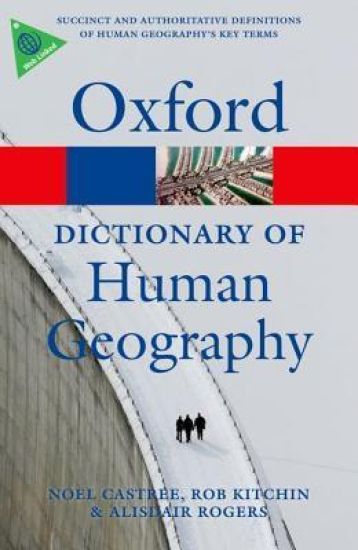
A Dictionary of Human Geography is a brand new addition to Oxford's Paperback Reference Series, offering over 2,000 clear and concise entries on human geography terms. From basic terms and concepts to biographical entries, acronyms, organisations, and major periods and schools in the history of human geography, it provides up-to-date, accurate, and accessible information. It also includes entry-level web links that are listed and regularly updated on a dedicated companion website. This dictionary is a reliable reference for students of human geography and ancillary subjects, for researchers and professionals in the field, and for interested generalists.
Nature

Nature

Noel Castree

Routledge
2005
sidottu
Exploring the shifting ways in which geographers have studied nature, this book emphasizes the relationships and differences between human geography, physical geography and resource and hazards geography. The first to consider the topic of nature in modern geography as a whole, this distinctive text looks at all its major meanings, from the human body and psyche through to the non-human world, and develops the argument that student readers should abandon the idea of knowing what nature is in favour of a close scrutiny of what agendas lie behind competing conceptions of it. It deals with, amongst others, the following areas:the idea of nature the 'nature' of geography de-naturalization and re-naturalizationafter-nature. As everything from global warming to GM foods becomes headline news, the use and abuse of nature is on the agenda as never before. Synthesizing a wealth of diverse and complex information, this text makes the significant theories, debates and information on nature accessible to students of geography, environmental studies, sociology, and cultural studies.
Nature

Nature

Noel Castree

Routledge
2005
nidottu
Exploring the shifting ways in which geographers have studied nature, this book emphasizes the relationships and differences between human geography, physical geography and resource and hazards geography. The first to consider the topic of nature in modern geography as a whole, this distinctive text looks at all its major meanings, from the human body and psyche through to the non-human world, and develops the argument that student readers should abandon the idea of knowing what nature is in favour of a close scrutiny of what agendas lie behind competing conceptions of it. It deals with, amongst others, the following areas:the idea of nature the 'nature' of geography de-naturalization and re-naturalizationafter-nature. As everything from global warming to GM foods becomes headline news, the use and abuse of nature is on the agenda as never before. Synthesizing a wealth of diverse and complex information, this text makes the significant theories, debates and information on nature accessible to students of geography, environmental studies, sociology, and cultural studies.
Spaces of Work

Spaces of Work

Noel Castree; Neil Coe; Kevin Ward; Mike Samers

SAGE Publications Inc
2003
sidottu
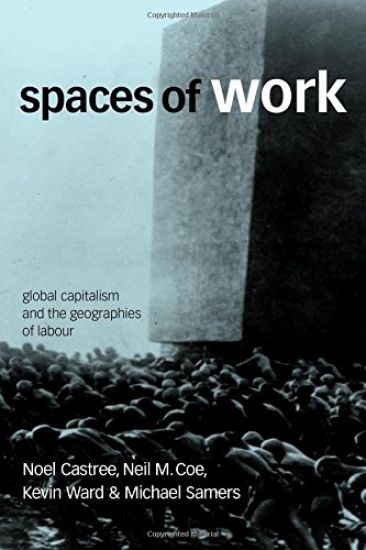
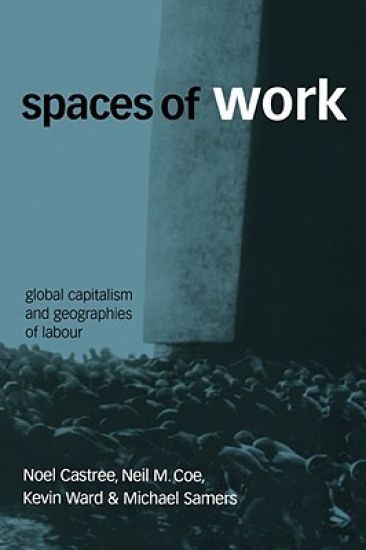
Spaces of Work is an accessible examination of the role of labour in the modern world. The authors critically assess the present condition and future prospects for workers through the geographies of place, space and scale, and in conjunction with other more commonly studied components of the globalisation such as production, trade and finance. Each chapter presents examples of labour practice from around the world, and across multiple sectors of work, not just Western manufacturing. In addition, the book features: · further reading section with key questions · glossary of key terms · short summaries of the main theoretical approaches · guide to further learning resouces Spaces of Work is a key book for all social scientists interested in the contemporary state of labour, and the scope for progressive change within the capitalist system. Students of human geography, sociology, international political economy, economics and cultural studies will all find this an invaluable text.
Spaces of Work

Spaces of Work

Noel Castree; Neil Coe; Kevin Ward; Mike Samers

SAGE Publications Inc
2003
nidottu
Spaces of Work is an accessible examination of the role of labour in the modern world. The authors critically assess the present condition and future prospects for workers through the geographies of place, space and scale, and in conjunction with other more commonly studied components of the globalisation such as production, trade and finance. Each chapter presents examples of labour practice from around the world, and across multiple sectors of work, not just Western manufacturing. In addition, the book features: · further reading section with key questions · glossary of key terms · short summaries of the main theoretical approaches · guide to further learning resouces Spaces of Work is a key book for all social scientists interested in the contemporary state of labour, and the scope for progressive change within the capitalist system. Students of human geography, sociology, international political economy, economics and cultural studies will all find this an invaluable text.