Kirjojen hintavertailu – 12 903 724 kirjaa ja 27 kauppaa
Kirjailija
Noel Jones
Kirjat ja teokset yhdessä paikassa: 40 kirjaa, julkaisuja vuosilta 2005–2021, suosituimpiin kuuluu The Catholic Organist's Quarterly: Summer - Manuals Only. Vertaile teosten hintoja ja tarkista saatavuus suomalaisista kirjakaupoista.
This is a Book Of Instructions to the believers transmitted 12-21-2012 through the energy of the galactic alignment at the great house at Chaco Canyon after visiting The Three Hopi Mesas and a conversation with grandfather Martin...
Duets arranged to be heard outside as Carillon Music and, within the church or school, heard as performances for Carillon & Organ. The organ part is to be played live, while the carillon may be played live from a keyboard, or automatically using MIDI or Audio Files.
This is created for harpsichordists, pianists and organists who love the Cello Suites. It is also useful for students interested in expanding their familiarity with the Bass Clef. These fifteen movements lend themselves nicely for realization and performance on a keyboard. The realization is based upon the study of four early copies of the original violoncello manuscript - which, itself, has never been found. Bach brilliantly created music for the four or five strings of the Baroque Cello that states and, when not possible, implies harmonies. This realization puts these implied harmonies on paper.
A new addition to The Catholic Choirbook Series A book for building new choirs and improving the skills and repertoire of experienced choirs. This is a new digest created from The Catholic Choirbook series, containing the most sung music from that book as used by Catholic, Anglican and other choirs from around the world. Designed to be affordable and easy to hold, its price is less than the cost of a lunch in many countries Much of the music is very singable for the average choir, some is a bit more challenging to encourage excellence in the singing of your choir. Some of the music may be sung without accompaniment, but all pieces include accompaniments for a simple reason: Many choirs struggle to find enough singers to sing all the parts. Going back in history to the time of Palestrina, who wrote for choirs of many parts, 8 and more, we have learned that when a singer was missing, that part was played on the organ, or by another instrument. For example, music written for a double choir of 8 voices, could be sung by four voices, the second choir part being played on the organ, or by other wind instruments or strings. Our motivation for this publication is simple. Choir directors are amazed, when their choirs sing pieces from this collection, using a substitute instrument or two to strengthen the voices, to have people from their congregation who sang that piece in College, want to join the choir. Also, many of these works may be sung with only sopranos, the organ playing the other parts. You have to sing great music to be a great choir. Adoramus Te Christe Giovanni Pierluigi da Palestrina Adoramus Te Christe Francesco Gasparini Adoramus Te Christe Orlando di Lasso Adoramus Te Christe William Byrd Adoramus Te Christe Theodore Dubois Ave Maria Jacob Arcadelt Ave Regina Coelorum Guillaume Dufay Ave Verum William Byrd Ave Verum Wolfgang Amadeus Mozart Ave Verum Edward Elgar Cantate Domino Giuseppi Pitoni Drop, Drop, Slow Tears Orland Gibbons God So Loved The World John Stainer God So Loved The World John Goss Hide Not Thou Thy Face Richard Farrant If Ye Love Me Thomas Tallis Jesu Dulcis Memoria Tom s Luis de Victoria Jesu Rex Admirabilis Giovanni Pierluigi da Palestrina Kyrie Eleison William Byrd Locus Iste Anton Bruckner Lord, For Thy Tender Mercy's Sake Richard Farrant Miserere Mei Tom s Luis de Victoria Miserere Mei Antonio Lotti Non Nobis Domine Philip Van Wilder William Byrd] O Bone Jesu Michelangelo Grancini O Bone Jesu Marc'Antonio Ingegniere O Sacrum Convivium Edward D'Evry O Sacrum Convivium Roberto Remondi Panis Angelicus Fr. Louis Lambillotte Prayer Of King Henry IV Henry G. Ley Sing My Soul, His Wondrous Love John Bacchus Dykes Stabat Mater Giovanni Battista Pergolesi Tantum Ergo D odat de S vr c Thou Knowest, Lord Henry Purcell Sacred Music Library Noel Jones, AAGO Augusta, Kentucky, USA April, 2018
Frog Music's Playing the Church Organ Parish Edition book now available in Spanish, a partner book to our "26 Acompa amientos F ciles de Himnos y Preludios para rgano o Teclado" a collection of favorite Spanish language hymns and preludes on these hymns sung in Catholic churches arranged for the church organist.
26 favorite Spanish hymns, arranged for your organist to play for your choir and congregation plus 26 organ solos on the same hymns to play during Mass as well. This is an excellent source of music for organists playing in parishes where Hispanic-speaking congregants attend English language Masses. La Utilizaci n de este libro Estos 26 acompa amientos han sido arreglados para el rgano y cada uno de ellos tiene dos versiones. La versi n en la p gina izquida es para tocar cuando la gente canta. Puede ser cuando solo se usa el rgano para acompa ar el canto o tambi n cuando se acom- pa a con guitarras u otros instrumentos. La versi n en la p gina derecha es para tocar como un solo de rgano, sin el canto. Al nal del libro hay un g ia indicando la ubicaci n del capo que el guitarrista puede usar para acompa ar. Alzar la tonalidad puede ayudar a que el canto est en un registro m s c modo resultando en que la gente cante con m s facilidad. Los valores de las notas han sido duplicados resultan- do en una lectura m s f cil. Esto no cambia el sonido de la m sica. En la p gina derecha hay un arreglo para tocar como solo de rgano y como las muchas piezas de Bach y otros est n basados en melod as de canciones. Durante el ofertorio y la comuni n, se puede interp- retar estos arreglos usando registros muy suaves para la oraci n y meditaci n y otros como T Reinar s se puede tocar con registros m s sonoros despu s de la Misa o como una introducci n jubilosa a un canto. El rgano ha sido parte de la pr ctica lit rgica Cat lica por siglos. M s de mil a os atr s el Papa Silvestre II constu a rganos hidra licos que utilizaban la fuerza del agua para producir los sonidos (llamado Hydraulis), y las primeras instrucciones detalladas sobre la construcci n de los rganos est n contenidos en los escritos mon sticos del siglo XI. Aunque otros instrumentos han tenido su tiempo de moda, la regla de oro para la m sica de la Iglesia Cat lica sigue siendo el rgano. El Segundo Concilio Vaticano consagr este hecho en la Constituci n sobre la Liturgia Sagrada: T NGASE EN GRAN ESTIMA EN LA IGLESIA LATINA EL RGANO DE TU- BOS, COMO INSTRUMENTO MUSICAL TRADICIONAL, CUYO SONIDO PUEDE APORTAR UN ESPLENDOR NOTABLE A LAS CEREMONIAS ECLESI STICAS Y LE- VANTAR PODEROSAMENTE LAS ALMAS HACIA DIOS Y HACIA LAS REALIDADES CELESTIALES (ART CULO 120). El rgano de tubos es, por ende, el instrumento elegido para la liturg a de la Iglesia Cat lica. Otros instrumentos deben ser evaluados por su idoneidad en la realizaci n del servicio divino. El rgano ya es el instumento m s adecuado y la Iglesia lo ha dicho explicitamente. Para muchos, el rgano es la voz de la iglesia y estoes cierto en muchas culturas diferentes. Los pa ses latinos poseen algunos de los rganos m s bellos e hist ricos del mundo. Las iglesias en Espa a y Am rica Latina ha resonado con los sonidos del rgano por siglos. La tradici n del rgano hispano es vibrante y apasionada. Los rganos hispanos est n entre los m s bellos y inspiradores de cualquier parte del mundo. Hoy hay mucha gente que asiste a la Misa a quienes les encanta escuchar el sonido del rgano y lo extra an. Al cantar, incluyendo muchas de las canciones can- tadas en congregaciones de habla hispana, el rgano puede servir para proveer un sonido m s sonoro, sea solo rgano o con otros instrumentos. Sin embargo, la mayor a de los libros de canto en espa ol tienen partes escritas para piano que resultan dif cil tocar en el rgano y as no ayudan a apoyar al canto en la forma que se pudiera.
Sacred Music Library is proud to present the last in our first series of books of organ music for the Liturgical Year. After the great Feasts of Easter and Pentecost, and the solemnity of Trinity Sunday and Corpus Christi, we embark upon the long summer and fall days of Ordinary Time, which can seem to stretch inexorably into a never-ending future. Without an overarching "theme" it can be a challenge to keep a sense of musical direction in a period where there are few feast days. Noel Jones has met this challenge and has succeeded in creating a truly useful selection of pieces that will make Ordinary Time fizz with interest and musical satisfaction. When Noel first talked about this project with me, we both agreed that it would be great to "over deliver". By that, we wanted to see volumes that would have more music than any other comparable volume on the market; enough that organists would be able to return year after year and still gain something new. I believe that this has proved to be the case, and a discussion with a Quarterly subscriber at the recent NPM Convention in Cincinnati has shown this to be true. is particular organist said that it would probably take him five years to play all the music in these volumes. That is exactly what we wanted this series of books to be. In addition to a broad selection of preludes and postludes, Noel has also established a Wedding section in this volume, where you may find excellent choices for the lengthy wedding preludes that we are often called upon to fill. In addition, Noel has included some more choral anthems. This was an excellent idea in the last issue, and it allows these timeless works to be heard at mass, even where there is not a choir available to sing them in their original form. Their harmonic structure is uniquely suited for inclusion in the sacred liturgy. This set of four books has truly been a labor of love. Noel has maintained its high standard of excellence throughout, both in terms of the music selected, and the quality of the engraving. In this he has been sup- ported and assisted with great diligence and skill by his wife, Ellen Doll Jones, a professional organist of high caliber herself, together with the excellent team of engravers at Frog Music Press. The Verdin Co. has been honored to be associated with such an impressive and important contribution to the musical resources available to Catholic Church musicians, and we hope that all four volumes will continue to provide you with a rich source of inspiration for many years to come. Neil Weston Cincinnati
The Great Fifty Days of Easter, swiftly followed by Trinity Sunday and Corpus Christi, provide us with the greatest celebrations of the Church Year, a period when the organ can truly come into its own. Some of the church's best-loved hymnody becomes truly inspirational with well-judged organ accompani- ment. Appropriate selections of instrumental music set the tone and aesthetic for the most joyous days of the Church's life. Finding those appropriate selections can, however, be a challenge. Publishers release new music on a constant basis in a necessary bid to maintain sales, and while there are often gems to be found, there is no doubt that the quality and usability of such a large corpus of music will always be varied. In addition, there is more free music available online than ever before. However, much of it is contained within old editions that can be hard to read, and which are often littered with printing errors. It is precisely because of the problem of finding consistently usable music that this Quarterly has quickly become an invaluable tool for organists throughout the United States, as well as in other countries. Noel Jones has a knack for finding music that is accessible to organists of varied levels of experience, while setting the appropriate tone of quality and solemnity that makes it uniquely suited to the celebration of the Liturgy. Within these pages you will find a wide selection of music that will lift the experience of your parishioners, and which will do so much to create an aesthetic of solemnity and devotion. As always, all the music has been newly engraved to the impeccable standard we have come to expect from Frog Music Press. Everything is clean and clear. I hope you enjoy the many wonderful pieces to be discovered within these pages, and that the music discovered here will do much to inspire you in your ministry as a church musician, as well as helping to inspire the devotion of those in your parish. NEIL WESTON Cincinnati
After spending many years in abeyance, there are clear signs that the organ is making a welcome return to Roman Catholic liturgical life. Parishes across the country are installing new organs and hiring professional organists, and Diocesan Music Directors are providing training and support for or- ganists in their areas. This development is as it should be. The Constitution on the Sacred Liturgy promulgated by the Second Vatican Council made it quite clear that the organ was the instrument of choice for the liturgy of the Church: Organum tubulatum in Ecclesia latina magno in honore habeatur, tamquam instrumentum musi- cum traditionale, cuius sonus Ecclesiae caeremoniis mirum addere valet splendorem, atque mentes ad Deum ac superna vehementer extollere. "The pipe organ is to be held in high esteem in the Latin Church, for it is the traditional musical instrument, the sound of which can add a wonderful splendor to the Church's ceremonies and powerfully lifts up men's minds to God and higher things". Sacrosanctum Concilium, Chapter VI, Paragraph 120 However, the organ, like any instrument, can be a two-edged sword. While it can lift up the mind "to God and higher things" it is also possible for it to cre- ate a dismal experience where the mind is focused on anything but God. Like every church musician, an organist has a sacred responsibility to ensure that the organ performs its true function so that the faithful are edified and brought to devotion. As a Catholic Church organist myself, I have long lamented the lack of easily accessible collections of organ music composed specically for the Catholic liturgy, or which is particularly suitable for it. A col- league of mine puts it, "when I hear the organ play in church, I want to know that I'm in a Catholic Church." I know what he means. There is an aesthetic that is uniquely Catholic, and this goes beyond the liturgical seasons and the melodies that are appropriate for those seasons. THere is organ music that helps create an aesthetic space for prayer and contempla- tion, allowing the faithful to focus on the presence of Christ in the Sacrament, music which does not draw attention to itself, but which supports the unity of the Body of Christ in the Celebration of the Eucharist: the sum and center of our life. However, this music also has a role to play in defining the seasons of the year, underscoring celebrations, and providing a point of comfort in times of trial. The Verdin Company has a close relationship with the Catholic Church, and with our bells, carillons, and organs, we offer every church a unique collection of resources. However, installing organs is not enough; that's only part of the story. We need to equip those charged with their use. We believe our responsibility goes way beyond the sale and installation of bells or organs. We want to enable those installations to be used in the fullest way possible. Hence the VERDIN CATHOLIC ORGANIST'S QUARTERLY. Noel Jones has worked tirelessly to produce a volume of music, all of which can be played by organists of modest experience (none of it requires pedals), and which is all of excellent quality. The music is laid out in sections for the various seasons of the year, but it goes without saying that most of it (with some obvious exceptions) is suitable for many different times of the year. It should also be noted that these pieces can be played in a variety of ways. I encourage organists to try them fast and slow, loud and quiet, so that they may be used in the liturgy in different ways. The Catholic Organist's Quarterly will be published four times a year: January, April, July, and October. Each one will contain music that is appropriate for that particular period, but much which could be played at any time. Subscribers to the Quarterly will soon build a library of fine organ music that they can call on for years to come. Neil Weston The Verdin Company Cincinnati, OH June 2016
Sacred Music Library presents the second book in this series. As we embark upon another calendar year, we find ourselves in the midst of the richest days of the liturgical calendar. We have completed the mystical journey of Advent and shared the joy of Christmas, and we now move quickly through Epiphany to Lent, Holy Week, and Easter. The organ is unique among all instruments in its ability to define different moods in a profoundly affecting way. With joy, awe, mystery, and poignancy, the organ speaks in infinitely contrasting ways, allowing the church to experience more deeply the profound lessons of the liturgical year. With diligence and care, Noel Jones has, once again, put together a compilation of superb organ music which will help you to more effectively support the liturgical journey of your own parish. We start with Epiphany, that supremely mystical feast in which the true nature of Christ is fully manifested. Noel has chosen some wonderful music that will allow you to support the celebration of this solemnity with confidence. For the period of Ordinary Time which follows we have a wide selection of music which should provide you with everything you need for the weeks leading up to Ash Wednesday. The General Instruction of the Roman Missal forbids the use of the organ at mass for anything other than to accompany singing during the season of Lent: "In Lent the playing of the organ and musical instruments is allowed only in order to support the singing. Exceptions, however, are Laetare Sunday (Fourth Sunday of Lent), Solemnities, and Feasts." Therefore, preludes and postlude should not be played at mass during Lent. We have, however, included music for Lent for those parishes which require music for Penance Services and other extra-liturgical activities where subdued music would be appropriate. However, we urge all parish musicians to follow the directive of the General Instruction when it comes to the Mass, and allow silence to mark most effectively the penitential nature of the season. We include a few pieces for Easter at the conclusion of this volume for Easter Day itself. The next issue of the Quarterly will include music for the rest of Eastertide. Neil Weston
Traducido de nuestro libro "A Beginner's Guide to Reading Gregorian Chant Notation," usa notas grandes tal como los monjes usaban anteriormente cuando preparaban hojas grandes para el gran atril del cual cantaba la schola entera. C mo funciona esto ? Se nos ocurri que los modernos libros impresos de canto, como son m s peque os, son dif ciles de leer. Pero por el aprendizaje de los patrones de las notas cuadradas mediante las notas grandes, la mente r pidamente absorbe la direcci n de las indicaciones mel dicas y as le facilita leerlas en la p gina peque a. S funciona. Translated from our book A Beginner's Guide to Reading Gregorian Chant Notation, using Big Notes as the monks did in early times when scribing single large sheets for the entire schola to sing from on a stand. How does this work? It cames us that today's smaller, printed chant books are hard to read. But by learning the square note patterns from large notes, the mind quickly absorbs the direction of the melodic devices and then is much more able to read them in small page form. It works.
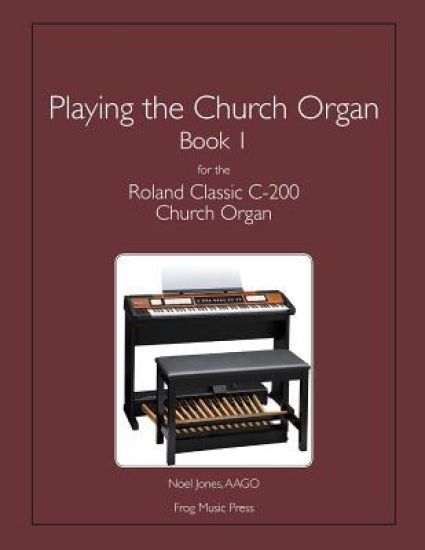
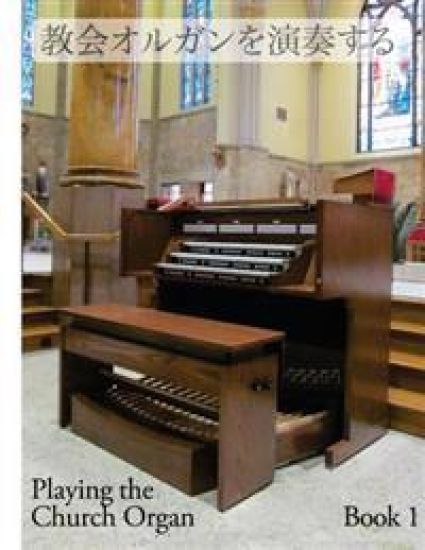
Book 1 of Playing the Church Organ(TM) series devoted to the C-200 Organist. The owner's manual that is shipped within tells you what the keyboard will do. Our book shows you how to play music using these features - organ music that you can play in a church service, including hymn.
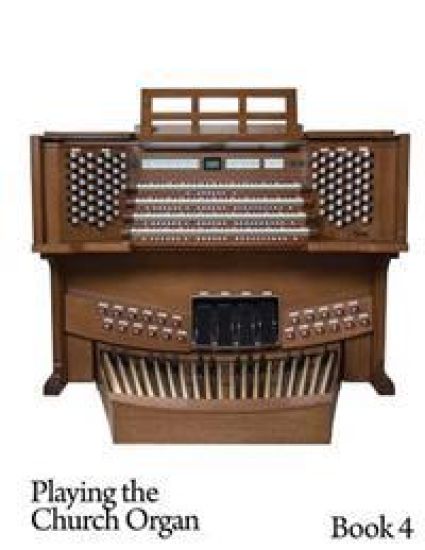
Book 4 - Operation of the Organ Controls Exploring USER and Library Access Stops. Here we study the controls of the organ that affect registrations. We fully examine organ stops and their use. As a reminder there are two large groups of stops on these organs, in addition to the stops whose names appear on the stop tablets or knobs, stops that are immediately available at all times to the organist. Voice Palette(TM) stops are assigned to stop tablets or drawknobs and tend to be from the same family as the stop name engraved on the face. They may be tonally finished by your technician or local person that does tonal finishing for your area. USER stops on the Roland and Rodgers organs and Library Access stops on Infinity Organ are available for you to choose, play and tonally finish as well. When you select them, you will find a menu that gives you the opportunity to make them sound exactly as you wish. And these changes may be saved to pistons. You may then voice it differently for another piece and save that to another piston. Trying stops out could become boring, but we've eliminated that possibility by including music that you will want to play. This book prepares you to play not only church services, but also recitals as we explore these stops with music by Pachelbel, Franck, Dubois and two Bachs. To conclude the book we've included showpieces by two Vierne's, Bo lmann, Lef bure-W ly - all for manuals only with optional pedals. Pachelbel may be known for one piece, but we are beginning to discover that his music may even rival Bach's for variety and depth. As we try a variety of stops we play variations on a theme by Pachelbel. Throughout we offer advice and guidance on playing the organ - choosing tempos, registrations, techniques and more that will make your playing shine. The organs also include some useful orchestral sounds - the Orchestral Oboe is absolutely lovely - and we cover using them as well. Playing the organ State Trumpet with the Orchestral Trumpet at a slightly lower volume level work nicely as well. Theater Organ USER & Library Access Stops Theatre organs are different than church organs, as they are winded at a higher pressure (around 10") than the pressures of church organs. Tremulant works letting a little air escape over and over again. On theatre instruments a lot of air escapes so the pitch drops and the volume drops, giving the organ a "sobbing" sound. These tremulants are built into the USER/Library Access theatre stops. You may enjoy playing these while using our Playing Silent Movies book lessons.
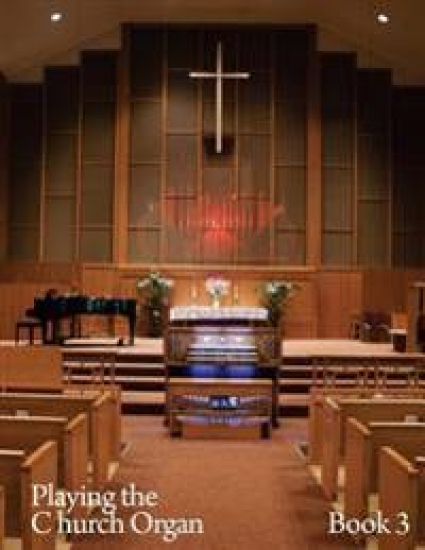
Book 3 - Building Stop Registrations Using Voice Palette(TM) Stops This book goes into depth into more than just using more stops, instead right along with the new stops you will be playing we investigate techniques of combining stops as well as developing organ technique. The organ can have just one keyboard, but this is sort of rare. Organs have two or more keyboards and pedalboards so that the organist is able to play more than one instrumental line and sound at a time. The organ is one of the few instruments that makes this possible. While pianists play, bringing out the bass melody, then echoing it in the treble, it's all using the same sound. Pianists must work hard to produce a difference in the tone while playing - an organist just chooses a new stop Here we play music that echos itself, music in which the organ accompanies itself, and that use two different instruments playing against each other. We also go into choosing tempos, stroking the keys for sparkling playing, using our secret weapon - silence - to accent notes and guides on how to choose stops by analyzing the music. Coupling - playing stops on two keyboards at one from just one keyboard - is used to build up the chorus sound of the organ, sort of like combining two choirs for a special performance. More clues to matching registrations are accompanied by music that makes it easy for you to see and hear how this all works. Pedals remain optional - and much of this music was written for organs without pedals as composers understood that organists in smaller churches also had money to buy music, so quite a bit of organ music appears in print with and without pedals. We dig deeper into what the stops are and how to use them as well as giving you all sorts of ideas for creating your own stop settings. By the end of this book you will understand the Voice Palette(TM) stops that are behind the engraved stop tablets or drawknobs of your organ. They are like having the ingredients for making a pasta dish not just Italian cooking, but also German, French and even for American macaroni and cheese. These organs today have stops representing many nationalities of organ building and with these organs you are able to dip into each style of organ building and experiment with registrations to make the music sound just as you expect it to, very easily. - 25 pieces written for the organ including 3 fugues, three settings of the choral "Jesu, Meine Freude" by Pachelbel, Bach and B hm and four settings by Walther. - Learning stop families and traditional stop combinations including the "cornet" are a lots easier when you can actually play and hear them. - "Scholarly Music" turns out to be fun to play when you are using the stops it was written for by the composer. Hear Bach how Bach heard it. - New music that will serve you and your church congregation for many years.