Kirjojen hintavertailu – 12 859 827 kirjaa ja 27 kauppaa

Kirjailija

Noelani Arista

Kirjat ja teokset yhdessä paikassa: 5 kirjaa, julkaisuja vuosilta 2019–2022, suosituimpiin kuuluu Against Reduction. Vertaile teosten hintoja ja tarkista saatavuus suomalaisista kirjakaupoista.

5 kirjaa

Kirjojen julkaisuvuodet: 2019–2022.

Indigenous Protocol and Artificial Intelligence

Indigenous Protocol and Artificial Intelligence

Jason Edward Lewis; Angie Abdilla; Noelani Arista

Lulu.com
2022
pokkari
This position paper on Indigenous Protocol (IP) and Artificial Intelligence (AI) is a starting place for those who want to design and create AI from an ethical position that centers Indigenous concerns. Each Indigenous community will have its own particular approach to the questions we raise in what follows. What we have written here is not a substitute for establishing and maintaining relationships of reciprocal care and support with specific Indigenous communities. Rather, this document offers a range of ideas to take into consideration when entering into conversations which prioritize Indigenous perspectives in the development of artificial intelligence. It captures multiple layers of a discussion that happened over 20 months, across 20 time zones, during two workshops, and between Indigenous people (and a few non-Indigenous folks) from diverse communities in Aotearoa, Australia, North America, and the Pacific. Indigenous ways of knowing are rooted in distinct, sovereign territories across the planet. These extremely diverse landscapes and histories have influenced different communities and their discrete cultural protocols over time. A single 'Indigenous perspective' does not exist, as epistemologies are motivated and shaped by the grounding of specific communities in particular territories. Historically, scholarly traditions that homogenize diverse Indigenous cultural practices have resulted in ontological and epistemological violence, and a flattening of the rich texture and variability of Indigenous thought. Our aim is to articulate a multiplicity of Indigenous knowledge systems and technological practices that can and should be brought to bear on the 'question of AI.' To that end, rather than being a unified statement this position paper is a collection of heterogeneous texts that range from design guidelines to scholarly essays to artworks to descriptions of technology prototypes to poetry. We feel such a somewhat multivocal and unruly format more accurately reflects the fact that this conversation is very much in an incipient stage as well as keeps the reader aware of the range of viewpoints expressed in the workshops.

Ka?ina Hana ?Oiwia me ka Waihona ?Ike Hakuhia

Ka?ina Hana ?Oiwia me ka Waihona ?Ike Hakuhia

Jason Edward Lewis; Angie Abdilla; Noelani Arista

Lulu.com
2022
pokkari
This position paper on Indigenous Protocol (IP) and Artificial Intelligence (AI) is a starting place for those who want to design and create AI from an ethical position that centers Indigenous concerns. Each Indigenous community will have its own particular approach to the questions we raise in what follows. What we have written here is not a substitute for establishing and maintaining relationships of reciprocal care and support with specific Indigenous communities. Rather, this document offers a range of ideas to take into consideration when entering into conversations which prioritize Indigenous perspectives in the development of artificial intelligence. It captures multiple layers of a discussion that happened over 20 months, across 20 time zones, during two workshops, and between Indigenous people (and a few non-Indigenous folks) from diverse communities in Aotearoa, Australia, North America, and the Pacific. Indigenous ways of knowing are rooted in distinct, sovereign territories across the planet. These extremely diverse landscapes and histories have influenced different communities and their discrete cultural protocols over time. A single 'Indigenous perspective' does not exist, as epistemologies are motivated and shaped by the grounding of specific communities in particular territories. Historically, scholarly traditions that homogenize diverse Indigenous cultural practices have resulted in ontological and epistemological violence, and a flattening of the rich texture and variability of Indigenous thought. Our aim is to articulate a multiplicity of Indigenous knowledge systems and technological practices that can and should be brought to bear on the 'question of AI.' To that end, rather than being a unified statement this position paper is a collection of heterogeneous texts that range from design guidelines to scholarly essays to artworks to descriptions of technology prototypes to poetry. We feel such a somewhat multivocal and unruly format more accurately reflects the fact that this conversation is very much in an incipient stage as well as keeps the reader aware of the range of viewpoints expressed in the workshops.

The Kingdom and the Republic

The Kingdom and the Republic

Noelani Arista

University of Pennsylvania Press
2021
pokkari
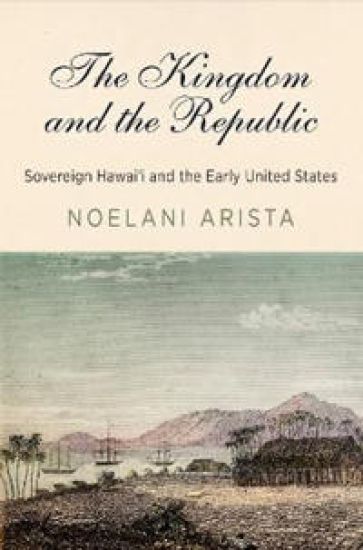
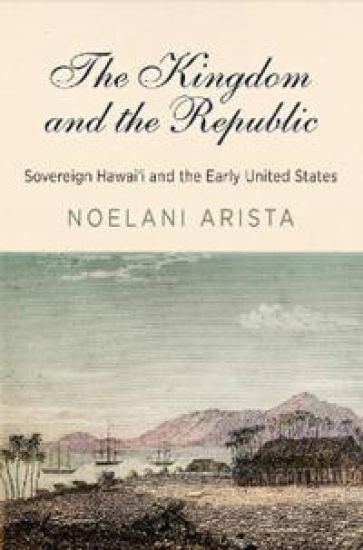
In 1823, as the first American missionaries arrived in Hawai'i, the archipelago was experiencing a profound transformation in its rule, as oral law that had been maintained for hundreds of years was in the process of becoming codified anew through the medium of writing. The arrival of sailors in pursuit of the lucrative sandalwood trade obliged the ali'i (chiefs) of the islands to pronounce legal restrictions on foreigners' access to Hawaiian women. Assuming the new missionaries were the source of these rules, sailors attacked two mission stations, fracturing relations between merchants, missionaries, and sailors, while native rulers remained firmly in charge. In The Kingdom and the Republic, Noelani Arista (Kanaka Maoli) uncovers a trove of previously unused Hawaiian language documents to chronicle the story of Hawaiians' experience of encounter and colonialism in the nineteenth century. Through this research, she explores the political deliberations between ali'i over the sale of a Hawaiian woman to a British ship captain in 1825 and the consequences of the attacks on the mission stations. The result is a heretofore untold story of native political formation, the creation of indigenous law, and the extension of chiefly rule over natives and foreigners alike. Relying on what is perhaps the largest archive of written indigenous language materials in North America, Arista argues that Hawaiian deliberations and actions in this period cannot be understood unless one takes into account Hawaiian understandings of the past-and the ways this knowledge of history was mobilized as a means to influence the present and secure a better future. In pursuing this history, The Kingdom and the Republic reconfigures familiar colonial histories of trade, proselytization, and negotiations over law and governance in Hawai'i.
The Kingdom and the Republic

The Kingdom and the Republic

Noelani Arista

University of Pennsylvania Press
2019
sidottu
In 1823, as the first American missionaries arrived in Hawai'i, the archipelago was experiencing a profound transformation in its rule, as oral law that had been maintained for hundreds of years was in the process of becoming codified anew through the medium of writing. The arrival of sailors in pursuit of the lucrative sandalwood trade obliged the ali'i (chiefs) of the islands to pronounce legal restrictions on foreigners' access to Hawaiian women. Assuming the new missionaries were the source of these rules, sailors attacked two mission stations, fracturing relations between merchants, missionaries, and sailors, while native rulers remained firmly in charge. In The Kingdom and the Republic, Noelani Arista (Kanaka Maoli) uncovers a trove of previously unused Hawaiian language documents to chronicle the story of Hawaiians' experience of encounter and colonialism in the nineteenth century. Through this research, she explores the political deliberations between ali'i over the sale of a Hawaiian woman to a British ship captain in 1825 and the consequences of the attacks on the mission stations. The result is a heretofore untold story of native political formation, the creation of indigenous law, and the extension of chiefly rule over natives and foreigners alike. Relying on what is perhaps the largest archive of written indigenous language materials in North America, Arista argues that Hawaiian deliberations and actions in this period cannot be understood unless one takes into account Hawaiian understandings of the past-and the ways this knowledge of history was mobilized as a means to influence the present and secure a better future. In pursuing this history, The Kingdom and the Republic reconfigures familiar colonial histories of trade, proselytization, and negotiations over law and governance in Hawai'i.