Kirjojen hintavertailu – 12 859 819 kirjaa ja 27 kauppaa

Kirjailija

Noenoe K. Silva

Kirjat ja teokset yhdessä paikassa: 4 kirjaa, julkaisuja vuosilta 2004–2017, suosituimpiin kuuluu Aloha Betrayed. Vertaile teosten hintoja ja tarkista saatavuus suomalaisista kirjakaupoista.

4 kirjaa

Kirjojen julkaisuvuodet: 2004–2017.

The Power of the Steel-tipped Pen

The Power of the Steel-tipped Pen

Noenoe K. Silva; Ngugi Wa Thiong'o

Duke University Press
2017
sidottu
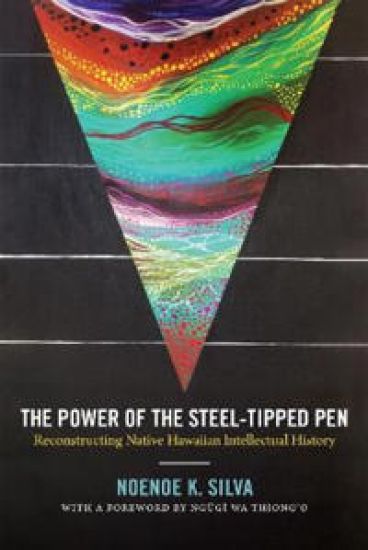
In The Power of the Steel-tipped Pen Noenoe K. Silva reconstructs the indigenous intellectual history of a culture where-using Western standards-none is presumed to exist. Silva examines the work of two lesser-known Hawaiian writers-Joseph Ho‘ona‘auao Kanepu‘u (1824–ca. 1885) and Joseph Moku‘ohai Poepoe (1852–1913)-to show how the rich intellectual history preserved in Hawaiian-language newspapers is key to understanding Native Hawaiian epistemology and ontology. In their newspaper articles, geographical surveys, biographies, historical narratives, translations, literatures, political and economic analyses, and poetic works, Kanepu‘u and Poepoe created a record of Hawaiian cultural history and thought in order to transmit ancestral knowledge to future generations. Celebrating indigenous intellectual agency in the midst of US imperialism, The Power of the Steel-tipped Pen is a call for the further restoration of native Hawaiian intellectual history to help ground contemporary Hawaiian thought, culture, and governance.
The Power of the Steel-tipped Pen

The Power of the Steel-tipped Pen

Noenoe K. Silva; Ngugi Wa Thiong'o

Duke University Press
2017
pokkari
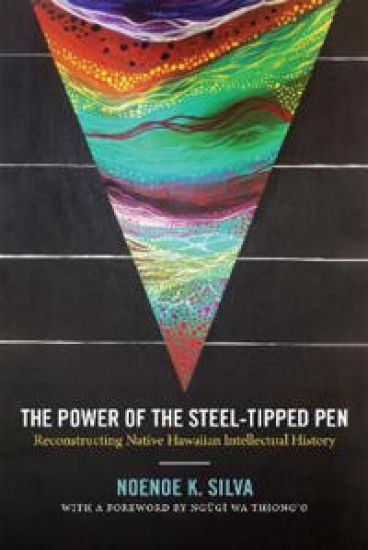
In The Power of the Steel-tipped Pen Noenoe K. Silva reconstructs the indigenous intellectual history of a culture where-using Western standards-none is presumed to exist. Silva examines the work of two lesser-known Hawaiian writers-Joseph Ho‘ona‘auao Kanepu‘u (1824–ca. 1885) and Joseph Moku‘ohai Poepoe (1852–1913)-to show how the rich intellectual history preserved in Hawaiian-language newspapers is key to understanding Native Hawaiian epistemology and ontology. In their newspaper articles, geographical surveys, biographies, historical narratives, translations, literatures, political and economic analyses, and poetic works, Kanepu‘u and Poepoe created a record of Hawaiian cultural history and thought in order to transmit ancestral knowledge to future generations. Celebrating indigenous intellectual agency in the midst of US imperialism, The Power of the Steel-tipped Pen is a call for the further restoration of native Hawaiian intellectual history to help ground contemporary Hawaiian thought, culture, and governance.
Aloha Betrayed

Aloha Betrayed

Noenoe K. Silva

Duke University Press
2004
sidottu
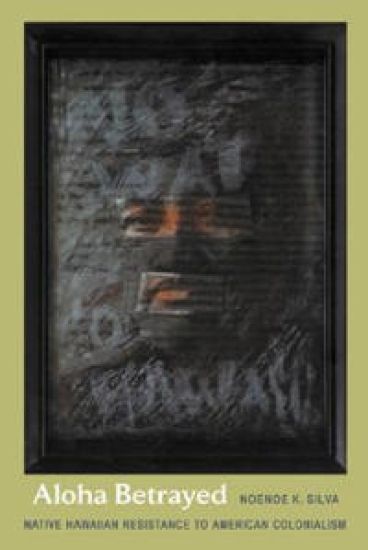
In 1897, as a white oligarchy made plans to allow the United States to annex Hawai'i, native Hawaiians organized a massive petition drive to protest. Ninety-five percent of the native population signed the petition, causing the annexation treaty to fail in the U. S. Senate. This event was unknown to many contemporary Hawaiians until Noenoe K. Silva rediscovered the petition in the process of researching this book. With few exceptions, histories of Hawai'i have been based exclusively on English-language sources. They have not taken into account the thousands of pages of newspapers, books, and letters written in the mother tongue of native Hawaiians. By rigorously analyzing many of these documents, Silva fills a crucial gap in the historical record. In so doing, she refutes the long-held idea that native Hawaiians passively accepted the erosion of their culture and loss of their nation, showing that they actively resisted political, economic, linguistic, and cultural domination. Drawing on Hawaiian-language texts, primarily newspapers produced in the nineteenth century and early twentieth, Silva demonstrates that print media was central to social communication, political organizing, and the perpetuation of Hawaiian language and culture. A powerful critique of colonial historiography, Aloha Betrayed provides a much-needed history of native Hawaiian resistance to American imperialism.
Aloha Betrayed

Aloha Betrayed

Noenoe K. Silva

Duke University Press
2004
pokkari
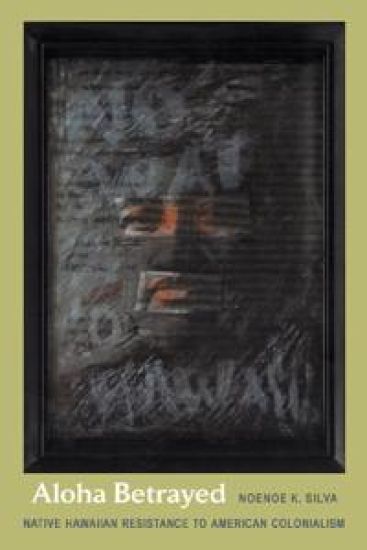
In 1897, as a white oligarchy made plans to allow the United States to annex Hawai'i, native Hawaiians organized a massive petition drive to protest. Ninety-five percent of the native population signed the petition, causing the annexation treaty to fail in the U. S. Senate. This event was unknown to many contemporary Hawaiians until Noenoe K. Silva rediscovered the petition in the process of researching this book. With few exceptions, histories of Hawai'i have been based exclusively on English-language sources. They have not taken into account the thousands of pages of newspapers, books, and letters written in the mother tongue of native Hawaiians. By rigorously analyzing many of these documents, Silva fills a crucial gap in the historical record. In so doing, she refutes the long-held idea that native Hawaiians passively accepted the erosion of their culture and loss of their nation, showing that they actively resisted political, economic, linguistic, and cultural domination. Drawing on Hawaiian-language texts, primarily newspapers produced in the nineteenth century and early twentieth, Silva demonstrates that print media was central to social communication, political organizing, and the perpetuation of Hawaiian language and culture. A powerful critique of colonial historiography, Aloha Betrayed provides a much-needed history of native Hawaiian resistance to American imperialism.