Kirjojen hintavertailu – 12 859 818 kirjaa ja 27 kauppaa
Kirjailija
Noor Nieftagodien
Kirjat ja teokset yhdessä paikassa: 5 kirjaa, julkaisuja vuosilta 2008–2014, suosituimpiin kuuluu Alexandra. Vertaile teosten hintoja ja tarkista saatavuus suomalaisista kirjakaupoista.
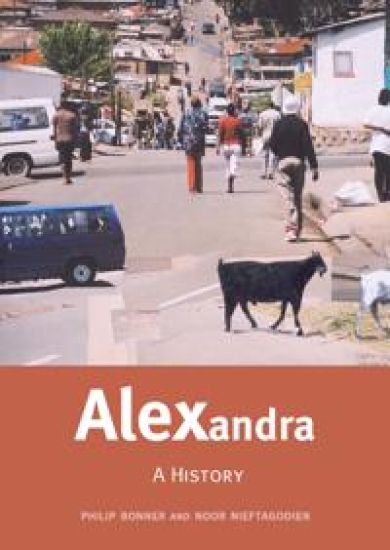
Alexandra: A History is a social and political history of one of South Africa's oldest townships. It begins with the founding of Alexandra as a freehold township in 1912 and traces its growth as a centre of black working-class life through the early years before the Nationalist government, through the struggles of the apartheid era and into the present day. Declared as a location for 'natives and coloureds', Alexandra became home to a diverse population where stand owners, tenants, squatters, hostel-dwellers, workers and migrants from every corner of the country converged to make a new life for themselves near the economic hub of Johannesburg. The stories of ordinary people are at the core of the township's history. Based on numerous life-history interviews with residents and previously unexamined archive sources, the book portrays in vivid detail the daily struggles and tribulations of the people of Alexandra. A significant focus is the rich history of political resistance, in which political organisations and civic movements organised bus boycotts, anti-removal and anti-pass campaigns, and mobilised for housing and a better life for the township's residents. But the book also tells the stories of daily life, of the making of urban cultures and of the infamous Spoilers and Msomi gangs. Over weekends Alexandra came alive as soccer matches, church services and shebeens vie for the attention of residents. Alexandra: A History highlights the social complexities of the township, which at times caused tension between different segments of the population. Above all else, despite a long history of hardship and adversity, the community spirit of the people of Alexandra, expressed in a fiercely loyal love of their township home, has repeatedly triumphed and endured.
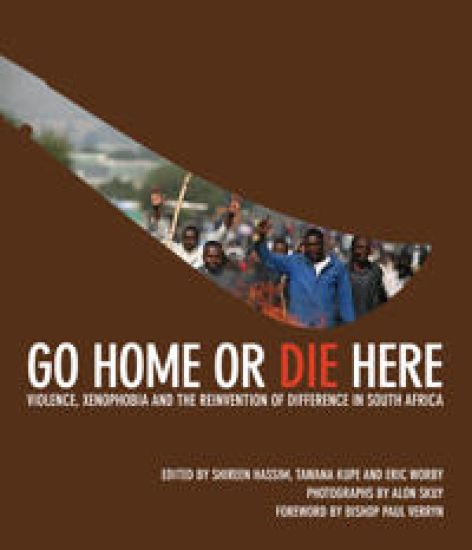
Shireen Hassim; Tawana Kupe; Eric Worby; Paul Verryn; Alex Eliseev; Rolf Maruping; Daryl Glaser; Noor Nieftagodien; Stephen Gelb; Devan Pillay; Loren Landau; David Coplan; Julia Hornberger; Melinda Silverman; Tanya Zack; Anton Harber; Cathi Albertyn; Andile Mngxitama; Pumla Dineo Gqola; Véronique Tadjo
The xenophobic attacks that started in Alexandra, Johannesburg in May 2008 before quickly spreading around the country caused an outcry across the world and raised many fundamental questions: Of what profound social malaise is xenophobia – and the violence that it inspires – a symptom? Have our economic and political choices created new forms of exclusion that fuel anger and distrust? What consequences does the emergence of xenophobia hold for the idea of an equal, non-racial society as symbolised by a democratic South Africa? On 28 May 2008 the Faculty of Humanities in the University of the Witwatersrand, Johannesburg convened an urgent colloquium that focused on searching for short and long-term solutions. Nearly twenty individuals – mostly Wits academics from a variety of disciplines, but also two student leaders, a journalist and a bishop – addressed the unfolding violence in ways that were conversant with the moment, yet rooted in scholarship and ongoing research. Go Home or Die Here emanates directly from the colloquium. It hopes to make sense of the nuances and trajectories of building a democratic society out of a deeply divided and conflictual past, in the conditions of global recession, heightening inequalities and future uncertainty. The authors hoped to pose questions that would lead both to research and to more informed, reflective forms of public action. With extensive photographs by award-winning photographer Alon Skuy, who covered the violence for The Times newspaper, the volume is passionate and engaged, and aims to stimulate reflection, debate and activism among concerned members of a broad public.
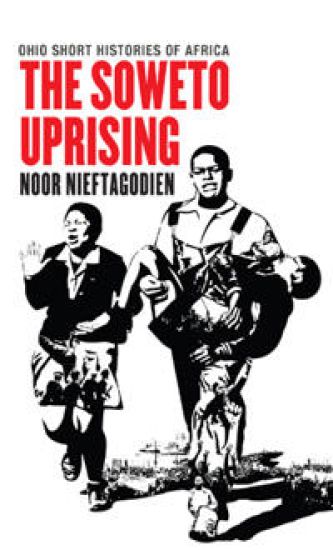
The Soweto uprising was a true turning point in South Africa's history. Even to contemporaries, it seemed to mark the beginning of the end of apartheid. This compelling book examines both the underlying causes and the immediate factors that led to this watershed event. It looks at the crucial roles of Black Consciousness ideology and nascent school-based organizations in shaping the character and form of the revolt. What began as a peaceful and coordinated demonstration rapidly turned into a violent protest when police opened fire on students. This short history explains the uprising and its aftermath from the perspective of its main participants, the youth, by drawing on a rich body of oral histories.
William Beinart; Julia Charlton; David Coplan; Peter Delius; Jacob Dlamini; Patrick Harries; Michelle Hay; Deborah James; Sekibakiba Peter Lekgoathi; Jock McCulloch; Anitra Nettleton; Noor Nieftagodien; Laura Phillips; Dinah Rajak; Fiona Rankin-Smith; Micah Reddy; Jonny Steinberg
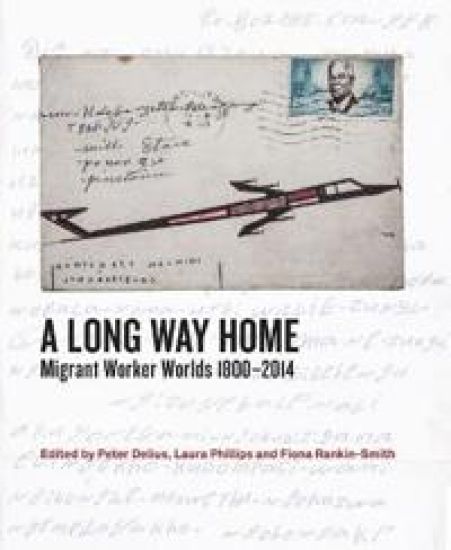
In no other society in the world have urbanisation and industrialisation been as comprehensively based on migrant labour as in South Africa. Rather than focusing on the well-documented narrative of displacement and oppression, A Long Way Home captures the humanity, agency and creative modes of self-expression of the millions of workers who helped to build and shape modern South Africa. The book spans a three-hundred-year history beginning with the exportation of slave labour from Mozambique in the eighteenth century and ending with the strikes and tensions on the platinum belt in recent years. It shows not only the age-old mobility of African migrants across the continent but also, with the growing demand for labour in the mining industry, the importation of Chinese slaves. The essays and visual materials traverse homesteads, chiefdoms and mining hostels in their portrayal of migrant workers’ and their families’ attempts to maintain contact across large distances and uphold their rural customs, traditions and rituals in new spaces and locations. Together, they provide multiple perspectives on the lived experience of migrant labourers and celebrate their extraordinary journeys. A Long Way Home was conceived during the planning of an art exhibition entitled `Ngezinyawo: Migrant Journeys’ at the Wits Art Museum. The interdisciplinary nature of the contributions and the extraordinary collection of images selected to complement and expand on the text make this a unique collection.
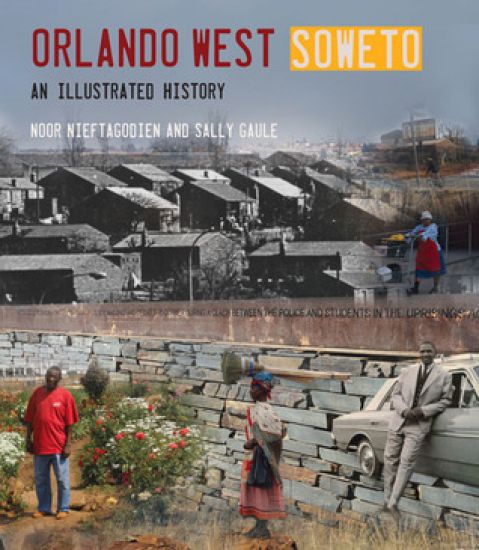
A history of the famous Orlando township Until the end of the First World War, urban growth in Johannesburg proceeded unevenly and haphazardly, but under the impact of a wave of militant struggles by black workers and in the context of the devastating impact of the 1918 influenza epidemic, the state became determined to better manage the movement of Africans into the urban areas and to place them in properly controlled locations. The promulgation of the Native (Urban) Areas Act of 1923 was intended to meet these objectives. The Act was a hybrid piece of legislation. On the one hand, it espoused the principles enunciated by the Stallard Commission of 1922, which had infamously declared that an African 'should only be allowed into the urban areas, which are essentially the white man's creation, when he is willing to enter and minister to the needs of the white man, and should depart therefrom when he ceases so to minister'. On the other hand, when it empowered local authorities to set aside land for black residential purposes, it recognised the need to create conditions for the settlement of an urban African population in order to provide a reliable supply of labour to secondary industry. The growing demand for housing led the government to establish Orlando (named after the chairman of the Native Affairs Committee, Edwin Orlando Leake) in 1931, when thousands of African families were evicted from urban slums in and around the city centre and moved there. The authorities described this as a 'model native township' that was supposedly planned along the lines of a garden city. The new location, it promised, would be characterised by tree-lined streets, business opportunities and recreation facilities. Reflecting the views of a somewhat conservative section of the African urban elite, the popular African newspaper Bantu World predicted on 14 May 1932 that the new township 'will undoubtedly be somewhat of a paradise [that] will enhance the status of the Bantu within the ambit of progress and civilisation'. Orlando West, Soweto illuminates the genesis of Orlando township and its well-known subsequent history, which is inextricably linked with the lives of prominent South Africans such as Nelson Mandela and Desmond Tutu, amongst many others. A beautiful photographic essay complements the testimony from residents, who describe the way things were, and the way they are now, in the heart of Soweto, South Africa's most iconic African township.