
Kirjojen hintavertailu – 12 873 949 kirjaa ja 26 kauppaa

Kirjailija

Noor Shaker

Kirjat ja teokset yhdessä paikassa: 2 kirjaa, julkaisuja vuosilta 2016–2018, suosituimpiin kuuluu Procedural Content Generation in Games. Vertaile teosten hintoja ja tarkista saatavuus suomalaisista kirjakaupoista.

2 kirjaa

Kirjojen julkaisuvuodet: 2016–2018.

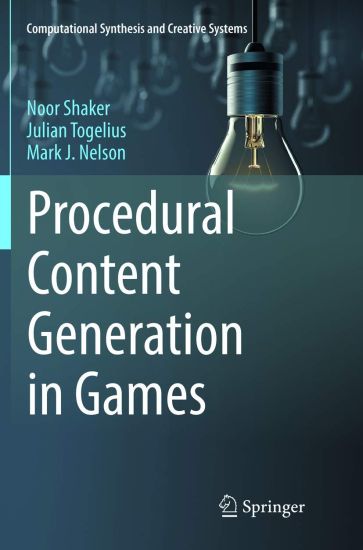
Procedural Content Generation in Games

Procedural Content Generation in Games

Noor Shaker; Julian Togelius; Mark J. Nelson

Springer International Publishing AG
2018
nidottu

Halvin toimitettuna 39,30 €

This book presents the most up-to-date coverage of procedural content generation (PCG) for games, specifically the procedural generation of levels, landscapes, items, rules, quests, or other types of content. Each chapter explains an algorithm type or domain, including fractal methods, grammar-based methods, search-based and evolutionary methods, constraint-based methods, and narrative, terrain, and dungeon generation. The authors are active academic researchers and game developers, and the book is appropriate for undergraduate and graduate students of courses on games and creativity; game developers who want to learn new methods for content generation; and researchers in related areas of artificial intelligence and computational intelligence.
Procedural Content Generation in Games

Procedural Content Generation in Games

Noor Shaker; Julian Togelius; Mark J. Nelson

Springer International Publishing AG
2016
sidottu

Halvin toimitettuna 47,30 €

This book presents the most up-to-date coverage of procedural content generation (PCG) for games, specifically the procedural generation of levels, landscapes, items, rules, quests, or other types of content. Each chapter explains an algorithm type or domain, including fractal methods, grammar-based methods, search-based and evolutionary methods, constraint-based methods, and narrative, terrain, and dungeon generation. The authors are active academic researchers and game developers, and the book is appropriate for undergraduate and graduate students of courses on games and creativity; game developers who want to learn new methods for content generation; and researchers in related areas of artificial intelligence and computational intelligence.