Kirjojen hintavertailu – 12 859 818 kirjaa ja 27 kauppaa

Kirjailija

Norberto Bobbio

Kirjat ja teokset yhdessä paikassa: 21 kirjaa, julkaisuja vuosilta 1987–2022, suosituimpiin kuuluu Fronesis 2. Utopier. Vertaile teosten hintoja ja tarkista saatavuus suomalaisista kirjakaupoista.

21 kirjaa

Kirjojen julkaisuvuodet: 1987–2022.

Fronesis 2. Utopier

Fronesis 2. Utopier

Barbara Taylor; Norberto Bobbio; Jean Baudrillard; Michel Foucault; Charlotte Perkins Gilman; Walter Benjamin; William Morris; Frida Stéenhoff

Fronesis
2016
lehtivihko, moniste
Berlinmurens fall tycktes markera slutet för den kommunistiska utopin, men samtidigt bars förändringen fram av en utopisk energi och drömmar om ett pluralistiskt samhälle utan förtryck. Det nya årtusendets inträde har samtidigt setts som inledningen på en ny tid, vilket gett näring till utopiska spekulationer. Fronesis nr 2 befinner sig i skärningspunkten mellan verklighet och utopi. Det handlar om den socialistiska idétraditionens förhållande till det utopiska tänkandet, om feministiska utopier, om det tidiga 1900-talets utopiska tanke om att skapa ”en ny människa” med mera. Innehåll i Fronesis nr 2 (138 sidor): Norberto Bobbio: Den förvridna utopins fall Petra Hall och Sara Winnfors: I glappet mellan möjligt och omöjligt Per Månson: Utopiernas död: Har socialismen någon framtid? Barbara Taylor: Den socialistiska feminismen: utopi eller vetenskap? Jakob Norberg: Inledning till Walter Benjamins ”Program för en proletär barnteater” Walter Benjamin: Program för en proletär barnteater Ulrika Holgersson: Frida Stéenhoffs feministiska utopi Frida Stéenhoff: Feminismens moral Jenny Lindblad: Herland – Den litterära feministiska utopin Charlotte Perkins Gilman: Våra förhållanden och deras Sara Winnfors: Arkitektur och makt Ur Acceptera-manifestet: Staden William Morris: Om den dekorativa konstens ursprung Michel Foucault: Rum, makt och kunskap Richard Saage: Reflektioner över den politiska utopins framtid Jean Baudrillard: I skuggan av millenniet, eller Det ovissa år 2000 Blå Tåget: Nyårsafton
Højre og venstre

Højre og venstre

Norberto Bobbio

Gyldendal
2019
nidottu
“Eksisterer højre og venstre stadig? Og hvis de eksisterer og går i stilling mod hinanden, hvordan kan man så hævde, at de fuldstændig har mistet deres mening? Og hvis de stadig har én, da hvilken?” Det er – meget enkelt sagt – disse tre spørgsmål, som filosoffen Norberto Bobbio stiller og besvarer i det lille, men indholdsmættede hovedværk Højre og venstre – årsager til og betydning af en politisk skelnen. Med venstrefløjens sammenbrud, Berlinmurens fald, Sovjetunionens opløsning og 90’ernes politisk-ideologiske virvar satte Norberto Bobbio sig for at “rehabilitere” det klassiske politiske begrebspar. Begge politiske grundholdninger har mange nuancer, som Bobbio loyalt gør opmærksom på i sin logiske og alt andet end politisk missionerende argumentation. Højre og venstre – årsager til og betydning af en politisk skelnen, rejste ikke alene i Italien, men overalt, stormfulde debatter, da den udkom første gang i 1993. Bogen genudgives i Hans Reitzels Forlags serie Klassikere og udkom første gang på dansk i 1995. Noberto Bobbio (1909-2004) var italiensk filosofiprofessor ved universitetet i Torino og en betydningsfuld kulturskribent på det sociale og politiske område.
Ideological Profile of Twentieth-Century Italy

Ideological Profile of Twentieth-Century Italy

Norberto Bobbio

Princeton University Press
2016
sidottu
Anyone interested in the entire sweep of political thought over the last hundred years will find in Norberto Bobbio's Ideological Profile of Twentieth-Century Italy a masterful, thought-provoking guide. Home to the largest communist party in a democratic society, Italy has been a unique place politically, one where Christian democrats, liberals, fascists, socialists, communists, and others have co-existed in sizable numbers. In this book, Bobbio, who himself played an outstanding role in the development of Italian civic culture, follows each of the major ideologies, explaining how they developed, describing the key actors, and considering the legacies they left to political culture. He wrote Ideological Profile in 1968 to explain from a personal perspective the history behind that decade's tumultuous politics. Bobbio's defense of democracy and critique of capitalism are among the themes that will particularly interest American readers of this updated edition, the first to appear in English. Beginning in the late nineteenth century with positivism and Marxism, Bobbio next presents the ideological currents that developed before the outbreak of the First World War: Catholic, socialist, irrational and anti-democratic thought, the reaction against positivism, and the thinking of Benedetto Croce. After discussing the impact of the war, the author turns to the revolutionary-reactionary polarization of the postwar period and the ideology of fascism. The final chapters consider Croce's opposition to fascism and the ideals of the resistance and conclude with the post-Second World War "Years of Involvement." Originally published in 1995. The Princeton Legacy Library uses the latest print-on-demand technology to again make available previously out-of-print books from the distinguished backlist of Princeton University Press. These editions preserve the original texts of these important books while presenting them in durable paperback and hardcover editions. The goal of the Princeton Legacy Library is to vastly increase access to the rich scholarly heritage found in the thousands of books published by Princeton University Press since its founding in 1905.
Ideological Profile of Twentieth-Century Italy

Ideological Profile of Twentieth-Century Italy

Norberto Bobbio

Princeton University Press
2014
pokkari
Anyone interested in the entire sweep of political thought over the last hundred years will find in Norberto Bobbio's Ideological Profile of Twentieth-Century Italy a masterful, thought-provoking guide. Home to the largest communist party in a democratic society, Italy has been a unique place politically, one where Christian democrats, liberals, fascists, socialists, communists, and others have co-existed in sizable numbers. In this book, Bobbio, who himself played an outstanding role in the development of Italian civic culture, follows each of the major ideologies, explaining how they developed, describing the key actors, and considering the legacies they left to political culture. He wrote Ideological Profile in 1968 to explain from a personal perspective the history behind that decade's tumultuous politics. Bobbio's defense of democracy and critique of capitalism are among the themes that will particularly interest American readers of this updated edition, the first to appear in English. Beginning in the late nineteenth century with positivism and Marxism, Bobbio next presents the ideological currents that developed before the outbreak of the First World War: Catholic, socialist, irrational and anti-democratic thought, the reaction against positivism, and the thinking of Benedetto Croce. After discussing the impact of the war, the author turns to the revolutionary-reactionary polarization of the postwar period and the ideology of fascism. The final chapters consider Croce's opposition to fascism and the ideals of the resistance and conclude with the post-Second World War "Years of Involvement." Originally published in 1995. The Princeton Legacy Library uses the latest print-on-demand technology to again make available previously out-of-print books from the distinguished backlist of Princeton University Press. These editions preserve the original texts of these important books while presenting them in durable paperback and hardcover editions. The goal of the Princeton Legacy Library is to vastly increase access to the rich scholarly heritage found in the thousands of books published by Princeton University Press since its founding in 1905.
Rechts und Links

Rechts und Links

Norberto Bobbio

Wagenbach Klaus GmbH
2006
pokkari
Rechts und links, Freiheit oder Gleichheit - welche Bedeutung und welchen Sinn haben diese Begriffe heute noch? Wer den Unterschied von rechts und links leugnet, gibt die Idee einer Gesellschaft mit gleichen Rechten auf, stiehlt sich aus der Spannung zwischen Freiheit und Gleichheit, die seit der Französischen Revolution besteht. Norberto Bobbio, der große politische Denker Italiens, hat mit 'Rechts und links' einen in seiner Klarheit unübertroffenen Klassiker der politischen Philosophie geschrieben. ? Für diese italienische Einmischung, mit Lust am Demokratischen, mit Leidenschaft gegen die Denunziation von Demokratie als Gleichmacherei, kann man nur dankbar sein.? Die Zeit
Liberalism and Democracy

Liberalism and Democracy

Norberto Bobbio

Verso Books
2006
nidottu
Liberalism and democracy have long been assumed to exist in a complementary relationship, if not always an entirely easy one. This book scrupulously investigates the reason for this alliance and the sources of its tensions, providing a lucid and succinct introduction to some of the subject's central concepts and concerns.
The Idea of the Republic

The Idea of the Republic

Norberto Bobbio; Maurizio Viroli

Polity Press
2003
nidottu
In this lively and engaging book, Norberto Bobbio, the distinguished contemporary Italian philosopher, and the political theorist Maurizio Viroli, explore a range of themes relating to the idea of the Republic and some of the major political and ethical issues of the day. A lively discussion of politics and political theory by one of the world’s most distinguished political theorists and philosophers. Provides an excellent introduction to the work of Bobbio for the newcomer. Explains the idea of the Republic and some of the major political and ethical themes of the day. Demonstrates philosophy in action, with a breadth of reference including Machiavelli, Hobbes, Locke, Kant, Rousseau, Pettit and Skinner.
The Idea of the Republic

The Idea of the Republic

Norberto Bobbio; Maurizio Viroli

Polity Press
2003
sidottu
In this lively and engaging book, Norberto Bobbio, the distinguished contemporary Italian philosopher, and the political theorist Maurizio Viroli, explore a range of themes relating to the idea of the Republic and some of the major political and ethical issues of the day. A lively discussion of politics and political theory by one of the world’s most distinguished political theorists and philosophers. Provides an excellent introduction to the work of Bobbio for the newcomer. Explains the idea of the Republic and some of the major political and ethical themes of the day. Demonstrates philosophy in action, with a breadth of reference including Machiavelli, Hobbes, Locke, Kant, Rousseau, Pettit and Skinner.
Old Age and Other Essays

Old Age and Other Essays

Norberto Bobbio

Polity Press
2001
sidottu
This book by one of Italy's oldest and wisest intellectuals is a philosophical and personal meditation on ageing. The question of old age has preoccupied writers from Cicero to Améry, but in this volume Norberto Bobbio produces an account that is specific to our times. Born in 1909, Bobbio has lived through the major events of the past century, and his experiences of Fascism, Communism and the Cold War lend his reflections a melancholy that distinguishes them from earlier eulogies on old age and death. Bobbio's conclusions are often sobering, yet his investigation into memory and mortality is written with both humour and emotion. In the opening chapter, Bobbio reassesses the notion of progress from the perspective of an old man. Arguing for an understanding of historical change as the transfer between generations, Bobbio explains how the elderly are increasingly marginalized in contemporary society. Referring to the traditional idea of old age as the 'age of wisdom', Bobbio argues that our ever-accelerating technological progress has dramatically shifted the power of knowledge from old to young. This discussion of old age as a social problem is accompanied by a reflection on old age as a personal predicament. In his elegant and lucid prose, Bobbio confronts the facts of decrepitude and death. In taking stock of his life, he argues once again for the importance of democracy and human rights. This is a beautifully written book that will be of great interest to the academic and general reader alike. Its intellectual content renders it of particular value to students in the fields of philosophy, politics and the social sciences.
In Praise of Meekness

In Praise of Meekness

Norberto Bobbio; Teresa Chataway

JOHN WILEY AND SONS LTD
2000
nidottu
In this important volume, the leading political theorist and philosopher Norberto Bobbio confronts some of the most enduring moral questions of our time. Written over the last two decades of the twentieth century, the essays in this volume develop some of the central themes in Bobbio's moral and political philosophy. They also reflect his longstanding civil commitment to liberty, democracy, peace and equality. The opening essay, 'In praise of meekness', analyses the virtue of meekness in its individual and social aspects. It identifies the meek person with the nonviolent, and meekness with the refusal to exercise violence against anyone. Meekness, therefore, is a non-political virtue - it is the antithesis of politics. The volume also addresses the persistent classical problem of 'reason of state', as well as the more contemporary questions of tolerance and truth, racism, prejudice and ethics. The problem of evil in the modern world is also discussed. All the essays display the sensitivity and depth of understanding that characterize Bobbio's writings on current debates and historical controversies. The book will be invaluable reading for all students and scholars of politics, as well as those who are interested in the debates surrounding morals, ethics and law.
In Praise of Meekness

In Praise of Meekness

Norberto Bobbio; Teresa Chataway

Polity Press
2000
sidottu
In this important volume, the leading political theorist and philosopher Norberto Bobbio confronts some of the most enduring moral questions of our time. Written over the last two decades of the twentieth century, the essays in this volume develop some of the central themes in Bobbio's moral and political philosophy. They also reflect his longstanding civil commitment to liberty, democracy, peace and equality. The opening essay, 'In praise of meekness', analyses the virtue of meekness in its individual and social aspects. It identifies the meek person with the nonviolent, and meekness with the refusal to exercise violence against anyone. Meekness, therefore, is a non-political virtue - it is the antithesis of politics. The volume also addresses the persistent classical problem of 'reason of state', as well as the more contemporary questions of tolerance and truth, racism, prejudice and ethics. The problem of evil in the modern world is also discussed. All the essays display the sensitivity and depth of understanding that characterize Bobbio's writings on current debates and historical controversies. The book will be invaluable reading for all students and scholars of politics, as well as those who are interested in the debates surrounding morals, ethics and law.
Democracy and Dictatorship

Democracy and Dictatorship

Norberto Bobbio

Polity Press
1997
nidottu
In this important volume Norberto Bobbio examines some of the central themes of political theory and presents a systematic exposition of his views. With great astuteness and profound scholarship, Bobbio unfolds the elements for a general theory of politics. Bobbio's wide-ranging argument is focused on four themes: the distinction between the public and the private; the concept of civil society; differing conceptions of the state and differing ways of understanding the legitimacy of state power; and the relation between democracy and dictatorship. Bobbio's discussion draws on a wealth of theoretical and historical material, from Plato, Aristotle, Hobbes and Locke to Marx, Weber, Habermas and Foucault. By analysing the development of different languages of politics in relation to changing social and historical contexts, Bobbio deepens our understanding of the concepts we use to describe and evaluate modern political systems.
Left and Right

Left and Right

Norberto Bobbio

Polity Press
1996
nidottu
Following the collapse of communism and the decline of Marxism, some commentators have claimed that we have reached the 'end of history' and that the distinction between Left and Right can be forgotten. In this book - which was a tremendous success in Italy - Norberto Bobbio challenges these views, arguing that the fundamental political distinction between Left and Right, which has shaped the two centuries since the French Revolution, has continuing relevance today. Bobbio explores the grounds of this elusive distinction and argues that Left and Right are ultimately divided by different attitudes to equality. He carefully defines the nature of equality and inequality in relative rather than absolute terms. Left and Right is a timely and persuasively argued account of the basic parameters of political action and debate in the modern world - parameters which have remained constant despite the pace of social change. The book will be widely read and, as in Italy, it will have an impact far beyond the academic domain.
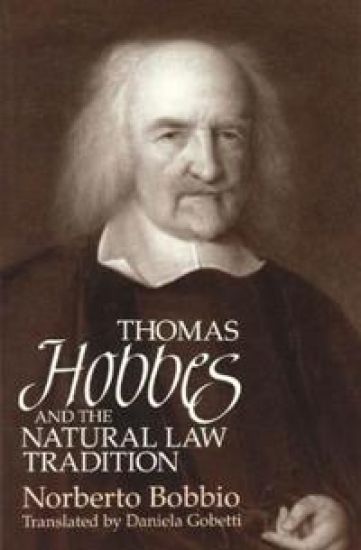
Thomas Hobbes and the Natural Law Tradition

Thomas Hobbes and the Natural Law Tradition

Norberto Bobbio

University of Chicago Press
1993
nidottu
Pre-eminent among European political philosophers, Norberto Bobbio has throughout his career turned to the political theory of Thomas Hobbes. Gathered here for the first time are the most important of his essays which together provide both a valuable introduction to Hobbes's thought and a fresh understanding of Hobbes's place in the theory of modern politics. Tracing Hobbes's work through De Cive and Leviathan, Bobbio identifies the philosopher's relation to the tradition of natural law. That Hobbes must now be understood in both this tradition as well as in the seemingly contradictory positivist tradition becomes clear for the first time in Bobbio's account. Bobbio also demonstrates that Hobbes cannot be easily labelled "liberal" or "totalitarian"; in Bobbio's provocative analysis of Hobbes's justification of the state, Hobbes emerges as a true conservative. Though his primary concern is to reconstruct the inner logic of Hobbes's thought, Bobbio is also attentive to the philosopher's biography and weaves into his analysis details of Hobbes's life and world--his exile in France, his relation with the Mersenne circle, his disputes with Anglican bishops, and accusations of heresy leveled against him. The result is a revealing, thoroughly new portrait of the first theorist of the modern state.
Which Socialism?

Which Socialism?

Norberto Bobbio

Polity Press
1988
nidottu
Can democracy provide a path to socialism? Can civil rights and democratic institutions be protected and developed in a socialist society? Does our view of the nature and value of democracy affect our understanding of socialism itself? In a world with regimes which profess to be socialist, which socialism is worth defending today? In this powerful and provocative volume, Norberto Bobbio re-examines the uneasy relation between socialism and democracy. He argues that Marxist theory has failed to provide an adequate account of the nature and role of the state in socialist society and defends the concept of representative democracy. Bobbio's arguments sparked off a lively debate in Italy; this volume includes a reply by Antonio Negri. The volume also includes an essay by Bobbio on Marxism and international relations, and his classic text on Gramsci's conception of civil society.