
Kirjojen hintavertailu – 12 903 724 kirjaa ja 27 kauppaa

Kirjailija

Noreen Yazejian

Kirjat ja teokset yhdessä paikassa: 3 kirjaa, julkaisuja vuosilta 2017–2021, suosituimpiin kuuluu Infant/Toddler Environment Rating Scale (ITERS-3). Vertaile teosten hintoja ja tarkista saatavuus suomalaisista kirjakaupoista.

3 kirjaa

Kirjojen julkaisuvuodet: 2017–2021.

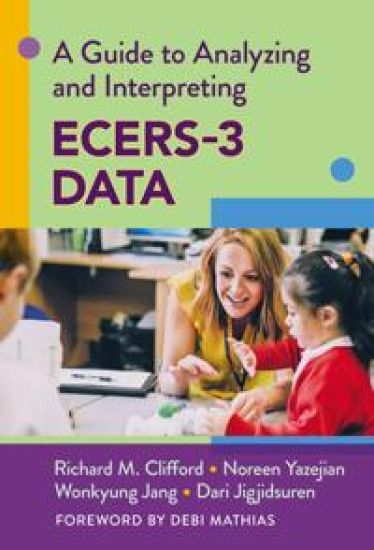
A Guide to Analyzing and Interpreting ECERS-3 Data

A Guide to Analyzing and Interpreting ECERS-3 Data

Richard M. Clifford; Noreen Yazejian; Wonkyung Jang; Dari Jigjidsuren

Teachers' College Press
2021
sidottu
Early childhood is a crucial stage in a child's life, and aspects of the environment in the physical, social-emotional, cognitive, and health and safety domains all play important roles in shaping children's development during these early years. Having a valid and reliable measure of the quality of these aspects of children's care settings is critical. The Early Childhood Environment Rating Scale (ECERS-3) is the leading research-based instrument for examining these influential global factors that directly impact children in early childhood environments. In this new guide, readers will find an in-depth description of both the conceptual model underlying the ECERS-3 and innovative ways of analyzing data for a fuller understanding of what can be done with the scale and why it is integral to the evaluation of early care and education. The authors analyze a large database of classroom observations to help ECERS-3 users better understand, interpret, and utilize their own findings. Readers will also see how components of their ECERS-3 data relate to one another, within and across subscales, and within the scale as a whole. A Guide to Analyzing and Interpreting ECERS-3 Data will assist program directors, agency administrators, preK–K teaching coaches/mentors, school principals, researchers, and others who use the ECERS-3 to more successfully document, interpret, and analyze the quality of essential influential factors in an early learning setting. This resource will help guide program improvement initiatives with insight into what is needed for children's development and learning. Book Features: Provides a framework for thinking about how early childhood care and education learning environments fit into the larger picture of influences on children's development. Presents a theory of change that combines understanding how children learn and develop with how early education and care affect long-term outcomes. Analyzes what ECERS-3 data looks like for a large sample of classrooms and by different child and teacher characteristics. Includes full color tables and figures illuminating the data analysis of the classroom observations.
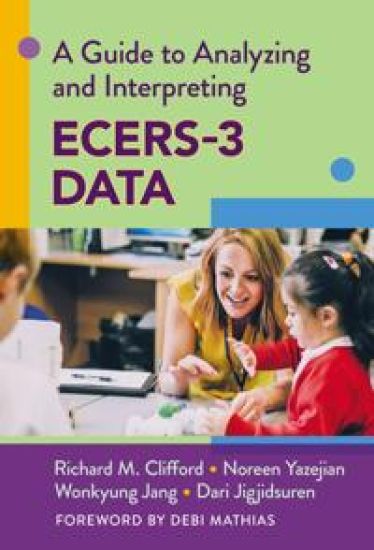
A Guide to Analyzing and Interpreting ECERS-3 Data

A Guide to Analyzing and Interpreting ECERS-3 Data

Richard M. Clifford; Noreen Yazejian; Wonkyung Jang; Dari Jigjidsuren

Teachers' College Press
2021
nidottu
Early childhood is a crucial stage in a child's life, and aspects of the environment in the physical, social-emotional, cognitive, and health and safety domains all play important roles in shaping children's development during these early years. Having a valid and reliable measure of the quality of these aspects of children's care settings is critical. The Early Childhood Environment Rating Scale (ECERS-3) is the leading research-based instrument for examining these influential global factors that directly impact children in early childhood environments. In this new guide, readers will find an in-depth description of both the conceptual model underlying the ECERS-3 and innovative ways of analyzing data for a fuller understanding of what can be done with the scale and why it is integral to the evaluation of early care and education. The authors analyze a large database of classroom observations to help ECERS-3 users better understand, interpret, and utilize their own findings. Readers will also see how components of their ECERS-3 data relate to one another, within and across subscales, and within the scale as a whole. A Guide to Analyzing and Interpreting ECERS-3 Data will assist program directors, agency administrators, preK–K teaching coaches/mentors, school principals, researchers, and others who use the ECERS-3 to more successfully document, interpret, and analyze the quality of essential influential factors in an early learning setting. This resource will help guide program improvement initiatives with insight into what is needed for children's development and learning. Book Features: Provides a framework for thinking about how early childhood care and education learning environments fit into the larger picture of influences on children's development. Presents a theory of change that combines understanding how children learn and develop with how early education and care affect long-term outcomes. Analyzes what ECERS-3 data looks like for a large sample of classrooms and by different child and teacher characteristics. Includes full color tables and figures illuminating the data analysis of the classroom observations.

Infant/Toddler Environment Rating Scale (ITERS-3)

Infant/Toddler Environment Rating Scale (ITERS-3)

Thelma Harms; Debby Cryer; Richard M. Clifford; Noreen Yazejian

Teachers' College Press
2017
kierre

Halvin toimitettuna 37,70 €

This revised and updated assessment tool focuses on the full range of needs of infants and toddlers up to 36 months of age and provides a framework for improving program quality. ITERS-3 assesses both environmental provisions and teacher-child interactions that affect the broad developmental milestones of infants and toddlers, including: language, cognitive, social-emotional and physical development as well as concern for health and safety.