Kirjojen hintavertailu – 12 859 829 kirjaa ja 27 kauppaa

Kirjailija

Norman Cigar

Kirjat ja teokset yhdessä paikassa: 12 kirjaa, julkaisuja vuosilta 2011–2023, suosituimpiin kuuluu The Historical Chronicle of Abu ?Abdallah Ma?ammad Ibn Ibrahim al-Dukkali. Vertaile teosten hintoja ja tarkista saatavuus suomalaisista kirjakaupoista.

12 kirjaa

Kirjojen julkaisuvuodet: 2011–2023.

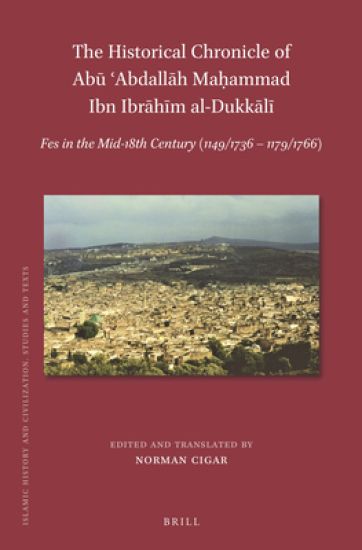
The Historical Chronicle of Abu ?Abdallah Ma?ammad Ibn Ibrahim al-Dukkali
Ibn Ibrahim al-Dukkali’s Historical Chronicle, edited and translated by Norman Cigar, is a valuable contemporary manuscript source from Morocco’s poorly documented and seldom-studied mid-eighteenth century, a period marked by weak rulers and conflicts, but also a golden age for local political actors and the autonomous power centers in the cities. As a well-placed observer and active participant in events in his native city of Fes, al-Dukkali provides unique data that helps us address key questions about cities in the Muslim world raised in multiple disciplines, such as whether cities could be considered communities or were simply an agglomeration of disparate elements, and to what extent cities enjoyed autonomy in their relations with the central government, and in what sense they were “Islamic.”
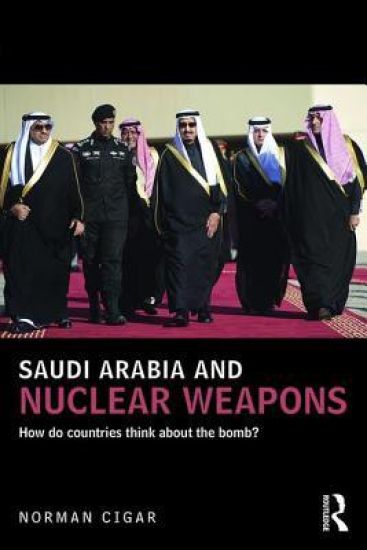
Saudi Arabia and Nuclear Weapons

Saudi Arabia and Nuclear Weapons

Norman Cigar

Routledge
2016
sidottu
Nuclear proliferation in the Middle East remains an issue of concern. Saudi Arabia’s actions will largely rest on Iran’s decisions, and discussions and preparations within Saudi Arabia would suggest that it is ready to react to potential shifts in the region’s nuclear powers. Saudi Arabia and Nuclear Weapons uses an "inside out" approach that emphasises the Saudis’ own national interests in relation to the nuclear threat, and their understanding of the role of nuclear weapons in defense, foreign policy and the concept of deterrence. It is the first study with comprehensive use of the local Arabic language military and civilian media to provide this understanding of official thinking and policy. The Saudi case study is contextualised against the prevailing proliferation models, to conclude that the Saudi case shares both commonalities and elements of uniqueness with other proliferation cases, implying the need for a ‘multi-causal’ approach. Its comparative analysis also suggests potential implications applicable more broadly to the issue of nuclear proliferation. A comprehensive study of Saudi Arabia’s attitude to nuclear weapons, this book offers an exploration of nuclear proliferation that would interest students, scholars and policymakers working in Middle East studies, as well as Military and nuclear proliferation studies.
Saudi Arabia and Nuclear Weapons

Saudi Arabia and Nuclear Weapons

Norman Cigar

Routledge
2016
nidottu
Nuclear proliferation in the Middle East remains an issue of concern. Saudi Arabia’s actions will largely rest on Iran’s decisions, and discussions and preparations within Saudi Arabia would suggest that it is ready to react to potential shifts in the region’s nuclear powers. Saudi Arabia and Nuclear Weapons uses an "inside out" approach that emphasises the Saudis’ own national interests in relation to the nuclear threat, and their understanding of the role of nuclear weapons in defense, foreign policy and the concept of deterrence. It is the first study with comprehensive use of the local Arabic language military and civilian media to provide this understanding of official thinking and policy. The Saudi case study is contextualised against the prevailing proliferation models, to conclude that the Saudi case shares both commonalities and elements of uniqueness with other proliferation cases, implying the need for a ‘multi-causal’ approach. Its comparative analysis also suggests potential implications applicable more broadly to the issue of nuclear proliferation. A comprehensive study of Saudi Arabia’s attitude to nuclear weapons, this book offers an exploration of nuclear proliferation that would interest students, scholars and policymakers working in Middle East studies, as well as Military and nuclear proliferation studies.
Iraq's Shia Warlords and Their Militias: Political and Security Challenges and Options

Iraq's Shia Warlords and Their Militias: Political and Security Challenges and Options

Norman Cigar; Strategic Studies Institute; U.S. Army War College

Lulu.com
2015
nidottu
The phenomenon of Iraq's Shia warlords and the militias they lead has significant implications for the conduct of the war against Islamic State in Iraq and Syria (ISIS), including for U. S. policy interests and for U. S. Landpower forces deployed in-country. In this monograph, Dr. Norman Cigar analyzes the rapid resurgence of the Shia militias and the warlords thanks to a mass popular mobilization in response to the severe ISIS threat to the country in 2014. The militias have played a key role in helping to stabilize the situation on the ground, while the Iraqi Army has been rebuilding with the help of the international Coalition. At the same time, the warlords have become significant political players who have an impact on issues of interest to the United States, such as sectarian reconciliation and the formation of a National Guard in Sunni areas, which have implications for the future of Iraq's security and stability.
Tribal Militias: an Effective Tool to Counter Al-Qaida and its Affiliates?

Tribal Militias: an Effective Tool to Counter Al-Qaida and its Affiliates?

Strategic Studies Institute; U.S. Army War College; Norman Cigar

Lulu.com
2015
nidottu
Most of the local societies in which Al-Qaida and its affiliates and offshoots operate in the Middle East and Africa have a predominantly tribal or at least have a strong tribal component (Iraq, Yemen, Libya, Syria, Somalia, Mali, and Sinai). Countering Al-Qaida's continuing presence, therefore, requires addressing the tribal milieu and understanding Al-Qaida's critical vulnerabilities when it operates in tribal societies. In this context, the capability that tribally-based militias provide may be one of the most effective tools against Al-Qaida, and may offer a cost-effective mechanism serving as a force multiplier for U. S. forces. It could reduce the need for U. S. force commitment on the ground in environments that might offer unfavorable conditions for a U. S. Landpower footprint.