Kirjojen hintavertailu – 12 903 729 kirjaa ja 27 kauppaa

Kirjailija

Norman K. Denzin

Kirjat ja teokset yhdessä paikassa: 53 kirjaa, julkaisuja vuosilta 1991–2023, suosituimpiin kuuluu Indians in Color. Vertaile teosten hintoja ja tarkista saatavuus suomalaisista kirjakaupoista.

Nimi esiintyy myös muodoissa: Norman K Denzin

53 kirjaa

Kirjojen julkaisuvuodet: 1991–2023.

Indians in Color

Indians in Color

Norman K Denzin

Left Coast Press Inc
2015
sidottu
In Indians in Color, noted cultural critic Norman K. Denzin addresses the acute differences in the treatment of artwork about Native America created by European-trained artists compared to those by Native artists. In his fourth volume exploring race and culture in the New West, Denzin zeroes in on painting movements in Taos, New Mexico over the past century. Part performance text, part art history, part cultural criticism, part autoethnography, he once again demonstrates the power of visual media to reify or resist racial and cultural stereotypes, moving us toward a more nuanced view of contemporary Native American life. In this book, Denzin-contrasts the aggrandizement by collectors and museums of the art created by the early 20th century Taos Society of Artists under railroad sponsorship with that of indigenous Pueblo painters;-shows how these tensions between mainstream and Native art remains today; and-introduces a radical postmodern artistic aesthetic of contemporary Native artists that challenges notions of the “noble savage.”
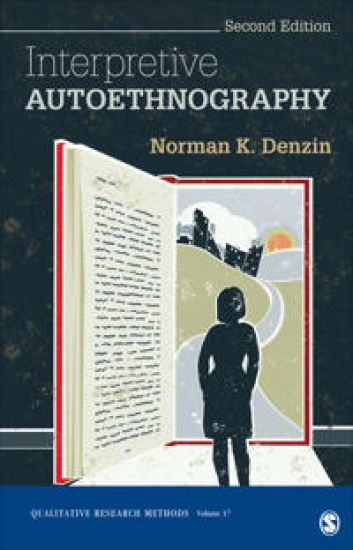
Interpretive Autoethnography

Interpretive Autoethnography

Norman K. Denzin

SAGE Publications Inc
2014
nidottu
Like all writing, biographies are interpretive. In Interpretive Autoethnography, Norman Denzin combines one of the oldest techniques in the social sciences with one of the newest. Bringing in elements of postmodernism and interpretive social science, he reexamines the biographical and autobiographical genres as methods for qualitative researchers. Grounded in theory and rigorous analysis, this accessible book points up the inherent weaknesses in traditional biographical forms and outlines a new way in which biographies should be conceptualized and shaped. The book provides a guide to the assumptions of the biographical method, to its key terms, and to the strategies for gathering and interpreting such materials. Denzin introduces the key concept of "epiphany," or turning points in person’s lives. A final chapter returns to autoethnography’s primary purpose: to make sense of our fragmented lives.
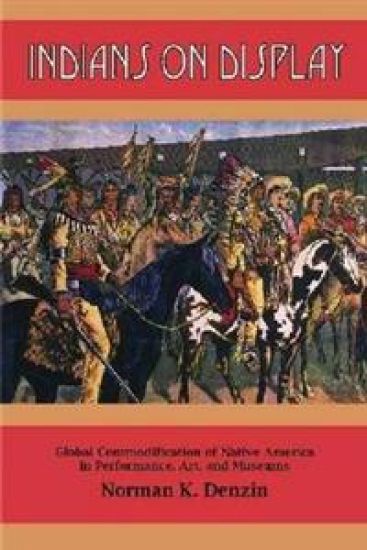
Indians on Display

Indians on Display

Norman K Denzin

Left Coast Press Inc
2013
nidottu
Even as their nations and cultures were being destroyed by colonial expansion across the continent, American Indians became a form of entertainment, sometimes dangerous and violent, sometimes primitive and noble. Creating a fictional wild west, entrepreneurs then exported it around the world. Exhibitions by George Catlin, paintings by Charles King, and Wild West shows by Buffalo Bill Cody were viewed by millions worldwide. Norman Denzin uses a series of performance pieces with historical, contemporary, and fictitious characters to provide a cultural critique of how this version of Indians, one that existed only in the western imagination, was commodified and sold to a global audience. He then calls for a rewriting of the history of the American west, one devoid of minstrelsy and racist pageantry, and honoring the contemporary cultural and artistic visions of people whose ancestors were shattered by American expansionism.
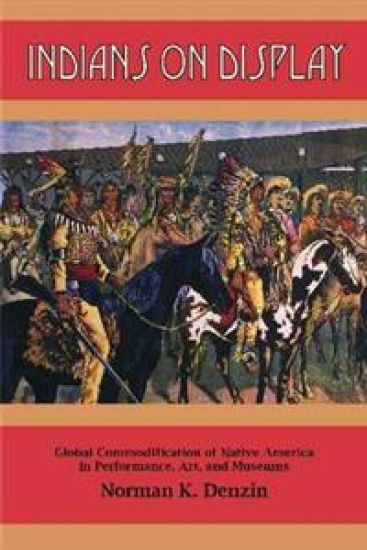
Indians on Display

Indians on Display

Norman K Denzin

Left Coast Press Inc
2013
sidottu
Even as their nations and cultures were being destroyed by colonial expansion across the continent, American Indians became a form of entertainment, sometimes dangerous and violent, sometimes primitive and noble. Creating a fictional wild west, entrepreneurs then exported it around the world. Exhibitions by George Catlin, paintings by Charles King, and Wild West shows by Buffalo Bill Cody were viewed by millions worldwide. Norman Denzin uses a series of performance pieces with historical, contemporary, and fictitious characters to provide a cultural critique of how this version of Indians, one that existed only in the western imagination, was commodified and sold to a global audience. He then calls for a rewriting of the history of the American west, one devoid of minstrelsy and racist pageantry, and honoring the contemporary cultural and artistic visions of people whose ancestors were shattered by American expansionism.
40th Anniversary of Studies in Symbolic Interaction

40th Anniversary of Studies in Symbolic Interaction

Norman K. Denzin

Emerald Publishing Limited
2013
nidottu
To mark 40 volumes of Studies in Symbolic Interaction, this volume includes a special introduction from Series Editor, Norman K. Denzin. This 40th volume advances critical discourse on several fronts at the same time, including a report from the First Contemporary Ethnography Across the Disciplines hui, Waikato, New Zealand; New Empirical Studies by D. Coates, J. Johnson, D. Altheide, C. J. Schneider and D. Trotter, R. J. Berger, C. Corroto, J. Flad, and R. Quinney, and B. Jarrett (respectively): new religious movements, the California School of Symbolic Interaction, Terrorism and the National Security University, the 2011 Vancouver Riot, The Terrains of Medical Diagnosis and Treatment, and mediation processes. In a separate section to highlight the diverse and challenging aspects of symbolic interactionism; Ryan Turner asks if animals have selves? Michael Katovich and Robert Young and Carol Thompson use Turners article as a springboard for insightful commentary on the selves of other animals and the selves of humans.
Controlling Delinquents

Controlling Delinquents

Stanton Wheeler; Norman K. Denzin

AldineTransaction
2011
nidottu
Delinquency is one of those social problem areas that calls upon the contributions of many different disciplines. A wide variety of social, psychological, economic, and political forces interact in the organization and operation of agencies of delinquency prevention and control as well as in the lives of delinquents. As a result, research on delinquency is exceedingly complex. To understand what is required to understand delinquency, it is necessary to grasp all of its facets, and the contributions of each of the forces contributing to delinquency as they relate to one another. Measures to prevent and control delinquency constitute a system of organizations, facilities, and practices with a great deal of inherent conflict. Some agencies even perceive themselves as being able to operate successfully without regard to the work of other agencies. From the standpoint of the delinquent, a total system is in operation, and the delinquent's experience reflects all the conflict and lack of clarity that such a complex system encompasses. To understand the delinquent's experience, it is essential to explore the joint effects of the various agencies that deal with him. The comparative study of the organization and operations of similar agencies in different jurisdictions greatly enhances the accuracy with which the crucial questions and variables that affect delinquency can be identified. This study by Stanton Wheeler and his associates about the handling of juvenile offenders in two different police departments continues to provide a striking contribution to understanding delinquency.
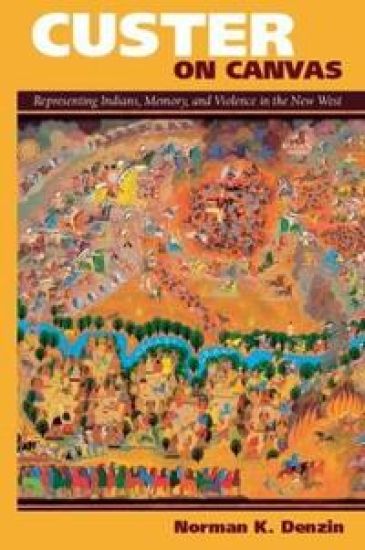
Custer on Canvas

Custer on Canvas

Norman K Denzin

Left Coast Press Inc
2011
nidottu
The 1876 events known as Custer’s Last Stand, Battle of Little Big Horn, or Battle of Greasy Grass have been represented over 1000 times in various artistic media, from paintings to sculpture to fast food giveaways. Norman Denzin shows how these representations demonstrate the changing perceptions—often racist—of Native America by the majority culture, juxtaposed against very different readings shown in works composed by Native American artists. Consisting of autobiographical reminiscences, historical description, artistic representations, staged readings, and snippets of documents, this multilayered performance ethnography examines questions of memory, race, and violence against Native America, as symbolized by the changing interpretations of General Custer and his final battle.
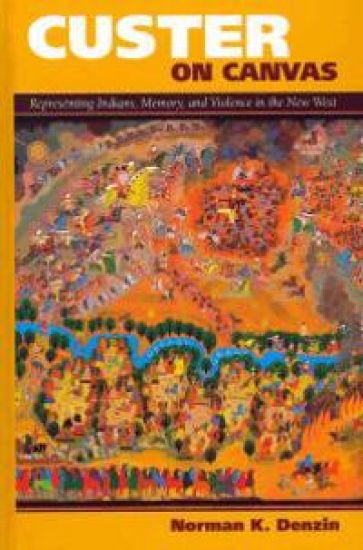
Custer on Canvas

Custer on Canvas

Norman K Denzin

Left Coast Press Inc
2011
sidottu
The 1876 events known as Custer’s Last Stand, Battle of Little Big Horn, or Battle of Greasy Grass have been represented over 1000 times in various artistic media, from paintings to sculpture to fast food giveaways. Norman Denzin shows how these representations demonstrate the changing perceptions—often racist—of Native America by the majority culture, juxtaposed against very different readings shown in works composed by Native American artists. Consisting of autobiographical reminiscences, historical description, artistic representations, staged readings, and snippets of documents, this multilayered performance ethnography examines questions of memory, race, and violence against Native America, as symbolized by the changing interpretations of General Custer and his final battle.
Childhood Socialization

Childhood Socialization

Norman K. Denzin

AldineTransaction
2009
nidottu
Norman Denzin presents a social psychological account of how the lives of children are shaped by social interaction, particularly interaction with parents and other caretakers. He examines the special language of children, their socialization experiences, and the emergence of their selfconceptions- all as they occur in natural surroundings: daycare centers, homes, playgrounds, schools, and many other places. Denzin is concerned not with sequential developmental changes during childhood, but with how children themselves enter into the processes that lead to self-awareness, socialized abilities and attribute-such as pride, perceptiveness, dignity, and poise. Through his symbolic interactionist approach, Denzin shows how language-the key link between children and others-is required in everyday interpersonal relationships and how the sense of self develops as linguistic skills grow. He stresses the importance of play and games as processes by which children teach themselves about social behavior; he also shows that, for children, play takes on the seriousness of adults' work. Denzin maintains that the definitions of childhood by the 1970s had become detrimentally entrenched in educational and political policies regarding children. He recommends a new definition that recognizes children as individuals seeking meaning for their own actions. This book will be valuable to all social scientists concerned with symbolic and linguistic foundations of the socialization process. A new introduction reviews developments since publication of the original edition. This book raises the interactions between adults and children to a new level.
Qualitative Inquiry Under Fire

Qualitative Inquiry Under Fire

Norman K Denzin

Left Coast Press Inc
2009
nidottu
This collection of recent works by Norman K. Denzin provides a history of the field of qualitative inquiry over the past two decades. As perhaps the leading proponent of this style of research, Denzin has led the way toward more performative writing, toward conceptualizing research in terms of social justice, toward inclusion of indigenous voices, and toward new models of interpretation and representation. In these 13 essays—which originally appeared in a wide variety of sources and are edited and updated here—the author traces how these changes have transformed qualitative practice in recent years. In an era when qualitative inquiry is under fire from conservative governmental and academic bodies, he points the way toward the future, including a renewed dialogue on paradigmatic pluralism.
Qualitative Inquiry Under Fire

Qualitative Inquiry Under Fire

Norman K Denzin

Left Coast Press Inc
2009
sidottu
This collection of recent works by Norman K. Denzin provides a history of the field of qualitative inquiry over the past two decades. As perhaps the leading proponent of this style of research, Denzin has led the way toward more performative writing, toward conceptualizing research in terms of social justice, toward inclusion of indigenous voices, and toward new models of interpretation and representation. In these 13 essays—which originally appeared in a wide variety of sources and are edited and updated here—the author traces how these changes have transformed qualitative practice in recent years. In an era when qualitative inquiry is under fire from conservative governmental and academic bodies, he points the way toward the future, including a renewed dialogue on paradigmatic pluralism.
The Research Act

The Research Act

Norman K. Denzin

AldineTransaction
2009
nidottu
At once a unique textbook for methods courses and a major contribution to sociological theory, this book teaches students the principles of research and how to construct and test theories. It brings coherence to the study of methods by presenting four major approaches to experimentation: survey research, participant observation, life histories, and unobtrusive measures from a single theoretical point of view, symbolic interaction. It demonstrates the need for a synthesis between theory and methods, and shows how different methods limit and aff ect research results. Denzin's argues that no single method, theory, or observer can capture all that is relevant or important in reality. He argues for the use of triangulation and for a view of theory and methods as "concept sensitizers." His approach enables sociologists to acquire specifi c facts about a particular situation while simultaneously elevating these to the level of shared meaning. The author shows students how to proceed with research, bringing sharply into focus the possibilities and their limitations. Since his view is integrated rather than eclectic, this is much more than a "how to do it" manual. Denzin points out aspects of research that fall outside the scope of a given method yet aff ect results, and emphasizes the need to employ several methods to cross-check each other. The Research Act covers all the content of conventional methods courses. The presentation is exciting and imaginative, and provides a thorough review of major sociological methods, a cogent statement about approaches to sociological inquiry, and a source from which a understanding of the problems of research can be derived.
Searching for Yellowstone

Searching for Yellowstone

Norman K Denzin

Left Coast Press Inc
2008
nidottu
Yellowstone. Sacagawea. Lewis & Clark. Transcontinental railroad. Indians as college mascots. All are iconic figures, symbols of the West in the Anglo-American imagination. Well-known cultural critic Norman Denzin interrogates each of these icons for their cultural meaning in this finely woven work. Part autoethnography, part historical narrative, part art criticism, part cultural theory, Denzin creates a postmodern bricolage of images, staged dramas, quotations, reminiscences and stories that strike to the essence of the American dream and the shattered dreams of the peoples it subjugated.
Searching for Yellowstone

Searching for Yellowstone

Norman K Denzin

Left Coast Press Inc
2008
sidottu
Yellowstone. Sacagawea. Lewis & Clark. Transcontinental railroad. Indians as college mascots. All are iconic figures, symbols of the West in the Anglo-American imagination. Well-known cultural critic Norman Denzin interrogates each of these icons for their cultural meaning in this finely woven work. Part autoethnography, part historical narrative, part art criticism, part cultural theory, Denzin creates a postmodern bricolage of images, staged dramas, quotations, reminiscences and stories that strike to the essence of the American dream and the shattered dreams of the peoples it subjugated.
Flags in the Window

Flags in the Window

Norman K. Denzin

Peter Lang Publishing Inc
2007
sidottu
Written over a four-year period and originally conceived as Notes from a Homeland War Diary, these concise, provocative essays record on-going reactions - reports from the war zone - to what Joan Didion calls the new normal under the Bush Administration. They rethink questions of power, political authority, patriotism, democracy, science, civil society, and the academy. Flags in the Window should be read by everyone who has an interest in the alternative view of the Iraq War.
Contesting Empire, Globalizing Dissent

Contesting Empire, Globalizing Dissent

Norman K. Denzin; Michael D. Giardina

Paradigm
2007
nidottu
"Denzin and Giardina have brought together the works of leading cultural critics who have given cultural studies a global framework that meets our need to examine the governing strategies of the military, the economy, the media, and educational elites... This is a must-read for those who want cultural studies to really matter in the present moment." Patricia Ticineto Clough Contesting Empire, Globalizing Dissent: Cultural Studies after 9/11 is a landmark text. Leading scholars from cultural studies, education, gender studies, and sociology reposition critical cultural studies research around the goals of moral clarity and political intervention. Chapters range in focus from neoliberalism and democracy to America's war on kids and the cultural politics of national identity.
Contesting Empire, Globalizing Dissent

Contesting Empire, Globalizing Dissent

Norman K. Denzin; Michael D. Giardina

Paradigm
2006
sidottu
"Denzin and Giardina have brought together the works of leading cultural critics who have given cultural studies a global framework that meets our need to examine the governing strategies of the military, the economy, the media, and educational elites... This is a must-read for those who want cultural studies to really matter in the present moment." Patricia Ticineto Clough Contesting Empire, Globalizing Dissent: Cultural Studies after 9/11 is a landmark text. Leading scholars from cultural studies, education, gender studies, and sociology reposition critical cultural studies research around the goals of moral clarity and political intervention. Chapters range in focus from neoliberalism and democracy to America's war on kids and the cultural politics of national identity.
Performance Ethnography

Performance Ethnography

Norman K. Denzin

SAGE Publications Inc
2003
nidottu
Norman K. Denzin feels that now is the time to take stock of reflexive performance, ethnography, and autoethnography; to evaluate where each has been and where they are going, especially as they pertain to the study of democracy and racism in postmodern America. In Performance Ethnography, one of the world's most distinguished authorities on qualitative research, established the initial published connection of performance narratives with performance ethnography and autoethnography; the linkage of these formations to critical pedagogy and critical race theory; and the histories of these formations, and shown how they may be connected. Performance Ethnography is divided into three parts. Part I covers pedagogy, ethnography, performance, and theory as the foundation for a performative social science. Part II addresses the worlds of family, nature, praxis, and action, employing a structure that is equal parts memoir, essay, short story, and literary autoethnography. Part III examines the ethics and practical politics of performance autoethnography, anchored in the post-9/11 discourse in the United States. The amalgam serves as an invitation for social scientists and ethnographers to confront the politics of cultural studies and explore the multiple ways in which performance and ethnography can be both better understood and used as mechanisms for social change and economic justice.
Performance Ethnography

Performance Ethnography

Norman K. Denzin

SAGE Publications Inc
2003
sidottu
Norman K. Denzin feels that now is the time to take stock of reflexive performance, ethnography, and autoethnography; to evaluate where each has been and where they are going, especially as they pertain to the study of democracy and racism in postmodern America. In Performance Ethnography, one of the world's most distinguished authorities on qualitative research, established the initial published connection of performance narratives with performance ethnography and autoethnography; the linkage of these formations to critical pedagogy and critical race theory; and the histories of these formations, and shown how they may be connected. Performance Ethnography is divided into three parts. Part I covers pedagogy, ethnography, performance, and theory as the foundation for a performative social science. Part II addresses the worlds of family, nature, praxis, and action, employing a structure that is equal parts memoir, essay, short story, and literary autoethnography. Part III examines the ethics and practical politics of performance autoethnography, anchored in the post-9/11 discourse in the United States. The amalgam serves as an invitation for social scientists and ethnographers to confront the politics of cultural studies and explore the multiple ways in which performance and ethnography can be both better understood and used as mechanisms for social change and economic justice.
The Qualitative Inquiry Reader

The Qualitative Inquiry Reader

Norman K. Denzin; Yvonna S. Lincoln

SAGE Publications Inc
2002
sidottu
New from award winning editors Norman K. Denzin and Yvonna S. Lincoln, The Qualitative Inquiry Reader offers the best of the popular SAGE journal, Qualitative Inquiry. These collected works aim to introduce the necessary critical framework that will allow scholars and students scholars to interpret cutting edge work in the field of qualitative inquiry. By providing this framework, readers will then be able to use this work as it applies to critical political and moral discourses. Features: The book includes examples from across the behavioral and social sciences Reader is divided into five sections: Reflexive Ethnography, Autoethnography, Poetics, Performance Narratives, Assessing the Text These sections reflect the ways in which contemporary researchers have implemented the narrative turn in their writing Contains cutting-edge work by top scholars in the field Introduces students and scholars to what's new in the field of qualitative inquiry